What is Biodynamic Farming?

By Wendy E. Cook
 My first introduction to
a biodynamic farm was over 35 years ago, yet it made such an indelible impression upon me that I
can still vividly recreate the memory. Nestling in the soft East Sussex hills,
Busses Farm, run by Jimmy and Pauline Anderson, was a clear demonstration of a
living example of biodynamics.
My first introduction to
a biodynamic farm was over 35 years ago, yet it made such an indelible impression upon me that I
can still vividly recreate the memory. Nestling in the soft East Sussex hills,
Busses Farm, run by Jimmy and Pauline Anderson, was a clear demonstration of a
living example of biodynamics. Walking through the kitchen garden was like being in a Monet painting. The French intensive biodynamic method was being practised, with raised beds and an exuberant riot of herbs, flowers and vegetables. Patches of marigolds, tagetes and nasturtiums tangled with bright blue borage, lavender, rosemary, courgettes, cucumbers and firm-hearted lettuce. Runner beans busily twined up poles and tomatoes grew warm, sweet and ripe.
If you managed to glimpse the soil through this cornucopia it was black and crumbly, the kind that produces happy plants. Bees provided the background hum as they gratefully progressed from flower to flower, spoilt for choice between gardens and orchards. This was the first time I remember hearing about companion planting.
Out in the fields was a herd of horned Sussex cows, most with their calves, for breeding as well as some milk cows; a few fluffy sheep that looked like an advertisement for washing powder, 300 pecking and excitable hens, and a wonderful workhorse that was used for transporting heavy loads.
All of these animated the landscape with their variety of shapes, colours, sounds and behaviours. In addition to this huge quantity of mouths and beaks to feed there was usually a group of very hard-working and very hungry apprentices who would come to train for 3-6 month blocks. Their healthy appetites meant that Pauline’s four-oven Aga was always on the go, full of marvellous dishes. And, as if this was not enough, the indefatigable Andersons pioneered a vegetable and wholefood shop in the village of Forest Row, which has continued to go from strength to strength.
So many people were enthusiastic about getting biodynamic produce that a number came forward with their various talents, and the next enterprise was a restaurant run by a team of good cooks – some days the queues would stretch round the block The salads fairly jumped off the plates with vitality and we all felt that this was an ‘idea whose time had certainly come’.
On the farm were study groups looking at the theoretical side of biodynamics, and regular celebrations of festivals with music, singing and dancing. It was very hard work to be sure, but it made the profound statement of Manfred Klett (former head of biodynamic work in Germany) that “the farm is the university of the future,” a living ideal to be realised eventually on a much wider scale.
When it honours the particular piece of land that forms it, in all its true depth of potentiality, the farm is a world of symbiotic relationships and processes. Then the farm becomes the most excellent, cheap and efficient place to study botany, zoology, chemistry, physics, water, soil, chemistry, nutrition, cooking, animal husbandry, crafts, climatology, astronomy and true economy (the Greek oikos, meaning house + nomia, meaning management; to manage nature’s household properly we will need to develop a new and qualitatively different understanding of economic principles).
To bring us back to today, my local biodynamic farmer Richard Smith takes up the theme:
“Walking around a biodynamic garden, or as in my case, over the fields of a biodynamic farm, one soon begins to realise that there is something different going on here. It is usually an impression of vibrancy in the plants, warmth in the soil and a health and contentment amongst the animals. When we look at some of the surrounding conventional farms, the fact that they have become highly specialised will be evident. There will be a small selection of crops spread out over huge fields or there will perhaps be animals, usually cattle or sheep. We rarely see poultry or pigs, because they tend to be kept in barns or feedlots where they stay summer and winter. It is hard to think of the deprivations that they endure. Whereas on a biodynamic farm we will usually see a wide diversity of crops and animals outside in smaller groups, smaller machines (e.g. lighter tractors) and generally a closer connection between human beings and nature.”
One of the biodynamic farmer’s main goals is to create a balance between plants, animals and humans, and the needs of that particular soil. The aim is as far as possible to grow food for the animals entirely on the farm. No artificial fertilisers are brought in since the fertility of the soil will be derived exclusively from composted plant waste mixed with the different animal manures. If there are so many animals that it is necessary to buy feed in, or the plants do not thrive because there is insufficient compost, then somehow a more realistic and secure ratio of plants and animals has to be achieved. With experience, most biodynamic farmers usually find this to be possible. It is a principle at the heart of biodynamic farming; it is also one of the ways biodynamics may differ from organic farming (where the main aim for some farmers is to be able to grow food without chemicals).
Sometimes, of course, there are difficulties to be faced, such as extremes of weather, which seem to be occurring with greater frequency. A farmer who has a wide spread of plants and animals usually observes that not all are affected with equal severity. Failures are neither total nor ruinous, and there is a measure of security in such an approach. (No biodynamic cattle succumbed to the foot and mouth epidemic. The only cull of biodynamic cattle was in Scotland where the farm was contiguous with an infected farm.) Such security came from diversity, which used to be true of traditional farms before the last World War, but is not the lot of the current conventional farmer who has sacrificed a wide spread of farm products to concentrate on mono-crops or only dairy cows and has to cope with the unpredictable and fluctuating prices of different commodities. This is short-term, high-risk farming because specialisation also exhausts the soil, limits the habitat of insects and birds and can open the door to disease.
A biodynamic farmer trying to ‘orchestrate’ the number and type of animals required to create the ideal and appropriate balance on the farm will need to consider the different types of manures produced by the various animals, and this in a qualitative way. In animal dung there is something of the essence of the animal and its whole relationship with the earth. Each group of animals has a different attribute or gift, and a good farmer will understand how to direct certain animals to specific parts of the farm where they can improve and enliven the soil. Here are some thoughts on various farm animals.
The Pig is a very intelligent creature. It spends a great deal of time rooting in the soil and is inexhaustibly curious, heaving up the soil and disturbing it where it is compact and damp, letting in the air. As an omnivore it is partial to whatever is rich in flavour, especially the taproots of pernicious weeds. With only a sparse coat of hair it likes to grow fat to keep itself warm and it seems to extract all the potential for warmth from its feed, so that its dung tends to be much more earthly and cold (compared to that of the cow). But this type of manure works well on the cold root crops.
Sheep, clothed in the ‘Golden Fleece’ and famous as the ‘Golden Hoof’, improve the land wherever they tread. They nibble close to the ground thus allowing light to penetrate the pasture, which responds by the production of a rich clover. Their silica-rich manure encourages the growth of strong stems that help the plant reach up into the air and light. Although the sheep is a ruminant animal with a complex digestion, involving four stomach chambers and a circular process of regurgitation into the mouth for further chewing, its digestion is not as advanced as that of the cow.
 The Cow, a ruminant, has a digestive
system that has reached a state of perfection. The reach of the cow’s senses
out into the world, however, is limited; she chews the cud in a state between
dreaming and waking. She seems to inwardly experience all the plants of the
meadow as she chews and re-chews them in a wonderful reverie. It is not
difficult to appreciate why this animal is so venerated by the Hindus as a
model of meditative peace. The dung that derives from a digestive tract 22
times the length of the animal is so transformed from the original plant state
that cattle are not repulsed by it, as other animals are by theirs. Cow dung
has been so well assimilated that it is provides the most nutritionally
available dung for maturing plants on the farm or in the garden, when
composted. Its effect is strongest on the soil surface; it nourishes leaves –
the watery part of the plant – and so balances the earthly and watery realms.
The cow is indeed quite central to the proper workings of a biodynamic farm.
The Cow, a ruminant, has a digestive
system that has reached a state of perfection. The reach of the cow’s senses
out into the world, however, is limited; she chews the cud in a state between
dreaming and waking. She seems to inwardly experience all the plants of the
meadow as she chews and re-chews them in a wonderful reverie. It is not
difficult to appreciate why this animal is so venerated by the Hindus as a
model of meditative peace. The dung that derives from a digestive tract 22
times the length of the animal is so transformed from the original plant state
that cattle are not repulsed by it, as other animals are by theirs. Cow dung
has been so well assimilated that it is provides the most nutritionally
available dung for maturing plants on the farm or in the garden, when
composted. Its effect is strongest on the soil surface; it nourishes leaves –
the watery part of the plant – and so balances the earthly and watery realms.
The cow is indeed quite central to the proper workings of a biodynamic farm.So farm animals are connected with the four elements of earth, air, fire and water. If only there were still horses on farms, then the aspect of ‘warmth’ would be more completely fulfilled. (Horse manure has always been prized by flower growers.) The dung of the pig specially fertilises root crops and sheep’s dung the stems and flowers. Much that we have been describing could be observed on a well-run organic farm, so what is different about biodynamics?

Origins of the Biodynamic Movement
“The materialistic farmer who thinks about these matters can calculate how many decades it will be in this century before agricultural products have degenerated so far that they can no longer nourish the human being adequately. With the materialistic world conception, agriculture has come the furthest away from rational principles.” (Agriculture)
He went on to predict how farm products would become so denatured that people would endeavour to make mineral blueprints of them, and here we are reminded of the growth of the mineral and vitamin supplement industry over past decades. Steiner pointed out that not only was the earth already middle aged, but it would become increasingly sclerotic (declining in vitality) as a result of the developing materialistic view of the earth as a resource for human beings to exploit. When he was persuaded to offer his insights into agriculture, his aim was to try and correct a largely one-sided, mechanistic view of nature, entrenched as early as the 1920s.
Steiner’s approach offered a view of life that reconnected the earth and the cosmos, physical life with its origins, in a spiritual worldview – a vision that takes account of the powerful forces that pour down from the cosmos to work within the soil and plant. These forces stimulate the processes vital to agriculture, but in order for these beneficent influences to be fully active, the soil needs to be sufficiently sensitive. This in turn requires the use of natural organic fertilising materials, to keep it alive. Coupled with this, special potentised ‘medicines’ (usually known as ‘preparations’) would be required for the compost heap and for spraying on the land, as well as a renewed understanding of planetary and zodiacal influences, to be creatively harnessed by the sensitive farmer.

The Moon and Its Relation to the Zodiac
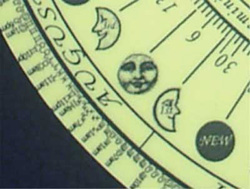
As the moon circles the earth it is able to focus the particular aspect of each constellation rather like a lens, according to its passage in front of that sign. So that when the moon is in front of the constellation of Pisces, Cancer or Scorpio (all water signs), it magnifies their influence on the watery part of the plant – the leaves. The earth element (particularly favourable for root vegetables) can be stimulated by the arrangement of planting, hoeing or any work that disturbs the soil, at a time when the moon is in Capricorn, Taurus or Virgo (earth signs).
Some biodynamic gardeners arrange their garden rotations so that each year a different plant activity is accentuated on each plot. Flowers should be grown under air signs (Gemini, Aquarius and Libra) and cereal and seed crops under the fire signs (Leo, Sagittarius and Aries).
The Roman scholar Pliny the Elder, in his Natural History, examined the influences of the moon’s phases on vegetal and animal life. He observed that if one wanted juicy and good-looking fruits and vegetables for sale or for consumption, the optimal time to pick them was at full moon, just when ants were busiest in their hills, even at night, and marine animals such as oysters were in their period of burgeoning growth. At new moon the ants were seen to be listless and the growth of sea creatures slack. “Fruit,” said Pliny, “is much less susceptible to rotting at new moon and can be easily and efficiently dried.”
Virgil, born just after the death of Pliny, told in a discourse on agriculture how husbandmen took cues from the heavenly spheres and constellations to tell them when to sow their crops, certain seeds being best put into the ground when “glittering Taurus opens the year with his golden horns.” Paracelsus – a healer and one of the last of the true alchemists – made much of the connections in astronomy and astrology for perceiving the ‘signatures’ of plants and to use remedies much more effectively, as did Nicholas Culpeper who saw that each planet was linked to a particular plant species, in turn connected to a particular organ of the body. From the seventeenth century onwards people following such traditional wisdom have been systematically marginalised, so we have lost the link to the cosmos.
Biodynamic farmer Alan Brockman adds:
“Each planet has its own force field; thus each planet can, at some time or other, be seen in every part of the zodiac. The earth can be pictured as being surrounded by seven spheres of force, of which each physically visible planet is marking out its own particular boundary. These spheres were known as ‘crystal spheres’ (a description attributed to Ptolemy). Steiner indicated that the various leaf spirals and their positioning around the stem, or ‘phyllotaxis’, indicates which particular force field the plant is reacting to. So clearly plants and planets have correspondences, as healers such as Paracelsus and Culpeper knew.”
Part two of this article appears in New Dawn 113 and explains how biodynamic preparations are made and their effectiveness compared to modern chemical fertilisers.
Reprinted with permission from The Biodynamic Food & Cookbook: Real Nutrition that Doesn’t Cost the Earth by Wendy E. Cook, ISBN: 1905570015, published by Clairview Books.
.
WENDY E. COOK is a writer and speaker on nutritional issues. The first wife of satirist Peter Cook, she gained a reputation as a hostess in the 1960s and 1970s. Born in 1940, she studied art at Cambridge where she met Peter Cook. Later they lived in London and New York during which time Wendy developed cooking and entertaining as her creative motif. When their daughter Daisy developed asthma and conventional medicine had little effect, Wendy began a journey of discovery of complementary treatments and alternative ideas. She studied macrobiotics as well as Rudolf Steiner’s approach to nutrition and agriculture (biodynamics). Having discovered how life-changing nutrition can be, she devoted herself to cooking and teaching in clinics, communities and schools. More recently she was resident at Schumacher College while simultaneously studying for a degree in Waldorf Education at Plymouth University.
The above article appeared in New
Dawn No. 112 (January-February 2009)
© New Dawn Magazine and the respective author.
For our reproduction notice, click here.
For our reproduction notice, click here.
From New Dawn @ http://www.newdawnmagazine.com/articles/what-is-biodynamic-farming
For more information about organic farming see http://nexusilluminati.blogspot.com/search/label/organic%20farming
- See ‘Older Posts’ at the end of each section
This is a ‘not for
profit’ site -
But if you like what we do please
buy us a meal if you can
Donate any amount and receive at least one New Illuminati eBook!
Please click in the
jar -
Xtra Images – http://www.ojaigarden.com/images/RyuTriciTree.jpg
http://www.rutlandbio.com/wp-content/uploads/2009/02/planting-the-horn.jpg
http://biodynamics2024.com.au/wp-content/uploads/2009/04/cow-horn.jpg
http://slowfoodsgv.org/wp-content/uploads/2012/09/biodynamic_affinities-scaled-500.jpg
http://www.rutlandbio.com/wp-content/uploads/2009/02/planting-the-horn.jpg
http://biodynamics2024.com.au/wp-content/uploads/2009/04/cow-horn.jpg
http://slowfoodsgv.org/wp-content/uploads/2012/09/biodynamic_affinities-scaled-500.jpg
For further enlightening
information enter a word or phrase into the random synchronistic search box @ http://nexusilluminati.blogspot.com
And see
New Illuminati – http://nexusilluminati.blogspot.com
New Illuminati on Facebook - https://www.facebook.com/the.new.illuminati
New Illuminati Youtube Channel - http://www.youtube.com/user/newilluminati/feed
The Her(m)etic Hermit - http://hermetic.blog.com
The Prince of Centraxis - http://centraxis.blogspot.com (Be Aware! This link leads to implicate &
xplicit concepts & images!)
DISGRUNTLED SITE ADMINS PLEASE NOTE –
We provide a live link to your original material on your site - which
raises your ranking on search engines and helps spread your info further! This site
is published under Creative Commons Fair Use Copyright (unless an individual article
or other item is declared otherwise by copyright holder) – reproduction for non-profit
use is permitted & encouraged, if you give attribution to the work &
author - and please include a (preferably active) link to the original (along
with this or a similar notice).
Feel free
to make non-commercial hard (printed) or software copies or mirror sites - you
never know how long something will stay glued to the web – but remember
attribution! If you like what you see, please send a donation (no amount is too
small or too large) or leave a comment – and thanks for reading this far…
Live long
and prosper!
From the New Illuminati
– http://nexusilluminati.blogspot.com


