"All the World's a Stage We Pass Through" R. Ayana

Showing posts with label star larvae. Show all posts

Monday, 7 November 2016

Programmed Evolution: Ontogeny, Phylogeny, Teleology and Evolution’s Empirical Conundrum

Programmed Evolution:
Ontogeny, Phylogeny, Teleology and Evolution’s Empirical Conundrum

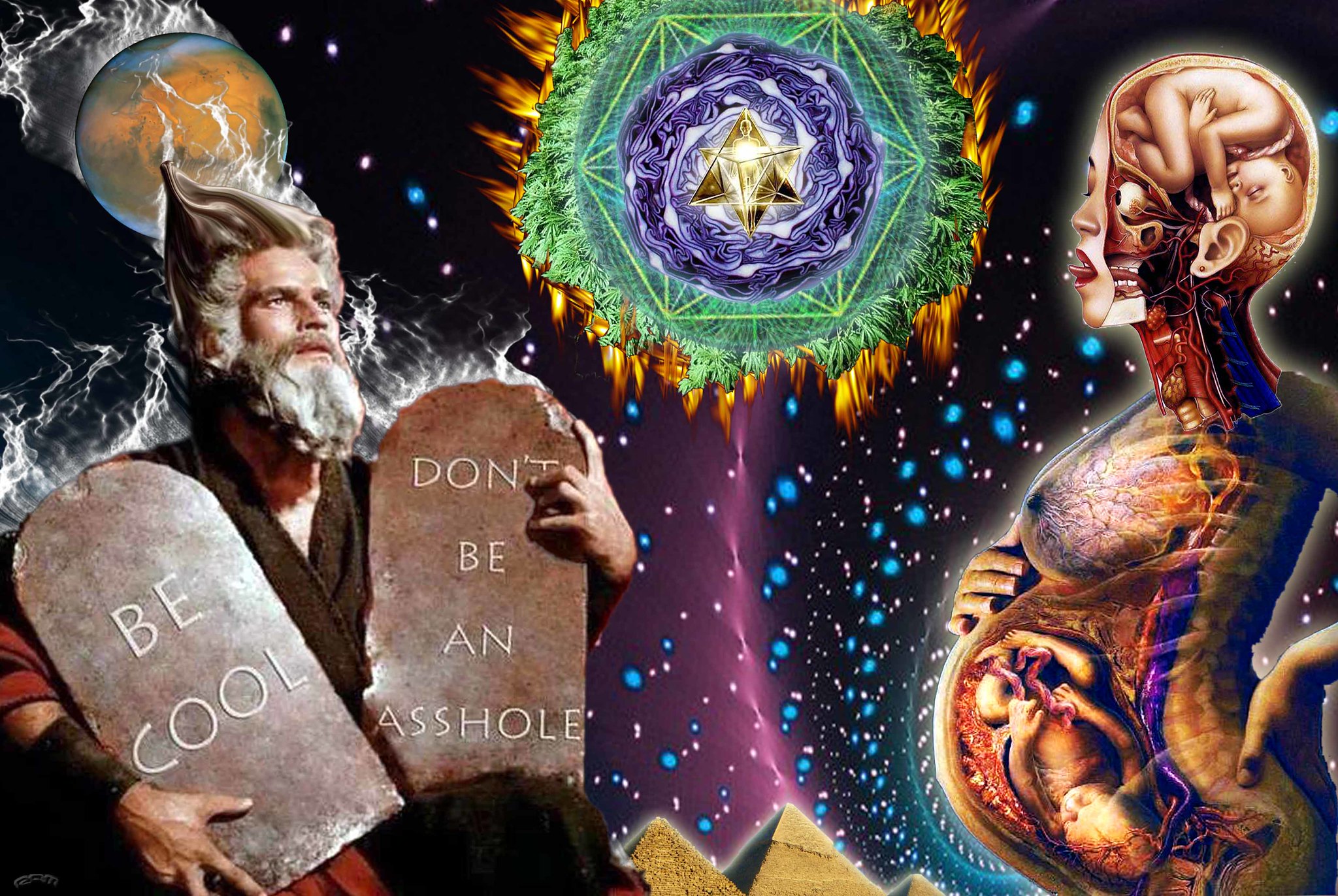
 Burning Bush Instructs the Primates by R. Ayana


Scientists and philosophers of science have proposed various metrics by which to assess the merits of scientific theories. An often cited one is Karl Popper’s requirement that a theory be in principle empirically falsifiable. For example, the discovery of rabbit fossils in Precambrian geological strata would demolish Darwinian theory. Another often cited measure of merit is a theory’s ability to make accurate predictions. This has always been a difficult hurdle for Darwinian evolution. What predictions can the theory make?

Unfortunately for Darwinian theory, the difficulties are several. They include the time scale required, the need to rely on necessarily incomplete fossil remains, and the small sample (one planet). But something new has changed the situation. Darwinian theory now is in a position to belly up to the bar and, like other respectable scientific theories, make some bold predictions.

What has changed is our ability to analyze DNA. Genomic sequencing and analysis projects are in full swing around the world. Researchers are using new technologies to, not only sequence DNA, but also statistically analyze those sequences across species. So, Darwinians, what’s going to come of it? If you understand how changes in DNA propagate through generations within a species and into new species, if you understand the sources of genetic novelty, if you understand why some genes are preserved in a species and others selected out, then let’s have some predictions.

What will ongoing genetic sequencing and analysis turn up that will corroborate Darwinian evolution and falsify rivals?

But before we try to pin Darwinists to the mat, let’s entertain a relevant thought experiment, as an intermission:

Let’s suppose that we observe a complex process, one that involves discernibly discrete entities. We might call these entities organisms. We notice that over time, as the process progresses, the organisms give rise to new organisms. And we notice that older organisms perish.

We notice that the descendants differ from their ancestors. As more generations turnover, the forms of the descendants vary more dramatically. Morphological forms, and their attendant functions and behaviors, proliferate through the population of descendant organisms. And, having been fortunate enough to observe the process from its outset, we know that the multiplicity of forms descended, ultimately, from a single ancestral form.

An intriguing process. How to account for it? Let’s consider two competing theories.

(1) We might conjure an explanation that invokes a more or less deterministic influence, one that bridges the generations and guides the process as it works its way from the ancestral form to the many descendant forms. Such an influence would be teleological. We might call this formative influence a genetic program. Its action across the generations would constitute development, an unfolding of pre-programmed potential into a multiplicity of forms.

(2) Alternatively, we might conjure an explanation that invokes nondeterministic, nonteleological factors. We might say that the process is the result of two interacting subprocesses, one being unpredictable changes that exaggerate variation among the members of a generation, and the second being the varying numbers of progeny that members of each generation leave behind. We might call the first subprocess random mutation and the second process natural selection, and we might posit a relationship between the two that causes descendant populations to display a diversity of morphologies (and functions and behaviors) based on pure chance and environmental selection. There is no preprogrammed potential unfolding, just selection among various traits among individuals and a disproportionate retention in descendant generations of the selected traits.

Now comes the hard part: determining which explanation best accounts for the observed process of descent. Being conscientious scientists, we want empirical corroboration. What observations might we make, in principle, that could determine which explanation has the greater merit? How would one distinguish, empirically, a teleological process from a Darwinian one? What would one look for to detect the presence or absence of a program?


Phylogeny: Polymorphous descent from a common ancestor. In principle, what sort of observation would establish the presence or absence of a program?


Ontogeny: Polymorphous descent from a c
ommon ancestor. In principle, what sort of observation would establish the presence or absence of a program? 


One observation that would help clear the air is the discovery of an information code in the organisms that expresses itself as the organisms’ various morphological traits. The codes for the traits we might call genes. If we were to find genes in ancestors that lay waiting, unexpressed, but are preserved and jump to life in descendant species, this would bolster the case for a programmatic process. 


A Darwinian process would not predict such a discovery. Darwinism includes no anticipatory mechanism whereby genes needed in the future would be present, though dormant, in ancestors. Only a teleological theory would predict an anticipatory genome. Anticipatory evidence would suggest a pre-coded program underlying the process of multi-generational morphological diversification.

And this is precisely what we observe in ontogeny. We observe that genes dormant in the fertilized ovum do not express themselves until the time comes for them to produce muscle cells, liver cells, brain cells, etc. Then these dormant genes spring to life. Their expression unfolds sequentially to create descendant species of cells of multifarious types.

Or at least this is the prevailing account. Alternatively, maybe it’s just a coincidence that genes dormant in the fertilized ovum are useful in descendant cell types. Maybe nature is resourceful and discovers uses for the inherited supply of genes. It might be the case that the differentiation of cell types during embryonic development has nothing to do with any precoded program. Maybe it’s happenstance, the result of random mutations and natural selection.

This line of thinking probably is not worth pursuing. But is phylogenetic descent really that different? Would the discovery of descendant genes in ancestors argue for a programmed phylogeny, or would it argue only for the happenstance of random mutations and natural selection?

These are no longer rhetorical questions, because genomic sequencing and analysis is finding unexpected, unpredicted instances of descendant genes in ancestors. Does Darwinian evolution predict that the genomes of primitive species should contain genetic programs for newer, more complex species—?The discovery challenges the logic of normal evolution theory, because it suggests that evolution, as ontogeny is thought to do, unfolds from a pre-programmed genetic potential. These findings are ongoing:

A news release (11/24/2005) issued by the journal Trends in Genetics announces that

"Corals and sea anemones (the flowers of the sea), long regarded as merely simple sea-dwelling animals, turn out to be more genetically complex than first realised. They have just as many genes as most mammals, including humans, and many of the genes that were thought to have been "invented" in vertebrates are actually very old and are present in these "simple" animals."

The full text of the release is available at http://www.sars.no/research/technau_Science.pdf

Newer (2007) sequencing and analysis results corroborate the anemone anomalies. Another example comes from research at the European Molecular Biology Laboratory, which found human genes in a marine worm. The news release (11/24/2005) announcing the finding is at http://www.embl-heidelberg.de/aboutus/news/press/press05/press25nov05/index.html

Additional research discovered that genes essential for human nerve cells to communicate with one another are present already in bacteria. This research is described in a NIH news release (6/1/2004) at http://www.nichd.nih.gov/new/releases/genes.cfm These and other anomalous (in the Darwinian context) results of genome analysis are collected at http://www.panspermia.org/oldgenes.htm.

This page of Brig Klyce’s "Cosmic Ancestry" web site includes commentary on the relevance of these findings to panspermia. The discovery of advanced genes in primitive organisms suggests that the evolution of life on Earth constitutes an ontogeny—the ontogeny of Gaia.


If a process of descent is programmatic, then it would seem to be dependent on some kind of timing mechanism. What triggers the production of new descendant types? How does the developing embryo know when to kick out a new cell/tissue type? In the case of ontogeny, researchers posit various chemical signals from within the organism and/or from its gestating parent as potential triggers. In the case of phylogeny the timing triggers are harder to determine.

Nonetheless, various candidates present themselves. Phylogeny might also be paced by chemical signals. Organisms exchange chemical signals all the time, through eating one another, through exchanges of pheromones. Terence McKenna argues that ingestion of plant drugs among our primate ancestors played a role in human speciation. Other environmental triggers might include the terraforming of Earth’s atmosphere by the release of oxygen from photosynthesis. Glaciations might act as triggers. Industrial pollution is another candidate.

Maybe the prevailing accounts of ontogeny and phylogeny are artifacts of the time scales involved. If we could observe a sped-up movie of evolution might we perceive a programmatic development from the first to the most recent species—the gestation of a pregnant planet from impregation to delivery? If the embryonic development of a long-lived organism required a few billion years, might it not look like a Darwinian process?

So how do approaches to evolution stack up as scientific theories based on their abilities to predict? A teleological, programmed model, predicts that genes active in descendant species can be found already in distant ancestors. What does the Darwinian model predict? Genomic sequencing and analysis is in the early stages. There’s time to render predictions. The star larvae hypothesis predicts an accumulating pile of anomalous data that will stretch the Darwinian model to the breaking point. Those data, however, will find themselves well integrated in a new paradigm, one that proposes an overarching ontogeny that envelops evolution and repositions biology into the role of larvae to the stars.


Starman Vortex by R. Ayana

For more information about new evolutionary paradigms see http://nexusilluminati.blogspot.com/search/label/evolution  
- Scroll down through ‘Older Posts’ at the end of each section


Do you LIKE this uniquely informative site?
A genuinely incapacitated invalid maintains, writes, edits, researches, illustrates, moderates and publishes this website from a tiny cabin in a remote forest.
Now that most people use ad blockers and view these posts on phones and other mobile devices, sites like this earn an ever shrinking pittance from advertising sponsorship.
This site needs your help.
Like what you see? Please give anything you can -  
Contribute any amount and receive at least one New Illuminati eBook!
(You can use a card securely if you don’t use Paypal)
Please click below -


And it costs nothing to share this post on Social Media!
Dare to care and share - YOU are our only advertisement!


For further enlightening information enter a word or phrase into the random synchronistic search box @ the top left of http://nexusilluminati.blogspot.com


And see


 New Illuminati on Facebook - https://www.facebook.com/the.new.illuminati

New Illuminati Youtube Channel -  https://www.youtube.com/user/newilluminati/playlists

New Illuminati’s OWN Youtube Videos -  
New Illuminati on Google+ @ For New Illuminati posts - https://plus.google.com/u/0/+RamAyana0/posts

New Illuminati on Twitter @ www.twitter.com/new_illuminati


New Illuminations –Art(icles) by R. Ayana @ http://newilluminations.blogspot.com

The Her(m)etic Hermit - http://hermetic.blog.com


DISGRUNTLED SITE ADMINS PLEASE NOTE –
We provide a live link to your original material on your site (and links via social networking services) - which raises your ranking on search engines and helps spread your info further!

This site is published under Creative Commons (Attribution) CopyRIGHT (unless an individual article or other item is declared otherwise by the copyright holder). Reproduction for non-profit use is permitted & encouraged - if you give attribution to the work & author and include all links in the original (along with this or a similar notice).

Feel free to make non-commercial hard (printed) or software copies or mirror sites - you never know how long something will stay glued to the web – but remember attribution!

If you like what you see, please send a donation (no amount is too small or too large) or leave a comment – and thanks for reading this far…

Live long and prosper! Together we can create the best of all possible worlds…


From the New Illuminati – http://nexusilluminati.blogspot.com

Monday, 25 May 2015

Cyberfetus Rising - The Star Larvae Hypothesis: Nature's Plan for Humankind


Cyberfetus Rising
The Star Larvae Hypothesis: Nature's Plan for Humankind (Addendum )

 https://farm9.staticflickr.com/8094/8530581838_d12d661d38_k.jpg

NeotenousTechnology decommissions the specialized adaptations of the adult body. The neoteny that results illustrates gene-culture coevolution. In outer space that process will deliver a posthuman form anticipated by the religious figure of the cherubic angel, or putto, the celestial infant.


Living in the weightlessness of outer space, humankind's extraterrestrial descendants will have removed themselves from their terrestrial kin not only geographically, but also physiologically and psychologically. Their bones and muscles will atrophy to wisps under the influence of weightlessness, while their brains hypertrophy, becoming super enriched. This physiological one-two punch will juvenilize extraterrestrials. ETs will enjoy retarded biological development.

The creatures that result from these changes will resemble human infants more than they will resemble human adults. That is, weightlessness will induce, elicit, or evoke a neotenous response to the environment of outer space. Space colonists, a small inbreeding population, will be isolated reproductively from their contemporaries on Earth. These several circumstances set the stage for a posthuman speciation.

Why is youth associated with flight?Juvenile skywalkers are common in popular folklore and fables. The stereotypical UFO alien, for example, with its fetal allometry (big head, small limbs); Peter Pan, the eternally youthful high-flyer; the cosmic fetus that closes out Kubrick's 2001, A Space Odyssey, and other fantasy figures link juvenile forms with life in the sky.

Perhaps the most explicit renderings of extraterrestrial tots are the putti, the flying babies of Renaissance and Victorian art. Babies in the clouds are curious representations of spiritual entities, evolved beyond the merely human. The evolutionary program might be expressing itself culturally.

Why babies in the clouds?Among the flying babies, the St. Valentine's Day Cupid seems eager to advance the evolutionary program. As a symbol, the figure of cupid combines neoteny—retarded development— sexuality, and weightlessness, a sure-fire recipe for speciation. Neoteny itself has a well-established propensity to launch species. As Ecologist Ramon Margalef notes in Perspectives in Ecological Theory, "The opening of new spaces to colonization creates new opportunities for the development of new species; such evolution does not take a slow and regular path but proceeds through neoteny or other nonhabitual or poorly understood evolutionary paths."


What space is more likely to trigger nonhabitual modes of speciation than outer space?

Human evolution generally already has been neotenous. Humans are the juvenilized descendants of apish ancestors, according to some evolutionary theorists, including paleontologist Stephen Jay Gould. And the neotenous trend is likely to accelerate under the influence of weightlessness. Humankind's extraterrestrial descendants might not develop beyond the form of the fetus, the embryo or even the zygote—the newly fertilized egg—eventually, this trajectory being dictated by the pattern of development common to all complex organisms.


The archetypal putto, shown here on Greek stone reliefs
The archetypal putto, shown here on Greek stone reliefs.
The archetypal putto, shown here on Greek stone reliefs


Each complex organism begins life as a single-celled zygote, which divides into an undifferentiated clump of cells before the cells give rise to specialized tissues. As the organism develops—as its ontogeny unfolds—it acquires more of the anatomy and morphology characteristic of its adult form. The tails, fangs, and wings that grow more conspicuous during development constellate into a distinctive bodily form, the adult form of the species. Rat, boar and ostrich embryos share a common form, initially, then differentiate into their specialized adult forms.

(Nineteenth-century German naturalist, Karl Ernst von Baer recognized this developmental trend of differentiation from a general form into a specialized one. Among biologists, Von Baer's observation has replaced the so-called biogenetic law of Ernst Haekel as the favored view. Haekel's law, which asserts that during development organisms pass through the adult stages of their ancestors, is summarized in the well known formula, "Ontogeny recapitulates phylogeny." This formula persists in popular contexts, but scientists today dismiss it as discredited. In 1988 the president of the National Academy of Sciences concluded, "The biogenetic law is as dead as a doornail" ["Ontogeny and Phylogeny Recapitulated," American Scientist, May-June 1988]. According to von Baer's law of progressive differentiation, neotenous descendants resemble the juvenile form of their ancestors—in contrast to Haekel's law, which predicts that neotenous descendants will resemble ancestral adults.)
Comparative Embryology - the Differentiation of Form from a Common Origin
All complex organisms share a common morphology—initially. They acquire their distinctive, specialized adult forms as they develop. By retarding development, neoteny produces adults with juvenile features. This de-differentiation of morphology provides adaptive advantages in rapidly changing environments, including, one has to suppose, high-tech environments.


In unstable, rapidly changing environments, neoteny enables organisms to jettison adaptations that have outlasted their usefulness. As for the environmental changes that promote human neoteny, technology seems to be in the mix. The work of anthropologist C. Loring Brace provides an example of the evolutionary effects of technology. Brace discovered adult human skeletal remains that are peculiarly retarded—they're toothless. Brace explains the connection to technology: "Human skeletal collections from the Neolithic and subsequent periods contain the remains of individuals who had survived for years in a completely edentulous [toothless] state. No such evidence is available for any human population that did not use pottery.

Pounding, grinding, and milling tools also become common late in the Pleistocene . . . and it seems likely that this may also have contributed to the relaxation of Pleistocene levels of selection, which had maintained large amounts of tooth substance." (Brace, C. Loring, Karen R. Rosenberg, and Kevin D. Hunt, "Gradual Change in Human Tooth Size in the Late Pleistocene and Post-Pleistocene," Evolution, 41(4), 1987, pp. 705-720. See also, "Human Teeth, Small Already, Continue to Shrink," The New York Times, August 30, 1988.)

Food-processing technologies reduce the need for big teeth, biology's natural grinding and milling tools. Big teeth become unnecessary and unable to return the metabolic investments that they require, once automation technologies, such as pounding, grinding, and milling tools, become available.


Technology Extends, then Supplants, the Body

"The first tools were probably conceived initially as simple extensions of the human body," surmises David Barash in The Hare and the Tortoise: Culture, Biology, and Human Nature, "the club a stylized and more powerful hand and fist, the bowl and pouch more efficient cupped hands, the flint scraper a heavy-duty fingernail. . . ." Marshall McLuhan made the same observation. His opus, Understanding Media, he subtitled "The extensions of man." Philosopher Jean-Francois Lyotard defines the same relationship in The Postmodern Condition: "Technical devices originated as prosthetic aids for the human organs or as physiological systems whose function it is to receive data or condition the context."

As physical capacities get extended technologically, the body parts to which they correspond atrophy, as teeth do when they compete with food-processing technologies. L. Frank Baum, author of the early OZ books intuited this effect. The tin woodsman of Oz was ordinary flesh and blood, originally. But as he worked his ax would rebel and chop off parts of his body. A tinsmith replaced each severed part until the woodsman was remade entirely of tin. Technology had supplanted the body completely. Mircea Eliade cites another version of this motif, in The Two and the One:

"The celebrated 'rope-trick' of the fakirs and conjurers creates the illusion that a rope rises very high in the sky, and the master makes his pupil climb it until he disappears from view. The fakir then throws his knife into the air and the young man's limbs fall, one after another, to the ground."

Here the blade's—technology's—cleaving of body parts is associated with ascent. And the motif is pervasive. Though associated mostly with India, Eliade finds examples in cultures as far flung as those of China, Mexico, and Ireland.

The technological environment is a milieu of gadgets whirring and chugging in space and time in lieu of human bodies. Freud, for one, welcomed the concommitant prosthetic effect. In Civilization and Its Discontents, he declares, "With every tool man is perfecting his own organs, whether motor or sensory, or is removing the limits to their functioning. Man has, as it were, become a kind of prosthetic God. When he puts on all his auxiliary organs he is truly magnificent."

"It is often said that nothing makes sense except in the in the light of history, meaning cultural change over a few centuries. More accurately, nothing makes sense except in the light of organic evolution, which encompasses a tightly linked form of cultural and genetic change and spans hundreds of thousands of years."

— Charles Lumsden and Edward O. Wilson
Promethean Fire: Reflections on the Origin of the Mind


"Whence the debility, the infantile degeneration of this imaginary. It is meant to be an infantile world, in order to make us believe that the adults are elsewhere, in the "real" world, and to conceal the fact that real childishness is everywhere, particularly amongst those adults who go there to act the child in order to foster illusions as to their real childishness."

— Jean Baudrillard
on Disneyland, in Simulations


Evolutionary pressures for metabolic economy allow tools to supplant the specialized—adult—body parts that they functionally simulate (and outperform). By extending the functions of specialized body parts, technology relaxes selection pressures for the maintenance of those parts. McLuhan called the process, "autoamputation." Hence, technology and neoteny proceed hand in hand.

This ability of tools to shape the human phenotype finds a more formal theoretical foundation in the gene-culture coevolution model of sociobiologist Edward O. Wilson. Humankind was synthesized by "a sustained autocatalytic reaction in which genetic and cultural evolution drove each other forward," Wilson and colleague Charles Lumsden propose in Promethean Fire. "This largely unknown evolutionary process we have called gene-culture coevolution: it is a complicated, fascinating interaction in which culture is generated and shaped by biological imperatives while biological traits are simultaneously altered by genetic evolution in response to cultural innovation."

Although Wilson and Lumsden tend to restrict their use of "culture" to behaviors, clearly the concept must include artifacts, implements, devices—technology. The notion of "epigenetic rules" that they use to link genes and social behaviors in a feedback relationship applies as readily to the linking of genes and the crafting and use of tools. In this view, a species that modifies its environment technologically—that is, one that constructs its niche—becomes locked into an evolutionary feedback circuit in which it and its technologies mutually shape one another, symbiotically. Recently, this insight has inspired much research among evolutionary biologists working under the banner of Niche Construction.


Techneoteny—The Primary Mode of Gene-Culture Coevolution

Neoteny and technology feeding off each other—techneoteny—appears to be humankind's primary mode of evolution. Neoteny is an adaptation to the manufactured environment. This adaptation sometimes is called domestication.

What was true of the grinding tools and pottery of neolithic cookery should apply to subsequent generations of technologies: they each should contribute to the autocatalytic cycle of neotenous gene-culture coevolution. If we fast forward from the Pleistocene to the present, we see the techneotenous gyre tightening and taking a greater toll on the more highly differentiated gendered phenotype, the male phenotype. Though technology tends to be associated with the prerogatives of the masculine, it produces environments increasingly hospitable to the feminine.

Havelock Ellis noticed the connection already at the end of the nineteenth century. In his Man and Woman: A Study of Human Secondary Sexual Characters, he observes, "Savagery and barbarism have more usually than not been predominantly militant, that is to say masculine, in character, while modern civilization is becoming industrial, that is to say feminine, in character, for the industries belonged primitively to women, and they tend to make men like women." This feminization is neotenous, Ellis contends, citing what he calls the "infantile diathesis" of women: "When women differ from men, it is the latter who have diverged, leaving women nearer to the child-type. Women are nearer to children than are men [and] the child represents a higher degree of evolution than the adult."


Trends in Allometry: Terrestrial human ontogeny reads from left to right. Post-terrestrial post-human phylogeny reads from right to left. Trends in Allometry: Terrestrial human ontogeny reads from left to right. Post-terrestrial post-human phylogeny reads from right to left.


The ancient world recognized the link between the industrial and the feminine. Some early practitioners of metallurgy, for example, built their lore on a mythos of gestation and incubation. "Very early on we are confronted with the notion that ores 'grow' in the belly of the Earth after the manner of embryos," Mircea Eliade comments in The Forge and the Crucible: The Origins and Structure of Alchemy, "Metallurgy thus takes on the character of obstetrics. Miner and metalworker intervene in the unfolding of subterranean embryology: they accelerate the rhythm of the growth of ores, they collaborate in the work of Nature and assist it to give birth more rapidly." Eliade goes on to cite the traditions of the Atonga, who "have a custom of throwing into the furnace a portion of the placenta to ensure the success of the smelting."

"The common defect of all mystical systems previous to that of the Aeon whose Law is Thelema is that there has been no place for laughter. But the sadness of the mournful Mother and the melancholy of the dying Man are swept into the limbo of the past by the confident smile of the immortal Child."

— Aleister Crowley
Little Essays Toward Truth


Mary Shelley's Frankenstein assigns a more overtly anthropomorphic form to the industrial feminine. Critics conventionally interpret the story through the lens of its Promethean subtitle, but critic Steven Lehman interprets it as an allegory of male womb envy. He argues, "[Dr. Frankenstein's] problem—and it is the central thematic problem of the novel—is that modern science obviates the biological gender distinctions upon which our psychology and society have been built." (Lehman, Steven, "The Motherless Child in Science Fiction: Frankenstein and Moreau," Science Fiction Studies, No. 56, 1992, pp. 49-58.) Technology cures Dr. Frankenstein's womb envy by enabling him to give birth to artificial life. It allows Victor Frankenstein to mother the prototypical problem child. If technologies are extensions of the body, then inventing must be a birthing.

Angels: Intrauterine Extraterrestrials of TechneotenyMore recently, male womb envy has taken a digital turn. Computer programmers have adopted the creation of "artificial" or "virtual" life as a technical grail. Bold programmers claim that their growing, replicating, and adapting software constitutes a new life form. Such Frankensteinian aspirations maybe express the male urge to deliver life, but, despite any joy that they might derive from their ersatz motherhood, the men of industry craft their own undoing.

In The Mechanical Bride McLuhan renders an image of male impotence at the hands of industry: "Under complex conditions of rapid change, the family unit is subject to special strain. Men flounder in such times. The male role in society, always abstract, tenuous, and precarious compared with the biological assurance of the female, becomes obscured. Man the provider, man the codifier of laws and ritual, loses his confidence." Given the dire circumstances, a men's movement may have been inevitable. Poet Robert Bly, a central figure in the men's movement of the 1980s, winces at the link between industry and immaturity:
"If you walk from Boston to Labrador, you’re more mature when you arrive; If you drive, you’re more infantile when you arrive. The Industrial Revolution brought central heating and the automobile. Not only does maturity fail, but a positive movement toward regression is taking place. There’s a connection between technology and infantilism. It’s sad." (Interview in EastWest, March 1986, p.72.) Despite technology’s more immediate undermining of traditional male roles, the specialized roles of male and female seemed destined ultimately to converge on the generic child type. "The wolf shall dwell with the lamb, and a little child shall lead them," as the prophet foresaw.


"In a real man a child is hiddenand wants to play. Go to it, women, discover the child in man! Let woman be a plaything, pure and fine, like a gem, irradiated by the virtues of a world that has not yet arrived. Let the radiance of a star shine through your love! Let your hope be: May I give birth to the overman!"

— Nietzsche
Thus Spoke Zarathustra


Myth and folklore typically describe the first human as an androgynous creature, then account for the androgyne giving rise to gendered descendants. Similarly, a fertilized egg—first human—is not obviously male or female, but differentiates along gender lines as it develops. And myth and folklore also often describe a reintegration of the genders that restores the original, undifferentiated, androgynous form. Native, neotenous, extraterrestrials will act out this alchemical script, as they revert phenotypically toward infantile morphology.

Mircea Eliade makes note of a mythological connection between the androgynous form and divinity: "Certain apocryphal texts use paradoxical images to describe the Kingdom or the overturning of the Cosmos occasioned by the coming of the Saviour. It is to be noted that these images are used side by side with those of androgyny and of a return to the state of a child."

Today family members gather around the electronic hearth to consume as a unit popular cultural fare, with adults content to watch cartoon shows and children eager to imbibe celebrity sex scandals. Psychological de-differentiation drives cultural de-differentiation. "Being There," Jerzy Kozinski's parable of the divine naif, captures the trend. The novel's protagonist, "Chauncey Gardiner," grows up in seclusion, nursed by a TV. The tastes, concerns, and socialized personality of a normal adult never take root in him. The plot expels a disoriented Gardiner into the adult world, his only social skill being his ability to rattle off folksy platitudes. Ironically, innocence proves disarming. Gardiner ascends the political ranks and lands in a position of magical influence. He assumes a political function along the lines of the Reagan administration's White House astrologer, Ms. Joan Quigley, an oracle.

"Being There," in its movie form, suggests the next stop in humankind’s neotenous evolutionary trip. Director Hal Ashby takes liberties with the novel when the infantile Chauncey Gardiner makes clear the allegory by walking on water. By deifying the naif, the weightless conclusion of "Being There" points to a way around humankind's terminal regression. Gravity yields to levity.


weightless evolution
angels in space


 Space Colony: The Extended Womb

Technology's extension of the body would seem to culminate in a comprehensive surround. Within an all-encompassing synthetic-prosthetic environment, biological metabolisms will stop investing in specialized adaptations left over from wild, ancestral environments. The encapsulated ecosystem of the space colony is that comprehensive environment—the body extended in toto. The Freudian project of human industry aims at the construction of an immortal mother. Within an immortal mother, biology can remain eternally embryonic. This is where the feminine energies inherent in industry complete their project, as the collection of industries takes the form of a comprehensive synthetic womb. Weightlessness adds the finishing touch of authenticity. Evolution is preparing to spawn intrauterine extraterrestrials. Philosopher Herbert Marcuse, in Five Lectures: Psychoanalysis, Politics and Utopia, saw the logic in technology's potential to complete itself by turning inside out and liberating libido from its discontents:

"The achievements of repressive progress herald the solution of the repressive principle of progress itself. It becomes possible to envisage a state in which there is no productivity resulting from and conditioning renunciation and no alienated labor: a state in which the growing mechanization of labor enables an ever larger part of the instinctual energy that had to be withdrawn for alienated labor to return to its original form, in other words, to be changed back into energy of the life instincts. It would no longer be the case that time spent in alienated labor occupied the major portion of life and the free time left to the individual for the gratification of his own needs was a mere remainder. Instead, alienated labor time would not only be reduced to a minimum but would disappear and life would consist of free time."


"Based on the evolutionary facts, we may define society as the nurturing life-system that generates and extends the neotenous traits of humanity with every generation. The perspective of evolution shows us that our neotenous, extended childhood, our lifelong youthfulness, becomes the single most commanding fact upon which to design all social and productive relations. The child, as Simone de Beauvoir has so well said, surpasses the adult by the wealth of his possibilities, the vast range of his acquisitions, and his emotional freshness. Throughout human history neotenic processes were sustained and succeeded within the evolutionary matrix because social organization rapidly evolved to support the demand of prolonged childhood, to afford the protection, nurturing, learning, and interpersonal support and collaboration essential to the continuing development of human potentialities."

— Ashley Montague
Growing Young


On Earth, the transition from womb to world is a traumatic one. In the weightless exowomb of the space colony, human descendants might not notice the transition—a smooth glide from one buoyant comprehensive life-support environment to another. In weightlessness the purported benefits of underwater birthing will be put to the test. The psychological effect on future generations of the elimination of the trauma of birth is a tangential topic ripe for speculation.

"Biological evolution is to a large extent a history of escapes from the blind alleys of over-specialization, the evolution of ideas a series of escapes from the tyranny of mental habits and stagnant routines. In biological evolution the escape is brought about by a retreat from the adult to a juvenile stage as the starting-point for the new line; in mental evolution by a temporary regression to more primitive and uninhibited modes of ideation, followed by the creative forward leap (the equivalent of a sudden burst of 'adaptive radiation'). Thus these two types of progressthe emergence of evolutionary novelties and the creation of cultural noveltiesreflect the same undoing-redoing pattern and appear as analogous processes on different levels."

— Arthur Koestler
Janus: A summing up


But this much seems evident: the developmental transition from Freudian psychology's Pleasure Principle to its Reality Principle, a transition that in the Freudian model accounts for much psychological distress and dysfunction, might not occur at all in a space-based civilization. A fetal mentality could remain unchallenged and unadulterated in an environment that reproduces with sufficient fidelity the life-support functions of the womb. The weightless technologically comprehensive environment of the space colony recalibrates all standards of psychological and physical adaptation, because it promises to radically truncate psychological and physical development through radical neoteny.

Weightless encapsulation will unchain neotenous de-differentiation. An extreme prospect is that of the unfettered expression of oncogenes. These genes would seem to be natural vehicles for neoteny, because their job is to retard cellular differentiation. Masses of undifferentiated tissue occur twice during the lives of complex organisms: once early in embryologic development and later in the form of the cancerous tumor. Both occurrences involve oncogenes. In the course of embryologic development, cells differentiate into the diverse tissues of the adult organism. But tumors don't differentiate. They remain undifferentiated tissue. What’s more, given a sufficiently supportive culture, these undifferentiated masses—neoplasms—behave oddly. They don't die. This peculiarity of tumors contributes another mythical dimension to the star larvae hypothesis. It suggests a literal heavenly immortality.

"Prominent among the kinds of cell lineages potentially immortal in culture are cancerous ones; hence the study of such cells in culture has been vigorously pursued in recent years," writes William T. Keeton of Cornell University in the college textbook "Biological Science" (third edition, 1980, W. W. Norton and Company). "The HeLa cell line is derived from a carcinoma of the cervix of a young black woman named Henrietta Lacks, who died of her cancer in 1951. This was the first stable, vigorously growing line of cultured human cells used in cancer research. Today HeLa cells are found growing in medical and research laboratories the world over."

"Culture" denotes a manufactured environment that preserves its occupants in a state of arrested development, whether it be the cosmopolitan milieu of the neotenous urbanite or the petri dish of the laboratory tumor. Cancerous neoplasms in this context appear to be premature posthuman extraterrestrials, as if they were mutations waiting for appropriate environments (weightless cultures) in which to emerge as evolutionary players. As bodies and technologies fuse, and today's virtual reality systems evolve into semisynthetic skins that mediate molecular exchanges between body and environment, evolution in space will erase all distinctions between Gaia and Techne. Both will be subsumed into a generic, extropic stuff, an amorphous technorganism.

"To 'green' Mars, to colonize other planets, or to live for extended periods in space will, of course, require far more than just human settlers and machines. It will require organized, efficient communities. Living together will be as crucial to the colonization of outer space as symbiosis and diversity were to the Paleozoic Era colonization of dry land. Life in space, if it is to occur, will require physical alliances, including new symbioses, among differing life-forms."


This prospect suggests all kinds of alien morphologies and the potential for a new endosymbiosis. The original endosymbiosis was the process by which ancient bacterial cells, prokaryotes, merged to form the first eukaryotic cells, the complex cells that make up plant and animal bodies. The juvenilizing effects of weightlessness presumably will retard all species, not just humans. Assuming that our descendants haul their pets and possibly livestock into space, the several species will revert together and converge on the common embryonic form. And the tendency already is in place. What earlier was referred to as "techneoteny" is essentially the process of domestication, which is technology-driven juvenilization. House cats are domesticated felines, companion dogs are domesticated canines, and humankind is the domesticated primate. 

Each species is neotenous relative to its wild ancestors and contemporaries and is a potential contributor of genes to an aggregate descendant that will stand in complexity to its constituents as our cells do to the prokaryotes, the simple bacteria. The convergence of species inside a weightless solid-state environment will set the stage for an exo-Cambrian explosion of evolutionary novelty. The animal rights and humane farming movements might be setting the stage for, or be early expressions of, such an interspecies convergence.

Already we can see that silicon will play a leading role in the transition, and, in good science-fiction form, could even replace carbon in part or whole as the main building block of organisms—though at that point biology will have evolved/metamorphosed into something postbiological. The reappearance of silicon at the end of biology mirrors its initiating role, a parsimonious symmetry.

Ultimately, the microscopic devices known collectively as nanotechnology, acting as intracellular prostheses, could enable coils of DNA to control technological systems remotely. Nanotechnologies, if realized as advertised, could function as prostheses for the tools of molecular genetics. They might obsolesce RNA molecules, amino acids, ribosomes, and the other machinery of protein synthesis. The overlooked dimension of nanotechnologies is their potential to translate genetic blueprints for cells, organs, and organisms directly into microprocessors, supercomputers, and space colonies—and other prosthetic extensions of cells, organs, and organisms.


Something superhuman is weaning itself of its dependence on human beings.

That thing is the local expression of the universe's ontogeny. The religious vision turns out to be merely clairvoyant, not transcendent—Heaven is the sky, a weightless niche for the habitation of angels.


 The feminine extraterrestrial carried by neotenous attendants.

Neotenous Extraterrestrial in Mythic Rendition

The solarized feminized extraterrestrial carried by neotenous attendants.


The Star Larvae Hypothesis:

Stars constitute a genus of organism. The stellar life cycle includes a larval phase. Biological life constitutes the larval phase of the stellar life cycle.

Elaboration: The hypothesis presents a teleological model of nature, in which  


For more information about the philosophy of inevitable space migration and  see http://nexusilluminati.blogspot.com/search/label/smi2le  
- Scroll down through ‘Older Posts’ at the end of each section


Hope you like this not for profit site -
It takes hours of work every day by a genuinely incapacitated invalid to maintain, write, edit, research, illustrate and publish this website from a tiny cabin in a remote forest
Like what we do? Please give anything you can -  
Contribute any amount and receive at least one New Illuminati eBook!
(You can use a card securely if you don’t use Paypal)
Please click below -


Spare Bitcoin change?


For further enlightening information enter a word or phrase into the random synchronistic search box @ the top left of http://nexusilluminati.blogspot.com


And see


 New Illuminati on Facebook - https://www.facebook.com/the.new.illuminati

New Illuminati Youtube Channel - http://www.youtube.com/user/newilluminati


New Illuminati on Twitter @ www.twitter.com/new_illuminati


New Illuminations –Art(icles) by R. Ayana @ http://newilluminations.blogspot.com

The Her(m)etic Hermit - http://hermetic.blog.com


DISGRUNTLED SITE ADMINS PLEASE NOTE –
We provide a live link to your original material on your site (and links via social networking services) - which raises your ranking on search engines and helps spread your info further!

This site is published under Creative Commons (Attribution) CopyRIGHT (unless an individual article or other item is declared otherwise by the copyright holder). Reproduction for non-profit use is permitted & encouraged - if you give attribution to the work & author and include all links in the original (along with this or a similar notice).

Feel free to make non-commercial hard (printed) or software copies or mirror sites - you never know how long something will stay glued to the web – but remember attribution!

If you like what you see, please send a donation (no amount is too small or too large) or leave a comment – and thanks for reading this far…

Live long and prosper! Together we can create the best of all possible worlds…


From the New Illuminati – http://nexusilluminati.blogspot.com