"All the World's a Stage We Pass Through" R. Ayana

Showing posts with label yoga. Show all posts

Monday, 19 December 2016

The Five Tibetans: The Ancient Tibetan practice for Health and Vitality


The Five Tibetans:
The Ancient Tibetan Practice for Health and Vitality

The Ancient Tibetan Practice for health and vitality


How Ten minutes a Day can change your Life

Some years ago I attended a yoga class where my flamboyant artist friend and yoga teacher shared an interesting sequence called The Five Tibetans. I immediately fell in love with this simple, short and totally useable sequence and it became a great resource that I turn to and use for a quick yoga pick me up. For some time it was a daily sequence, but it’s always been one I return to, and a sequence that I teach my students as a self empowering, simple yoga ritual they can do on their own at home.

So what are the Five Tibetans?

  The Five Tibetans or the Five Rites of Rejuvenation, is a system of five, believed to be Tibetan, Yogic exercises said to be over 2500 years old. You flow through the five exercises almost in a meditative dance. Each exercise stimulates a particular chakra or hormonal system and revitalises certain organs, so that the five rites together form a complete workout for the body as a whole.


This series of movements also known as “The fountain of youth” are credited with the ability to heal the body, balance the chakras and reverse the ageing process in just ten minutes a day.


According to legend, a British explorer learned the rites in a Himalayan Monastery from Tibetan monks who had excellent health despite their advanced age. Some skeptics cast doubt upon the origins of the practice, but no matter the exact source, there is no uncertainty about the great health benefits of the practice. Peter Kelder first publicised the Tibetan Rites in 1939 in a publication, The Eye of Revelation. The sequence was later popularised through a book, The Five Tibetans, written by yoga teacher Chris Kilham, who says we will never know their true origins:


“Perhaps they come from Nepal or Northern India…As the story has it, they were shared by Tibetan lamas; beyond that I know nothing of their history. Personally, I think these exercises are most likely Tibetan in origin. The issue at hand, though, is not the lineage of the Five Tibetans. The point is [their] immense potential value for those who will clear 10 minutes a day to practice.” 
– Chris Kilham


Yoga teachers are in agreement, the sequence is a simple yet incredibly, even deceptively powerful one that creates a dynamic energetic effect in the body increasing the flow of prana or chi up the spine and through the chakras, energising every cell in your body.


Turning back the clock


According to the Tibetan lamas, the only difference between youth and old age is the spin rate of the chakras (the body’s seven major energy centres).This specific routine is said by lamas to stimulate all seven chakras to spin rapidly at the same rate. They believe that if any one of the chakras is blocked and its natural spin rate slowed, then vital life energy will be unable to circulate and so ageing and illness will set in. The Five Tibetans are called the rites of rejuvenation because the lamas say the ageing process is stopped by the unblocking and activation of the spinning of the chakras due to this sequence. Recent medical research has uncovered convincing evidence that the ageing process is hormone-regulated.The sequence also normalises hormonal imbalances in the body which also hold the key to lasting youth, vitality and wellbeing.


As simple as the Five Tibetans may seem, they have a profound effect on the energy and chakra system of the body, stimulating the electrical energy of the chakras in the same way as switching on a light switch sets off a flow of electrical energy.


“The Five Tibetans is simple, practical, effective and certainly mind/body altering. If you would love to become rejuvenated, remain calm, feel more vitality, be more flexible and simply look your absolute best, then now there is a new way to experience a greater state of wellbeing that takes just minutes a day, but lasts a lifetime.” 
… Dr. John F. Demartini


How to practice the Five Tibetans


The Five Tibetans have similarities to some traditional yoga practices: Tibetan 1 is basically Sufi whirling. Tibetan 3 is essentially the camel pose. Tibetan 4 is like an upward table, and Tibetan 5 is a smooth flow of up dog and down dog


First Tibetan


Stand erect with arms strong, outstretched and horizontal with the shoulders. Now spin around in a clockwise direction until you become slightly dizzy. You can employ a ballet-like technique of keeping your eyes on one spot and then returning to that spot when you turn your head in a full revolution.There is only one caution: you must turn from left to right.

Breathing: Inhale and exhale deeply as you do the spins.


Second Tibetan


Lie down full length on the floor or bed. Place the hands flat down alongside of the hips. Fingers should be kept close together with the finger-tips of each hand turned slightly toward one another. Raise the feet until the legs are straight up. If possible, let the feet extend back a bit over the body toward the head, but do not let the knees bend. Hold this position for a moment or two and then slowly lower the feet to the floor, and for the next several moments allow all of the muscles in the entire body to relax completely. Then perform the Rite all over again. For greater core strength activation you can lower the legs without touching the floor and then using your belly and your in breath, raise the legs up, in a continuous cycle. Be sure to breath out as you lower the legs. An easier version is to have your hands underneath the buttocks and a more challenging version is to have the arms stretched above the head as you raise your legs.

Breathing: Breathe in deeply as you lift your head and legs and exhale as you lower your head and legs.


Third Tibetan


Kneel on the floor with the body erect. The hands should be placed on the backs of your thigh muscles. Incline the head and neck forward, tucking your chin in against your chest. Then fold the the head and neck backward, arching the spine. Your toes should be curled under through this exercise. As you arch, you will brace your arms and hands against the thighs for support. After the arching return your body to an erect position and begin the rite all over again.

Breathing: Inhale as you arch the spine and exhale as you return to an erect position.


Fourth Tibetan


Sit erect on the floor with your feet stretched out in front of you. The legs must be perfectly straight, with the backs of the knees well down or close to the floor. Place the hands flat on the rug, fingers together, and the hands pointing outward slightly. Chin should be on chest and the head forward. Now gently raise the body on an in breath, using your core strength of your belly to lift the pelvis, and at the same time bend the knees so that the legs from the knees down are practically straight up and down like an upward table. The arms, too, will also be vertical while the body from shoulders to knees will be horizontal. As the body is raised upward allow the head gently to fall backward so that the head hangs backward as far as possible when the body is fully horizontal. Hold this position for a few moments, return to first position on the out breath, and relax for a few moments before performing the Rite again. When the body is pressed up to complete horizontal position, you can tense every muscle in the body.

Breathing: Breathe in as you raise up, hold your breath as you tense the muscles, and breathe out fully as you come down.


Fifth Tibetan


Place the hands on the floor about two feet apart. Then, with the legs stretched out to the rear with the feet also about two feet apart in a downward dog, push the body, and especially the hips, up as far as possible, rising on the toes and hands. At the same time the head should be brought so far down that the chin comes up against the chest. Next, allow the body to come slowly down to a ‘sagging’ position in an upward dog, with only the toes on the floor. Bring the head up, causing it to be drawn as far back as possible. The muscles should be tensed for a moment when the body is at the highest point, and again at the lowest point.”Be sure not to strain the lower back, by bringing strong flowing movement to the upper shoulders. Those with lower back injuries can bend the legs as they go into upward dog.

Breathing: Breathe in deeply as you raise the body, and exhale fully as you lower the body.


Gain a more focused and purposeful mind


As with all yoga practice, it is important to synchronise your breath with the movement. It’s best to do the exercises in the morning because they get your energy going. But it’s highly likely you will fall in love with the sequence and want to repeat it during the day. To begin with it is best to complete five to seven repetitions of each rite every day and to work up to 21 repetitions of each of the exercises. Usually this takes about 10 – 12 weeks. A lot of people are keen to reach 21 repetitions quickly, but it is best to gradually increase the repetitions. The recommended slow build up process allows your body to develop a strong foundation upon which to improve your flexibility. And it also is important due to the effects of the Rites themselves.  They can initiate many changes in your bodies energy and balance systems. Although this varies from person to person, it is generally best to allow your body time to adjust.

It’s important to pay attention to what your body is telling you and not to strain or force any position that causes pain. There is also a simple and adapted version of the Five Tibetans for those who have injuries or cannot perform the sequence.

When you make this sequence part of your daily practice, you can experience an overall improvement in your health and wellbeing and perhaps the most important benefit, is a dramatic increase in your levels of energy. Other great benefits are a greater resilience to stress and the ability to stay centred. As with all yoga practice greater flexibility in body and mind are usual. Most people report a more focused and purposeful mind and greater awareness, which then creates a happier and more fulfilling life. This sequence really improves the quality of your life.


A complete and balanced practice


One of the great things about the Five Tibetans, is it is a quick and simple practice that can be done by anyone, regardless of age or fitness levels. It is an incredibly simple ten minute routine that can easily be slotted into your daily life, yet will have major spin offs in all areas. Its free, and its yours. A self empowering practice you can do on your own anywhere and at any time! The Five Tibetans strengthens and stretches all the main muscles in the body. Just as Sun Salutations make up a complete sequence, the Five Rites are a complete and balanced practice.


The 5 Tibetan Rites


In just ten minutes a day you can:

  • Reduce stress
  • Feel younger and more powerful
  • Slow down the aging process
  • Improve strength and flexibility
  • Enhance vitality
  • Calm the mind
  • Create greater mental clarity and focus
  • Improve your breathing so its deeper, slower and conscious
  • Strengthen lower back and core muscles
  • Improve your libido
  • Supports menopause and hormonal balance
  • Be more centred and at peace
  • Lose weight and develop muscle tone and core strength
  • Improved digestion and elimination
  • Reduce depression and anxiety
  • Develop better posture
  • Strengthen your immune system
  • Support deeper sleep


The 5 Tibetan Rites of Rejuvenation: 108 Movements to a Meditative Mind State


 meditation 2 - Copy


It just so happens that one of the quickest and simplest sets of meditative movements and one of the easiest to integrate as your own, is also one of the most powerful. The Five Tibetan Rites of Rejuvenation take about twenty minutes or so depending on how long you meditate, the longer the better of course.

There are many ways to do the Five Tibetans and the movements will benefit you in multiple ways also. As with all meditative movements, part of the reason people are adverse to beginning it – part of the reason we allow our ego to convince us we do not need to do such practices – is because we see that they take time. But remember meditative movements make time, they give you more energy and more efficiency.

The Five Tibetan Rites of Rejuvenation were not designed as beginner yoga, nor are they, but the fact they only take twenty minutes or so makes them totally accessible to our busied mind and active lifestyle that prevents us beginner yogis from beginning. I have described some finer points of each in the following.


5 Tibetan Rites of Rejuvenation


There are 5 movements done 21 times and 1 movement done, most frequently, 3 times, equating to 108 breath coordinated movements. Each of the Tibetans are followed by taking two breaths so as to balance out the energy just moved. The Sixth Tibetan is only performed after you are capable of doing 21 breath coordinated movements of the Five Tibetans and doesn’t have to be included otherwise. One can begin doing any number of each Rite that you feel comfortable with, but try to do an equal number of each.

The first Tibetan is simply spinning clockwise with the arms active to the sides. The first Rite is done clockwise in unison with the sun for the chakras are said to spin clockwise. When held up such activates and opens up the arms, shoulders and neck. Try going excruciatingly slow. The Five Rites strengthen and activate the abdominal area and neck. These areas are considered the most problematic and clogged in terms of energetic and chakra understandings too. The Rites open up the chakras.

Then take two breaths like Superman, that which devoted practice can turn you into. Hands are at your hips. Take a deep breath through your nose and exhale through your mouth with lips shaped in an O like Superman blowing out cold air.

The trick to the second Tibetan is to lift up and set down the legs and neck in unison. Each Tibetan is done in unison with the breath and as with all meditative movement, the inhale is tension/activation and exhale is relaxation/release. So each movement begins with inhale and returns with exhale. The easiest way to count is to count 1 on the inhale and 1 on the exhale, counting each twice so you are less likely to lose track.

A trick with the third Tibetan is to think about using your hands as support and about bringing bring your back so that it returns to being perpendicular or just slightly past perpendicular, a degree or two forward. Go slow.

The trick to the fourth Tibetan is to initiate the movement with your neck opening the throat chakra.

As you progress you will eventually be able to do the fifth Tibetan with opened joints and ligaments doing Hindi pushups where your face glides along just above the floor and then rises up, like a cobra, on the return/release.

Remember to breathe twice like Superman in between each Rite.


sheet

The 6th Tibetan

The trick with the sixth Tibetan is to not do it unless you can do 21 of each of the first Five. I find three of the sixth Tibetan is optimal and no more than five is advised. For more specifics on the Five Tibetan Rites check out  108 Steps to Be in The Zone


108 Steps to Be In The Zone
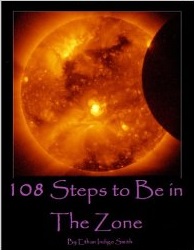

108 steps to be in the zone - ethan indigo smithWant to learn more about the metaphysical relationship of 108, and how it can help you live “in the zone”? Check out Ethan Indigo Smith’s book 108 Steps to Be in The Zone.

In this work, Ethan  provides a set of 108 meditative practices and steps toward self discovery and individual betterment, including techniques to develop balance, transmute sexual energy and better the self.

“Ethan’s work on meditation achieves a level of  rarefied  quality so necessary to metaphysical writing and teaching. The 108 Steps is simple and profound, and rich in details and analogies that bring the inner truths of diverse traditions into usefulness in the present time. Ethan’s writing…  lays out a system that can be used beneficially to reveal one’s inner nature and the truths we all seek sooner or later.” ~  Laura Peppard, Founder and Director of the Reno Psychic Institute.

“108 Steps to Be in The Zone” is available here on Amazon.com.


About the author:
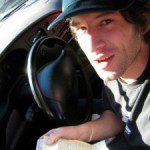

Ethan Indigo SmithAuthor, activist and Tai Chi teacher  Ethan Indigo Smith  was born on a farm in Maine and lived in Manhattan for a number of years before migrating west to Mendocino, California. Guided by a keen sense of integrity and humanity,  Ethan’s work is both deeply connected and extremely insightful, blending philosophy, politics, activism, spirituality, meditation and a unique sense of humour.

Ethan’s publications include:


For more information, visit Ethan on  Facebook  and check out  Ethan’s author page  on Amazon.com


For more information about yoga see http://nexusilluminati.blogspot.com/search/label/yoga  
- Scroll down through ‘Older Posts’ at the end of each section


Do you LIKE this uniquely informative site?
A genuinely incapacitated invalid maintains, writes, edits, researches, illustrates, moderates and publishes this website from a tiny cabin in a remote forest.
Now that most people use ad blockers and view these posts on phones and other mobile devices, sites like this earn an ever shrinking pittance from advertising sponsorship.
This site needs your help.
Like what you see? Please give anything you can -  
Contribute any amount and receive at least one New Illuminati eBook!
(You can use a card securely if you don’t use Paypal)
Please click below -


And it costs nothing to share this post on Social Media!
Dare to care and share - YOU are our only advertisement!


For further enlightening information enter a word or phrase into the random synchronistic search box @ the top left of http://nexusilluminati.blogspot.com


And see


 New Illuminati on Facebook - https://www.facebook.com/the.new.illuminati

New Illuminati Youtube Channel -  https://www.youtube.com/user/newilluminati/playlists

New Illuminati’s OWN Youtube Videos -  
New Illuminati on Google+ @ For New Illuminati posts - https://plus.google.com/u/0/+RamAyana0/posts

New Illuminati on Twitter @ www.twitter.com/new_illuminati


New Illuminations –Art(icles) by R. Ayana @ http://newilluminations.blogspot.com

The Her(m)etic Hermit - http://hermetic.blog.com


DISGRUNTLED SITE ADMINS PLEASE NOTE –
We provide a live link to your original material on your site (and links via social networking services) - which raises your ranking on search engines and helps spread your info further!

This site is published under Creative Commons (Attribution) CopyRIGHT (unless an individual article or other item is declared otherwise by the copyright holder). Reproduction for non-profit use is permitted & encouraged - if you give attribution to the work & author and include all links in the original (along with this or a similar notice).

Feel free to make non-commercial hard (printed) or software copies or mirror sites - you never know how long something will stay glued to the web – but remember attribution!

If you like what you see, please send a donation (no amount is too small or too large) or leave a comment – and thanks for reading this far…

Live long and prosper! Together we can create the best of all possible worlds…


From the New Illuminati – http://nexusilluminati.blogspot.com

Wednesday, 14 December 2016

The Most Powerful Exercise to Purify and Rejuvenate the Body and Mind


The Most Powerful Exercise to Purify and Rejuvenate the Body and Mind


by Shems Heartwell


The way you breathe is the way you live. Breathing is absolutely essential to life, but it's often overlooked as a necessity for good health. Full, free breathing is one of the most powerful keys to enhancing physical, emotional, and spiritual wellbeing.

Breathing fully and freely is our birthright. If you watch a baby breathe, you will see the beauty and simplicity of flow in the body. With each inhale, the baby's belly fills with air like a balloon, the pelvis rocks, the legs open, the chest rises and then falls, like swells across the ocean. This is natural, oceanic full-body breathing. It is the way we were meant to breathe.

Breathing effortlessly, a baby lives fully and freely in the now, in the expansiveness of the moment. There is no past to remember, no future to plan for or worry about. Each breath is a process of receiving from the universe and giving back to it. With each inhale, she receives and takes life in. With each exhale, she lets go and gives back. She is in touch with and part of the essential rhythm of life.


"Full, free breathing is one of the most powerful keys to enhancing physical, emotional, and spiritual wellbeing."


The baby doesn't know or do this consciously, but simply experiences an inherent peace, joy, and connectedness with all things. Of course, a baby will also experience needs and be heavily influenced by the environment that she is in. She will have emotional outbursts or cries for attention, but what is important to notice is how easily a baby will settle back into a relaxed state of calm and peace. Much like animals, children have a great capacity for resilience. In one moment they may be screaming and then after a brief reassuring glance or embrace, settle back into a deep peace and calm.

Over time, the child absorbs and accumulates the tensions and stresses of their family and learns behaviors from their environment. As we each experience the joys, challenges, and traumas of life, we begin to anticipate and react from our past experiences of pleasure and pain. Unfortunately, we lose the freedom and expansiveness that were natural at birth. We become afraid of disapproval, punishment, or abandonment. We experience unpleasant feelings that we don't know how to handle.

As a result, we begin to contract more often or even shut down. We learn to "control" ourselves, to "be good," to receive positive attention. We sacrifice our desires for the approval of others. To control ourselves in this way, we unconsciously tighten our muscles and restrict our breathing. We discover that the less we breathe, the less we feel--and the easier it is to get through the challenges and difficulties of modern life. Over time, this process develops habitual unconscious reactions that lock up the body and prevent the full expression of both pleasure and pain. The essential flow of life force energy becomes kinked like a hose and every functioning system in the body will eventually degrade faster.

As adults, many people tend to breathe small and shallow, mostly in the chest, with little visible movement. To make matters worse, most people contract and literally stop breathing for short periods during stressful or mentally focused situations. These periods of contraction and breath holding create a low-grade suffocation in the body. Suffocation leads to suffering. The lack of oxygen and increased tension hinders the flow of blood, nutrients, and vital energy.


"When we constrict or stop our breath, we lose touch with what is happening in the present moment."


When we constrict or stop our breath, we lose touch with what is happening in the present moment--with how magical, pleasurable, and wonderful it is just to be alive. Instead, we focus too much in the head and get stuck in the past and the future. Our minds race with thoughts--worrying, figuring out, and planning. We lose the freedom, joy, and expansiveness that are natural when we are relaxed in our breath and connected to our body awareness.

Miraculously, by directing your consciousness back to your breathing and learning to work with it, you can regain what has been lost. You can learn to let go of patterns of worry and tension, which hold you back, and return to natural, oceanic, full-body breathing. Like a baby, you can experience the full feeling, possibility, and connection of each moment.


The Art of Conscious Breathing


Bell Nell by R. Ayana As you become aware of your breath and work with it consciously, you make a direct link to your autonomic nervous system, gaining access to a part of yourself that usually functions outside of conscious awareness.

It is no accident that many meditation techniques are based on breathing. As our breathing gets fuller and deeper, we can feel ourselves softening, opening, getting more spacious inside.

The breath takes us into our very core. There is a reason that in many languages and many sacred texts, the word for breath also means soul or spirit: psyche in Greek, anima in Latin, ruach in Hebrew and the "ha" in aloha means the sacred breath of life within us all, or the spirit of the Creator that breathes life into all living beings and joins us all as one.

As you lengthen and deepen the breath in and out, you can feel a connection between the inside and the outside. Through our breathing, it is possible to feel connected with all living beings. When I first experienced full-body breathing myself, I discovered what true relaxation feels like and a genuine sense of oneness. Before I became a breathing enthusiast, I had little awareness of how much tension there was in my body. When I tried to take a full deep breath, it was actually difficult to allow my belly and solar plexus to relax and expand. I was surprised by this. With so many years of swimming, mountain biking, surfing, and playing sports, I had not learned how to breathe properly. No wonder I was easily irritable, anxious, and often nervous. At age 18, it felt like my conscious life began. All my social and academic struggles radically transformed with the introduction of breathing through my first yoga teachers. Within a few months, I went from being a struggling frustrated student to a focused and confident learner.

Breathing is regenerative and restorative. It can cleanse us of toxins that have built up in the body and the mind. It can help rid us of worries and tensions and bring us back to our true nature of relaxed openness and connection. This most basic and essential of all our activities can also be the most transformative. Many times I have felt tired and unmotivated, with a lot to accomplish; yet, with only a few minutes of breathing, I can feel refreshed and energized.


"Breathing is regenerative and restorative. It can cleanse us of toxins that have built up in the body and the mind."


Beyond the baseline of natural breathing, there is also an art to cultivating your breath in more powerful ways. The teachings of yoga, martial arts and many other cultural and spiritual systems have deep roots in breath cultivation. According to many of these ancient teachings, breathing generates electromagnetic energy, or life force energy--commonly called Prana, Qi or Mana--which can heal your body and deepen your spiritual practices.

This is where the alchemy comes in, where conscious breathing becomes life changing. For a person who experiences a great deal of stress and tension, focusing on breathing and relaxing is the most effective way to recalibrate their nervous system. The autonomic nervous system can get stuck in a chronic sympathetic response that is wound up and hyper-fearful. In this case, the digestive system gets less blood supply and the body is on alert, commonly known as fight-or-flight response mode. Many people in fast-paced society are operating from a constant stress response in their autonomic nervous system. Breathing is a way of dismantling the habitual stress responses by establishing a deeper trust and embodied presence in each moment.

Chronic stress responses cause an overactive mind, poor health, and a disconnection from the natural cycles and interconnectedness with all of life. When you free up your breathing, you become brighter, more healthy and resilient. Every experience in life can become more harmonious and meaningful when you are in tune with the power and nourishment of consciously breathing.

From the perspective of the world's great spiritual traditions, our breath not only brings needed oxygen and other gases to the physical body, but it is a major way that we release accumulated stress, emotional tension, and toxins. When we are conscious and intentional with our breathing, the finer energies (Prana, Qi, or Mana) needed to help nourish our bodies will invigorate and activate the energy flow within our subtle and energetic bodies. With enough accumulation of energy and meditative absorption, new frontiers of awareness light up and the finer spiritual dimensions of interconnection emerge. Whatever we may believe about our soul and spirit, our breath, and how we breathe, is intimately connected with all aspects of our being.


Breathing Exercise: The Complete Breath


The first phase in healthy breathing is to become conscious of how we actually breathe. Noticing whether we are relaxed and allowing the breath to naturally deepen into the lower belly or if the breath is shallow and primarily in the upper chest area. The diaphragm, which is located near the solar plexus, is a vital gateway of the breath. In a complete and healthy breath, the diaphragm easefully expands downward, along with the lower lobes of the lungs as if being drawn by the earth into your pelvis when you inhale. For this to easily happen, your body and emotional state need to be relaxed and feel safe. If you have a lot of tension or wound-up emotional stress, your diaphragm will be tight, as if locked in place.

Start by sitting with a straight spine. Allow each breath to gently deepen into your belly and roll up from the inside of your spine, creating a bit of lift and traction with each inhale as the air fills the upper lungs. On the exhale, let your body deflate and round forward a little as the air empties out of you, with a gentle squeezing of the abdomen at the end of the exhale. Repeat this wave-like breathing for a few minutes. Notice how easeful and natural it is to feel the breath roll through you from your pelvis up to your neck.


Expand Your Breath Capacity


The second phase is to begin to exaggerate and expand your breath capacity. Here you want to focus on using each inhale to stretch deeper into your pelvis and up fully into your ribs. Exaggerating your breathing releases structural tension and emotional blockages in the body. It also makes more space in your physical body, which allows your natural unconscious breathing to be more full and relaxed. Much like yoga postures, the breath can be used to stretch the body from the inside out. Many yogis say that Pranayama (yogic breathing practices) are the origin of the yoga postures and the very core of a true yoga practice.

Put one hand on your lower belly and one hand on your upper chest. Fill the lower hand with a large expanding breath and then continue expanding up into your upper hand, flaring the ribs out and stretching open in your entire chest area. Always focus on feeling the breath move not only in the front but also in the back of your body. Exaggerated breathing is a way of stretching yourself open from the inside out. This type of breathing can also be called structural breathing, as it restructures your posture by making more space throughout your torso, with the complete use of your lung capacity. This practice will also massage your organs and release any congestion throughout your intestines and liver.


Breathe to Purify and Cleanse


The third phase is to purify and cleanse the body with the exhale. When stretching and opening the body with large deep breaths, you allow for areas of congestion to be discharged through the blood and lungs. The lungs are a major organ of elimination, and the most significant way that we alkalize our bodies is through our breathing. In this phase, you focus on opening your mouth and emptying out your lungs on the exhale, encouraging the release of stagnant air, particulate, and carbon dioxide. Open your jaw wide and allow for a large volume of air to move through your trachea. You can also try adding a "HA" sound as a way to vibrate and increase the opening of your heart and clearing of stagnant energy.


"The cleansing breath is a powerful practice to release stress and emotional build up."


The cleansing breath is a powerful practice to release stress and emotional build up. Whenever we have an emotional release, it comes out in some way through the mouth. Whether it be crying, laughing or anger, the mouth and breath play a major role in the experience. Focusing on clearing your lungs with a large yawn-like exhale will refresh and clear your body physically, emotionally, and spiritually.

The next phase is to turn your attention inward with each breath and feel deeply into your body. The life force energy is directed by where your attention goes. Turning your attention inward and lighting up your internal feeling perception is a powerful way to heal your body and awaken spiritual awareness. As you feel and perceive your heart beating and the circulation throughout your body, you begin to accumulate the life force energy. Here is where the foundation of meditation is built. Your breath awakens inner perception, which builds concentration and energy, which leads to the remembrance and experience of profound spiritual connection.

With consistency of these simple breathing practices, there will be a gradual increase in your energy, clarity, and peace of mind. As the body receives more oxygen and life force energy, it will self-regulate and regenerate. Then you will begin to store up this vital energy; you might notice an increased sex drive and even feel more emotional. Keep building this energy and welcome more flow into your life. Let your breathing open you up all the way and move you through any of the challenges you face.

Whenever you have a few moments to pause or wait for someone, use it as an opportunity to focus on your breath. If you experience doubt, reaction or fear, you always have your breath to guide you into and through what you feel. No matter how old you are or feel, how you breathe will lead the way you live.

Breathe more, love more, laugh more!


Why Breathwork Matters: Breathing Allows Your Mind To Liberate Itself From Ego


When the mind begins to look inward, away from ego, it becomes self-conscious and this leads to liberation. When the mind enters this state of serenity it embraces feelings of love, vigour, patience, concentration and memory. Do-it-anytime breathing exercises remove allow the mind to enter this state while releasing tension, anger, annoyance, fear and exhaustion. Since breathing is something we can control and regulate, it is a useful tool for achieving a relaxed and clear state of mind.

Research performed by a scientist at Barrow Neurological Institute at St. Joseph's Hospital and Medical Center has shown that controlled breathing at a slowed rate can significantly reduce feelings of pain.

The Stimulating Breath, The 4-7-8 Breathing Exercise (also called the Relaxing Breath), and Breath Counting. Try each and see how they affect your stress and anxiety levels.

Exercise 1: The Stimulating Breath (also called the Bellows Breath)


The Stimulating Breath is adapted from a yogic breathing technique. Its aim is to raise vital energy and increase alertness.


  • Inhale and exhale rapidly through your nose, keeping your mouth closed but relaxed. Your breaths in and out should be equal in duration, but as short as possible. This is a noisy breathing exercise.
  • Try for three in-and-out breath cycles per second. This produces a quick movement of the diaphragm, suggesting a bellows. Breathe normally after each cycle.
  • Do not do for more than 15 seconds on your first try. Each time you practice the Stimulating Breath, you can increase your time by five seconds or so, until you reach a full minute.

If done properly, you may feel invigorated, comparable to the heightened awareness you feel after a good workout. You should feel the effort at the back of the neck, the diaphragm, the chest and the abdomen. Try this breathing exercise the next time you need an energy boost and feel yourself reaching for a cup of coffee.


Exercise 2: The 4-7-8 (or Relaxing Breath) Exercise

This exercise is utterly simple, takes almost no time, requires no equipment and can be done anywhere. Although you can do the exercise in any position, sit with your back straight while learning the exercise. Place the tip of your tongue against the ridge of tissue just behind your upper front teeth, and keep it there through the entire exercise. You will be exhaling through your mouth around your tongue; try pursing your lips slightly if this seems awkward.


  • Exhale completely through your mouth, making a whoosh sound.
  • Close your mouth and inhale quietly through your nose to a mental count of four.
  • Hold your breath for a count of seven.
  • Exhale completely through your mouth, making a whoosh sound to a count of eight.
  • This is one breath. Now inhale again and repeat the cycle three more times for a total of four breaths.

Note that you always inhale quietly through your nose and exhale audibly through your mouth. The tip of your tongue stays in position the whole time. Exhalation takes twice as long as inhalation. The absolute time you spend on each phase is not important; the ratio of 4:7:8 is important. If you have trouble holding your breath, speed the exercise up but keep to the ratio of 4:7:8 for the three phases. With practice you can slow it all down and get used to inhaling and exhaling more and more deeply.


This exercise is a natural tranquilizer for the nervous system. Unlike tranquilizing drugs, which are often effective when you first take them but then lose their power over time, this exercise is subtle when you first try it but gains in power with repetition and practice. Do it at least twice a day. You cannot do it too frequently. Do not do more than four breaths at one time for the first month of practice. Later, if you wish, you can extend it to eight breaths. If you feel a little lightheaded when you first breathe this way, do not be concerned; it will pass.

Once you develop this technique by practicing it every day, it will be a very useful tool that you will always have with you. Use it whenever anything upsetting happens - before you react. Use it whenever you are aware of internal tension. Use it to help you fall asleep. This exercise cannot be recommended too highly. Everyone can benefit from it.

Exercise 3: Breath Counting

If you want to get a feel for this challenging work, try your hand at breath counting, a deceptively simple technique much used in Zen practice.

Sit in a comfortable position with the spine straight and head inclined slightly forward. Gently close your eyes and take a few deep breaths. Then let the breath come naturally without trying to influence it. Ideally it will be quiet and slow, but depth and rhythm may vary.

  • To begin the exercise, count "one" to yourself as you exhale.
  • The next time you exhale, count "two," and so on up to "five."
  • Then begin a new cycle, counting "one" on the next exhalation.

Never count higher than "five," and count only when you exhale. You will know your attention has wandered when you find yourself up to "eight," "12," even "19."


Try to do 10 minutes of this form of meditation.


For more information about yoga see http://nexusilluminati.blogspot.com/search/label/yoga  
- Scroll down through ‘Older Posts’ at the end of each section


Do you LIKE this uniquely informative site?
A genuinely incapacitated invalid maintains, writes, edits, researches, illustrates, moderates and publishes this website from a tiny cabin in a remote forest.
Now that most people use ad blockers and view these posts on phones and other mobile devices, sites like this earn an ever shrinking pittance from advertising sponsorship.
This site needs your help.
Like what you see? Please give anything you can -  
Contribute any amount and receive at least one New Illuminati eBook!
(You can use a card securely if you don’t use Paypal)
Please click below -


And it costs nothing to share this post on Social Media!
Dare to care and share - YOU are our only advertisement!


For further enlightening information enter a word or phrase into the random synchronistic search box @ the top left of http://nexusilluminati.blogspot.com

And see


 New Illuminati on Facebook - https://www.facebook.com/the.new.illuminati

New Illuminati Youtube Channel -  https://www.youtube.com/user/newilluminati/playlists

New Illuminati’s OWN Youtube Videos -  
New Illuminati on Google+ @ For New Illuminati posts - https://plus.google.com/u/0/+RamAyana0/posts

New Illuminati on Twitter @ www.twitter.com/new_illuminati


New Illuminations –Art(icles) by R. Ayana @ http://newilluminations.blogspot.com

The Her(m)etic Hermit - http://hermetic.blog.com


DISGRUNTLED SITE ADMINS PLEASE NOTE –
We provide a live link to your original material on your site (and links via social networking services) - which raises your ranking on search engines and helps spread your info further!

This site is published under Creative Commons (Attribution) CopyRIGHT (unless an individual article or other item is declared otherwise by the copyright holder). Reproduction for non-profit use is permitted & encouraged - if you give attribution to the work & author and include all links in the original (along with this or a similar notice).

Feel free to make non-commercial hard (printed) or software copies or mirror sites - you never know how long something will stay glued to the web – but remember attribution!

If you like what you see, please send a donation (no amount is too small or too large) or leave a comment – and thanks for reading this far…

Live long and prosper! Together we can create the best of all possible worlds…


From the New Illuminati – http://nexusilluminati.blogspot.com