"All the World's a Stage We Pass Through" R. Ayana

Showing posts with label medicine. Show all posts

Thursday, 9 June 2016

Nearly all of our medical research is wrong


Nearly all of our medical research is wrong


https://qzprod.files.wordpress.com/2016/01/testtubes.jpg?quality=80&strip=all&w=1600

So many negative results we never hear about. (Reuters/Danish Siddiqui)

by Danielle Teller Physician and researcher


Something is rotten in the state of biomedical research. Everyone who works in the field knows this on some level. We applaud presentations by colleagues at conferences, hoping that they will extend the same courtesy to us, but we know in our hearts that the majority or even the vast majority of our research claims are false.

When it came to light that the biotechnology firm Amgen tried to reproduce 53 “landmark” cancer studies and managed to confirm only six, scientists were “shocked.” It was terrible news, but if we’re honest with ourselves, not entirely unexpected. The pernicious problem of irreproducible data has been discussed among scientists for decades. Bad science wastes a colossal amount of money, not only on the irreproducible studies themselves, but on misguided drug development and follow-up trials based on false information. And while unsound preclinical studies may not directly harm patients, there is an enormous opportunity cost when drug makers spend their time on wild goose chases. Discussions about irreproducibility usually ends with shrugs, however—what can we do to combat such a deep-seated, systemic problem?

Lack of reproducibility of biomedical research is not the result of an unusual level of mendacity among scientists. There are a few bad apples, but for the most part, scientists are idealistic and fervent about the pursuit of truth. The fault lies mainly with perverse incentives and lack of good management. Statisticians Stanley Young and Alan Karr aptly compare biomedical research to manufacturing before the advent of process control.

Academic medical research functions as a gargantuan cottage industry, where the government gives money to individual investigators and programs—$30 billion annually in the US alone—and then nobody checks in on the manufacturing process until the final product is delivered. The final product isn’t a widget that can be inspected, but rather a claim by investigators that they ran experiments or combed through data and made whatever observations are described in their paper. The quality inspectors, whose job it is to decide whether the claims are interesting and believable, are peers of the investigators, which means that they can be friends, strangers, competitors, or enemies.

Lack of process control leads to shoddy science in a number of ways. Many new investigators receive no standardized training. People who work in life sciences are generally not crackerjack mathematicians, and there’s no requirement to involve someone with a deep understanding of statistics. Principal investigators rarely supervise the experiments that their students and post-docs conduct alone in the lab in the dead of night, and so they have to rely on the integrity of people who are paid slave wages and whose only hope of future success is to produce the answers the boss hopes are true.

The peer review process is corrupted by cronyism and petty squabbles. These are some of the challenges inherent in a loosely organized and largely unregulated industry, but these are not the biggest reasons why so much science is unreproducible. That has more to do with dumb luck.

Randall Munroe has a wonderful cartoon at xkcd that neatly summarizes the reason why most published research findings are false. In the cartoon, scientists ask whether jelly beans cause acne and determine that they don’t. They then proceed to do subgroup analyses on 20 different colors of jelly beans, and excitedly announce that green jelly beans are associated with acne “with 95% confidence!” This is a reference to the traditional gold standard for whether or not a research finding is considered to be statistically significant. Over the last century, scientists have somewhat arbitrarily agreed that if something has only a 1-in-20 chance of happening purely by chance, then when that thing happens, we will consider it to be meaningful.

For instance, if the first time you asked someone out on a date that person declined in favor of attending a nephew’s birthday party, you might think of it as a coincidence. If the same excuse came up a second time, you might find it strange that the birthday parties always fell on Friday nights. By the third time, you would have to sadly conclude that there was a less than 1-in-20 chance that yet another nephew had a Friday night birthday party, and that the pattern of rejection was statistically significant.

One could quibble about whether or not 95% confidence is high enough to be truly confident. We wouldn’t fly on planes that had a 5% chance of crashing, but we would probably go on a picnic if there were a 5% chance of rain. Whether it’s the right number for scientific studies isn’t clear, but it is clear that this cutoff for statistical significance should not apply to multiple testing or multiple modeling.

The jelly bean cartoon illustrates this point nicely. If the scientists had found an association between jelly beans and acne on the first try, they might reasonably think that it wasn’t just chance—maybe jellybeans cause acne, or maybe acne causes jelly bean cravings. After testing 20 colors of jelly beans, though, the 1-in-20 chance of finding an association by pure chance becomes meaningless. If you test enough jelly beans, you are bound to find an association by pure chance, and that association will be spurious and irreproducible, just like many scientific studies.

When scientists run experiments in labs or model large datasets in multiple different ways, they generate heaps and heaps of negative data, but these don’t get reported. All that gets published is the 100th experiment or analysis that “worked.” Furthermore, scientists are rarely required to state upfront how they will measure primary outcomes. To understand why this is a problem, imagine that I claim to have a magic coin. I tell you that I’m going to flip it 10 times, and if it is magic, it will it come up heads every single time. That’s a pretty good study. But what if instead I flip my coin a 1,000 times and comb through the data for patterns. When I find any pattern in a series of 10 flips, and I tell you that the probability of that sequence occurring by luck alone is less than one in 1,000. That’s correct, but are you impressed by the magic of my coin?

There are some potential solutions to the irreproducibility of medical science, but they would require an extensive overhaul of the system. For observational studies, Young and Karr have proposed sensible measures, like making data publicly available, recording data analysis plans upfront, and splitting the data to be analyzed into test and validation sets. For basic science, public money could be used to set up large testing facilities where experiments can be run by impartial technicians and all results, positive or negative, can be made available to the scientific community. If such changes were implemented, however, the number of published studies would plummet precipitously. Journals would go out of business and so would most scientists, unless new criteria were devised for doling out grant money and handing out promotions.

Some areas of research would be invalidated if everyone had access to negative studies, and researchers would be discredited. The biomedical research community isn’t ready for these kinds of painful changes. One piece of evidence for this is that nobody knows which 47 studies Amgen was unable to reproduce. To gain the cooperation of the principal investigators of those studies, Amgen was forced to sign non-disclosure agreements about the results of their inquiries. It seems that the authors of the “landmark” cancer studies knew that they would be found out, and unsurprisingly, setting the record straight wasn’t high on their list of priorities.


Study Suggests Medical Error Is Third Leading Cause of Death in US


by Jackie Syrop


Medical error is the third-leading cause of death and Johns Hopkins University School of Medicine researchers are calling for better reporting on death certificates to help understand the scale of the problem and how to tackle it.

Medical error is the third-leading cause of death, after heart disease, and cancer, in the United States, according to a study published in BMJ. As a result of the findings, Johns Hopkins University School of Medicine researchers are calling for better reporting on death certificates to help understand the scale of the problem and how to tackle it.

Martin Makary, MD, MPH, professor of surgery, and Michael Daniel, a research fellow, say their research shows that US death certificates are not useful for acknowledging medical error because they rely on assigning an International Classification of Disease (ICD) code to the cause of death. If a cause of death is not associated with an ICD code, it is not captured; thus, if human and system factors are associated with a death, that is not reflected on the death certificate.

“The medical coding system was designed to maximize billing for physician services, not to collect national health statistics, as it is currently being used,” explained Makary.

Medical error is defined as an unintended act either of omission or commission or one that does not achieve its intended outcome; the failure of a planned action to be completed as intended (an error of execution); the use of a wrong plan to achieve an aim (an error of planning); or a deviation from the process of care that may or may not cause harm to the patient. This kind of error can be at the individual or system level.

Makary and Daniel used death rate data from 4 studies from 2000 to 2008, including one from the HHS’ Office of the Inspector General and the Agency for Healthcare Research and Quality. Then they used hospital admission rates from 2013 and extrapolated that based on 35,416,020 hospitalizations, there were 251,454 deaths from medical error, which translates to 9.5% of all deaths each year in the United States.

Comparing their estimate to the CDC’s list of the most common causes of death in the United States, the authors calculated that medical error is the third most common cause of death, surpassing respiratory disease—the CDC’s currently listed third leading cause of death.

Makary noted that top-ranked causes of death as reported by the CDC drive the nation’s research funding and public health priorities. While cancer and heart disease get a lot of attention, medical errors do not, and thus do not get deserved funding. More research is needed, they say, because although we cannot eliminate human error, we can better measure the problem to design safer systems mitigating its frequency, visibility, and consequences.


For information about medical malpractice see http://nexusilluminati.blogspot.com/search/label/medical%20malpractice  
- Scroll down through ‘Older Posts’ at the end of each section


Do you LIKE this uniquely informative site?
Hours of effort by a genuinely incapacitated invalid are required every day to maintain, write, edit, research, illustrate, moderate and publish this website from a tiny cabin in a remote forest.
Now that most people use ad blockers and view these posts on phones and other mobile devices, sites like this earn an ever shrinking pittance from advertising sponsorship. This site needs your help.
Like what you see? Please give anything you can -  
Contribute any amount and receive at least one New Illuminati eBook!
(You can use a card securely if you don’t use Paypal)
Please click below -


Spare Bitcoin change?


And it costs nothing to share this post on Social Media!
Dare to care and share - YOU are our only advertisement!


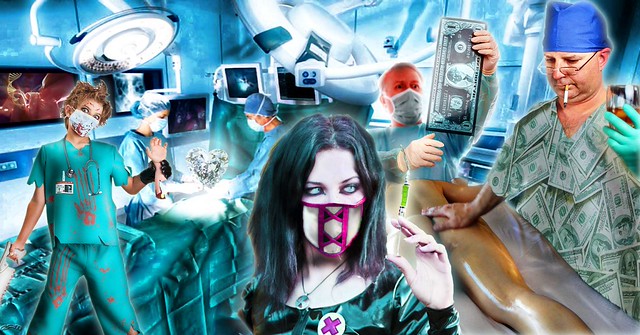
Xtra Image by R. Ayana - https://c2.staticflickr.com/2/1543/26054219630_6b187d9d26_k.jpg  


For further enlightening information enter a word or phrase into the random synchronistic search box @ the top left of http://nexusilluminati.blogspot.com


And see


 New Illuminati on Facebook - https://www.facebook.com/the.new.illuminati

New Illuminati Youtube Channel -  https://www.youtube.com/user/newilluminati/playlists

New Illuminati’s OWN Youtube Videos -  
New Illuminati on Google+ @ For New Illuminati posts - https://plus.google.com/u/0/+RamAyana0/posts

New Illuminati on Twitter @ www.twitter.com/new_illuminati


New Illuminations –Art(icles) by R. Ayana @ http://newilluminations.blogspot.com

The Her(m)etic Hermit - http://hermetic.blog.com


DISGRUNTLED SITE ADMINS PLEASE NOTE –
We provide a live link to your original material on your site (and links via social networking services) - which raises your ranking on search engines and helps spread your info further!

This site is published under Creative Commons (Attribution) CopyRIGHT (unless an individual article or other item is declared otherwise by the copyright holder). Reproduction for non-profit use is permitted & encouraged - if you give attribution to the work & author and include all links in the original (along with this or a similar notice).

Feel free to make non-commercial hard (printed) or software copies or mirror sites - you never know how long something will stay glued to the web – but remember attribution!

If you like what you see, please send a donation (no amount is too small or too large) or leave a comment – and thanks for reading this far…

Live long and prosper! Together we can create the best of all possible worlds…


From the New Illuminati – http://nexusilluminati.blogspot.com

Thursday, 28 January 2016

The Fallacious Germ Theory


The Fallacious Germ Theory

germ theory terrain theory


The Germ Theory is the belief that germs are the primal cause of disease.  Nutrition and exercise play a small role, but it’s really the all-pervading germ that makes you sick.  That’s why we “catch cold” thereby expelling the responsibility outside ourselves.  It’s reassuring, I mean, at least you didn’t do anything wrong.

With this mistaken ideology we lose our innate power to heal ourselves, what Hippocrates called vis medicatrix naturae.  After all, since it was something outside of your body that made you sick.  In order to get well you must also seek help from an outside force, namely vaccines and doctors in general.

Luckily we don’t live in a bizarro reality like that.  We don’t “catch disease”, we create it.  It is not a sick person’s fault for being sick, since they never learned in school how the human body actually operates, but ultimately the responsibility lies with the individual.

germsGerms do not cause disease.  The precautions we take to eliminate germs do.  These include but are not limited to: antibiotics, disinfectants, food irradiation, hand sanitizers, and vaccines which are designed to protect us from the nefarious germ.  We also get sick from our compromised food supply, malnutrition,  and inability to recognize what the human body needs.

When we think we “get sick”, what is really happening is our bodies are attempting to discard toxic material.  “Getting sick” is allowing the body to detoxify itself from toxemia (toxic blood), which is caused by living a toxic life.

Germs do not cause disease, disease causes germs.  Germs are the body’s scavengers, the garbage men of your cells.  If they are present that means that the conditions where they lie are unfavorable.  Change the conditions of the ‘terrain’, and the germs will morph back into their healthy state.

It is easier for us to put the blame on an outside invader, thereby shifting the responsibility outside of ourselves.  But health can only come from within.  As Antoine Béchamp said: “Disease is born of us and in us.”  That same is true for health.

The immune system is a conceptual bodily system we sort of just made up.  It doesn’t actually exist, at least not in the way we think of it.  The respiratory system, digestive system, circulatory system, nervous system, lymphatic system, etc, these are all clearly distinct systems of the human body. Where is the immune system?  Can you point to it?  What composes it?  If anything, it’s the lymphatic system that comes closest to being what we call the “immune system”, as it is responsible for detoxing  the body from toxins and waste material.


Germ Fiction 
Germ Fiction


We’ve learned that the healthier a person is the less likely they are to get sick.  This aspect of the immune system is correct, but the naming of it is all wrong.  Immunity does not exist.  Germs don’t invade your body and cause disease, so “building up immunity” and “strengthening your immune system” to ward off those nasty germs is a lost cause.   We can only build our health by providing the body with what it needs, and steering clear of chemicals, vaccines, medicines, and other magical allopathic potions that are supposed to provide health but only cause more iatrogenic deaths.

Science is like a new religion.  Once originally called ‘Natural Philosophy’, this new form of worship disregards common sense for the appeal to the authority and other logical fallacies.  There is no longer any bit of philosophy in it.  The love of wisdom has been lost.  Science is no longer “science” when funding biases dominate our scientific community.  The almighty dollar is the universally accepted icon of worship and in scientism the shareholders are the Gods.


holy cross church


Doctors are the new priests and holy communion has been replaced with vaccinations.  The scientific method is swapped out for blind faith in the system.  Doctors tell us we can’t obtain health without their injections and injunctions.  Perhaps we should ignore these authority figures and make up our own mind based on intuition and common sense instead of blind faith and dogma.

Most people who believe in science also believe that germs make us sick and defenses must be ‘built up’ to keep us safe.  We mistakenly think exposing ourselves to these ‘germs’ builds our defenses, antibodies, etc, thereby ‘strengthening our ‘immune system’. But, there is no “immune system”.  There is only health, and we build health by providing salubrious conditions for the human body, not by exposing ourselves to poison in hopes that it will ‘make our immune system stronger’.   People who seem to have better ‘immune systems’ than others are just healthier in general, and the healthier you are, the less likely you are to get sick.  It’s as simple as that.

In 1864, French chemist Louis Pasteur fathered “The Science of Bacteriology” and “The Germ Theory of Disease Causation” by demonstrating the existence of various micro-organisms— and concluding that these germs cause pathogenic changes in living cultures within the laboratory setting.

The germ theory states that diseases are due solely to invasion by specific aggressive micro- organisms. A specific germ is responsible for each disease, and micro-organisms are capable of reproduction and transportation outside of the body.  With the germ theory of disease, no longer did we have to take responsibility for sickness caused by our own transgressions of the laws of health. Instead, we blamed germs that invade the body.

The germ theory effectively shifted our personal responsibility for health and well-being onto the shoulders of the medical profession who supposedly knew how to kill off the offending germs. Our own personal health slipped from our control.

Almost everyone in the Western world has been nurtured on the germ theory of disease: that disease is the direct consequence of the work of some outside agent, be it germ or virus.   

-Arthur M. Baker


germ theory is wrong


It was Antoine Béchamp (1816-1908), a contemporary of Pasteur, who discovered the true nature of germs.  He found they were pleomorphic (capable of changing from one type of organism to another).  With this theory, it is the conditions where germs live that is important (the terrain), instead of the germ itself.

As Florence Nightingale put it: “There are no specific diseases, there are specific disease conditions”.


Pasteur himself, in one of the most quoted deathbed statements perhaps of all time, recanted the Germ Theory and admitted that his rivals had been right, and that it was not the germ that caused the disease, but rather the environment in which the germ was found: “Bernard acail raison; le terrain c’est tout, le germe c’est rien.”  He was referencing  his nemesis Claude Bernard, a proponent of the Terrain Theory and contemporary of Antoine Béchamp.


Howard Hencke, in his 1995 book The Germ Theory: A Deliberate Aberration, notes that it was critical for the new medical industry, “… to indoctrinate the public in the Western world with the belief that the salvation from all, especially physical ailments, lay outside the individual’s system and responsibility, because it was caused by external factors…and that chemical remedies (drugs) will keep him free from disease, independent of his own vigilant responsibility.”

Some 17 years before Pasteur, the most famous nurse in history, Florence Nightingale, put it like this:

“Diseases are not individuals arranged in classes, like cats and dogs, but conditions growing out of one another. Is it not living in a continual mistake to look upon diseases as we do now, as separate entities, which must exist, like cats and dogs, instead of looking upon them as conditions, like a dirty and a clean condition, and just as much under our control; or rather as the reactions of kindly nature, against the conditions in which we have placed ourselves?   I was brought up to believe that smallpox, for instance, was a thing of which there was once a first specimen in the world, which went on propagating itself, in a perpetual chain of descent, just as there was a first dog, (or a first pair of dogs) and that smallpox would not begin itself, any more than a new dog would begin without there having been a parent dog.   Since then I have seen with my own eyes and smelled with my own nose smallpox growing up in first specimens, either in closed rooms or in overcrowded wards, where it could not by any possibility have been ‘caught’, but must have begun.   I have seen diseases begin, grow up, and pass into one another. Now, dogs do not pass into cats.”

In other words, certain diseases, like smallpox for instance, did not originate from one original specimen.  The AIDS virus didn’t come from one sick monkey.  The different symptoms our bodies display are falsely categorized into different diseases. Disease cannot be classified into categories since they are all the same thing.  They are the body’s attempts to heal, manifesting themselves in different ways depending on the person and the unfavorable conditions they find themselves in.

If you have the flu or a fever, your cellular terrain has been compromised.  Your body’s temperature rises because it detoxes itself more efficiently at higher temperatures.   Hippocrates once said  “Give me fever and I can cure every disease.”  He understood that what we call ‘disease’ today in Western Medicine, is really the body’s attempt to heal.


health


We don’t ‘catch cold’, we create sickness.  As Béchamp said, “Disease is born of us and in us.”

This pathological zeitgeist of allopathy and pseudoscience is sheer madness. We can listen to the ‘trained professionals’ -who also suggest we cut off a section of our penis– or we could listen to common sense and intuition, as well as investigate the suppressed medical literature.  Onward we go.

“Had it not been for the mass selling of vaccines, Pasteur’s germ theory of disease would have collapsed into obscurity.”  – E. Douglas Hume


vaccines


Vaccination did not save us from deadly diseases.  All ‘diseases’ were in steep decline well before the vaccine was introduced.

We can forget about the nefarious germs and trying to kill them all by whatever means necessary, but we should also remember not to crap where we eat. Cleanliness is next to godliness.  There is a big difference between being scared of germs and living a clean life.  Fear is employed by the authorities to manufacture consent.   Fear is the opposite of Love, and Love is ultimately knowledge.  Knowledge must be cultivated, free of bias and cognitive dissonance.


virchow


“If I could live my life over again, I’d devote it to proving that germs seek their natural habitat, disease tissue, rather than being the cause of disease tissue.”
-Dr. Rudolph Virchow, renowned scientist, considered the ‘Father of Pathology’


You could think of it like this; Mosquitoes seek the stagnant water, but don’t cause the pool to become stagnant.  It’s the same way with germs.


“Germs seek their natural habitat – diseased tissue – rather than being the cause of diseased tissue.”
-Antoine Béchamp


“if we see flies on a manure pile which do we think is more intelligent – to fight disease be swatting flies or to remove the pile of manure.”
-Dr. J. Baldor, Surgeon, Florida

It is more important to know what sort of person has a disease than to know what sort of disease a person has.
-Hippocrates


There was another theory at the time that actually made sense.  I’m talking about the Terrain Theory, or Pleomorphism, or the Cellular Theory of disease causation.  The idea that, instead of poisoning our bodies, like we would do with antibiotics(anti-life) to kill an ‘infection’, we would instead provide the right conditions for the body to heal itself, and forget about trying to kill everything in sight.


germ theory is bunk


Which one makes more sense to you?  Most healthy people live their lives according to the Terrain Theory just out of common sense.   Most people will never hear about this suppressed medical science, and will take the authority figure’s advice as sacrosanct truth.

It makes sense that if you are sick you probably shouldn’t consume poison.  Western medicine, in their infinite wisdom, begs to differ.  They think the germ is all that matters and it just needs to be eliminated.  But germs only thrive under certain conditions.

Perhaps we should just provide the right conditions for our body and if we do encounter one of these pernicious ‘germs’, we can rest assured because it won’t ‘stick’.  Using their own flawed and ambiguous terminology, you would be ‘immune’ to the ‘germs’.

So, what’ll it be?  Should we continue living in the flawed paradigm of disease-management by treating the symptom?  Or should we reject the belief system that passes for modern science and create HEALTH by addressing the root cause of the problem?

Treating the root cause of dis-ease with diet and lifestyle makes a lot of sense, but unfortunately suppressing the symptoms with drugs and surgery makes a lot of dollar$


organic food


Foolish the doctor who despises the knowledge acquired by the ancients.  
~Hippocrates

Whenever a doctor cannot do good, he must be kept from doing harm.
- Hippocrates


Natural forces within us are the true healers of disease.
- Hippocrates


gmo free


“Was the government to prescribe to us our medicine and diet, our bodies would be in such keeping as our souls are now.”
-      Thomas Jefferson, Notes on the State of Virginia

It is simply no longer possible to believe much of the clinical research that is published, or to rely on the judgment of trusted physicians or authoritative medical guidelines. I take no pleasure in this conclusion, which I reached slowly and reluctantly over my two decades as an editor of The New England Journal of Medicine. Marcia Angell, M.D.


The description of the disease seems to change according to the drug that’s being marketed.
- Ray Peat, PhD


iatrogenesis


“If the germ theory were founded on facts, there would be no living being to read what’s written.”
-      Dr. George White


“Disease is the crisis of purification of toxic elimination. Symptoms are the natural defenses of the body”
– Hippocrates – 460 bc


iatrogenetic death chart


Iatrogenesis is the technical term for ‘death by medicine’ In the U.S this is the third leading cause of death according to JAMA


“The most serious disorders may be provoked by the injection of living organisms into the blood…into a medium not intended for them may provoke redoubtable manifestations of the gravest morbid phenomena.”
– Bechamp

“…doctors fight the imaginary foe without ceasing. The people are so saturated with the idea that disease must be fought to a finish that they are not satisfied with conservative treatment. Something must be done, even if they pay for it with their lives, as tens of thousands do every year. This willingness to die on the altar of medical superstition is one very great reason why no real improvement is made in fundamental medical science.”
– Toxemia Explained 1926


health care


Again Dr. Tilden nails it:
“… every so-called disease is a crisis of Toxemia; which means that toxin has accumulated in the blood above the toleration point, and the crisis, the so-called disease – call it cold, flu, pneumonia, headache, or typhoid fever – is a vicarious elimination. Nature is endeavoring to rid the body of toxin. Any treatment that obstructs this effort at elimination baffles nature in her effort of self-curing.”


“Bacteria and parasites cannot cause disease processes unless they find their own peculiar morbid soil in which to grow and multiply.”  -Henry Lindlahr, MD


disease polio


Contrary to popular beLIEf, Vaccines did not save us from deadly disease.


Rene Dubos of the Rockefeller Institute: “Reasons why the germ theory became popular are: First, it fit neatly into the mechanistic theories of the universe that were popular in the nineteenth century. Second, it fit human nature. Man, apparently, ever ready to avoid responsibility and place causation outside himself, found an easy scapegoat in the bad little organisms that flew about and attacked him. After all, it wasn’t too long ago that evil spirits had been responsible for man’s ills. Third, it fit ‘commercial nature’ When we place causation outside ourselves, we create vast armies of attackers and defenders, assailants and protectors.

The reason why Béchamp was mainly ignored and Pasteur elevated to hero status is to be found in the different personalities and the lure of commercial success. Bechamp was a dedicated scientist and researcher, but he had no skills at politics and ass-kissing. Pasteur, on the other hand, was an expert at both. He ingratiated himself with the rich and powerful, and even became a favorite of French royalty.”


graph England Measles


“Do not automatically believe in anything , especially what you are told. Convince yourself of something by observing it with your own eyes. And, after having perceived a new fact, do not lose sight of it again until it is fully explained.”
— Wilhelm Reich

disease


People have been educated to be terrified of bacteria and to believe implicitly in the idea of contagion: that specific, malevolently-aggressive disease germs pass from one host to another. They also have been programmed to believe that healing requires some powerful force to remove whatever is at fault. In their view, illness is hardly their own doing.

The ‘germ era’ helped usher in the decline of hygienic health reform in the 19th century and, ironically, the people also found a soothing complacency in placing the blame for their ill health on malevolent, microscopic ‘invaders’, rather than facing responsibility for their own insalubrious lifestyle habits and their own suffering.

Pasteur was a chemist and physicist and knew very little about biological processes. He was a respected, influential and charismatic man, however, whose phobic fear of infection and belief in the “malignancy and belligerence” of germs had popular far-reaching consequences in the scientific community which was convinced of the threat of the microbe to man. Thus was born the fear of germs (bacteriophobia), which still exists today. Before the discoveries of Pasteur, medical science was a disorganised medley of diversified diseases with imaginary causes, each treated symptomatically rather than at their root cause. Up to this time, the evolution of medical thought had its roots in ancient shamanism, superstition and religion, of invading entities and spirits. The profession searched in vain for a tangible basis on which to base its theories and practices. Pasteur then gave the profession the “germ”.

By the 1870s, the medical profession fully adopted the germ theory with a vengeance that continues today. The advent of the microscope made it possible to see, differentiate and categorise the organisms. Invading microbes were now seen as the cause of disease.

The medical-pharmaceutical industry began their relentless search for the perfect drug to combat each disease-causing microbe—of which there are now over 10,000 distinct diseases recognised by the American Medical Association.

The universal acceptance of the germ theory and widespread bacteriophobia resulted in frenzied efforts to avoid the threat of germs. A whole new era of modem medicine was then inaugurated, including sterilisation, pasteurisation, vaccination, and fear of eating raw food.


It is frequently overlooked that around 1880, Pasteur changed his theory. According to Dr Duclaux, Pasteur stated that germs were  “ordinarily kept within bounds by natural laws, but when conditions change, when its virulence is exalted, when its host is enfeebled, the germ is able to invade the territory which was previously barred to it.”

This is the premise that a healthy body is resistant and not susceptible to disease. With the advent of Pasteur’s mysterious germ, however, medicine cloaked itself under the guise of ‘science’ and ever since has succeeded in keeping the public ignorant of the true nature of dis- ease.   
 -Arthur M. Baker – Exposing the Myth of the Germ Theory


germ


Don’t be scared of me anymore! Just take care of your body and it will take care of you!

Suppressing Symptoms


The Dream & Lie of Louis Pasteur
Tell Me Simply by Kenneth S. Jaffrey
Toxemia Explained by J.H. Tilden
The Cause of Disease by Kenneth S. Jaffrey
Is Modern Medicine Founded on Error?
Questioning the “VIRUS” Theory – German New Medicine


For more information about alternative medical views see http://nexusilluminati.blogspot.com/search/label/alternative%20healing  
For more information about vaccination see http://nexusilluminati.blogspot.com/search/label/vaccination  
- Scroll down through ‘Older Posts’ at the end of each section


Hope you like this not for profit site -
It takes hours of work every day by a genuinely incapacitated invalid to maintain, write, edit, research, illustrate and publish this website from a tiny cabin in a remote forest
Like what we do? Please give anything you can -  
Contribute any amount and receive at least one New Illuminati eBook!
(You can use a card securely if you don’t use Paypal)
Please click below -


Spare Bitcoin change?


For further enlightening information enter a word or phrase into the random synchronistic search box @ the top left of http://nexusilluminati.blogspot.com


And see


 New Illuminati on Facebook - https://www.facebook.com/the.new.illuminati

New Illuminati Youtube Channel -  https://www.youtube.com/user/newilluminati/playlists

New Illuminati’s OWN Youtube Videos -  
New Illuminati on Google+ @ For New Illuminati posts - https://plus.google.com/u/0/+RamAyana0/posts

New Illuminati on Twitter @ www.twitter.com/new_illuminati


New Illuminations –Art(icles) by R. Ayana @ http://newilluminations.blogspot.com

The Her(m)etic Hermit - http://hermetic.blog.com


DISGRUNTLED SITE ADMINS PLEASE NOTE –
We provide a live link to your original material on your site (and links via social networking services) - which raises your ranking on search engines and helps spread your info further!

This site is published under Creative Commons (Attribution) CopyRIGHT (unless an individual article or other item is declared otherwise by the copyright holder). Reproduction for non-profit use is permitted & encouraged - if you give attribution to the work & author and include all links in the original (along with this or a similar notice).

Feel free to make non-commercial hard (printed) or software copies or mirror sites - you never know how long something will stay glued to the web – but remember attribution!

If you like what you see, please send a donation (no amount is too small or too large) or leave a comment – and thanks for reading this far…

Live long and prosper! Together we can create the best of all possible worlds…


From the New Illuminati – http://nexusilluminati.blogspot.com