"All the World's a Stage We Pass Through" R. Ayana

Showing posts with label finance. Show all posts

Thursday, 24 November 2016

Hiding the Identities of the World’s Wealthiest Individuals
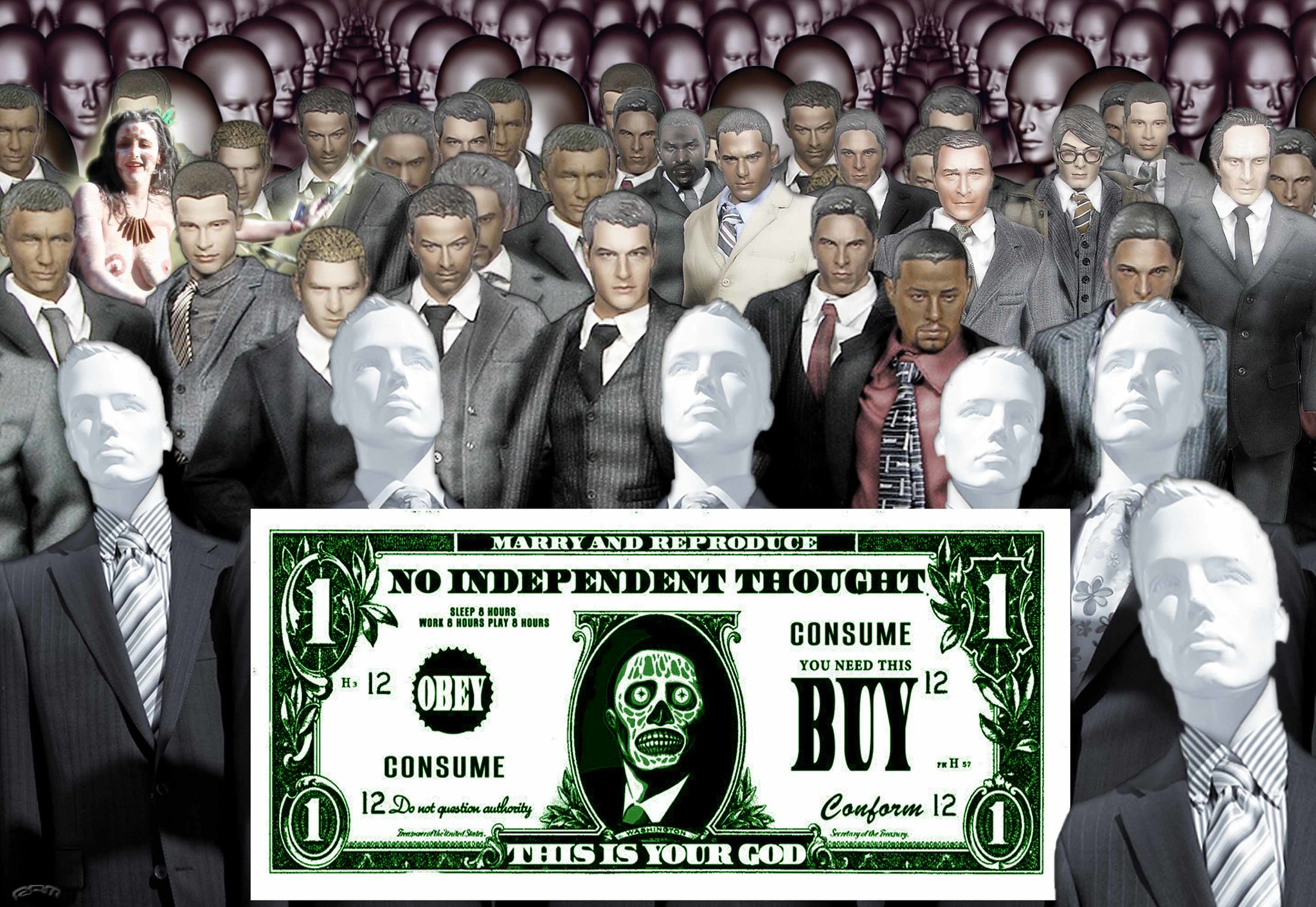

Hiding the Identities of the World’s Wealthiest Individuals


by Pedro Aquila


The Forbes billionaire list is perhaps the most mainstream source for who the wealthiest individuals in the world are, yet, some prefer to believe in this list as the authority on wealth. How close is this to the truth?

Within the inherent characteristics of the world monetary system, we have myriad forms of stock ownership, banks and hedge funds owning corporations, banks pulling strings for entire monetary systems, obfuscating who actually owns what. The entire system is awash in practices which conceal who the most influential and wealthy individuals, hedge funds, corporations, and powers are.

As an example, Renaissance Technologies is a hedge fund that owns a large stake in pharmaceutical corporation Johnson & Johnson. Renaissance CEO Peter Brown is actually on the Forbes list, and he is married to ex-FDA commissioner Margaret Hamburg. Through the obfuscated ownership of J&J, Renaissance Technologies co-chief executive’s wife Margaret Hamburg was able to function as a revolving door between government and big pharma, as she was FDA commissioner from 2009- 2015, involved a racketeering conspiracy to ensure the profits of Johnson & Johnson.

The more one looks into it, the more wealth in this world appears to be intentionally obfuscated.

This article will examine 4 factors that imply the wealthiest individuals and entities on this planet are in fact unknown to the public, and that the ones we know to be wealthy are more or less wealthy than we are led to believe.

1. Deutsche Bank is being charged for market manipulation in Italy: massive bank may fall, and Rothschilds are buying gold.


Economic collapse is again hitting the headlines, with German Deutsche Bank centerstage (the massive bank with a long, corrupt history including involvement in a German oil pipeline in Baghdad which was central to World War I).

Deutsche Bank may go under, with comparisons to the 2007 financial crisis and Lehman Brothers being drawn.

Rothschild family members are some of the most notorious suspects when it comes to the hidden wealthiest people on Earth: in response to the Deutsche Bank situation, they are buying gold, an ominous “warning” for the rest of us.

As reported by The Free Thought Project, “Rothschild Doubles Down on Gold as Banking Collapse Begins, Germans Told to Stockpile Food/Water:”

“The most prominent bank in Germany is at risk of imminent collapse, with potentially profound effects for the EU, the United States and the rest of the world. The prospect of a cataclysmic global banking collapse of this nature has not been seen since the implosion of Lehman Brothers in 2008, and subsequent fallout in the global banking world.

But these events haven’t taken place in a vacuum, as earlier this year savvy international investor Lord Jacob Rothschild, during a semi-annual address to RIT Capital Partners, announced that they are reducing stock market and currency exposure and increasing their gold holdings, warning that the world is now in “uncharted waters” and the consequences are “impossible” to predict.”

Zero Hedge reports, “Deutsche Bank Charged By Italy For Market Manipulation, Creating False Accounts”:

“One day after its stock soared from all time lows, following what so far appears to have been a fabricated report sourced by AFP which relied on Twitter as a source that the DOJ would reduce its RMBS settlement amount with Deutsche Bank from $14 billion to below $6 billion (and which neither the DOJ nor Deutsche Bank have confirmed for obvious reasons), moments ago Bloomberg reported that six current and former managers of Deutsche Bank, including Michele Faissola, Michele Foresti and Ivor Dunbar, were charged in Milan for colluding to falsify the accounts of Italy’s third-biggest bank, Monte Paschi (which itself is so insolvent it is currently scrambling to finalize a private sector bailout) and manipulate the market.”

Fabricated reports sprinkled into a situation where the bank is going under, and on top of that they are being charged for fraud in Italy: a plethora of falsehoods illustrating exactly how money works.

2. Wachovia Bank (now owned by Wells Fargo) laundered billions for Mexican drug cartels, nad was fined less than 2% of annual profit.


financiers-1


If a person pays attention to the scandalous activities of powerful entities beneath the surface level, they start to notice inconsistencies that obliterate the entire mainstream perception of that entity or industry, ushering in a bottomless pit of potential criminality, expanding the realm of probable corruption into deeply unknown territory.

In other words, if the scandals we hear about are this intense, how perception shattering is what we still don’t know?

According to an article by Andrew Gavin Marshall titled “Wells Fargo: Your Neighborhood Mega-Money Laundering, Drug War Profiteering, Prison-Industry Enlarging Bank”:

“Wells Fargo is one big elite networking operation that’s not afraid to get its hands covered in blood money.

Just recently, in late July, Wells Fargo surpassed the Industrial and Commercial Bank of China (ICBC) as the world’s largest bank by market capitalization. This followed Wells Fargo reporting a 19% increase in profits over the second quarter as the bank has been busy consolidating the housing market while other big banks have retreated from it. Wells Fargo had amassed a share of almost 40% of the U.S. mortgage market by early 2013.”

According to the Guardian:

“Wachovia was acquired by Wells Fargo during the 2008 crash, just as Wells Fargo became a beneficiary of $25bn in taxpayers’ money.

‘Wachovia’s blatant disregard for our banking laws gave international cocaine cartels a virtual carte blanche to finance their operations,’ said Jeffrey Sloman, the federal prosecutor. Yet the total fine was less than 2% of the bank’s $12.3bn profit for 2009. On 24 March 2010, Wells Fargo stock traded at $30.86 – up 1% on the week of the court settlement.

The conclusion to the case was only the tip of an iceberg, demonstrating the role of the “legal” banking sector in swilling hundreds of billions of dollars – the blood money from the murderous drug trade in Mexico and other places in the world – around their global operations, now bailed out by the taxpayer.”

3. Money from Afghanistan’s US-tied opium trade goes unaccounted for.


How much money is being made in the Afghanistan opium trade (now the source of 90% of the world’s supply of heroin), and how is the US profiting by clearly aiding in the growth of this corrosive industry? Who exactly is becoming rich?

According to an article from Pravda:

“US government installed Hamid Karzai, CIA agent, as Afghanistan’s President in 2002 to restore the drug trade. Ahmed Wali Karzai, heroin dealer, was Hamid’s brother. “The Afghan narcotics economy was a carefully designed project of the CIA”. “A convicted heroin trafficker, Izzatullah Wasifi, was appointed by Karzai to head an anti-corruption agency.” US government made Afghanistan into a narco state. By 2006, LA Times reported Afghan heroin flooding in, but wouldn’t investigate how. 1,000,000 people worldwide have been killed by heroin from US-occupied Afghanistan.”

This recent video sheds light on the continuous US occupation of Afghanistan:


One day perhaps an earth shattering revelation will come regarding exactly who is profiting from this. Until then, we can at least mark this down as another factor obfuscating who the world’s wealthiest individuals are.

4. We don’t know who owns the Federal Reserve.


We simply don’t know who owns the Federal Reserve bank. Its shareholders are private banks, we know that. We get glimpses of the strings that pull the Fed, when they generously provide private banks such as Chase with resources they would never provide to the common people.

From Global Research:

“The Federal Reserve (or Fed) has assumed sweeping new powers in the last year. In an unprecedented move in March 2008, the New York Fed advanced the funds for JPMorgan Chase Bank to buy investment bank Bear Stearns for pennies on the dollar. The deal was particularly controversial because Jamie Dimon, CEO of JPMorgan, sits on the board of the New York Fed and participated in the secret weekend negotiations.

In September 2008, the Federal Reserve did something even more unprecedented, when it bought the world’s largest insurance company. The Fed announced on September 16 that it was giving an $85 billion loan to American International Group (AIG) for a nearly 80% stake in the mega-insurer. The Associated Press called it a “government takeover,” but this was no ordinary nationalization. Unlike the U.S. Treasury, which took over Fannie Mae and Freddie Mac the week before, the Fed is not a government-owned agency. Also unprecedented was the way the deal was funded.”

For more info about the purposeful obfuscation of wealth implied by the actions of the Federal Reserve, this is a great documentary.

To theorize further, here’s an excerpt from an article titled “Former Wall St. Banker Suggests Global Debt May Not be Owned by Humans”:


“Is the world economy a closed system or an open system? In other words, are the world’s financial elite conducting transactions with off-planet entities, enslaving the human race to unseen actors?

The world’s people are held in perpetual bondage to the fiat currency money masters who have saddled us with absolutely insurmountable debt obligations which are mathematically impossible to repay. At present, the CIA estimates the total global debt to be nearing $90 trillion.

In 2013, according to the CIA’s World Factbook, the GWP totaled approximately US $87.25 trillion in terms of purchasing power parity (PPP), and around US $74.31 trillion in nominal terms.”

The gross world product, the nominal value of planetary human endeavor per year, was recently estimated at $78 trillion, meaning nearly an entire year of the productivity of every man, woman and child on planet earth, some 7.4 billion people, is owed to someone, but who exactly no one really knows for sure. How is this possible?”

We may never definitively know who the world’s wealthiest individuals or entities are, but we can know what golden revelations fall through the cracks in a wall of purposeful obfuscation, if we simply pay attention and make reading a routine.


For more information about banksters see http://nexusilluminati.blogspot.com/search/label/banksters  
For more information about warmongers see http://nexusilluminati.blogspot.com/search/label/warmongers  
- Scroll down through ‘Older Posts’ at the end of each section


Do you LIKE this uniquely informative site?
A genuinely incapacitated invalid maintains, writes, edits, researches, illustrates, moderates and publishes this website from a tiny cabin in a remote forest.
Now that most people use ad blockers and view these posts on phones and other mobile devices, sites like this earn an ever shrinking pittance from advertising sponsorship.
This site needs your help.
Like what you see? Please give anything you can -  
Contribute any amount and receive at least one New Illuminati eBook!
(You can use a card securely if you don’t use Paypal)
Please click below -


And it costs nothing to share this post on Social Media!
Dare to care and share - YOU are our only advertisement!


For further enlightening information enter a word or phrase into the random synchronistic search box @ the top left of http://nexusilluminati.blogspot.com


And see


 New Illuminati on Facebook - https://www.facebook.com/the.new.illuminati

New Illuminati Youtube Channel -  https://www.youtube.com/user/newilluminati/playlists

New Illuminati’s OWN Youtube Videos -  
New Illuminati on Google+ @ For New Illuminati posts - https://plus.google.com/u/0/+RamAyana0/posts

New Illuminati on Twitter @ www.twitter.com/new_illuminati


New Illuminations –Art(icles) by R. Ayana @ http://newilluminations.blogspot.com

The Her(m)etic Hermit - http://hermetic.blog.com


DISGRUNTLED SITE ADMINS PLEASE NOTE –
We provide a live link to your original material on your site (and links via social networking services) - which raises your ranking on search engines and helps spread your info further!

This site is published under Creative Commons (Attribution) CopyRIGHT (unless an individual article or other item is declared otherwise by the copyright holder). Reproduction for non-profit use is permitted & encouraged - if you give attribution to the work & author and include all links in the original (along with this or a similar notice).

Feel free to make non-commercial hard (printed) or software copies or mirror sites - you never know how long something will stay glued to the web – but remember attribution!

If you like what you see, please send a donation (no amount is too small or too large) or leave a comment – and thanks for reading this far…

Live long and prosper! Together we can create the best of all possible worlds…


From the New Illuminati – http://nexusilluminati.blogspot.com

Saturday, 11 June 2016

Is Ethereum The Next Big Thing?


Is Ethereum The Next Big Thing?


Ethereum


by Tim Bryant
 
For a majority of the world’s population, cryptocurrency and blockchain technologies are still completely unknown terms, let alone ideas that people have any coherent understanding of in regards to how they work and what they mean for the future. For those who have at least heard of the concepts, Bitcoin is often their only reference point in the field, which is understandable, as it is the first successful cryptocurrency and implementation of the blockchain technology. This allowed Bitcoin to jump out of the gate as the industry leader, allowing it far more exposure over time and around the world.

However, given the revolutionary applications possible through blockchain technologies, Bitcoin was inevitably not going to be the only cryptocurrency/technology to enter this new space of possibility. While this field is still very new and undefined, there are a plethora of new technologies, businesses, and cryptocurrencies being developed at this very moment that make Bitcoin just one component in a vastly expanding realm.

One in particular, Ethereum, has really gained a lot of traction as of late, catapulting it all the way up to the number two-rated cryptocurrency in terms of market cap and price, behind only Bitcoin. While it is well behind Bitcoin at the moment, the growth rate and potential capabilities of this new technology has many, in both the crypto-world and mainstream finance, buzzing with excitement about where it could go moving forward.


Ethereumpic1


(Note: I would highly recommend that anyone not familiar with Bitcoin or blockchain technology to first check out my previous article, which gives a beginner’s outline of the in’s and out’s of Bitcoin. It’s imperative to have this prerequisite knowledge in order to properly understand Ethereum, since I will skip over the basics of blockchain and cryptocurrency.)


What is Ethereum?


Now Ethereum isn’t the only alternative cryptocurrency out there; in fact there are more than 750 cryptocurrencies that currently exist. Many of them have been referred to as “Bitcoin 2.0” as they were designed very similar to Bitcoin, but with slightly different features. Many of them will eventually have a value of zero in all honesty. However, others, mainly Ethereum, have developed into something that is fundamentally different from Bitcoin, providing value in new areas for users.

According to its official website,

“Ethereum is a decentralized platform that runs smart contracts: applications that run exactly as programmed without any possibility of downtime, censorship, fraud, or third party interference.


The App runs on a custom built blockchain, an enormously powerful, shared global infrastructure that can move value around and represent the ownership of property. This enables users to create markets, store registries of debt or promises, move funds in accordance with instructions given long in the past (like a will or futures contact) and many other things that have not been invented yet, all without a middleman or counterparty risk.”

Some people have described Ethereum as a Supercomputer or Global Computer, while others have described it as the Web 3.0 or The Law of the Internet, but the basic idea is that it’s a single shared computer for users to exchange value that is run by its decentralized network of users. Another way to describe Ethereum is a decentralized virtual machine that can execute peer-to-peer contracts using its own fuel/cryptocurrency to power it, called Ether.

The virtual supercomputer, which doesn’t exist in one physical location, runs on a custom-built blockchain that uses open source software code and allows for a shared infrastructure that can move around value and honor contracts without the need for a central controller or a trusted third-party. These contracts, which are often referred to as smart contracts, are essentially the same as contracts in real life, but instead of being written out on paper and requiring third-party to arbitration, the contracts are programmed into the blockchain as computer programs (Turing-complete coding language) that then become self-executing contracts. Essentially, the Ethereum network (blockchain) is the arbitrator and simply carries out what is programmed into it.

For example, when someone develops a will, they sometimes hire a lawyer to write it out as well as use a lawyer to interpret it once it is breached or executed. However, if the will were uploaded as a smart contract on to the blockchain, the blockchain alone could divvy out the remains of the will upon activation, aka the death, without the need to pay for a third-party to get involved. Blockchain Apparatus is a company already aiming to build the infrastructure for these self-executing wills using the Ethereum platform.

Another example of a smart contract that could be implemented using the Ethereum network is financial derivatives. So when Person A agrees to buy a select item at a stated price on a specific date, instead of the company who issued the contract having to trust the other person to pay or utilize third-party clearing houses to make sure accounts are cleared, the blockchain would simply facilitate the transaction between the two parties directly and distribute out the payment instantaneously based upon the set agreements that were programmed in. It also can store all this information on the blockchain as well as integrate more efficiently with other users to keep real-time pricing, information, and transactions up-to-date. Banks like Barclays and JP Morgan Chase are already investing and researching into these technologies through a consortium called R3. Here is further reading for those interested.

One last example to checkout on your own is a new ride sharing platform called Arcade City, which aims to replace Uber by allowing the decentralized network of drivers to control the company directly, instead of the central controlled business, Uber, facilitating the ridesharing.

To put it simply, Ethereum allows parties to trust each other in contracts without the need for mediators or businesses to facilitate, since the decentralized network (blockchain) will distribute out exactly what is programmed in. The network acts as all the trust that is needed; and with all the data operating on one network, unnecessary overhead/processing fees due to hard to maintain and incompatible databases are greatly reduced. The network is also very reliable due to its decentralized design, making it very hard to stop, as there is no central point to attack. Governments, hackers, businesses, and central banks will find it incredibly hard to interfere with or control the system, which bodes well for those that advocate for freedom and decentralized power. Essentially, the computer can never be turned off, unless the Internet is completely dismantled.


ethereum-network


Additional Background:


Ethereum was originally described in a white paper by Russian Canadian Vitalik Buterin, a programmer involved with Bitcoin, in late 2013.  Other founders of Ethereum include Amir Chetrit, Anthony Di Iorio, Jeffrey Wilcke, Gavin Wood, and Joseph Lubin. The goal was to use blockchain technology for decentralized applications such as smart contracts, instead of strictly limited to peer-to-peer financial transactions.

Initial funding for the Ethereum project was provided by a public crowdsale in July and August 2014 that took in 31,529 bitcoins, worth approximately $18.5 million at the time. In exchange 60,102,216 Ether were disbursed amongst the donors. The Ethereum blockchain went live on July 30th, 2015, six and a half years after Bitcoin was first introduced. Currently, Ethereum trades at around $14 per Ether and has a market capitalization a little over one billion dollars, a feat reached in May 2016.

Some other features that stand out with Ethereum are its Proof of Stake (POS) mining system as opposed to the Bitcoin network, which uses Proof of Work (POW). It’s important to understand that Ethereum uses the Proof of Work model currently, but the plan is to move to a Proof Of Stake system once it scales up more. The reason for the move is that many worry once the supply is capped; mining will become too centralized due to lower financial incentive and higher-energy costs, which weeds out the small level miners. In Proof Of Stake, miners are required to have a direct stake in Ethereum in order to mine it. Essentially, miners can only mine the same amount of Ether they have in their account. In theory, this should discourage miners from doing anything detrimental to the system since they have a personal stake in its success.

Another small feature that should be noted and still needs to be addressed is what the total supply of Ether will be. Right now, five new Ether are minted every 13 seconds with a total supply of over 80 million. The Ethereum team has stated that they plan on lowering this number once the POS switch is made and possibly even capping off the supply completely at a certain point. While this isn’t a big deal in the early stages, the hope has to be that the supply is limited similar to Bitcoin, so that no central controller can add to the supply and dilute the value. This should be especially important since most in the decentralized community of cryptocurrency have migrated here due to the overprinting and over regulation of other currencies and payment systems. Having systems tied down to objective rules is helpful to investors, users, and developers because it gives them fixed variables to rely upon. This builds strong foundations and makes for sound money.


Ethereum


Exciting Possibilities:


One of most promising aspects about Ethereum is that it is such an open platform for all types of people, organizations and businesses to come in and develop upon. Anyone can put smart contracts on to the blockchain and anyone can use the blockchain to develop whatever applications they would like. The decentralized blockchain just honors the data it comes across, not caring whom, why, or where it came from. In this regard, it is a highly flexible system that allows for a diverse set of players, applications, and systems. Everyone is a first class citizen in the network, similar to the Internet where all the data is treated equally. No doubt this has led to a synergistic environment amongst the community, with everyone building off each other to benefit from both themselves and the network as a whole.

One of the exciting possibilities for Ethereum is the cultivation of a variety of different decentralized autonomous organizations (DAO’s), which are basically new business organizations that run through rules incorporated in computer programs, aka smart contracts. In this regard, businesses can operate in a decentralized manner based on rules that are voluntarily agreed upon by its members and subsequently programmed into the blockchain as smart contracts.

In this type of horizontal business structure, there is no need for a central decision maker. In theory, these organizations should morph into democratic institutions where everyone in the group gets to consider proposals and vote on them, as well as everyone sharing in the profits and loses of the organization. This comes in sharp contrast to most companies today, which have central controllers that dictate the direction of the company, while the stockholders receive dividends, but don’t usually have voting or creative rights. Bitcoin is considered an early example of a Decentralized Autonomous Organization, but Ethereum seems to have taken it a step further by using smart contracts to establish some type of agreed upon structure to these organizations.

A new DAO was recently launched in May 2016 thanks to the most successful crowdfund in history, taking in around $150 million from more than 11,000 investors, with the largest stake at just 4% of the total. In exchange, tokens were issued out, which are basically stocks in the company as well as voting rights. Literally called “The Dao,” it formed as an investor-directed venture capital fund, with an objective to provide a new decentralized business model for organizing both commercial and non-profit enterprises. It is designed to both build the infrastructure of Ethereum for everyone in the network (nonprofit) and invest in Ethermeum startups for the profit of its investors (commercial). In this regard, the direction of the company relies on the creative and democratic will of the group, instead of some central board of directors.

There are countless other possibilities that could stem from Ethereum such as new democratic structures in government to decentralized banking systems to new media distribution platforms. In theory, the use of blockchains and smart contracts could revolutionize everything that is currently centrally controlled and make it more decentralized in nature with open transparency and incredible precision. Ethereum could potentially bring the entire world onto one operating platform that is open to everyone, yet has no central force dominating it. It will allow the ever-growing peer-to-peer sharing economy to scale unheard of heights, which naturally hurts big business, but empowers the individual. Ethereum allows for a new economy, the people’s economy, all based upon the mathematics of blockchain and the decentralized law of smart contracts.


Ethereum


Potential Barriers:


One of the obvious barriers to success is a lack of understanding amongst the general public on the subject due to its highly technical nature and the fact that it is still a very new and raw technology. Usually innovative ideas like this do not hit the mainstream culture until they are fully developed and understood. While this is good in some regard, since all new technologies should be tested thoroughly before being utilized on a massive scale, it can also be to the detriment of many people in that the average person will miss out on the initial creative design of the system as well as the profits that will likely ensue. If Ethereum lives up to its potential, financial stakes and technological infrastructures will fill out quick, leaving smaller gains for the average person that gets in too late.

Another major obstacle for Ethereum is security. From a technical standpoint, Ethereum has more complex software than Bitcoin and has undergone far less testing, which means there is a lot more that can go wrong, especially as it begins to scale and take on larger workloads. Undoubtedly, the system will need to address these security concerns, especially if it wants to gain mainstream adoption. Since cryptocurrency is more technical compared to other financial instruments, many average users are scared of putting their money in new digital assets like Ethereum and Bitcoin.

The importance of security will also be tested from a government standpoint, as these new payment systems can operate across borders and outside of today’s legal jurisdictions. In many ways, these are both new economic systems, since it is a peer-to-peer money system, and new ways of governance/law, in that new systems of law are created due to smart contracts being programmed into the network. This is a whole new paradigm of money and governance, so naturally that scares a ton of people away. While this may not be a big deal yet, if the world of cryptocurrency and blockchain continue to scale larger, they will inevitable come face to face with the established economic/governmental system that aims to maintain its continued dominance. The result of this confrontation is unknown, but it will be an absolutely necessary battle in the journey to create a new financial and cultural paradigm.

Finally, scaling and in-group fighting are going to be some of the other major hurdles to success for Ethereum. Scaling is essential to any new technology, especially a new currency. With the Ethereum network being decentralized, facilitating an environment where users cooperate with each other and build off one another as opposed to constantly competing in unhealthy manners, or worse, sabotaging one another, will be incredibly important; just ask Bitcoin, which is stalled at the moment because of that very issue of in-fighting. Also, the network will need to scale in design in order to handle more transactions per day, especially if it is going to break into big markets like derivatives. Again, Bitcoin is having the same problem of network scalability in terms of handling large volumes, which is undeniably holding it back from exploding to new heights. Ethereum has the added advantage of watching and learning from Bitcoin, but they are still playing catch-up and will undoubtedly have to go through their own growing pains along the way. Finally, Bitcoin is aiming to implement its own smart contact system called Rootstock, which could rival Ethereum if rolled out effectively.


Ethereum


What The Future Will Hold?


It’s going to be very interesting to see how these completely new systems of cryptocurrency and blockchain technology are implemented into our current paradigm. I think when looking at Ethereum, it’s important to not only look at it from a technical perspective, such as what it can actually do for society, but also from a socio-cultural perspective, such as how existing systems will react and interact with it. It seems more and more clear that the current paradigm of money is heading towards a major collapse, revaluation, and redesign. I strongly believe these new cryptocurrencies and blockchain technologies are going to play major roles in the new monetary system that is slowly coming into focus.

Ethereum and Bitcoin, along with some other familiar financial instruments, such as precious metals, real estate/commodities, alternative cryptocurrencies, and even Fiat, will all be meshed together into one new financial paradigm. They are all likely to play a role, which will undoubtedly be decided in the coming years. It seems quite clear that our new system should not be a one size fits all equation, but instead needs to be a competing system of various stores of value and payment systems, which all intertwine and pull on each other to create one strong fabric that is all hedged together.

This technology is not a fad and not going away. In fact, it’s really just getting started. This is a whole new systemic design of economies and government happening before our very eyes, so if you want to change the world in major ways, now is the time to get involved and participate. There will be plenty of challenges along the way and major push back from the established system, but these new tools of cryptocurrencies, blockchains, and smart contracts allow us to change the game like never before. The tools are there; we just have to learn to come together and use them correctly, because ultimately it will be us who design the future. Let’s build bridges, instead of bringing each other down.


For more information about more solutions to vexing problems see http://nexusilluminati.blogspot.com/search/label/solutions  
- Scroll down through ‘Older Posts’ at the end of each section


Do you LIKE this uniquely informative site?
Hours of effort by a genuinely incapacitated invalid are required every day to maintain, write, edit, research, illustrate, moderate and publish this website from a tiny cabin in a remote forest.
Now that most people use ad blockers and view these posts on phones and other mobile devices, sites like this earn an ever shrinking pittance from advertising sponsorship. This site needs your help.
Like what you see? Please give anything you can -  
Contribute any amount and receive at least one New Illuminati eBook!
(You can use a card securely if you don’t use Paypal)
Please click below -


Spare Bitcoin change?


And it costs nothing to share this post on Social Media!
Dare to care and share - YOU are our only advertisement!


For further enlightening information enter a word or phrase into the random synchronistic search box @ the top left of http://nexusilluminati.blogspot.com


And see


 New Illuminati on Facebook - https://www.facebook.com/the.new.illuminati

New Illuminati Youtube Channel -  https://www.youtube.com/user/newilluminati/playlists

New Illuminati’s OWN Youtube Videos -  
New Illuminati on Google+ @ For New Illuminati posts - https://plus.google.com/u/0/+RamAyana0/posts

New Illuminati on Twitter @ www.twitter.com/new_illuminati


New Illuminations –Art(icles) by R. Ayana @ http://newilluminations.blogspot.com

The Her(m)etic Hermit - http://hermetic.blog.com


DISGRUNTLED SITE ADMINS PLEASE NOTE –
We provide a live link to your original material on your site (and links via social networking services) - which raises your ranking on search engines and helps spread your info further!

This site is published under Creative Commons (Attribution) CopyRIGHT (unless an individual article or other item is declared otherwise by the copyright holder). Reproduction for non-profit use is permitted & encouraged - if you give attribution to the work & author and include all links in the original (along with this or a similar notice).

Feel free to make non-commercial hard (printed) or software copies or mirror sites - you never know how long something will stay glued to the web – but remember attribution!

If you like what you see, please send a donation (no amount is too small or too large) or leave a comment – and thanks for reading this far…

Live long and prosper! Together we can create the best of all possible worlds…


From the New Illuminati – http://nexusilluminati.blogspot.com