"All the World's a Stage We Pass Through" – R. Ayana

Showing posts with label planetary catastrophe. Show all posts

Tuesday, 8 January 2013

Don’t panic! Preliminary data suggest earthquakes are indeed increasing worldwide


Don’t panic! Preliminary data suggest earthquakes are indeed increasing worldwide

by The Extinction Protocol


In recent weeks, worldwide earthquake data indicates an increase in the magnitude and a significant increase in the frequency (magnitude 5.5+) of earthquakes. Current graphs clearly show an alarming worldwide trend of increasing earthquake strength and frequency.
 
These results are in agreement with the USGS statistics page, which shows an increase in the frequency of stronger earthquakes (M 5.0+). These trends also show that the depth of earthquakes has diminished, they occur closer to the Earth’s surface.
 
Shallow earthquakes occur along fault lines and are due to the accumulation of stress. Earthquake waves can also propagate far enough to trigger other earthquakes; this may explain the noted increase in earthquakes. Certain scientists have stated that the increased frequency of earthquakes is due to the increased number of detection instruments installed worldwide. This would cause more sensitive earthquakes to be measured.
 
However, these graphs show an increase in stronger earthquakes; it is also important to note that the earthquake Richter scale is base-10 logarithmic. The fact that the world’s population has increased doesn’t help, more people are affected by these events. There is increased media availability and attention. However, due to recent events, it is now easy to convince even the average person, that there are more and more strong earthquakes occurring worldwide. – Guardianlv (excerpt)
 
Largest increase in 62 years:
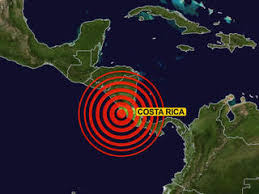
 
 
According to the Costa Rican Volcanology and Seismology Observatory (OVSICORI), after the magnitude 7.6 earthquake which occurred on September 5th, 2012, the country registered the highest level of earthquake activity it has seen in 62 years. The strongest earthquakes in Costa Rican history occurred in 1950 in Nicoya, with a 7.8 magnitude quake, followed by the 2012 earthquake that occurred in the same area, of a 7.6 magnitude. After the September 5th earthquake, OVSICORI reported 75 earthquakes that were felt by residents during the 4 months after the main event. 2010 saw a total of 6,245 earthquakes, in 2011 there were 5,483, and in 2012 the total was 11,049. – Inside Costa Rica
 
Japan shaking more:
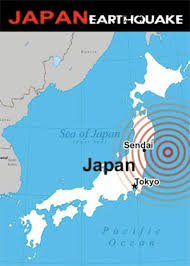
 
Japan had experienced a little over 3,000 noticeable earthquakes in 2012, nearly 60 percent of them aftershocks from last year’s massive tremor that devastated the country’s northeast, Japanese media reported on Monday. Quoting the Japan Meteorological Agency, the NHK broadcaster reported that a total of 3,134 quakes had been felt across Japan until Sunday (December 30) which is about 1,000 more than the annual average from 2001 to 2010. An analysis of seismic waves indicates that there were more than 10,000 noticeable quakes in 2011.
 
While the number of quakes decreased from that of last year, seismologists continue to monitor frequent seismic activity. They urged people to be on the alert for possible strong quakes with a magnitude of at least 7 or those triggering tsunami. The March 11, 2011 quake and the tsunami it triggered had left more than 15,000 people dead or missing besides wreaking havoc in Japan’s northeast, including the meltdown at the Fukushima Daiichi nuclear power plant that leaked radiation forcing the evacuation of more than 160,000 residents. – RTT 
 
Over 5,000 quakes shake Mexico:
 
In 2012, 5,043 earthquakes, including more than 1,484 with their epicenter in Chiapas, shook Mexico, according to the State Civil Protection System, local media reported. That number is likely to increase before the year’s end. In fact, two four-magnitude earthquakes in the Richter scale were reported some 67 kilometers southwest of Ciudad Hidalgo on Friday, but there was no visible damage. The State Civil Protection System noted that seismic activity is caused by the convergence of three tectonic plates in North America, Cocos and the Caribbean. Coincidently, at the onset of 2013, a 4.5 magnitude earthquake struck off the coast of Oaxaca Mexico. – Prensa Latina 
 
Koreas report increase in quakes:
 
A study has found that, including North Korea and the seas, the country experienced twice as many earthquakes this year as in the past. According to the Korea Meterological Association on the 27th, there were 56 earthquakes on the Korean Peninsula this year through last month, twice the average since record-keeping began in 1978. The highest number, 60, was recorded in 2009. It’s also over ten more than the average of 43.6 recorded each year since digital detection methods were begun in 1999. There were nine which reached at least 3.0 on the Richter scale and four which were strong enough to be felt by people.
 
Other than in the seas the largest number, 11, were in the Daegu and Gyeongsangbuk-do area, followed by four in Jeollabuk-do and two each in Busan, Ulsan, and Gyeongsangnam-do. In North Korea seven earthquakes were recorded, and there were none in the capital region of Seoul, Gyeonggi-do, and Incheon. There were 12 in the West Sea, nine in the Sea of Japan (East Sea), and seven in the South Sea. The strongest earthquake of the year so far occurred on May 11th at 12:46 pm, five kilometers east-northeast of Muju-gun in Jeollabuk-do, registering a 3.9 on the Richter scale. Houses and windows shook in Muju and Namwon, at an intensity level of IV. In Daegu and Daejeon the intensity was of level II but there was no damage. The increased number of earthquakes in recent years is likely due to the effects of the Great East Japan Earthquake of 2010, the KMA said.
 
In this country there were 42 earthquakes in 2010, 52 last year, and 56 as of Christmas of this year. Kim Yeong-shin of the KMA said that “around the world in recent years there has been an increasing number of earthquakes… since the Great East Japan Earthquake there has been a slight decrease as energy levels seem to have been adjusted.” – Asian Correspondent
 
Fivefold increase in Peru:
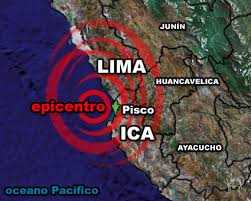
 
Peru has been shocked by a total of 225 sensitive earthquakes, during 2012, Geophysical Institute of Peru (IGP) reported Monday. Hernando Tavera, head of IGP’s Seismology said in statements to Andina news agency that the highest percentage of earthquakes, probably 70 percent, was centered off the coast of Peru. He noted that mostly the cities of Arequipa, Ica and Lima, in Peru’s central region and southern Peruvian coast, were the most affected by the several earthquakes.
 
Tavera added that recent earthquakes occurring off the coast, from Tumbes to Tacna, which is the area of highest risk to be affected by a major earthquake and where the subsurface tectonic plates are constantly moving. “It happens that offshore is exactly where the Nazca plate colliding head-on with the South American plate, and there is the problem,” he told Andina news agency. The IGP only reports the tremors sensitive to the population, but the not sensitive are usually two to three daily. According to Lima Easy, only 45 seismic events were listed for all of 2011. – Andina, Limaeasy


From The Extinction Protocol @ http://theextinctionprotocol.wordpress.com/2012/12/31/dont-panic-preliminary-data-suggests-earthquakes-are-indeed-increasing-worldwide/


For more information about earthquakes see http://nexusilluminati.blogspot.com/search/label/earthquakes  
- See ‘Older Posts’ at the end of each section


You Can Help This Unique Independent Site’s Author Survive & Stay Online
Donate any amount and receive at least one New Illuminati eBook!

Please press this button -


For further enlightening information enter a word or phrase into the random synchronistic search box @ http://nexusilluminati.blogspot.com


And see


 New Illuminati on Facebook - https://www.facebook.com/the.new.illuminati

New Illuminati Youtube Channel - http://www.youtube.com/user/newilluminati/feed


The Her(m)etic Hermit - http://hermetic.blog.com


The Prince of Centraxis - http://centraxis.blogspot.com (Be Aware! This link leads to implicate & xplicit concepts & images!)


This site is published under Creative Commons Fair Use Copyright (unless an individual item is declared otherwise by copyright holder) – reproduction for non-profit use is permitted & encouraged, if you give attribution to the work & author - and please include a (preferably active) link to the original along with this notice. Feel free to make non-commercial hard (printed) or software copies or mirror sites - you never know how long something will stay glued to the web – but remember attribution! If you like what you see, please send a small but heartfelt donation or leave a comment – and thanks for reading this far…

Live long and prosper!


From the New Illuminati – http://nexusilluminati.blogspot.com

Tuesday, 31 January 2012

Capitalism and Environmental Catastrophe

Capitalism and Environmental Catastrophe


by John Bellamy Foster


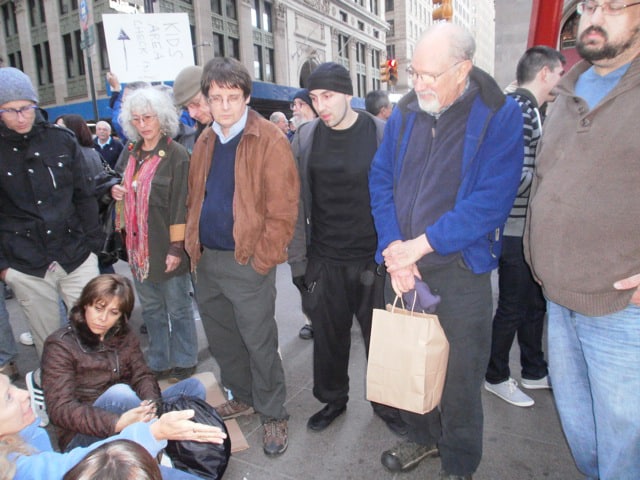
John Bellamy Foster and Fred Magdoff at Occupy Wall Street.  Photo by Carrie Ann Naumoff
The Occupy Wall Street movement arose in response to the economic crisis of capitalism, and the way in which the costs of this were imposed on the 99 percent rather than the 1 percent.  But "the highest expression of the capitalist threat," as Naomi Klein has said, is its destruction of the planetary environment.  So it is imperative that we critique that as well.1


I would like to start by pointing to the seriousness of our current environmental problem and then turn to the question of how this relates to capitalism.  Only then will we be in a position to talk realistically about what we need to do to stave off or lessen catastrophe.

How bad is the environmental crisis?  You have all heard about the dangers of climate change due to the emission of carbon dioxide and other greenhouse gases into the atmosphere -- trapping more heat on earth.  You are undoubtedly aware that global warming threatens the very future of the humanity, along with the existence of innumerable other species.  Indeed, James Hansen, the leading climatologist in this country, has gone so far as to say this may be "our last chance to save humanity."2

But climate change is only part of the overall environmental problem.  Scientists, led by the Stockholm Resilience Centre, have recently indicated that we have crossed, or are near to crossing, nine "planetary boundaries" (defined in terms of sustaining the environmental conditions of the Holocene epoch in which civilization developed over the last 12,000 years): climate change, species extinction, the disruption of the nitrogen-phosphorus cycles, ocean acidification, ozone depletion, freshwater usage, land cover change, (less certainly) aerosol loading, and chemical use.  

Each of these rifts in planetary boundaries constitutes an actual or potential global ecological catastrophe.  Indeed, in three cases -- climate change, species extinction, and the disruption of the nitrogen cycle -- we have already crossed planetary boundaries and are currently experiencing catastrophic effects.  We are now in the period of what scientists call the "sixth extinction," the greatest mass extinction in 65 million years, since the time of the dinosaurs; only this time the mass extinction arises from the actions of one particular species -- human beings.  Our disruption of the nitrogen cycle is a major factor in the growth of dead zones in coastal waters.  Ocean acidification is often called the "evil twin" of climate change, since it too arises from carbon dioxide emissions, and by negatively impacting the oceans it threatens planetary disruption on an equal (perhaps even greater) scale.  The decreased availability of freshwater globally is emerging as an environmental crisis of horrendous proportions.3

All of this may seem completely overwhelming.  How are we to cope with all of these global ecological crises/catastrophes, threatening us at every turn?  Here it is important to grasp that all of these rifts in the planetary system derive from processes associated with our global production system, namely capitalism.  If we are prepared to carry out a radical transformation of our system of production -- to move away from "business as usual" -- then there is still time to turn things around; though the remaining time in which to act is rapidly running out.

Let's talk about climate change, remembering that this is only one part of the global environmental crisis, though certainly the most urgent at present.  Climate science currently suggests that if we burn only half of the world's proven, economically accessible reserves of oil, gas, and coal, the resulting carbon emissions will almost certainly raise global temperatures by 2° C (3.6° F), bringing us to what is increasingly regarded as an irreversible tipping point -- after which it appears impossible to return to the preindustrial (Holocene) climate that nourished human civilization.  At that point various irrevocable changes (such as the melting of Arctic sea ice and the ice sheets of Greenland and Antarctica, and the release of methane from the tundra) will become unstoppable.  This will speed up climate change, while also accelerating vast, catastrophic effects, such as rising sea levels and extreme weather.  Alternatively, if our object is the rational one of keeping warming below 2° C, climate science now suggests that we should refrain from burning more than a quarter of the proven, economically exploitable fossil fuel reserves (unconventional sources such as tar sands are excluded from this calculation).4

The central issue in all of this, it is important to understand, is irreversibility.  Current climate models indicate that if we were to cease burning fossil fuels completely at the point that global average temperature had increased by 2°C, or 450 parts per million (ppm) carbon concentration in the atmosphere (the current level is 390 ppm), the earth would still not be close to returning to a Holocene state by the year 3000.  In other words, once this boundary is reached, climate change is irreversible over conceivable human-time frames.5  Moreover, the damage would be done; all sorts of catastrophic results would have emerged.

Recently climate scientists, writing for Nature magazine, one of the world's top science publications, have developed a concrete way of understanding the planetary boundary where climate change is concerned, focusing on the cumulative carbon emissions budget.  This is represented by the trillionth ton of carbon.  So far more than 500 billion tons of carbon have been emitted into the atmosphere since the industrial revolution.  In order to have an approximately even chance (50-50) of limiting the increase in global average temperature to 2°C, the cumulative CO2 emissions over the period 1750-2050 must not exceed one trillion tons of carbon; while in order to have a 75 percent chance of global warming remaining below 2°C, it is necessary not to exceed 750 billion tons of carbon.  Yet, according to present trends, the 750 billionth ton of carbon will be emitted in 2028, i.e., about sixteen years from now.

If we are to avoid burning the 750 billionth ton of carbon over the next four decades, carbon dioxide emissions must fall at a rate of 5 percent per year; while to avoid emitting the trillion ton, emissions must drop at a rate of 2.4 percent a year.  The longer we wait the more rapid the decrease that will be necessary.  The trillionth ton, viewed as the point of no return, is the equivalent of cutting down the last palm tree on Easter Island.  After that it is essentially out of our hands. 6

This takes us to the social question.  The problem we face when it comes to the appropriate response to impending climate catastrophe is not so much one of climate science -- beyond understanding the environmental parameters in which we must act -- as social science.  It is an issue of social conditions and social agency.  We live in in a capitalist society, which means a society in which the accumulation of capital, i.e., economic growth carried out primarily on the terms of the 1 percent at the top (the ruling capitalist class), is the dominant tendency.  


https://blogger.googleusercontent.com/img/b/R29vZ2xl/AVvXsEi7ojAcpzrwd-ol83Zp6LqylxLpP77DHRy_GuxUPqLbbH0Wnzct0A7EiJdNJXS9VwR_TluoBDTFvPvJk6bz_4EUkCijK08B4m_zBwG3FXDgja0-rygEjj67D4Zt5S5mwoR9Mk38srCF7w/s1600/ecosocialism2.gif


It is a system that accumulates capital in one phase simply so that it can accumulate still more capital in the next phase -- always on a larger scale.  There is no braking mechanism in such a system and no social entity in control.  If for some reason the system slows down (as it is forced to periodically due to its own internal contradictions) it enters an economic crisis.  That may be good temporarily for the environment, but it is terrible for human beings, particularly the bottom portion of the 99 percent, faced with rising unemployment and declining income.

Overall, capitalism is aimed at exponential growth.  It cannot stand still.  The minimum adequate growth rate of the system is usually thought to be 3 percent.  But this means that the economy doubles in size about every 24 years.  How many such doublings of world output can the planet take?

Hence, there is a direct and growing contradiction between capitalism and the environment, a contradiction that becomes more and more apparent as the size of the capitalist economy begins to rival the basic biogeochemical processes of the planet.  Naomi Klein has rightly characterized the age we live in as "disaster capitalism" because of its dual economic and ecological crises -- and due to the increasingly exploitative means the rich employ to enable them to prosper in the midst of increasing destruction.7

There are two predominant ways of addressing the climate crisis and the environmental problem generally.  One is to look for technological ways out -- often seen as being spurred by the creation of carbon markets, but the onus is on the technology.  The argument here is that through the massive introduction of various advanced technologies we can have our pie and eat it too.  We can get around the environmental problem, it is suggested, without making any fundamental social changes.  Thus, the pursuit of profits and accumulation can go on as before without alteration.  

Such magic-technological answers are commonly viewed as the only politically feasible ones, since they are attractive to corporate and political-power elites, who refuse to accept the need for system change.  Consequently, the establishment has gambled on some combination of technological miracles emerging that will allow them to keep on doing just as they have been doing.  Predictably, the outcome of this high-stake gamble has been a failure not only to decrease carbon emissions, but also to prevent their continued increase.

The turn to those alternative technologies that are already available (for example, solar power) has been hindered by the fact that they are often less profitable or require changes in social organization to be implemented effectively.  As a result, greater emphasis is placed on: (1) nuclear energy (a Faustian bargain if there ever was one); and (b) carbon capture and sequestration technology for coal-fired plants, which is neither economically nor ecologically feasible at present, and hence only serves to keep coal, the dirtiest fossil fuel, going.  

Beyond this the only option that the vested interests (the 1% and their hangers-on) have left is to push for geoengineering technologies.  This involves such measures as dumping sulfur dioxide particles in the atmosphere to block the suns rays (with the danger that photosynthesis might be decreased), or fertilizing the ocean with iron to promote algal growth and absorb carbon (with the possibility that dead zones might expand).  These geoengineering schemes are extremely dubious in terms of physics, ecology, and economics: all three.  They involve playing God with the planet.  Remember the Sorcerer's Apprentice!

Nevertheless, such technological fantasies, bordering on madness, continue to gain support at the top.  This is because attempts to shift away from our currently wasteful society in the direction of rational conservation, involving changes in our way of life and our form of production, are considered beyond the pale -- even when the very survival of humanity is at stake.

The other approach is to demand changes in society itself; to move away from a system directed at profits, production, and accumulation, i.e., economic growth, and toward a sustainable steady-state economy.  This would mean reducing or eliminating unnecessary and wasteful consumption and reordering society -- from commodity production and consumption as its primary goal, to sustainable human development.  This could only occur in conjunction with a move towards substantive equality.  It would require democratic ecological and social planning.  It therefore coincides with the classical objectives of socialism.

Such a shift would make possible the reduction in carbon emissions we need.  After all, most of what the U.S. economy produces in the form of commodities (including the unnecessary, market-related costs that go into the production of nearly all goods) is sheer waste from a social, an ecological -- even a long-term economic -- standpoint.  Just think of all the useless things we produce and that we are encouraged to buy and then throw away almost the moment we have bought them.  Think of the bizarre, plastic packaging that all too often dwarfs the goods themselves.  

Think of military spending, running in reality at $1 trillion a year in the United States.  Think of marketing (i.e. corporate spending aimed at persuading people to buy things they don't want or need), which has reached $1 trillion a year in this country alone.  Think of all the wasted resources associated with our financial system, with Wall Street economics.  It is this kind of waste that generates the huge profits for the top 1 percent of income earners, and that alienates and impoverishes the lives of the bottom 99 percent, while degrading the environment.8

What we need therefore is to change our economic culture.  We need an ecological and social revolution.  We have all the technologies necessary to do this.  It is not primarily a technological problem, because the goal here would no longer be the impossible one of expanding our exploitation of the Earth beyond all physical and biological limits, ad infinitum.  Rather the goal would be to promote human community and community with the earth.  Here we would need to depend on organizing our local communities but also on creating a global community -- where the rich countries no longer imperialistically exploit the poor countries of the world.  You may say that this is impossible, but the World Occupy Movement would have been declared impossible only a month ago.  If we are going to struggle, let us make our goal one of ecological and social revolution -- in defense of humanity and the planet.


http://griid.files.wordpress.com/2011/04/capitalisms-many-faces.jpg


Notes

1  Naomi Klein, blurb to Fred Magdoff and John Bellamy Foster, What Every Environmentalist Needs to Know About Capitalism (New York: Monthly Review Press, 2011).
2  James Hansen, Storms of My Grandchildren: The Truth About the Coming Climate Catastrophe and Our Last Chance to Save Humanity (New York: Bloomsbury, 2009).
3  See the discussion (and sources cited) in John Bellamy Foster, Brett Clark, and Richard York, The Ecological Rift: Capitalism's War on the Earth (New York: Monthly Review Press, 2010), 13-19.
4  Malte Meinshausen, et al., "Greenhouse-Gas Emission Targets for Limiting Global Warming to 2°C," Nature 458 (April 30, 2009): 1158-62; Heidi Cullen, The Weather of the Future (New York: Harpers, 2010), 264-71; "On the Way to Phasing Out Emissions," Potsdam Institute for Climate Impact Research, April 30, 2009.
5  Susan Solomon, et al, Proceedings of the National Academy of Sciences 106, no. 6 (February 10, 2009): 1704-1709; Cullen, Weather of the Future, 264-71.  It should be noted that even a target of stabilizing the climate at less than 2°C increase in global temperatures, or 450 ppm, would be inadequate.  Hansen indicates that we will reach critical tipping points, e.g., related to sea level rise, even before that stage.  If we truly wish to avoid such effects and maintain a stable Holocene state, he argues, we will need to stabilize the climate long-term at 350 ppm carbon concentration, or approximately 1°C increase in global average temperature -- a point that we have already exceeded.  See Hansen, Storms of My Grandchildren, 160-71.
6  Myles Allen, et al., "The Exit Strategy," Nature Reports Climate Change, April 30, 2009; Cullen, Weather of the Future, 264-71; Myles R. Allen, et al., "Warming Caused by Cumulative Carbon Emissions Towards the Trillionth Tonne," Nature 458 (April 20, 2009): 1163-66; Malte Meinshausen, et al., "Greenhouse-Gas Emission Targets for Limiting Global Warming to 2°C," Nature 458 (April 30, 2009): 1158-62; TrillionthTonne.org; Catherine Brahic, "Humanity's Carbon Budget Set at One Trillion Tonnes," New Scientist, April 29, 2009.
7  Naomi Klein, The Shock Doctrine: The Rise of Disaster Capitalism (New York: Henry Holt, 2007).
8  On the systematic role of waste (economic and ecological) under the regime of monopoly capital and the freedom which that gives us to reshape economy and society in a sustainable direction, see John Bellamy Foster, "The Ecology of Marxian Political Economy," Monthly Review 63, no. 4 (September 2011): 1-16.  On military spending levels see John Bellamy Foster, Hannah Holleman, and Robert W. McChesney, "The U.S. Imperial Triangle and Military Spending," Monthly Review 60, no. 5 (October 2008): 9-13.  On marketing see Magdoff and Foster, What Every Environmentalist Needs to Know About Capitalism, 46-53.


This is a reconstruction from notes of a talk delivered at a teach-in on "The Capitalist Crisis and the Environment" organized by the Education and Empowerment Working Group, Occupy Wall Street, Zuccotti Park (Liberty Plaza), New York, October 23, 2011.  It was based on a talk delivered the night before at the Brecht Forum.  Fred Magdoff also spoke on both occasions.


From Monthly Review @ http://mrzine.monthlyreview.org/2011/foster291011.html

Please Help Keep This Site Online -  
Donate any amount and receive at least one New Illuminati eBook!


For further enlightening information enter a word or phrase into the search box @  New Illuminati or click on any label/tag at the bottom of the page @  http://nexusilluminati.blogspot.com


And see

The Her(m)etic Hermit - http://hermetic.blog.com


This material is published under Creative Commons Fair Use Copyright (unless an individual item is declared otherwise by copyright holder) – reproduction for non-profit use is permitted & encouraged, if you give attribution to the work & author - and please include a (preferably active) link to the original along with this notice. Feel free to make non-commercial hard (printed) or software copies or mirror sites - you never know how long something will stay glued to the web – but remember attribution! If you like what you see, please send a tiny donation or leave a comment – and thanks for reading this far…

From the New Illuminati – http://nexusilluminati.blogspot.com