Healing and Spiritual Traditions
that Use Cannabis
Most people
are startled to find out that every major pharmacy in America offered cannabis
tinctures
as medicine until the 1930s when cannabis prohibition began in the US.(1)
Cannabis has
been used for over a thousand years by most of the world’s great cultures as a
medicine. Most people in the west are unaware that many ancient cultures also
recognized the value of cannabis as an aide to spiritual practice.
Like any
powerful medicinal plant, the energies of the plant must be used in a way that
harnesses its basic properties to promote health and healing. When used
correctly it can have a profound, enlightening effect.
For this
reason, sects within Tibetan Buddhism, Hinduism, Taoism, Sufism and a variety
of other religious groups have used cannabis for spiritual practices. Below is
a brief overview of cannabis spiritual history compiled through various textual
and online sources with a focus on ancient spiritual practices.
Cannabis Use in India
Cannabis has
been used in Ayurvedic and Indian medicine for at least three thousand years to treat a variety
of health conditions, including nausea and wasting syndromes. It is also
prescribed for general health and longevity. To this day body builders in India
use cannabis as a part of their training regiment to gain muscle mass, promote
digestion, and build strength.
The
spiritual aspects of cannabis are considered so profound in South Asia that
many religious groups including Buddhists, Naths, Shaivites and Goddess
Worshippers(2) have incorporated it into meditation practices, as a means to
stop the mind and enter into a state of profound stillness, also called
Samadhi.
Cannabis
holds a prominent place among Tantrics in India, Nepal, Sikkim, and Tibet to
this day. In the Mahayana tradition of Buddhism, it is said that Buddha
subsisted for six years on nothing but hemp seeds.(3) Various spiritual texts,
including the Buddhist Tara Tantra,(4) list cannabis as an important aide to
meditation and spiritual practice. In the Tantric Buddhism of the Himalayas and
Northern India, cannabis still plays a significant role in meditative rituals
to facilitate deep meditation and heighten awareness.
Cannabis is
even mentioned in the Indian creation myth, where it is named as one of the
five nectars of the gods and designated a “Reliever of Suffering.” In the
original myth, the gods churn the Ocean of Milk in search of Amrita, the elixir
of eternal life. One of the resulting nectars was cannabis. In the Vedas
cannabis is referred to as a “source of happiness.”(5)
In India
today, cannabis is often made into a drink consumed by local people and is said
to be the favorite drink of Indra, the king of the Indian gods.
Cannabis is
most closely associated with the worship of Shiva, one of the three principal
deities of India. Cannabis is considered Shiva’s favorite herb due to its
spiritual properties. It is commonly consumed by Shaivite yogis, ascetics, and
worshippers of Shiva, as an aid to their sadhana (spiritual practice).
Wandering ascetics, known as sadhus, are often seen smoking cannabis out of a
clay chillum as a part of their spiritual practice.(6)
One of the
most commonly consumed preparations of cannabis in India is called Bhang. Bhang
is offered to Shiva images and statues throughout India, especially on the
festival of Shivratri.
Cannabis is
such an important part of the religious culture of Benaras, the main city of
Shiva worship, that it is sold in government-run shops and used by pilgrims and
common folks alike, being part of the religious culture.(7)
In reviewing
the use of cannabis in India, the Indian Hemp Drugs Commission conducted a
government study on the matter and made the following conclusions in their
report:
"...It
is inevitable that temperaments would be found to whom the quickening spirit of
bhang is the spirit of freedom and knowledge. In the ecstasy of bhang the spark
of the Eternal in man turns into the light the murkiness of matter.
"...Bhang
is the Joy-giver, the Sky-filler, the Heavenly-Guide, the Poor Man's Heaven,
the Soother of Grief...No god or man is as good as the religious drinker of
bhang...The supporting power of bhang has brought many a Hindu family safe
through the miseries of famine. To forbid or even seriously restrict the use of
so gracious an herb as the hemp would cause widespread suffering and annoyance
and to large bands of worshipped ascetics, deep-seated anger. It would rob the
people of a solace on discomfort, of a cure in sickness, of a guardian whose
gracious protection saves them from the attacks of evil influences..."
Ayurvedic
and Indian doctors still prescribe cannabis to treat a range of conditions.
Slowly the west is finally beginning to recognize the true values of this
remarkable plant.
Cannabis Use in China
Hemp has a
long history in China.
At one point it was so prized that the Chinese called their country "the
land of mulberry and hemp.” Cannabis was a symbol of power over evil and in
emperor Shen Nung's pharmacopoeia and was called the "liberator of sin.”
The Chinese believed that the legendary Shen Nung first taught the cultivation
of hemp in the 28th century B.C. Shen Nung is credited with developing the sciences
of medicine from the curative power of plants. So highly regarded was Shen Nung
that he was deified and today he is regarded as the Father of Chinese medicine.
A Chinese
Taoist priest wrote in the fifth century B.C. that cannabis was used in
combination with Ginseng to set forward time in order to reveal future events.
It is recorded that the Taoists recommended the addition of cannabis to their
incense burners in the 1st century A.D. and that the effects thus produced were
highly regarded as a means of achieving immortality. In the early Chinese
Taoist ritual, the fumes and odors of incense burners were said to have
produced a mystic exaltation and contribution to well being.
Cannabis Use in Japan
Hemp was
used in ancient Japan in ceremonial rights and for purification with and emphasis on
driving away evil spirits. In Japan, Shinto priests used a gohei, a short stick
with undyed hemp fibers to create sacred space and purity. According to Shinto
beliefs, evil and purity cannot exist alongside one another, and so by waving
the gohei the evil spirit inside a person or place would be driven away.
Clothes made of hemp were especially worn during formal and religious
ceremonies because of hemp's traditional association with purity.
Cannabis Use in Ancient Iran
Ancient Iran
was the source for the great Persian Empire. According to Mircea Eliade,
"Shamanistic ecstasy induced by hemp smoke was known in ancient
Iran." In the Zend-Avesta, hemp occupies the first place in a list of
10,000 medicinal plants.
One of the
few surviving books of the Zend-Avesta, called the Venidad, "The Law
Against Demons", calls bhanga (marijuana) Zoroaster's "good
narcotic,” and tells of two mortals who were transported in soul to the heavens
where, upon drinking from a cup of bhang, they had the highest mysteries
revealed to them.
Cannabis Use in Ancient Europe
According to
Nikolaas J. van der Merwe (Department of Archaeology, University of Cape
Town, South Africa) the peasants of Europe have been using cannabis as
medicine, ritual material, and to smoke or chew as far back as oral traditions
go.
The famous
Greek philosopher Herodotus wrote about the use of cannabis by the Scythians,
whose cultural practices he observed and wrote about.
According to
Herodotus cannabis was an integral part of the Scythian cult of the dead
wherein homage was paid to the memory of their departed leaders. Cannabis has
been found in Scythian tombs dated from 500 to 300 B.C. Along with the
cannabis, a miniature tripod-like tent over a copper censer was found in which
the sacred plant was burned.
Cannabis Use in Africa
In south
central Africa, cannabis is held to be sacred and is connected with many
religious and social customs. Cannabis is regarded by some sects as a magical plant
possessing universal protection against all injury to life, and is symbolic of
peace and friendship. Certain tribes consider hemp use a duty.
Members of
the Rastafari movement use cannabis as a part of their worship of God and for
Bible study and meditation. Rastafarians see cannabis as a sacramental and
deeply beneficial plant and consider it to be the Tree of Life mentioned in the
Bible. Bob Marley, amongst many others, said, "The herb ganja is the
healing of the nations." The use of cannabis, and particularly the use of
large pipes called chalices, is an integral part of what Rastafarians call
"reasoning sessions" where members join together to discuss life
according to the Rasta perspective.
According to
Rastafari philosophy, "the herb is the key to new understanding of the
self, the universe, and God. It is the vehicle to cosmic consciousness"
and is believed to burn the corruption out of the human heart.(8)
Cannabis Use and Islam
It is
interesting to note that the use of hemp was not prohibited by Mohammed (570-632 A.D.) while
the use of alcohol was strictly prohibited. Despite the fact that Mohammed did
not disallow cannabis, orthodox groups of Muslims today consider cannabis to be
forbidden.
However,
many historical groups of Muslims considered hemp as a "Holy Plant.”
Medieval Arab doctors used hemp as a sacred medicine which they called among
other names kannab. The Sufis (Muslim mystics) originating in 8th century
Persia used hashish as a means of stimulating mystical consciousness and appreciation
of the nature of Allah. They maintained that hashish gave them otherwise
tremendous interiority and basic insight into themselves. They also claimed
that it gave happiness, reduced anxiety, and increased music appreciation.(9)
According to
one Arab legend Haydar, the Persian founder of the religious order of Sufis
came across the cannabis plant while wandering in the Persian mountains.
Usually a reserved and silent man, when he returned to his monastery after
eating some cannabis leaves, his disciples were amazed at how full of spirit he
was. His disciples went out into the mountains and tried the cannabis
themselves. So it was, according to the legend, that the Sufis came to know the
pleasures of hashish.(10)
Footnotes:
1.Wikipedia,
Cannabis Prohibition
2.White
DG. The Alchemical Body: Siddha Traditions of Medieval India. University of
Chicago Press. 1996. p 19,118–9,412
3.Rätsch
C. Marijuana Medicine. Healing Arts Press. 2001. p 45
4.White
DG. The Alchemical Body: Siddha Traditions of Medieval India. University of
Chicago Press. 1996. p 19,118–9,412. (Tara Tantra reference)
5.Touw
M. “The Religious and Medicinal Uses of Cannabis in China, India and Tibet.” J
Psychoactive Drugs. 1981 Jan–Mar;13(1):23–34. p 24,25,28,28,28
6.Wikipedia,
Cannabis Spirtual Traditions
7.Wikipedia,
Cannabis Prohibition, and Picture of Bhang Shop from Wiki-Commons
8.Rastarfarian
and Coptic Gospels Pamphlet, Erowid Extracts
9.Bhang
or cannabis is also known to be popular amongst Sufis as an aid to spiritual
ecstasy. Fuller, Robert (2000). Stairways to Heaven. Westview Press. ISBN
0813366127
10.Abel,
Earnest. Introduction to A Comprehensive Guide to Cannabis Literature
- Scroll down
through ‘Older Posts’ at the end of each section
Do you LIKE this uniquely informative site?
A genuinely incapacitated invalid maintains, writes, edits,
researches, illustrates, moderates and publishes this website from a tiny cabin
in a remote forest.
Now that most people use ad blockers and view these posts
on phones and other mobile devices, sites like this earn an ever shrinking
pittance from advertising sponsorship.
This site needs your help.
Like what you see? Please give
anything you can -
Contributeany amount and receive at least one New Illuminati eBook!
(You can use a card securely if you don’t use Paypal)
Please click below -
And it costs nothing
to share this post on Social Media!
Dare to care and
share - YOU are our only advertisement!
For further enlightening
information enter a word or phrase into the random synchronistic search box @
the top left of http://nexusilluminati.blogspot.com
We provide
a live link to your original material on your site (and links via social
networking services) - which raises your ranking on search engines and helps
spread your info further!
This site
is published under Creative Commons (Attribution) CopyRIGHT (unless an
individual article or other item is declared otherwise by the copyright
holder). Reproduction for non-profit use is permitted & encouraged - if you
give attribution to the work & author and include all links in the original
(along with this or a similar notice).
Feel free
to make non-commercial hard (printed) or software copies or mirror sites - you
never know how long something will stay glued to the web – but remember
attribution!
If you
like what you see, please send a donation (no amount is too small or too large)
or leave a comment – and thanks for reading this far…
Live long
and prosper! Together we can create the best of all possible worlds…
DNA scientists claim that Cherokees are from the Middle
East
“The Cherokees have lived in the Southeastern United States for over
10,000 years. Cherokees developed and cultivated corn, beans and squash – “the
three sisters” – along with sunflowers and other crops. Archaeological
evidence, early written accounts, and the oral history of the Cherokees
themselves show the Cherokees as a mighty nation controlling more than 140,000
square miles with a population of thirty-six thousand or more. Often the
townhouse stood on an earthen mound, which grew with successive ceremonial
re-buildings.”
In his famous book, “The History of the America Indians” eighteenth
century explorer and trader, John Adair stated that several hundred Cherokees,
living in the North Carolina Mountains, spoke an ancient Jewish language that
was nearly unintelligible to Jews from England and Holland. From this
observation, Adair extrapolated a belief that all Native Americans were the
descendants of the Ten Lost Tribes of Israel.
Adair genuinely admired Native Americans and was married to a Chickasaw
woman. However, his popular theory was twisted during the American Revolution
to something else. In the new version, the Ten Lost Tribes of Israel had built
the thousands of mounds that dotted the landscape of eastern North America, but
the Indians had killed all the “civilized Jews.” Frontier preachers gave
sermons which demanded that their parishioners go out and slaughter the evil
savages, who had killed the “civilized Jews.”
By the late 20th century, things had gone to the other extreme in North
Carolina. In 1976 the North Carolina state government directed a team of
professors to prove that the Cherokees had been in their state for at least
1000 years. It was called the North Carolina History Project. The
archaeologists and historians justified their bonus paychecks by dutifully
re-labeling all Native American archeological sites in the western third of the
state as “Cherokee” or “Proto-Cherokee.” The widespread Creek Indian place
names were re-labeled “ancient Cherokee words whose meanings have been lost.”
This academic fraud flew in the face of early Colonial archives that
described several other ethnic groups living in the region prior to 1715, but
no Cherokees. The word “Charaqui” first appeared on a European map in 1718.
Almost all radiocarbon dates for documented Cherokee villages, come from after
1720.
Academic fraud becomes historical absurdity
Two subsequent generations of archaeologists
and historians have so thoroughly quoted each other in academic papers that no one realizes that
North Carolina had a different history before 1976. The absurd results is that
the Coweeta town site, one mile north of the Georgia state line, is labeled a
Cherokee – Pisgah Phase town. Its sister towns immediately south of the state
line are labeled Etowah and Lamar proto-Creek towns by Georgia archaeologists.
The same proto-Creek pottery and architecture is found in all these towns.
Coweta is a Creek word and has no meaning in the Cherokee language.
Some Cherokees and Cherokee wannabe’s took
the situation beyond absurdity in the 1990s. In 1754, the British Crown “gave”
the Cherokees a vast territory in the Southeast that included the territories
of all tribes allied with the French. In return, the Cherokees agreed to send
warriors to fight the French in New York. Almost immediately thereafter, the
Creek Confederacy dramatically won the 40 year long Cherokee-Creek War and took
back a fourth of the Cherokee’s core territory that had been captured from the
Creeks 40 years earlier.
In 1757 the Cherokees attacked their former British allies. Great
Britain won the war and took back most of the land that it had given the
Cherokees in 1754, PLUS almost all the Cherokee lands in North and South
Carolina. Non-Cherokee tribes in western North Carolina were also forced to leave.
After 1763, what is now the Cherokee Reservation was 35 miles outside the
eastern Cherokee boundary.
In 1990 the U.S. Department of the Interior created a map of
traditional Native American territories as part of the Native American Graves
and Repatriation Act (NAGPRA.) The mapmakers labeled the vast “seven state”
area given to the Cherokees in 1754 as traditional Cherokee territory. To that
they added northwest Georgia and northeast Alabama, where the Cherokees lived
from 1785 until 1738, plus huge sections of North Carolina, South Carolina and
Georgia where the Cherokees never lived.
The NAGPRA laws froze into stone a
myth that the Cherokees were descendants of all the Indians who lived in this
territory since mankind came to North America.
Until the late 20th century all Cherokee leaders consistently said that
they never built any mounds. Suddenly, with the contrived history created by
the State of North Carolina in 1976 and the U.S. Government in 1990, a new
generation of North Carolina Cherokees assumed that the maps meant that they
had built most of the mounds in the Southeast. They were the “Master Race” of
the Americas. That line of thought was extended to the belief that they were
the ones who first domesticated corn, beans and squash, as stated by Dr. Duncan
above. A film recently produced by the Eastern Band of Cherokee Indians
claims that “the Mayas and Aztecs were the descendants of the Cherokees.”
DNA tests create a
bombshell
There are currently no DNA tests that can accurate label someone a descendant of a particular Indian tribe in
eastern North America. The people, calling themselves full-blooded Native
Americans, from the eastern United States, are not the same people,
genetically, who greeted early European explorers. A few reputable laboratories
are now attempting to create reliable DNA markers for individual tribes, but
the obstacles are monumental.
Perceiving a vast potential market from the millions of Americans, who
proudly claim that their great-grandmother was a Cherokee Princess, DNA
Consultants, Inc. initiated comprehensive DNA testing of the Cherokees living
on the Qualla Reservation in western North Carolina. The North Carolina
Cherokees were chosen because after 180 years in the west, Oklahoma Cherokees
are so thoroughly mixed with other ethnic groups, that any DNA test marker
obtained would be meaningless.
The laboratory immediately stumbled into a scientific hornet’s nest.
That Cherokee princess in someone’s genealogy was most likely a Jewish or North
African princess. Its scientists have labeled the Cherokees not as Native
Americans, but as a Middle Eastern-North African population. Cherokees have
high levels of test markers associated with the Berbers, native Egyptians,
Turks, Lebanese, Hebrews and Mesopotamians. Genetically, they are more
Jewish than the typical American Jew of European ancestry. So-called
“full-blooded” Cherokees have high levels of European DNA and a trace of
Asiatic (Native American) DNA. Their skin color and facial features are
primarily Semitic in origin, not Native American.
There is a major inaccuracy in most articles about this controversy.
Both DNA Consultants and journalists are stating that the research results from
the Qualla Reservation apply to all Cherokees. Genetic research associated with
the filming of the History Channel’s “America Unearthed” found separate
populations of Cherokees outside the reservation with very different genetic
profiles. In several counties, the “Cherokees” had profiles identical to
Georgia Creeks, and often carried Maya DNA like the Georgia Creeks. In one
county, the “Cherokees” were predominantly Quechua from South America, or
else mixed Quechua, Maya and Creek. Many of the residents of the Snowbird
Cherokee Reservation in Graham County, NC look like the Zoque of Mexico, who
created the Olmec Civilization. They are called “Moon Faces” by the
Cherokees on the main reservation.
At present, the researchers at DNA Consultants seem unaware that throughout
the 1600s Iberian Sephardic Jews and Moorish Conversos colonized the North
Carolina and Georgia Mountains, where they mined and worked gold and
silver. All European maps show western North Carolina occupied by
Apalache, Creek, Shawnee and Yuchi Indians until 1718. Most of these indigenous
tribal groups were forced out in the early 1700s. Anglo-American settlers
moving into northeastern Tennessee and extreme southwestern Virginia mentioned
seeing Jewish speaking villages in that region until around 1800.
How the occupants of the North Carolina Mountains became a mixed
Semitic, North African, European and Native American population, known as the
Cherokees, remains a mystery. Slave raids may have been a factor. The 18th
century Cherokees were the “biggest players” in the Native Americans slave
trade. Perhaps young Sephardic females were captured by slave raiders to be
concubines and wives.
It is also known that around 1693, the British put together an alliance
between eight small Native towns with Creek names in northwestern South
Carolina and the powerful Rickohockens of southwestern Virginia to thwart the
expansion of French colonies. The modern Cherokee language seems to be a
mixture of Rickohocken, Shawnee and Creek. There is obviously much that
anthropologists and historians do not know about the early history of the
Southern Highlands.
The
Northern Cherokee Nation of the Old Louisiana Territory has recently shocked
the world by claiming their ancient Oral legends tell of a Cherokee migration
made to America from the area known as Masada.
This startling evidence is being offered to the public by Beverly Baker Northup
whom is the spokesperson for their organization. The evidence offered in
support of this connection to Cherokees escaping the mountain fortress of
Masada is based in part of what Northup claims is stories passed down from
elders and the similarity between ancient words.
Beverly Baker Northup believes there is a connection between these two peoples
based on evidence of Jews of the region around Masada during Roman times
wearing braided hair and the similarities that the spokesperson attributes to
Hebrew language.
In
explaining this connection Beverly Baker Northup is quoted as saying:
"The story has been kept alive among our Cherokee people that the
Sicarii who escaped from Masada, are some of our ancestors who managed to cross
the water to this land, and later became known as Cherokees. (Please note the
phonetic resemblance of Si'cari'i and, Cherokee or Tsa'ra-gi'.)"
Northup claims that the famous scholar Josephus wrote that there were escapees
from Masada in which the spokesperson for the Northern Cherokee states that
this is evidence that gives credence to this connection between the Cherokee
Indians and the Jews.
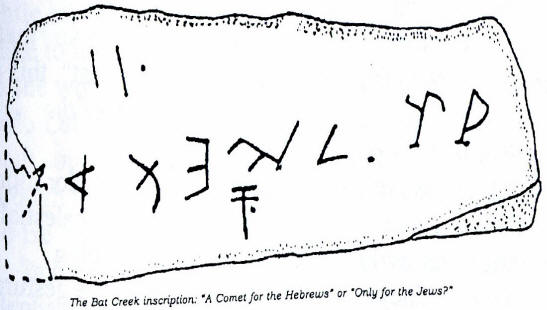
In addition to other startling claims, there is also the belief by the Northern
Cherokee that a rock that was uncovered in Tennessee in 1889 that is named the
Bat Creek Stone, proves a transatlantic connection to Jews.
Northup believes that the scratched writings on the rock indicate that the
stone is evidence of a first century Atlantic Crossing to America by these
escaped Jews that later became known as the Northern Cherokee Indians.
The Northern Cherokee attempted to gain full legislative recognition in the
State of Missouri in 1985 that was eventually vetoed by Governor John Ashcroft.
Governor Ashcroft made the following statement concerning his decision to veto
the recognition of the Northern Cherokee:
"The Federal Government has traditionally exercised authority with respect
to Indian Affairs. I am not persuaded that the state has such a substantial
interest in this area that it should become involved in the recognition of
Indian tribes."
Sources among some federally recognized Indian Tribes have stated that Mr.
Ashcroft's comments were 100% correct and should be referred to from time to
time.
James Adair is an earliest source of information concerning the American
Indians. He observed several Israelite characteristics in
the southern American Indians.
James Adair was a backwoods preacher that lived and traded with the
Southern Indians some forty years; he was called, by various writers, an
Englishman, a Scotchman, and an Irishman. He was of a noble birth, whose family
was of Earldom. His book was first published in London in 1775, and the main
reason he wrote this book was to give evidence to show that the Indians were
the lost tribes of Israel.
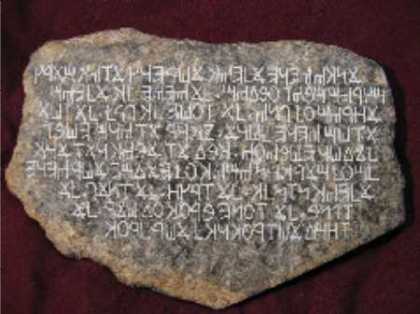
In recent times many stones have been turned up in America with ancient
writings on them. These writings were compared to writings in the old world,
and have been identified. These writings were found to be Arabic, Basque,
Celtic, Cuneiform, Egyptian, Gaelic, Greek, Iberian, Libyan, Norse Runic,
Numidian, Phoenician, and yes, there is ancient Hebrew inscriptions as well.
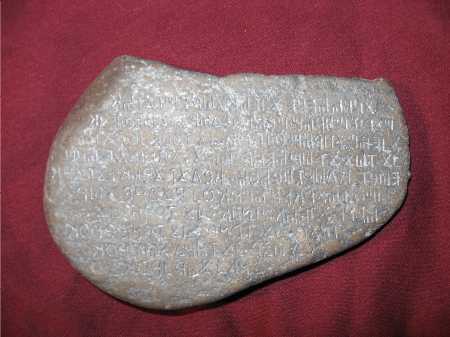
One of these inscriptions is the "Bat Creek Stone" discovered in
Loudon County Tennessee....
Usually interpreted "Only for the Yehudim"
(Jews)
With inscriptions like this popping up, its easy to see how someone
could come to such conclusions of the American Indians being the lost tribes of
Israel, but James Adair had no rocks to go by.
Moses warned the Israelites that if they departed from the covenant
faith that "YAHUWAH shall scatter thee among all people, from the one end
of earth even unto the other." Deuteronomy 28:64. Most scholars interpret
this to mean everywhere but America.
It is not the burden of this book to belabor the point too long, but it
is in order to at least mention some points, because they are so interesting.
The American Indians did practice certain aspects of the Hebrew
religion. "Cotton Mather in Boston, in the course of a long series of
extraordinary letters to the Royal Society in London, drew attention to the
existence, in Connecticut, of a tribe of Indians which practiced
circumcision." America B.C. p. 17
Even today the Cherokee nation honors the 7th day of the week. The
numbers 4 and 7 are sacred to them, largely because it is the fourth
commandment that sanctifies the seventh day.
A few evidences that James Adair listed:
1) They constructed their place of worship so "that their backs are
to the east, and faces to the west", this is after "the Jerusalem
copy"! Adair's History of the American Indians p. 118
2) "They do not pay the least perceivable adoration to any images,
or to dead persons; neither to the celestial luminaries, nor evil spirits, nor
any created being whatsoever. They are utter strangers to all the gestures
practiced by the pagans in their religious rites." Ibid p.20
3) "The Germans among them, frequently say "Yah-yah",
as an affirmative, they call them Yah-yah Algeh, Those of the
blasphemous speech'; which strongly hints to us, that they still retained a
glimpse of the third moral command delivered at Sinai." Ibid p.70
4) They "observed a weekly sabbath". Ibid p. 79 [This
Sabbath is the seventh-day, as the Cherokee observe and many Seminole, the same
day which Jews observed]
5) When they go to war they always carried their "sacred ark"
with them! Ibid p. 162
6) They rejoiced "at the appearance of the new moon." Ibid
p. 20
7) They "observed a year of jubilee"! Ibib p. 226
8) They used the word "HalleluYah" in their religious
gatherings etc.
James Adair, throughout his book, notes the set-apart name used by these
American Indians as Yo He Wah.
Josiah Priest, in his book American Antiquities p. 76 bears out that
this was from the Choctaw and Florida Indians.
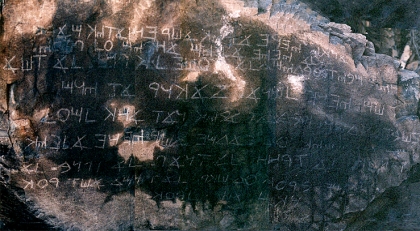
South
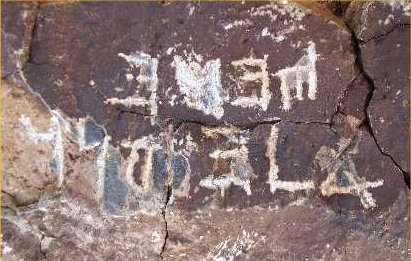
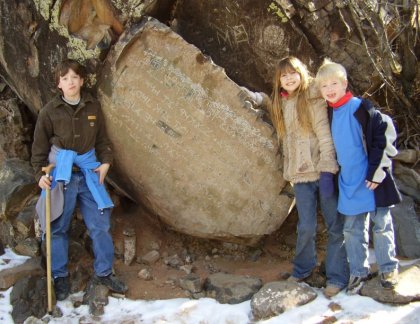
of Albuquerque, and west of Los Lunas, New Mexico, an ancient inscription was
carved into the face of a boulder centuries ago. It is the text of the
Ten Commandments, written in Hebrew.
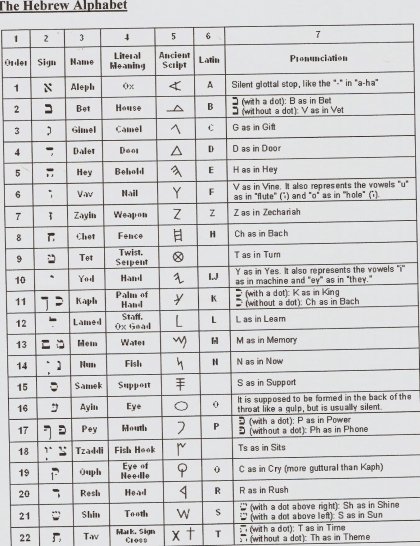
Of particular interest is the fact that the type of Hebrew
writing that was used was Paleo-Hebrew,
which is the form of Hebrew writing
that was used for approximately a one-thousand-year period,
ending about 500
BC. This means that we can fairly
conclude that the inscription of the Ten
Commandments was engraved on the face of
a boulder in New Mexico, North America, sometime prior
to 500 BC!
The Holy One of Israel
led colonies of righteous Israelites to the
land of America, prior to the destruction
of Jerusalem and the Babylonian dispersion
that occurred in about 587 BC. Harvard scholar Robert Pfeiffer. Pfeiffer, an expert
in Semitic languages, concluded that the
mysterious inscription was written in a form
of Paleo-Hebrew and paraphrased the Ten Commandments.
“I
am Yahweh thy God who brought thee out
of the land,” Pfeiffer’s translation began.
“There shall not be unto them other
gods before Me.”
Hebrew scholars, such
as Cyrus Gordon of Brandeis University near
Boston, have vouched for its authenticity.
Historian Steven M. Collins points out that
the “Las Lunas Stone” inscription in
archaic Hebrew was written in the Hebrew
letters of the style of the Moabite
Stone, dated to about 1,000 B.C. This
would place the writing on the stone
to the time of the kingdom of ancient
Israel under its most affluent and powerful
king, Solomon, who reigned from 1014 B.C.
to 974 B.C. sea voyages around the
world were fairly common during the time
of king Solomon, the son of David,
during Israel’s “golden age.”
Solomon’s
incredible wealth also strongly points to
the Las Lunas stone inscription as having been carved during his reign. Financing
sailing voyages of discovery and maritime
trade is no small feat. Vast sums and
investments are required. Solomon was the
wealthiest king who ever lived, and
undoubtedly had the resources to fund such
far reaching and dangerous voyages. Also,
during his reign Israel was in league
with the other major world powers of the day, including Tyre and the Phoenicians,
and the nation of Egypt.
It is ‘Hidden Mountain’ (5507’) in New
Mexico having the local “Mystery Stone”
as it is still called by the State,
now named the ‘Phoenician Inscription Rock’
on the official maps or “Mystery Rock”
in their ‘area attractions’ lists.
The
site is located 35 airmiles due SW of
Albuquerque on Hwy 6 (Historic ‘Route 66’)
at mm18 S of I-40 or 16 miles W
of I-25 at Los Lunas (where for it
has also become known as the “Los
Lunas Decalogue”).
It was once
an Israelite Wilderness Tabernacle site some
2500 or more years ago, with its high
place Altar inscription to ‘the LORD our
God’ of the Bible, and 80 ton boulder
“Commandments stone” Mezuzah ‘at the
gate’ -dating from the ‘Old Testament’
period of the Paleo-Hebrew ‘mother script’.
It is the only ’10 commandments’ yet
found in the ancient writing. Historically
the mountain was called Cerro Los Moqujino
(Cliff of the Strange writings) by the
Native Americans stating it pre-existed the
arrival of their ancestors into the area.
It’s
been said there exists about 2,000 glyphs
around Hidden Mtn. for a radius of
about 6 miles.
The
next most significant locale Hebrew is not
far away (in the Purgatoire River valley
due South of La Junta Colorado), where
the oldest written inscriptions in the US
are (c.1250 BCE. conservatively), from the
earliest Ligature phase of word-formation by
‘tying letters together into a picture’.
Those too have YaH inscriptions identifiable
with the Exodus people.
The actual massive rock which appears like a
small ship with cleared keel (maybe what
attracted his attention to it), of
the volcanic basalt from the top Tertiary shelf is a remnant of geological prehistory
which fell 2/3 of the way down the
mountain to become what now has stood
ground 2500+ years as a massive “Mezuzah”
(Bible script found at every Jewish
doorway). Set at a Right angle to the
Left of the main entry before a natural
gateway to this ancient site with
Altar having the same writing but at
exactly the opposite angle Leftward unto facing
the River where it’s flowing in a
strait line perfectly perpendicular to it.
Being the
greatest of only three ‘10 commandments’
stones found anywhere in the world (the
others being the “Ohio Decalogue” a much
smaller example in a unique type of the
post exilic Jewish square script and another
one of the “Michigan Artifacts” found
written in a Cuneiform style of Hebrew
graphics!) and therefore most worthy of
copy, these are made utilizing the complete
Alphabet, the best example of the print
closest to that writing of the original
tablets, as the Paleo is the only
Hebrew having an equal size characters
letter set which plotting on both sides
of two tablets according to the accounts
would’ve required. These remakes of it are
correct down to the very angle it sets
at, but without the ancient scribes mistake
of overlooking a part afterward realized and
inserted (with a diacritical mark^), with
the corrected spelling of a couple of
the words and addition of yet a couple
more he passed up for an accurate to
Exodus 20 readable abridgement of the full
Decalogue (as below unembossed)
There
are a surprising number of evidences and
corroborations that there have been Israelites
visiting and living upon the American
continents for thousands
of years.
Other inscriptions,
also written in Paleo-Hebrew, have been
discovered in the states of Iowa, Ohio,
and Tennessee, as well as in Brazil. In
Newark, Ohio, a carved stone of curious
workmanship was discovered which also bears
an engraved inscription of the Ten
Commandments of the Covenant – in
Paleo-Hebrew. At a site known as Bat
Creek cave, in Tennessee, an ancient Hebrew
inscription has been found which mentions
the Israelite tribe of Judah!
Another fascinating
archaeological discovery in America is an ancient artifact bearing an old Hebrew
inscription of the Ten Commandments unearthed
in Ohio in 1860. The tablet also
includes a scene of an individual –
Moses – carved into the front of the
tablet in considerable detail, holding the
tablets of the Ten Commandments. This
artifact was discovered in an ancient burial
mound.
Without
a doubt, these various inscriptions firmly
establish the fact that Israelites
were in America long before the arrival
of Europeans!
.
Native
Language & Customs
There are many Native American Indian customs that confirm
the fact of their Hebrew origins. Many
of those customs and linguistic evidences
were noticed and recorded by the first
Europeans who had contact with the various
Indian tribes. Congressman]; A
View of the Hebrews,
by Ethan Smith; and American
Antiquities, by Josiah Priest.
The
old customs of the American Indian people
included many
rituals that were the same, or partially
modified, from the equivalent Hebrew observances
of the Mosaic Law. Each Indian tribe displayed some
customs or traditions that are definitely
Hebrew in character. Examples include:
circumcision in some tribes; ritual purification
after touching a dead body; laws of
unclean meats [many Indian tribes followed
the dietary laws]; cities of refuge [to
which a person who accidentally
had committed a felony could flee for
safety from retribution]; levirate marriages [the
obligation of a brother to ‘raise up
seed’ to a deceased brother who left
a childless widow]; laws of niddah [separation] for menstruating women; ritual purification in
preparation for warfare; manner of marriage,
divorce, and punishment for adultery; their
lunar-based calendar; animal sacrifices; and many
others.
A
strong example of the Hebrew origin of
some American Indian people includes the
observance of annual holy days, which
correspond with the appointed feasts of the
Bible. For example, many Native American
tribes celebrated a spring holy day known
generally as the “feast of green corn”,
which was observed at the time of the full moon in early spring. Corresponding
with this, we find that in the Hebrew
calendar, the name for the month in
which the Passover occurs was originally known as
Abib,
which can be translated as “green ear
[of grain]”. Like the ‘feast of green
corn’, the Passover was observed at the
time of the full moon. Indian legends,
including that of the Yuchis, stating
they had migrated to the area of
Florida and Georgia from the region of the
Bahamas. According to their legends, the
island sank beneath the sea and they
fled for their lives.
These same Yuchis
later migrated to the Oklahoma territory,
where they eventually settled down. Amazingly
enough, they show strong evidence that they
had contact with the Old World in
historic times. They have a custom which
is unique among the American Indians. They
are racially and linguistically different from
their neighbors. Every year on the fifteenth
day of the sacred month of harvest, in
the fall, they make a pilgrimage. For
eight days they live in “booths” with
roofs open to the sky, covered with
branches and leaves and foliage. During this
festival, they dance around the sacred fire,
and called upon the name of God. The
ancient Israelites had the virtually identical
custom, in many respects. In the harvest
season in the fall, on the 15th day
of the sacred month of harvest (the
seventh month), theycelebrate the “festival of
booths” for eight days. During this time they lived in temporary booths, covered with
branches, leaves, fronds. This festival goes
back to the time of Moses and the
Exodus from ancient Egypt (Leviticus 23).
Dr. Cyrus Gordon, of Brandeis University in
Boston, was privileged to sit in on one
of the fall harvest festivals of the
Yuchi Indians, and listened to their chants,
songs, and sacred ceremonies. An expert in
Hebrew, Minoan, and many Middle Eastern
languages, he was incredulous.
As he
listened, he exclaimed to his companion, “My
God! They are speaking the Hebrew names
of God!”
Some
of the best-educated Europeans who first
contacted American Indians in eastern North
America noticed that, in the language of
many tribes, there were numerous words that sounded the same,
and had the same meaning
as Hebrew words! Among those reaching this
conclusion were notable early immigrants to
North America, such as William Penn, Roger
Williams, and Jonathan Edwards. Words that
have the same sounds and meanings in
Hebrew as they do in Indian languages
include words for: man, wife, the heavens,
prayer, winter, as well as numerous verbs
and phrases. Among the words that were nearly identical to the Hebrew were
Yo-he-wah
[corresponding to Yahweh], and ha-le-lu or ha-le-lu-yah.
Similarly, in the mid-1600’s, reports of
Hebrew-speaking Indians in South America first
came to the attention of Europeans. As
in North America, not only did the
Europeans discover many strong similarities
between the spoken
languages of the Indians and the Hebrew
language, they also reported seeing inscriptions
written in Hebrew, and a very strong
similarity between Indian customs and Israelite
practices.
Israelis
made to America thousands of years before
Europeans because there were sailors from
the tribe of Zebulon and they went all
over the world and left there mark.
They left from the City of Eilat also
it is recorded in the Old Testament
that Solomon sent his navy all over to
bring copper and silver and gold and
tin and minerals like turquoise for the
temple he was about to build. Also the
name and continent is mentioned in The
books of Talmud and Mishna that was
written thousands of years ago. Israel knew
that the world was round. The Vatican
accepted the world being round after man
stepped onto the moon and then and only
then did they apologize for wishing to
burn Galileo at the stake for stating
that the world is round.
- Scroll down
through ‘Older Posts’ at the end of each section
Do you LIKE this uniquely informative site?
Hours of effort by a genuinely incapacitated invalid are
required every day to maintain, write, edit, research, illustrate, moderate and
publish this website from a tiny cabin in a remote forest.
Now that most people use ad blockers and view these posts
on phones and other mobile devices, sites like this earn an ever shrinking
pittance from advertising sponsorship. This site needs your help.
Like what you see? Please give anything you can -
Contributeany amount and receive at least one
New Illuminati eBook!
(You can use a card securely if you don’t use Paypal)
Please click below -
And it costs nothing
to share this post on Social Media!
Dare to care and
share - YOU are our only advertisement!
For further enlightening
information enter a word or phrase into the random synchronistic search box @
the top left of http://nexusilluminati.blogspot.com
We provide
a live link to your original material on your site (and links via social
networking services) - which raises your ranking on search engines and helps
spread your info further!
This site
is published under Creative Commons (Attribution) CopyRIGHT (unless an
individual article or other item is declared otherwise by the copyright
holder). Reproduction for non-profit use is permitted & encouraged - if you
give attribution to the work & author and include all links in the original
(along with this or a similar notice).
Feel free
to make non-commercial hard (printed) or software copies or mirror sites - you
never know how long something will stay glued to the web – but remember
attribution!
If you
like what you see, please send a donation (no amount is too small or too large)
or leave a comment – and thanks for reading this far…
Live long
and prosper! Together we can create the best of all possible worlds…