Australia’s Centuries-Long Genocide Against Aboriginal
People
Wikimedia Commons
By
For
nearly two centuries, Australia pursued deliberate policies of extermination
against the native people that have left scars visible to this day.
Writing about the two months he spent in Australia during the around-the-world voyage of the HMS Beagle, Charles Darwin recollected this about what he saw there:
Wherever the European has trod, death seems to pursue the aboriginal. We may look to the wide extent of the Americas, Polynesia, the Cape of Good Hope, and Australia, and we find the same result…
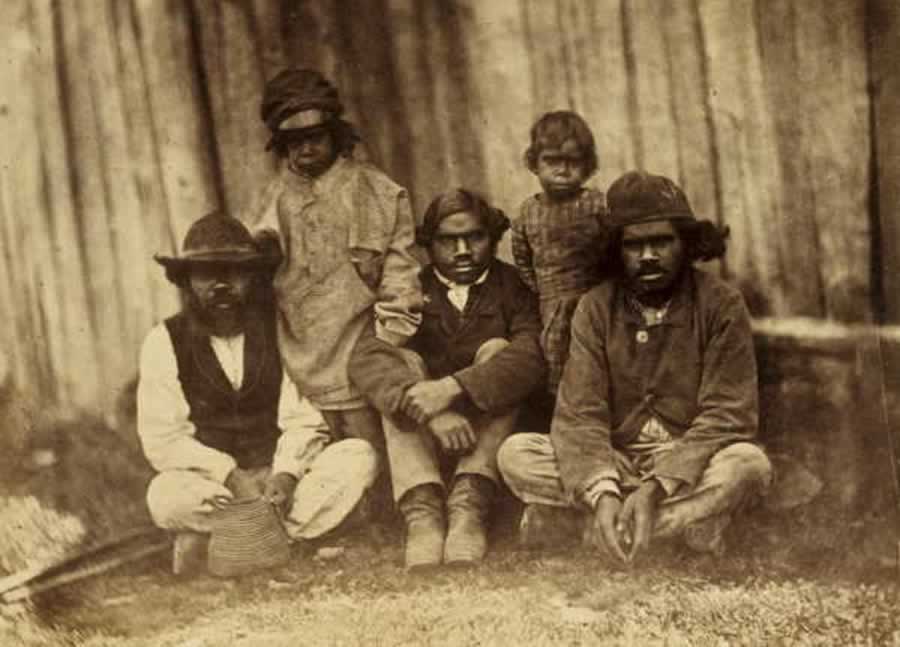
Darwin happened to visit Australia at a bad time. During his 1836 stay, all of the indigenous people of Australia, Tasmania, and New Zealand were in the midst of a catastrophic population crash from which the region has yet to recover. In some cases, such as that of the native Tasmanians, no recovery is possible because they’re all dead.
The immediate causes of this mass death varied. Deliberate killing of native people by Europeans greatly contributed to the decline, as did the spread of measles and smallpox.
Between disease, war, starvation, and conscious policies of kidnapping and re-education of native children, the Australian region’s indigenous population declined from well over a million in 1788 to just a few thousand by the early 20th century.
First Contact, First Casualties
We do know that the land they traveled to was extremely harsh. Highly unpredictable seasons have always made Australia hard to live in, and during the last ice age huge carnivorous reptiles, including a monitor lizard the size of a crocodile, inhabited the continent. Giant man-eating eagles flew overhead, venomous spiders scurried underfoot, and clever humans took the wilderness head on and won.
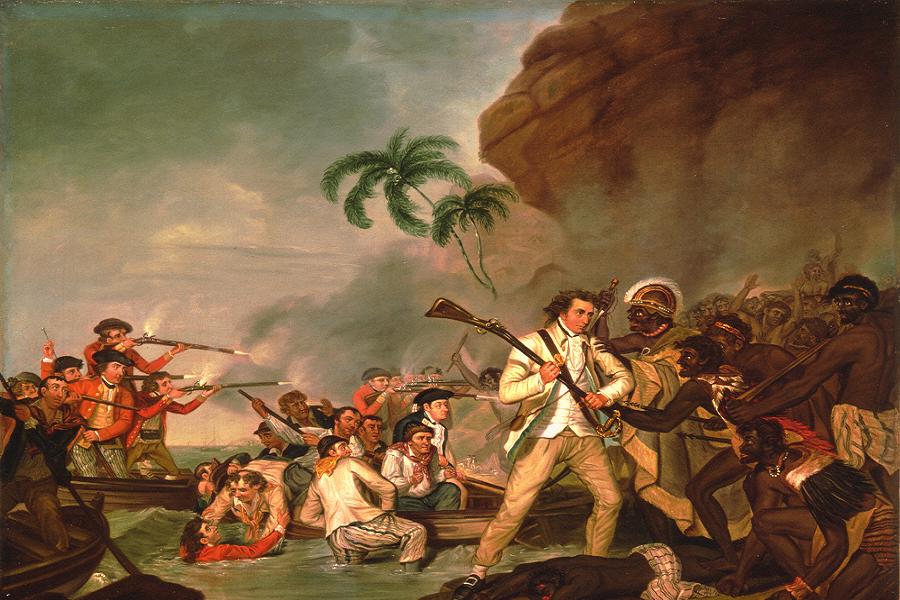
By the time British explorer James Cook’s expedition reached Australia in 1788, over a million people – virtually all descendants of those first pioneers – lived in almost complete isolation, just as their ancestors had for a thousand generations.
The consequences of breaking this airlock were immediate and devastating.
In 1789, an outbreak of smallpox nearly wiped out the indigenous people living in what is now Sydney. The contagion spread outward from there and destroyed whole bands of Aborigines, many of whom had never seen a European.
Other diseases followed; in turn, the native population was decimated by measles, typhus, cholera, and even the common cold, which had never existed in Australia before the first Europeans came along and started sneezing on things.
Without an ancestral history of coping with these pathogens, and with only traditional medicine to treat the sick, the indigenous Australians could only stand by and watch as plagues consumed their people.
The Press for Land
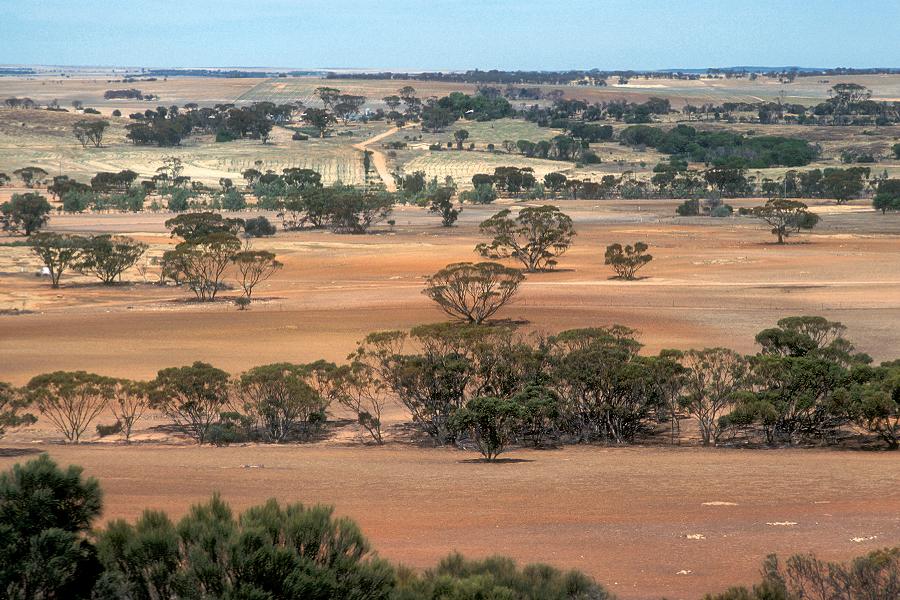
Wikimedia Commons Farmland near Bruce
Rock in the Western Australian wheat belt.
Australia’s soil is deceptively fertile; the first farms sprouted bumper crops right away and kept on producing good harvests for years. Unlike European or American soil, however, Australia’s farmland is only rich because it had tens of thousands of years to stockpile nutrients.
The land’s geological stability means there’s very little upheaval in Australia, so very few fresh nutrients get deposited in the dirt to support long-term agriculture. The bounteous harvests of the first years, therefore, were effectively gotten by mining the soil of non-renewable resources.
When the first farms gave out, and when colonists first introduced sheep to graze the wild grasses, it became necessary to spread out and cultivate new land.
As it happens, the children of those who survived the first epidemics occupied the land. Because they had a low population density – partly because of their hunter-gatherer lifestyle, and partly because of the plagues – none of these Stone Age nomads were in a position to resist settlers and ranchers with horses, guns, and British soldiers for backup.
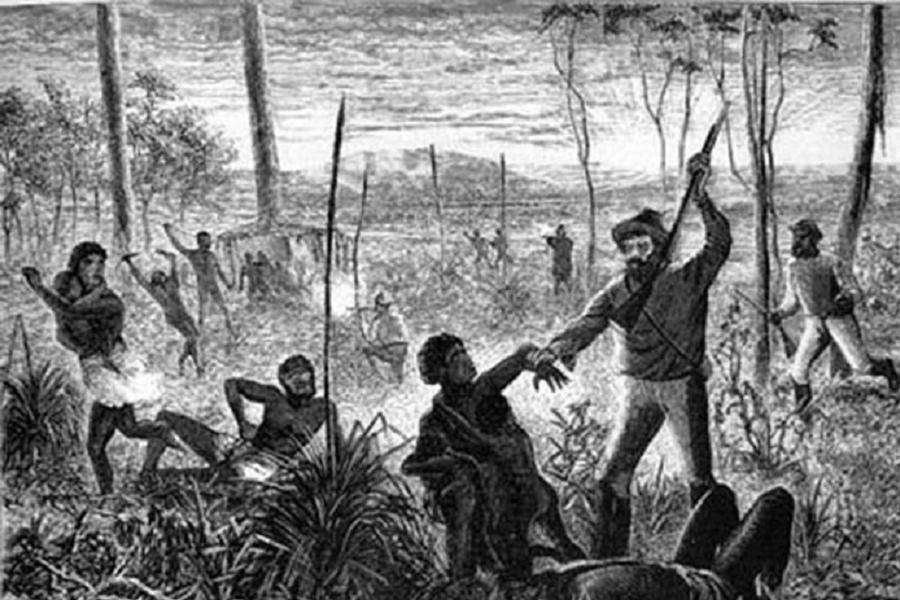
As such, countless Aborigines fled land that their ancestors may have inhabited for thousands of years, and colonists simply shot numberless tens of thousands others to keep them from hunting sheep or stealing crops.
No one knows how many Australian natives died in this way. While the Aborigines had no way to keep records of the killing, the Europeans seem not to have bothered: Shooting an “abo” became so routine that accurate records are impossible to come by, but the death toll must have been immense as vast new tracts of land opened up to replace exhausted soil every few harvest cycles.
Hunting for Sport
Wikimedia Commons
In some ways, differing understandings of property can help explain the ranchers’ slaughtering of natives. Colonists complained about traditional hunters poaching sheep that didn’t “belong” to them, and often had other property taken by natives who didn’t grow up with the same ideas about property rights that the English-speaking whites took for granted.
These losses cost the ranchers and farmers dearly and impaired the new colony’s growth, so the authorities eventually decided to let one problem solve another in perhaps the most grotesque way possible: bounty hunting.
In 1833, the Noongar tribe from south of modern-day Perth rose in a minor revolt. They mostly limited their resistance to spearing sheep, which did not amuse the territorial government.
The government placed a £30 bounty on a tribal elder named Yagan, whom settler William Keates eventually ran to the ground. Soon enough, Yagan’s pickled head made its way to London as a curiosity, where it remained until 1997.
This bounty method turned out to be popular and effective. In the early 1830s, governments across the colony offered bounties of £5 per aboriginal adult and £2 per child. By the middle of the decade, it was open season on the native people.
In a single action in 1832, over 5,000 whites formed a human chain in Van Diemen’s Land and drove through the bush as if they were a hunting party. Colonists forced Aborigines who escaped the drive to Flinders Island, where scarcity and disease nearly drove them extinct.
The Lost Generations
National Unity Government
This carnage eventually got to be a bit much for the British government, which had undergone a radical shift with the incoming Whig Party. These reformers got elected on a platform of abolishing slavery and limiting various other outrages in the colonies, as well as enacting major reforms at home. The new climate opposed open-air murder, and London started putting pressure on Australia to rein things in a bit.
In response, the Australian government actually charged a handful of whites with murder in the 1838 Stockman Case, which the Crown instigated after a dozen stock ranchers staged an unprovoked attack on a nearby camp of Aborigines. This marked the first time the state had formally charged whites for killing natives, and the whole colony watched to see how it would turn out.
When the court found the men guilty – and worse, sentenced some to hang – the settler population across Australia unfurled in outrage. Many protested and sent letters repudiating the decision, but they didn’t save the condemned men.
Still, the event marked a sea change in the way colonists treated native people. Going forward, the destruction of the native way of life would be far more appropriate for the papers back home — like assimilation.
The Crown government came up with a series of reforms aimed at civilizing the Aborigines. In the past, the native people could come and go as they liked, though at the risk of being shot on sight if they stepped out of line.
Under the new order, from about 1838 onward, they held a legal status akin to children. The Crown established a royal office for Aboriginal affairs, which assigned each group to a specific geographic area and issued permits for travel.
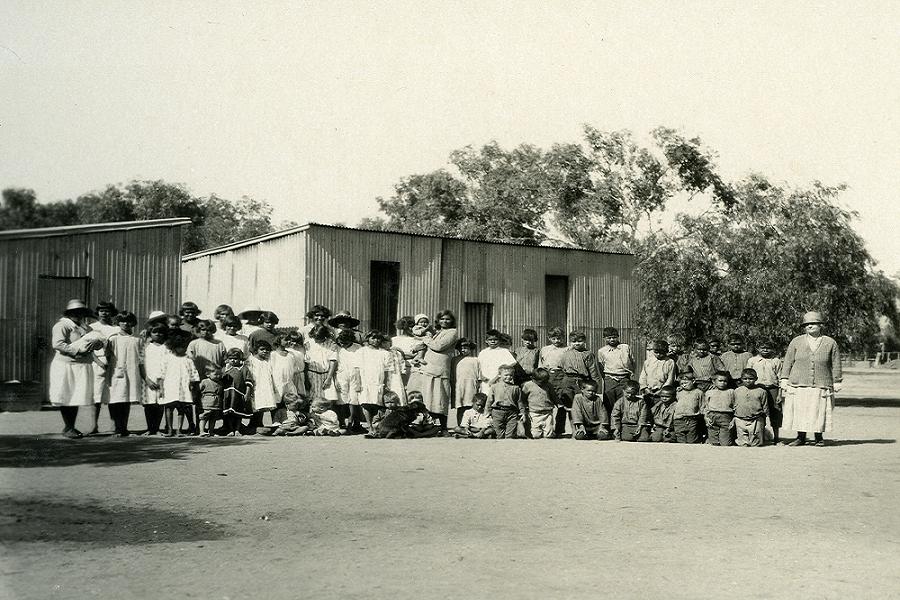
Commissions would approve marriages, along with job assignments and housing arrangements. The government assigned England-trained missionaries to each group to Christianize them. Likewise, colonial governments would routinely remove Aboriginal children from their parents and force them into schools to learn English, with severe punishments for speaking native languages.
The children had to dress, eat, live, and work like white children, which a regimen of physical punishment enforced. On top of the official abuse, the consequence-free environment of these schools invited rampant physical and sexual abuse that went almost totally unnoticed and unaddressed for decades.
By 1920, the children forced into these schools had become known as the “Stolen Generations.”
Much of the culture was lost as well. In 1905, for example, Fanny Cochrane Smith, the last full-blooded native Tasmanian and descendant of a group that had been isolated even from other Aborigines for 10,000 years, died shortly after pressing a wax cylinder of traditional songs. It is the only audio recording of the Tasmanian language in existence.
The Modern Legacy
Flickr
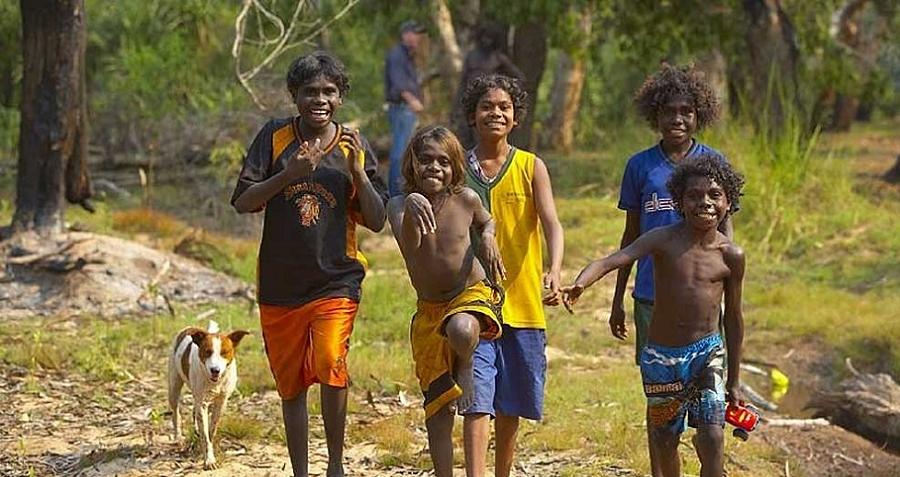
It goes without saying that populations don’t just bounce back from a century like this, and Australian policy throughout the 20th century didn’t help. The official policy of treating Aborigines like children in the custody of various appointed bureaucrats changed only very slowly, and it hasn’t completely ended even today.
For one, the first version of the Australian constitution excluded Aboriginal people from representation in government, as well as specifically depriving them of the vote. And in a country where it’s against the law to not vote, the government only granted Australians of Aboriginal descent suffrage in 1962, though they remained non-citizens regulated by the Flora and Fauna Act until 1967.
In the 1970s, the governments in Canberra and London made a few largely symbolic gestures to try to put things right, largely by returning the preserved remains of murdered Aborigines who had been put on display in museums and allowing traditional burials for them.
The de facto apartheid state gradually eased until full civil and legal equality was granted in every state, though not without a lot of strenuous objections in Queensland, which has a very high population of native people.
Today, things in Australia continue to move forward, but are still far from fair. Aboriginal artifacts and possessions continue to legally belong to the Crown, and deceased natives’ property still goes into receivership rather than being inherited by the next of kin, though in 2012 the Australian government admitted it was “considering” changing this law.
With a virtually annihilated culture and history, and with extremely tenuous property and voting rights, Aboriginal communities are rife with alcoholism and drug abuse, as well as all of the vices and afflictions common to impoverished ghettos around the world.
Fixing the problems that still kill thousands of aborigines a year does seem to be on the Australian authorities’ agenda, even if only on a “considering it” basis, but progress is slow and prone to reversal.
It
is possible that the descendants of Australia’s first people, after 60,000
years of isolation ended with 200 years of deliberate genocide, will continue
picking up the pieces for centuries to come.
Wikimedia Commons
From All That Is
Interesting @ http://all-that-is-interesting.com/australia-genocide
The Secret Country - First Australians Fight Back
(52:55)
For more information about Australian aboriginal people see
http://nexusilluminati.blogspot.com/search/label/australian%20aborigines
- Scroll down
through ‘Older Posts’ at the end of each section
Do you LIKE this uniquely informative site?
A genuinely incapacitated invalid maintains, writes, edits,
researches, illustrates, moderates and publishes this website from a tiny cabin
in a remote forest.
Now that most people use ad blockers and view these posts
on phones and other mobile devices, sites like this earn an ever shrinking
pittance from advertising sponsorship.
This site needs your help.
Like what you see? Please give
anything you can -
Contribute any amount and receive at least one New Illuminati eBook!
(You can use a card securely if you don’t use Paypal)
Please click below -
And it costs nothing
to share this post on Social Media!
Dare to care and
share - YOU are our only advertisement!
Video - https://youtu.be/-j_r0Wgg0T0
For further enlightening
information enter a word or phrase into the random synchronistic search box @
the top left of http://nexusilluminati.blogspot.com
And see
New Illuminati – http://nexusilluminati.blogspot.com
New Illuminati on Facebook - https://www.facebook.com/the.new.illuminati
New Illuminati Youtube Channel - https://www.youtube.com/user/newilluminati/playlists
New Illuminati’s OWN Youtube Videos
-
New Illuminati on Google+ @ For
New Illuminati posts - https://plus.google.com/u/0/+RamAyana0/posts
New Illuminati on Twitter @ www.twitter.com/new_illuminati
New Illuminations –Art(icles) by
R. Ayana @ http://newilluminations.blogspot.com
The Her(m)etic Hermit - http://hermetic.blog.com
DISGRUNTLED SITE ADMINS PLEASE NOTE –
We provide
a live link to your original material on your site (and links via social
networking services) - which raises your ranking on search engines and helps
spread your info further!
This site
is published under Creative Commons (Attribution) CopyRIGHT (unless an
individual article or other item is declared otherwise by the copyright
holder). Reproduction for non-profit use is permitted & encouraged - if you
give attribution to the work & author and include all links in the original
(along with this or a similar notice).
Feel free
to make non-commercial hard (printed) or software copies or mirror sites - you
never know how long something will stay glued to the web – but remember
attribution!
If you
like what you see, please send a donation (no amount is too small or too large)
or leave a comment – and thanks for reading this far…
Live long
and prosper! Together we can create the best of all possible worlds…
From the New Illuminati – http://nexusilluminati.blogspot.com