"All the World's a Stage We Pass Through" R. Ayana

Showing posts with label pharaoh's pump. Show all posts

Friday, 26 December 2014

How to Build the Great Pyramid: The Construction Stages of Cheops & How the Great Pyramid Made Monatomic Gold
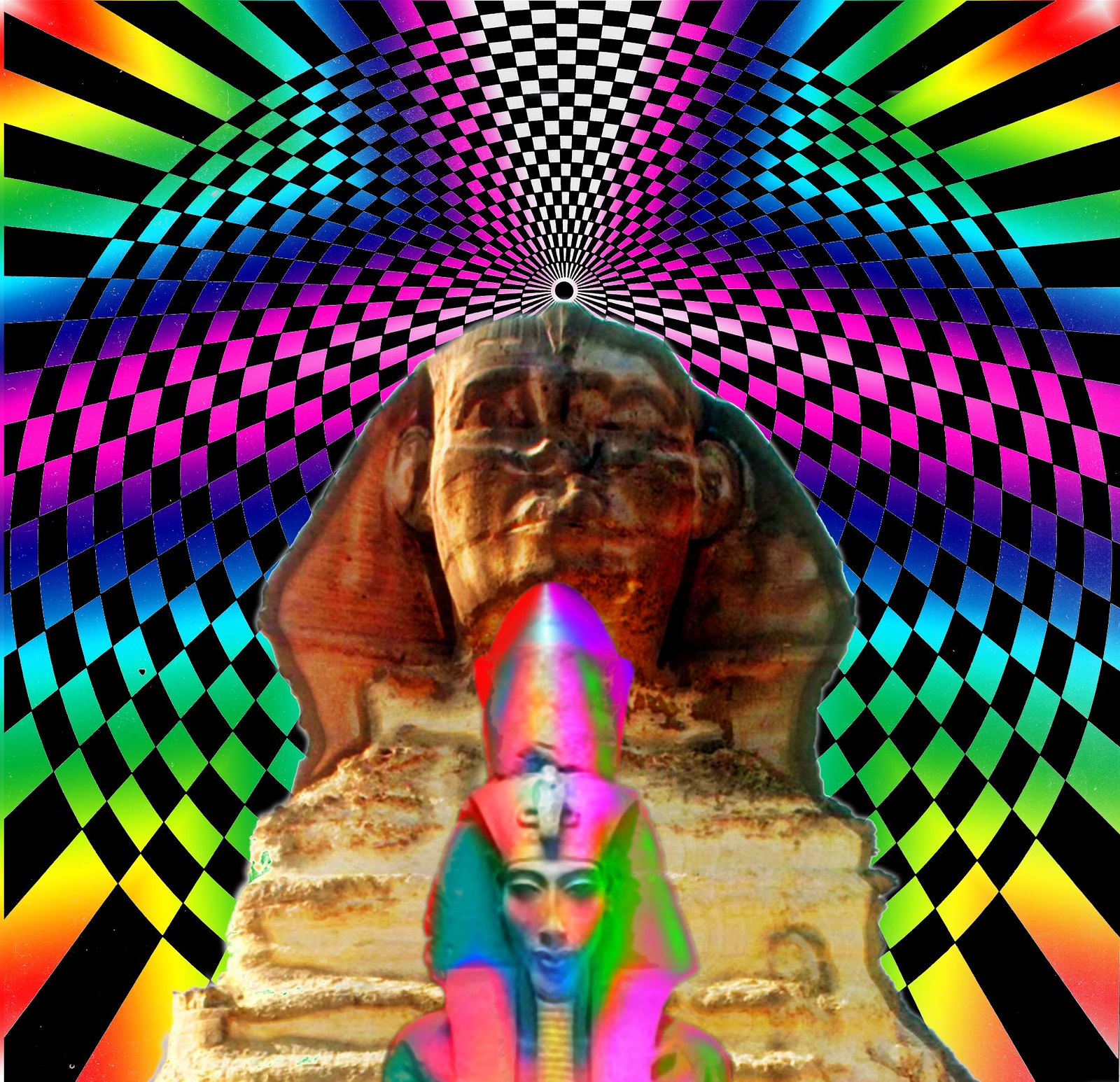

How to Build the Great Pyramid
The Construction Stages of Cheops
and
How the Great Pyramid Made Monatomic Gold

https://farm9.staticflickr.com/8074/8358110254_dacd1af7d0_h.jpg


 This is an alternative view of the construction of Cheops from The Great Pyramid Rainmaker. It is based on knowledge of how Cheops worked and its purpose as opposed to the third person account related by Herodotus. No researcher has been able to make sense of the currently accepted time frame for good reason; it is wrong.

‘Cheops was built in twenty years’ is repeated so often that it is rarely questioned. It had to have been constructed in a single lifetime in order to fit the tomb view. Scholars try to explain the pyramid with this in mind and invariably fail. This summary highlights the various working stages of the build and the value to the builders. It implies that the structure was probably constructed over many generations.

Several engineers and archaeologists have found evidence of water in and around the Great Pyramid. Here the implications for the building program and the functions are covered briefly. There are five phases outlined, though the pyramid could have received more than one refurbishment between any of the key stages. Each is deduced from the mechanic of the pyramid itself and data that is often overlooked in order to maintain the tomb view.


The five functional phases of Cheops


Each stage is summarized below. The evidence lies housed within the structure. It is a matter of showing how each phase worked under simple principles. The working machines were all neatly buried beneath tons of geometric rocks in the final phase. Despite the discovery of moving parts, water and a common scheme, Cheops is a tomb to the scholars. No matter what is found, there will always be an academic willing to find some new esoteric reason for it. There will no doubt also be a mystic and alternative writer to do the same.

Here the focus is on how to get the various parts working and what they meant for the builders. Importantly the science of each stage is known and was known to the ancient Egyptians. The various phases were break points where the utility could be exploited for decades before embarking on the next. There is a brief account of each step below. Hopefully it is enough to convince the open minded that Cheops was built over centuries and performed vital functions for long intervals. For a more detailed description read The Great Pyramid Rainmaker.


The Reservoir

The plateau was inhabited long before the pyramids were even conceived. It made a fine refuge from the flooding of the Nile, because of its height and the free flowing ground water. A cold water geyser system functioned where Cheops was eventually to be built. Its sediment raised the natural mound that is still at the core of Cheops.

The Reservoir ( (c) The Great Pyramid Rainmaker)


At this early stage there were no plans for a pyramid, just a need to capture the ground water and store it. The reservoir would allow large numbers of people to permanently settle the site instead of retreating as the water table dropped. To store the water the first settler-constructors built a retaining wall around the natural geyser. This is common to many ancient sites; great reservoirs are always an important facet of settlement.

The permanent settlers could thrive and build drainage channels and canals from the reservoir to convenient transport and irrigation networks. They also received a boost to their income each year as the flood migrants arrived. Ultimately Giza became a central hub of the ancient water network with locks and canals flowing to and from the plateau. This is a common function integrated into many pyramid complexes.

As each canal was dug, there was the natural byproduct of stone. This was used to create the first buildings on the plateau. Again this is a common feature in any pyramid building culture. It did not matter if the canal was dug into dirt or stone, the material was used to form the mass of the pyramids. On the plateau the extracted stone was immediately useful. The canals also provided routes for special stone to be brought in.

The wall is still on the plateau, though no doubt it has had many improvements since the first one was built. It likely started off as relatively small structure and grew to its final stature with time. The current one still has evidence of the overflow conduits. The main problem was that as the water table dropped, the water would back fill the caves beneath the plateau partly emptying the reservoir. A simple solution was needed, which leads to stage two.


The Mastaba Valve
In order to raise the level of water that could be stored a one way valve had to be constructed. It took the form of a simple platform or mastaba. Water flowed to the summit of the mastaba and then into the reservoir around it.


The mound was built up to a raised platform and the structure took the form of a mastaba or stepped pyramid. This is controversial. The affinity for the perfect four sided triangular pyramid is strong in the academic community. It is what makes Cheops such an enigma. However, most pyramids were built over time by adding increasingly larger steps. This is not viable under the tomb time frame, which might explain why it has been rejected. As will be shown, the evidence both physical and textual points to a staged build.


Benefits


The raised platform/pyramid acted as a simple valve. When water flowed to the summit, it could be stored and any excess poured down into the original reservoir. When the water table dropped with the seasons, the reservoir did not flow back into the ground beneath because of the raised inlet. This allowed much more water to be stored and used.


The Man Made Geyser


This phase of Cheops has evidence from the structure itself. The parts and mechanism make this abundantly clear. The use of the cold geyser technique to lift water to ever greater heights began here. The Queen’s Chamber is in effect the evidence with its pipes that no longer reach the outer layer. This part of the project also provides a clue as to the origins of the idea for the most ambitious next working stage.

The Man Made Geyser ( (c) The Great Pyramid Rainmaker) 


The Queen’s Chamber was built on the summit of the original platform and a stepped pyramid was built up to the 58th course. With outlet pipes in two directions, the chamber formed a man made geyser cavity. The immense amount of stone was needed to withstand the water pressure and support the summit chambers.

The mechanic of this phase was simple. Carbonated ground water was forced in to the QC by the natural water pressure. When it filled the QC, dissolved gas in the water was released by turbulence and the slight increase in temperature between the cool ground and the chamber. This gas forced the water down the QC and out of the ‘air shafts’. When the gas level reached the exit pipes, it vented in the classic geyser style. This is identical in principle to a soda siphon.

At this point most of the water had been pushed to the summit and the chamber was nearly empty. The pressure had also been decreased due to venting. The ground water pressure was now higher than the chamber’s, this sent water into the chamber and the cycle repeated. This is identical to Kunkel’s method for a single chamber. However, instead of steam being produced by heat, gas trapped in the water was released to provide the force. See Diagram (Blue is indicated by the water, Yellow is the gas).

The Queen's Chamber Mechanic ( (c) The Great Pyramid Rainmaker)


The remnants in the structure all add to improving this dynamic. The chamber design, the ‘air shafts’ to a previous summit, the solid sealed granite roof slabs and the mass of the structure all have distinct functions. They all contribute to the system.

The water pumping concept is common to other functional models of Cheops. Kunkel uses much the same pattern of support. However, his and all the other models introduce extra parts for the system. Excepting Cadman’s RAM pump, none of them work. Here, nothing needs to be added, except the natural fizzy water and the system will operate. Of course great chunks of the pyramid are removed for this phase, which is just as controversial.

This step pyramid was used in the same way as the other step pyramids. Some are known to have had water reservoirs on their summits and/or reservoirs surrounding them. Akapana and Angkor Wat are both recognized as having water reservoirs on the top level. This short Cheops was no different. It supported sanctuaries built in much the same style as the other step pyramids of Egypt.

Only one sanctuary is shown above, but there were likely the usual arrangement of five sanctuaries on the summit. The function and operation of the sanctuaries is described HERE, they were of great use to the builders. This type of pyramid structure in Egypt is mentioned by writers such as Herodotus, though not in the context of Cheops.

Gravimetric analysis of the structure shows steps up each side. The texts mention ‘battlements’, which implies ledges around the building. There are also references in the Pyramid Texts to a summit where the pharaoh’s body was cremated. None of these features are consistent with a smooth sided peaked pyramid. They are however in line with the more common tiered pyramids found in Egypt and the rest of the world.


Benefits


The gains at this stage include an increase in the volume of water that could be processed and energy independence with the solar aspects. The water was further degassed and warmed as it flowed down the side of the sun heated pyramid. Water and energy are always important factors in any settlement. This water was put to good use on the plateau for a number of industries that emerged. The transport network also grew to maturity at this stage.

 This phase also led to the origins of the penultimate Grand Design. There were two factors that evolved from the QC phase. The first and foremost was useful information. Most argue that Cheops was built all in one go, from the ground to the peak. This can not be the case if the structure was a machine because there was no way to know how high the natural water pressure would reach without a phased build. As the structure was built, the maximum water level became clear.

Secondly, a side effect of this stage was the impact of all the falling water. Likewise this could not have been known before the build and operation. No one could even guess at the effect since nothing so large had ever been built before. Water vapor had been seen in the solar chambers, but it was slight and short lived. The vapor was more of an irritant than a goal.

The massive flow of warm water down the side of Cheops led to an amazing insight that was applied with intent in the final working phase. The effect they noted was the mist that formed from the weir on the summit. At any hot geyser or large waterfall this same mist can be seen. It leads to unique weather patterns. The vapor from a geyser/waterfall laces the air with moisture. This causes fog and cloud which in turn makes localized rain. The mist and cloud likely inspired the builders on to the final working stage, where these properties were taken to a higher level.


From Secrets of the Sun Sects @ http://secretsofthesunsects.wordpress.com/2013/10/25/the-construction-stages-of-cheops/ and http://secretsofthesunsects.wordpress.com/2013/10/25/the-man-made-geyser/


How the Great Pyramid Made Monatomic Gold


See Also; The Pyramid Pump @ http://nexusilluminati.blogspot.com.au/2012/09/the-pyramid-pump-how-great-pyramid.html and http://nexusilluminati.blogspot.com.au/2012/01/new-theory-for-great-pyramid.html


For more information about the Great Pyramid pump see http://nexusilluminati.blogspot.com/search/label/pharaoh's%20pump 


For more information about the Great Pyramid see http://nexusilluminati.blogspot.com/search/label/great%20pyramid   
- Scroll down through ‘Older Posts’ at the end of each section


New Illuminati comments: While this represents a good outline of construction technique, the Great Pyramid itself was no ad-hoc construction but carefully designed from scratch to serve a number of purposes once erected - see the second video!


Hope you like this not for profit site -
It takes hours of work every day by a genuinely incapacitated invalid to maintain, write, edit, research, illustrate and publish this website from a tiny cabin in a remote forest
Like what we do? Please give anything you can -  
Contribute any amount and receive at least one New Illuminati eBook!
(You can use a card securely if you don’t use Paypal)
Please click below -


Spare Bitcoin change?


Xtra Images – https://farm9.staticflickr.com/8074/8358110254_dacd1af7d0_h.jpg
http://www.icestuff.com/%7Eenergy21/pumpinfo.gif

Videos -  http://youtu.be/y6geysnKSJo
http://youtu.be/DQvA-8V9t0Y


For further enlightening information enter a word or phrase into the random synchronistic search box @ the top left of http://nexusilluminati.blogspot.com


And see


 New Illuminati on Facebook - https://www.facebook.com/the.new.illuminati

New Illuminati Youtube Channel - http://www.youtube.com/user/newilluminati/feed


New Illuminati on Twitter @ www.twitter.com/new_illuminati


New Illuminations –Art(icles) by R. Ayana @ http://newilluminations.blogspot.com

The Her(m)etic Hermit - http://hermetic.blog.com


DISGRUNTLED SITE ADMINS PLEASE NOTE –
We provide a live link to your original material on your site (and links via social networking services) - which raises your ranking on search engines and helps spread your info further! This site is published under Creative Commons Fair Use Copyright (unless an individual article or other item is declared otherwise by the copyright holder). Reproduction for non-profit use is permitted & encouraged,  - if you give attribution to the work & author. Please include a (preferably active) link to the original (along with this or a similar notice).

Feel free to make non-commercial hard (printed) or software copies or mirror sites - you never know how long something will stay glued to the web – but remember attribution!

If you like what you see, please send a donation (no amount is too small or too large) or leave a comment – and thanks for reading this far…

Live long and prosper! Together we can create the best of all possible worlds…


From the New Illuminati – http://nexusilluminati.blogspot.com

Sunday, 10 August 2014

Was There a Civilisation X?


Was There a Civilisation X?

 http://www.world-mysteries.com/gp_emb.jpg


By EDWARD F. MALKOWSKI


poleshift1 Atlantis: everyone knows the name and almost everyone knows that the name refers to a mythical, sunken island continent in the Atlantic Ocean, according to a story told by the Greek philosopher Plato sometime during the 4th century BCE. Whether or not Atlantis existed has been a matter of conjecture for nearly four hundred years, ever since Francis Bacon published his novel The New Atlantis in 1626. Atlantis is a controversy that continues to this day.

For some folks, Atlantis existed just as Plato explained, but for others the idea alone runs across the grain of prevailing scholarship and archaeological investigation. For those who are sure Atlantis did exist, it is a belief. But for the skeptic, a prehistoric civilisation with technical sophistication is pure fiction. Unfortunately, for those who believe there is no proof, Atlantis has been ‘discovered’ by researchers in almost every part of the world, from South America to the Eastern Mediterranean to the British Isles.

Although scholarly consensus is convinced that Plato’s fictitious tale of Atlantis was based on the Island of Thera’s destruction in 1628 BCE, Atlantis remains as the Holy Grail of archaeology, even if archaeologists won’t admit it. Discovering evidence – even the smallest artefact – that the lost continent of Atlantis really existed would be the greatest find in the annals of all historical disciplines. History would not only be made, but have to be rewritten. However, until that evidence is discovered and confirmed, the controversy will rage on between believers and skeptics, with the skeptics having a distinct advantage. It’s all about evidence.

Solid evidence is important and there is no direct evidence that Atlantis existed. No ancient stone or sign has ever been found stating ‘Atlantis this Way’ or ‘Welcome to Atlantis.’ No artefact has been discovered proving that sophisticated Atlantean equipment was used by any culture or civilisation during prehistoric times. This being the case, why do some people insist that the story of Atlantis is fact?

The answer to this question lies in the Valley of the Nile, ancient Egypt, and the enigmatic Old Kingdom period. It’s where my hunt for Atlantis began.


STANDARD EXPLANATION MISINTERPRETS the EVIDENCE

The ruins of ancient Egypt are unique. Nowhere else in the world are there such magnificent megalithic structures as well as fields of granite. It’s obvious that the builders of ancient Egypt’s temples and pyramids used granite, as well as limestone and basalt, as primary materials in their architectural designs. The importance of this fact cannot be overlooked.

Working with stone is not easy and working with granite – the hardest rock known to man – and achieving any scale of economy in order to build big and build everywhere, like the ancient Egyptians did, is impossible without diamond studded tools. Today, such large and numerous projects on a big scale require specialised tools and equipment. Case in point: Giza’s Great Pyramid was the tallest structure in the world until France erected the Eiffel Tower in 1889.

So, how could the ancient Egyptians build an entire civilisation out of limestone, basalt and granite using little more than copper chisels, stone hammers, dolerite pounding rocks, and brute strength? How could a large number of granite statues, some in excess of forty feet tall, be carved with such detail and perfection and then erected?

The traditional explanation is that they did it with copper chisels, stone hammers, dolerite pounding rocks, and brute strength. However, for me, since no culture or civilisation was able to duplicate in complexity, scale, and quantity, the Old Kingdom construction efforts during the next 4,000 years, then the traditional understanding must be an incorrect interpretation of the evidence – the most erroneous being the Great Pyramid. Skepticism is a two-way street.

The idea that the Great Pyramid was a tomb defies logical and cogent reasoning. First, funeral items were never found within any of the pyramid’s chambers. Nor are there any inscriptions describing it as a tomb. Second, its internal design is strange and does not accommodate human beings. Passageways that lead to its three chambers are a little more than three feet in height and width. Nor are there any steps; so, to move about you have to crawl on your hands and knees. This makes moving about inside the pyramid next to impossible for anyone, let alone a ritual funerary party. Third, the walls and ceiling of the uppermost chamber, the alleged burial chamber, was built from seventy-ton slabs of granite with another five layers of granite in the area directly above its ceiling. Finally, as any good detective would consider important, a colossal structure such as the Great Pyramid requires enormous resources to build which, consequently, requires a valid and reasoned motive. A tomb is not one of them.

At a cost of thirty-five billion in adjusted (US) dollars, according to engineer Markus Schulte, there had to be a very good reason to build the Great Pyramid; a reason or a cause that united a nation in mind and in spirit. To be sure, the currently accepted idea that the Great Pyramid’s construction was a national project is an accurate interpretation of what likely happened. However, any large scale operation that consumes billions of dollars in resources must return some type of social benefit. In the case of the Great Pyramid, the benefit somehow involved water.

image_15
A trough links the pyramid/temple site to the valley below at Abu Sir. Image courtesy of the author.

image_17
Basin at Abu Gorab (1 mile north of Abu Sir). Image courtesy of the author.


On the Giza Plateau just south of the middle pyramid, a granite trough emerges from the sand (see illustration). At Abu Sir, south of Sakkara, a limestone trough runs the course of the hill on which a pyramid was built, and at both Abu Sir and its neighbour pyramid, Abu Gorab, there are numerous stone basins. Although denied by most Egyptologists, there is also evidence that a system of tunnels exists under the Giza Plateau. The so-called ‘Tomb of Osiris’ runs deep into the ground as does ‘the pit’ in the Great Pyramid’s subterranean chamber. Near the granite trough there is also two square tunnels drilled into the bedrock, although now filled with sand. Furthermore, the Great Pyramid’s original design included a perimeter wall, which might have functioned as a retaining wall for a reservoir for fresh water that flowed through a canal from the ancient Lake Moeris.


A DEVICE, NOT a TOMB

http://sentinelkennels.com/GPimages/rampump2.gif


In his 1967 book The Pharaoh’s Pump, Edward Kunkel put forth the idea that the Great Pyramid was a hydraulic device. According to Kunkel, the Great Pyramid served as a ‘ram’ style water pump in order to facilitate moving large quantities of stone. Through a series of locks, stone blocks arriving from Upper Egypt were moved onto the Giza Plateau by barge, through a system of canals that linked the Nile River to the Great Pyramid. In Kunkel’s theory, the Great Pyramid housed two pumps. One was built underground and a second pump was built above ground. The underground pump consisted of the subterranean chamber and its associated passageways, and the above ground pump, the middle and upper chambers.

The underground ‘ram’ style water pump used energy created by compressing water to maintain water flow, as did the middle chamber for the upper pump. In the lower pump, the subterranean chamber functioned as a compression chamber, and in the upper pump, the middle chamber functioned as a compression chamber. The odd niche in the middle chamber, according to Kunkel, was a safety value, and the upper (King’s) chamber, a secondary compression chamber.

Kunkel’s theory is not as wild as it first seems. In his book he discusses the archaeological evidence that supports his idea. However, the notion that the middle and upper chambers functioned as compression chambers is a stretch of engineering imagination. For the upper pump to function, water would have to enter the Grand Gallery from the lower pump and then flow into the middle and upper chambers. Once in the upper chamber, the continuous flow of water from below would create two streams exiting the pyramid through the shafts built into the north and south sides.

Unfortunately, Kunkel’s upper pump theory requires the creation of a vacuum, a number of valves, and some type of combustible fuel and combustion chamber to drive the pump, which according to Kunkel was located above the uppermost chamber. None of which appear plausible, although the theory that the subterranean chamber functioned as a ‘ram’ style water pump makes sense.

According to marine engineer John Cadman, Kunkel made the mistake of theorising that the entire pyramid was a water pump. Cadman realised that only the subterranean chamber and associated passageways would have functioned as a pump. So, Cadman set out to solve it the engineering way.

http://www.icestuff.com/~energy21/Imagemap.gif


With as many photos of the subterranean chamber as he could find, Cadman built a model to test his theory, the first of which didn’t work. Accordingly, he went over the model’s design looking for weak points, and built a second model. This one worked the first time. He then built two more models, one which was made with a glass top and ink injectors in order to study the flow of the water inside the chamber. After studying this model he concluded that the chamber was designed to efficiently circulate and move water through the output and waste line.

Cadman experimented further by adding a vertical pipe connected to the input pipe, called a ‘stand pipe’. In a ram pump, water enters the compression chamber from an elevated source. Inside the compression chamber an opened valve allows water to flow out until the velocity forces the valve shut; when the valve closes high pressure forces water past the check valve and through the output line. When the valve reopens, water once again flows down the input pipe into the compression chamber. A vertical pipe connected to the input line facilitates the pressure wave exiting the system and thereby allows greater cycling, i.e. water is moved through the pump at a faster rate. He also discovered that the stand pipe increases the intensity of the compression wave inside the chamber.

Cadman’s conclusion: whoever carved the subterranean chamber out of bedrock knew exactly what they were doing. The chamber’s design was deliberate and engineered to quickly move water through the system. Furthermore, the compression wave resulting from the pump’s action was apparently more important to the builders of the pyramid than the water being pumped. This leads to another question: why would the pyramid builders design a device that intentionally sent a compression wave up through the body of the pyramid?

Although the answer to that question still lies in the future, the significance of Cadman’s modelling of the Great Pyramid’s subterranean area is obvious. The builders of the Great Pyramid understood engineering physics, at least in the area of hydraulics which requires scientific inquiry and the application of science; in other words, technology.

Herein is the answer to how the pyramid builders built an entire civilisation out of limestone, basalt and granite. If they had achieved an understanding of hydraulics sufficient to build a large ram pump, certainly they also achieved an understanding of physics sufficient to develop some type of machine technology.

Of course, skeptics would argue if they used machines to build, then where are the machines now?

I, too, would like to know what happened to the machines, but the reality is the machines they used, or what is left of them, probably disintegrated and returned to the elements from which they were made long ago. Exposed to weathering, only rock can withstand the corrosiveness of the environment for extremely long periods of time, although the possibility exists that beneath the Saharan sands lies the machining treasure of Civilisation X. Even so, there is another way to demonstrate that powered machines were used in the process of building the Old Kingdom’s magnificent structures.

Whether a hand tool or power tool, every tool leaves its mark, and marks from hand tools are very different than those made by machines. Anyone who has taken metals or wood shop in high school knows this to be true. A cut made from a table saw is flat and straight where as a cut made by a person using a hand saw is less precise, not quite as flat or straight.

The telltale signs of a power tool or machine are the minute marks the blade’s teeth make as they remove material. Although difficult to see, close up the marks from the blade are visible and make a regular pattern across the surface of the cut material. These marks are called ‘feed lines’ and are left by the machine as the operator feeds the material into the cutting blade. Finding evidence of feed marks on stone at one of Egypt’s ancient sites would be the equivalent of finding the machine that made those marks.


THE STONE AT ABU RAWASH

With the Great Sphinx and three pyramids, the Giza Plateau is the jewel of Egypt’s modern day tourist economy, and rightfully so. Without question there is no other place with such magnificence. However, there’s little-known ancient ruins five miles to the north, just off the road to Alexandria, called Abu Rawash. It’s not on the tourist map, but is as spectacular as Giza, although in a very different way.

According to Egyptology, Abu Rawash’s pyramid was built 4,570 years ago during the fourth dynasty by Djedefre, that dynasty’s third ruler. What’s fascinating about this pyramid is that it was never finished. Only fifteen or so courses of the pyramid were laid and the descending passage is exposed to the sky. It’s a fantastic site to visit and provides insight into pyramid construction and design.

image_19
Machined granite slab at Abu Rawash. Image courtesy of the author.


The most intriguing aspect of Abu Rawash, though, lies on its south side, a hundred feet or so from the base of the pyramid. There is a pink granite slab approximately four feet in length, three feet wide, and a foot in thickness. It’s propped up on a dozen or so stones the size of a softball. The granite stone is pristine, as if it was hidden away for thousands of years and only recently uncovered. The surface of the stone is smooth to the touch and at its top is an arc, precise in its edge, which separates the stone’s smooth surface from its rough. On the smooth surface there are two slice marks, one near the top and another toward the bottom. And as you look close at the stone’s surface, minute horizontal striations are clearly visible in the same pattern of the separating arc.

Unmistakably, this pink granite slab was cut using a machine; irrefutable evidence that whatever construction crew was responsible for the pyramid at Abu Rawash, they were using some type of power saw. Abu Rawash isn’t the only place, either.

There is evidence elsewhere that powered equipment was used by the pyramid builders – on the Giza Plateau, on the east side of the Great Pyramid at the north end of the basalt patio. Originally, the machine marks on these stones were not visible, hidden by adjoining blocks of a finished patio. But sometime over the course of the last four thousand years or more scavengers removed a number of blocks from the patio’s periphery, particularly the north end, exposing what the pyramid builders did not want anyone to see. Mistakes made by the men who operated the saws. At Giza, the evidence is just as compelling as what exists as Abu Rawash.


WAS THERE a CIVILISATION X?

Since the ancient Egyptians that lived from the third through the first millennium BCE were not known to have developed machine technology, and no other civilisation since has until modern times, the builders responsible for the stone at Abu Rawash and the Great Pyramid’s basalt patio must have existed at a remote time in prehistory. The evidence speaks for itself.

There was Civilisation before Civilisation. I like to refer to it as Civilisation X.

Who were they? Was Egypt a colony of Atlantis as some theorists have put forth? Or were they an unknown culture never described by ancient peoples?

Although everyone knows that the story of Atlantis is attributed to the Greek philosopher Plato, most people don’t realise the story of Atlantis is Egyptian in origin. According to Plato’s dialogues Timaeus and Critias, he heard the story second hand from his uncle Solon who originally heard it from the temple priests at Sais where the Atlantis tale was said to be inscribed upon the temple’s pillars. Unfortunately, such an inscription has never been found. So no one knows whether or not Plato’s story of Atlantis is fact or fiction.

There’s no question that Plato’s tale of Atlantis was a social moral. The pertinent question is, in my opinion, was there a kernel of truth to the story? In other words, was Plato inspired to write Timaeus and Critias from known history of the time?

I think that is likely the case. There are a number of ancient cataclysm myths such as the Greek’s Deucalion’s Flood, the Hopi’s ‘Blue Star’, Sumer’s ‘The Epic of Gilgamesh’, and Egypt’s story of ‘Hathor as the Eye of Ra’, just to name a few. There are also two tales of catastrophe in the biblical Genesis, Noah’s Flood and the Tower of Babel.

In modern times these ancient stories of death and destruction have been attributed to fantasy or a way of explaining life’s mysteries. I think such an interpretation is not only superficial but an insult to our ancestors. Who are we to say they were primitive and ignorant in their understanding of the world around them?

Indeed, we should understand these ‘myths’ for what they are, ancient history told as a story in oral tradition that was designed to be understood as metaphor to be interpreted, and not a literal account. With that in mind, a fresh look at the biblical Tower of Babel story allows unique insight into our remote past. On its surface, the Tower of Babel story is just another fable where God’s wrath befalls an unsuspecting world:

The whole world had one language and a common speech. Mankind was capable of planning and completing just about anything. Now the whole world had one language and a common speech. As men moved eastward, they found a plain in Shinar [Babylon] and settled there.

They said to each other, “Come, let’s make bricks and bake them thoroughly.” They used brick instead of stone, and tar for mortar. Then they said, “Come, let us build ourselves a city, with a tower that reaches to the heavens, so that we may make a name for ourselves and not be scattered over the face of the whole earth.”

But the LORD came down to see the city and the tower that the men were building. The LORD said, “If as one people speaking the same language they have begun to do this, then nothing they plan to do will be impossible for them. Come, let us go down and confuse their language so they will not understand each other.”

So the LORD scattered them from there over all the earth, and they stopped building the city. That is why it was called Babel – because there the LORD confused the language of the whole world. From there the LORD scattered them over the face of the whole earth.

– Genesis 11:1-9

Taken literally the story makes little sense. However, as metaphor the imagery is easy to understand. First, the word Babel in Hebrew sounds like the Hebrew word for confused. In my opinion what they were building was not a literal tower. In fact, the tower they were building was not a tower at all. The tower represents the technical state humanity had achieved at that time and that they were building a great civilisation. The text is clear on this point: “mankind was united through a single language and could accomplish just about anything.”

It’s ludicrous to think that some magic event occurred that picked people up and moved them across the world while at the same time mysteriously altering their language. This, too, is metaphor.

In the insurance industry customers are protected from floods, fires, tornados, and other unfortunate events. They are referred to as ‘Acts of God’ and are nothing more than natural disasters. Today, although we know that the disaster is a result of nature, we still perceive these events as acts of God. And a number of people, particularly those who hold spiritual views, assign their responsibility to God. Why would it be any different five thousand years ago?

I don’t think it would. We still blame God today for all sorts of personal disasters.

What the Tower of Babel story is expressing in metaphor is that a natural disaster of immense proportions occurred that decimated civilisation. Over many generations, isolated pockets of survivors struggled back onto the road of civilisation, and because of their isolation unique languages developed in diverse regions.


HISTORY UNLEASHED

According to history pundits, civilisation emerged around the world at about the same time, around 3000 BCE; in the Nile Valley, the Indus Valley, Mesopotamia, as well as South America at Caral, Peru and Japan from within the Jomon culture. Scholars interpret the sudden rise in societal organisation as an evolutionary phenomenon, a natural progression of humankind. But how do we know that as a fact?

We don’t. It’s an assumption based solely on archaeological evidence, and given the evidence for the use of powered equipment at Abu Rawash and Giza, and the scientific modelling of the subterranean section of the Great Pyramid, it appears to be a false assumption.

Maybe we should pay more attention to ancient myth such as the story of Hathor as the Eye of Ra and ancient records such as the Palermo Stone or the Turin Papyrus.

According to the Turin Papyrus, before Egypt’s first dynasty – preceding 3000 BCE – the ‘Followers of Horus’ ruled for 13,000 years and before them ‘the gods’ ruled for 20,000 years. Thus, according to the ancient Egyptians their civilisation’s history dates back 36,000 years.

What happened to obscure this history?

Between 14,000 BCE and 9,000 BCE catastrophe occurred on our planet, a cataclysm we simply refer to as ‘the end of the Ice Age’; science refers to it as the Terminal Pleistocene Extinction. We know for a fact that during that time many large mammalian species became extinct. If civilisation existed at that time, and the evidence is convincing that it did, the women and men living at that time would also have suffered the consequences of global calamity. For the survivors it would have been a long and difficult journey on the road to re-establishing civilisation.


http://www.world-mysteries.com/gp_pidwg.gif

Edward Malkowski‘s book – Ancient Egypt 39,000 BCE: The History, Technology & Philosophy of Civilization X – takes a fresh look at the physical and textual evidence for a technical, prehistoric civilisation.

.

EDWARD F. MALKOWSKI has a lifelong interest in history, particularly ancient history with a special interest in philosophy and the development of religious beliefs from ancient to modern times. With the opinion that the ancient biblical stories in Genesis were based on historical fact, during the late 1990’s he began investigating such a possibility which led to his first book Sons of God – Daughters of Men. This led to a deep interest in the origin of civilisation, the curiously large monuments of Egypt’s Old Kingdom, particularly the Sphinx, and the influence Egyptian philosophy and culture exerted in the ancient world. Two more books were the result: Before the Pharaohs and The Spiritual Technology of Ancient Egypt. Edward will take a fresh look at the physical and textual evidence for a technical, prehistoric civilisation in his next book, Ancient Egypt 39,000 BCE: The History, Technology & Philosophy of Civilization X. He is also a contributing author to The Search for Lost Knowledge: A Graham Hancock Alternative Science and History Reader edited by Glenn Kreisberg. For further information, please visit his websites www.sonsofgod-daughtersofmen.com and www.civilizationx.com.

The above article appeared in New Dawn Special Issue 8.
 © New Dawn Magazine and the respective author.
For our reproduction notice, click here.


From New Dawn @ http://www.newdawnmagazine.com/articles/was-there-a-civilisation-x-evidence-indicates-there-was


For more information about the lost global civilisation see http://nexusilluminati.blogspot.com/search/label/antediluvian%20world
- Scroll down through ‘Older Posts’ at the end of each section


Hope you like this not for profit site -
It takes hours of work every day to maintain, write, edit, research, illustrate and publish this website from a tiny cabin in a remote forest
Like what we do? Please give enough for a meal or drink if you can -  
Donate any amount and receive at least one New Illuminati eBook!
Please click below -


Xtra Images – http://www.world-mysteries.com/gp_emb.jpg
http://sentinelkennels.com/GPimages/rampump2.gif
http://www.icestuff.com/~energy21/Imagemap.gif
http://www.world-mysteries.com/gp_pidwg.gif


For further enlightening information enter a word or phrase into the random synchronistic search box @ http://nexusilluminati.blogspot.com

And see


 New Illuminati on Facebook - https://www.facebook.com/the.new.illuminati

New Illuminati Youtube Channel - http://www.youtube.com/user/newilluminati/feed


New Illuminati on Twitter @ www.twitter.com/new_illuminati


New Illuminations –Art(icles) by R. Ayana @ http://newilluminations.blogspot.com

The Her(m)etic Hermit - http://hermetic.blog.com


The Prince of Centraxis - http://centraxis.blogspot.com (Be Aware! This link leads to implicate & xplicit concepts & images!)


DISGRUNTLED SITE ADMINS PLEASE NOTE –
We provide a live link to your original material on your site (and links via social networking services) - which raises your ranking on search engines and helps spread your info further! This site is published under Creative Commons Fair Use Copyright (unless an individual article or other item is declared otherwise by the copyright holder) – reproduction for non-profit use is permitted & encouraged, if you give attribution to the work & author - and please include a (preferably active) link to the original (along with this or a similar notice).

Feel free to make non-commercial hard (printed) or software copies or mirror sites - you never know how long something will stay glued to the web – but remember attribution! If you like what you see, please send a donation (no amount is too small or too large) or leave a comment – and thanks for reading this far…

Live long and prosper! Together we can create the best of all possible worlds…


From the New Illuminati – http://nexusilluminati.blogspot.com