"All the World's a Stage We Pass Through" R. Ayana

Showing posts with label united nations. Show all posts

Friday, 27 January 2012

When war is illegal paying tax is a war crime

When war is illegal paying tax is a war crime

 http://www.globalresearch.ca/coverStoryPictures2/27779.jpg


by Paul S.


It is a crime to pay tax. This statement may, at first, appear improbable – yet it is true. The truth of it is embedded firmly in international law, and this law is explicit and unequivocal.

At the Nuremberg War Crimes Tribunal it was stated that ‘individuals have international duties’ which transcend allegiance to their individual nation state. This makes it clear that each citizen has a responsibility to ensure their own personal conduct does not breach international law which overrides the laws of their own governments.

Let’s look at what these laws are: in 1950, the United Nations enacted the seven universal laws of war known as the Nuremberg Principles, principle six of which clearly defines the crimes which are ‘punishable under international law’: crimes against peace, war crimes, and crimes against humanity. These joined the offence of genocide as the world’s worst crimes. ‘Crimes Against Peace’ specifically prohibits ‘wars of aggression’ the definition of which our ‘interventions’ in Iraq, Afghanistan and Libya clearly satisfy. By deploying high-explosive weapons which they knew would cause massive death and destruction our leaders demonstrated intent and so are guilty of war crimes.

In 1998, after fifty years of illegal wars in breach of the Nuremberg Principles, 132 states, in an attempt to block the loopholes allowing nations to commit these crimes with impunity, drew up the Rome Statute of the International Criminal Court. Article 25 of the Rome Statute states that a person is criminally liable who ‘aids, abets or assists’ in the commission of such a crime ‘including providing the means for its commission.’

This statement is crucial; state sponsored wars such as those waged against Afghanistan, Iraq and Libya can only be fought with the consent of a majority of the citizens, specifically through gathering their taxes. Governments cannot wage war without the money to buy weapons, pay troops or purchase supplies. Without the support of taxpayers and moneylenders war would be impossible. Taxpayers who fund illegal war commit a war crime.

When war is illegal paying tax is a war crime


Your duty is clear then, as a citizen whose taxes are being used to commit war crimes you are committing those same crimes. The only way to avoid liability is to withhold your taxes, by doing so you will be upholding the law. But is this only about stark legalities? Do we not also have moral duties which impel us to act?

Significantly, in this case, the law takes into account your conscience: Nuremberg Principle number four states that even if a person acts under the orders of their government this ‘does not relieve him from responsibility under international law, provided a moral choice was in fact possible to him’.

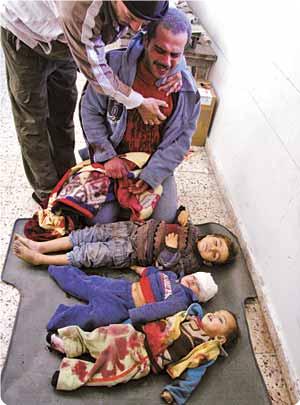
Let us then ponder that in ten years NATO and ISAF governments have caused the deaths of 800,000 adults and 400,000 children, injured three million people and driven eight million into exile and destitution. These very real human beings – are they worthy of your moral consideration? International law says yes. What do you say?

http://realsociology.edublogs.org/files/2011/09/tony-blair-war-criminal-24yci9n.jpg


Practical War Tax Resistance #2
To File or Not to File an Income Tax Return
 
  For reasons of conscience, many people believe that they should resist  military spending by refusing to pay federal income taxes. 

The first leaflet in this series, Controlling Federal Tax Withholding explains how some resisters prevent the withholding of war taxes from wages and salaries by claiming extra allowances on W-4 forms. Practical WTR #3 deals with resisting collection, or making the most of collection when it occurs. Practical WTR #4 discusses war tax refusal through self-employment, and contract employment. Practical WTR #5 deals with the option of living on a reduced income or on an income which is below the taxable level. Practical WTR #6 on organizational war tax resistance, outlines issues for employers, contractors, and financial institutions, and Practical WTR #7 will deal with social security and health issues for aging resisters.
 
  People who have just begun to resist war taxes typically ask, “What should I do when it’s time to file my income tax return?” Many refusers decide not to file tax returns at all. This pamphlet explores the risks, the benefits, and other consequences for war tax refusers who do file annual tax returns, and for those who do not.
 

Philosophical Reasons for Filing or Not Filing

 
Apart from practical personal benefits or risks (see below), many people make a decision on the filing question based upon ethical, religious, or political beliefs about war tax refusal.
 
   Philosophical arguments for filing returns include the following: 
 
  The idea of equitable taxation for social needs is sound in itself, therefore we should cooperate with the underlying taxation system, while openly resisting only the appropriation of taxes for war.

  The moral basis of conscientious war tax refusal relies upon open disobedience and acceptance of consequences. We should resist taxes openly, and not evade them or conceal our income in any manner. (Although some non-filers are public about their refusal to file.)

    The moral and political impact of conscientious tax refusal comes from informing the IRS and our political representatives about our protest and the reasons for it. If we refuse taxes without informing the IRS, there will be no political impact, because we will not be clearly distinguishable from millions of others who evade taxes for reasons of personal benefit.

  The act of political protest within the system is more significant than preventing specific collection of taxes from us.
 

Arguments for not filing include the following:
 
Because of the domination of militarism, the US tax system has becomes so perverse and distorted that it does not serve a positive social purpose. If we wish to contribute to the needs of society, we can do that more effectively by taxing ourselves and contributing to the unmet needs that we see, instead of cooperating with the federal taxation system in any manner.

  The federal government and the IRS have become morally illegitimate. We have no obligation to cooperate with them, or to accept the penalties and harassment that they impose on tax refusers.

  The political impact of filing protest returns is negligible. IRS employees are unlikely to pay attention to the protest part; because of their vested interests they are among the people least likely to be influenced by our ideas. We can refuse taxes openly without reporting ourselves to the IRS. We can have more political and social impact by talking openly about our tax refusal to friends and co-workers who are more likely to be influenced by us, and we can communicate openly with the general public through leaflets, public education, and letters to periodicals.

  Preventing assessment and collection is more significant than tax protest alone, because when we prevent collection, we are able to use thousands of dollars of uncollected taxes to directly finance political, educational, and social causes that meet the true needs of society. If we countenance assessment and collection we have fewer resources left to devote to the common good.


Practical Benefits and Drawbacks
 
 Those who file income tax returns as required by law provide a lot of information that can be helpful to the IRS in collecting the tax. They disclose the amount and the source of their income. They disclose the location of assets, such as savings or stocks, which produce income. When they sign an income tax return, showing tax due but not paid, they are also consenting to the assessment of the tax. This is an important step in the collection process, because without an “assessment,” voluntary or involuntary, there can be no collection. Signing a tax return showing tax due is a “self-assessment” that allows the IRS to proceed directly to the collection process.
 
            If you do not file your own income tax return, the IRS needs to file a return in your name, mail you a copy, allow you to appeal and then make a final assessment of tax due, before they can demand payment and begin the collection process. These steps are time consuming, and each delay tends to decrease the likelihood that the IRS will ever get to the stage of active collection efforts.
 
            Delaying assessment and collection efforts has both benefits and drawbacks. The main benefit is that the IRS may never assess or collect the tax at all. The main drawback is that delayed assessment will result in large civil penalties, interest accumulation and an extended statute of limitations.
 
            There are separate penalties for delinquency, for negligence, for failure to pay estimated tax, for late payment, and so forth. The civil penalty for failure to file is independent of, and ten times greater than, the penalty for late payment. When the penalties and interest are added on they often double or triple the total amount claimed by the IRS when they finally get around to processing their claim.
 
            To be hit suddenly with assessments for tax liabilities piled up for several years, plus added penalties and interest, can be very intimidating for anyone who feels vulnerable to the IRS collection tactics. Until the tax is paid or collected, interest continues to accrue at a high rate, and is compounded daily. Also, when the IRS files for you, they may assert excessive claims, because they make errors in estimating your income, or because they do not allow for exemptions, deductions or credits that you would claim if filing for yourself. Getting the IRS to correct such errors can be complicated and difficult.
 
            In addition, if a return is filed, the IRS has only 3 years to assess the tax due. For a non-filer, however, there is no “statute of limitations” for assessment. The IRS has ten years to collect after an assessment has been made. Also, while some tax resisters have been able to defeat collection by declaring bankruptcy, taxes for which no return was filed cannot be “discharged” in bankruptcy court.
 
Before 1987 it seemed clear that not filing a tax return significantly increased the likelihood that the resisted taxes would never be collected. People who did file annual tax returns showing substantial amounts of unpaid tax usually had the IRS trying every year to collect the tax by seizure of wages, bank accounts, or other assets. Many of those who did not file never heard from the IRS at all. Sometimes they received notices asking them to file, but if they ignored those notices, there usually was no effective follow-up, no assessment, and no attempts to collect.

            This picture began to change radically in the late 1980’s. The IRS developed a capability to file skeleton returns automatically, using information provided by employers and other income payers on annual W-2 and 1099 reports. The IRS is now demonstrating an ability to assess taxes and penalties against those who do not file. This capability seems to have improved and become more efficient in recent years.

            While the philosophical reasons for not filing may remain important to them, many non-filers with middle incomes and/or mainstream jobs have lost the benefits of delay and non-enforcement. There is one group for whom the practical benefits of non-filing remain strong. That group is those who are self-employed or employed in some form of “underground economy” in which their income is not reported to the IRS on W-2 or 1099 forms that all income payers are supposed to file. However, this approach is also not as simple as it used to be as the IRS has instituted reporting requirements for a much wider range of financial transactions and has tightened the definition of independent contractors. Still, as the IRS relies more heavily on computerized and automated processes, their ability to assess taxes against unreported income will probably remain low and may even decline.


The Risk of Criminal Prosecution and Imprisonment


Through the use of skillful public relations the IRS has been able to frighten people by exaggerating the likelihood of criminal prosecution and imprisonment for those who evade or resist taxes.

            According to the IRS’s own estimates, the number of people prosecuted and jailed nationwide is minuscule when compared to the several million people who do not file returns. Among thousands of principled war tax refusers, we know of only two in the last 50 years who have been indicted for failure to file a tax return. One of those had implicated himself by filing a blank return. In 1980 he was sentenced to probation, with community service. He served no time in jail. The other, a non-filer since 1947, was sentenced to 60 days in jail plus three years’ probation in 1978.

             The IRS only recommends prosecution when they are practically assured of a conviction. The average amount of tax owed in criminal prosecutions is over $70,000. The most usual tax crimes prosecuted, in order of priority, are tax evasion, filing a false return, and not filing. Exceptions may be made in some situations to allow prosecution of people with lower liabilities if their nonpayment involves “flagrant conduct.”

            The IRS relies more on monetary civil penalties and civil enforcement processes as the U.S. prisons become increasingly over crowded and as the IRS computerized information capabilities improve.

            Many war tax refusers who fear criminal prosecution if they do not file are not aware that “willful failure to pay tax” is also a criminal offense carrying the same penalties as “willful failure to file.” Both are federal criminal misdemeanors punishable by up to one year in jail and up to a $25,000 fine for each year’s refusal. We know of no criminal prosecution of a war tax refuser for “willful failure to pay,” but when you file a tax return with a letter stating that you refuse to pay, you are actually providing the IRS with evidence of the crime of “willful failure to pay.”

            Every war tax refuser should be aware that they could be indicted for “willful failure to file,” or for “willful failure to pay,” but the risk is so slight for most people that it can be regarded as negligible when compared to the other practical burdens and risks of war tax refusal. In recent years the IRS has used the threat of criminal penalties to try to frighten people into reporting income from the “underground economy,” but there has been no actual increase in prosecution reported by non-filing war tax resisters.

http://www.gregfelton.com/satire/2009_01_24_Both_sides.gif

Summary

Criminal prosecution and imprisonment for failing to file is possible, but it is not the most threatening factor in deciding about filing or not filing tax returns. Criminal liability and risk for filers and non-filers appears to be equally slight.

            For the overwhelming majority of war tax refusers the greatest burdens and risks arise from anxiety about the impact of IRS collection actions on their income, job security, ownership of real estate, and other assets such as bank accounts and pension benefits.

            Those who earn wage income that is reported to the IRS annually on W-2 forms by employers, or have other forms of income that are reported on Form 1099, can expect to get automated assessments from the IRS for many or most years, even if they do not file annually for themselves. If their employment is sporadic, transitory, marginal, or outside the mainstream economy, if they move frequently from job to job or from place to place, it will be hard for the IRS to catch up with them or keep up with them. If they do not file tax returns, assessment may come at any time, without time limitations, and the IRS assessments may be higher; but the delays and obstacles to assessment and collection will make successful collection lower and slower. The IRS must collect the tax within ten years of the final assessment date, or it becomes legally uncollectible. Such people are hard to collect from and the IRS often gives up on them because the collections are not cost effective.

            People whose residence, employment or vocational focus are stable may find that it is no longer feasible to prevent assessment and collection efforts by not filing a voluntary tax return. If they do not file, the liability for added penalties and interest will greatly increase their overall liability. They will be vulnerable to frequent collection of greater amounts.

            People who are self-employed, or receive most of their income from unreported sources, may well be able to prevent the assessment and collection of taxes by not filing any income tax returns. They may be vulnerable if unfriendly acquaintances who know about their tax refusal report them to the IRS. Even then they may be in a position to ride out any IRS inquiry, if they decline to provide information to the IRS, if their visible assets are modest, and if their past income sources are difficult to trace.

            People of conscience, who are committed to keeping their money out of the hands of the government over an extended period of years, may have to shift their strategy of resistance as the IRS increases its computerized capability to file returns and assess taxes more promptly.

            Effective protest and tax resistance remains possible, but recent developments in the IRS reporting and enforcement capabilities will make it much more difficult to keep money from being collected than it had been for the previous 20 years.
Whatever choice a person makes, war tax resistance should not be done for personal financial gain. We encourage war tax refusers to talk to friends, family and the general public about why we choose not to pay for militarism. We encourage people to devote their refused taxes to works of peace, education, social sharing and the common good. 
The most effective strategy for war tax refusers who may be determined to prevent any collection of war taxes will include these elements:

 They will derive their income from sources that are not reported to the IRS.

 They will not file income tax returns. They will make themselves less collectible by employment flexibility and by not holding real estate or other real property and assets in forms that are easy to find and to seize.  

Resources

 Publication 501, Exemptions, Standard Deduction, and Filing Information,
 Publication 910, Guide to Free Tax Services -available free from the IRS, 1-(800) 829-FORM, or on the Internet: http://www.irs.ustreas.gov. 


 Available free from the IRS, 1 (800) 829-FORM, or on the internet: www.irs.ustreas.gov.

Stand Up to the IRS, by Frederick W. Daily, 6th Edition, 2001,
  Nolo Press, 950 Parker Street, Berkeley, CA 94710-9867, www.nolo.com. 
Available from NWTRCC Practical War Tax Resistance Pamphlet Series,

 Practical #1: Controlling Federal Tax Withholding
 Practical #3: How to Resist Collection, or Make the Most of Collection When it Occurs,
 Practical #4: Self Employment: An Effective Path for War Tax Resistance,
 Practical #5: Low Income/Simple Living as War Tax Resistance,
 Practical #6: Organizational War Tax Resistance  
 Practical #7: Healthy, "Wealthy," and Wise: Aging and War Tax Resistance
(Single copies #1-3 75¢ each, #4-7 $1 each; call for bulk rates.)


 War Tax Resistance: A Guide to Withholding Your Support from the Military — 144 page comprehensive book on the subject. Available from War Resisters League, 5th Edition, March 2003, 339 Lafayette St., New York, NY 10012, 212-228-0450, www.warresisters.org. $17.00 postpaid.

 War Tax Resisters and the IRS — a brief outline of WTR motivations, methods and consequences. ($2.50 each)

 War Tax Resistance Network — regional listings of contacts, counselors, activists, and support groups.  Free.

  For a full and updated resource list, please see our website or call the number below for a copy.
 This brochure was produced by the National War Tax Resistance Coordinating Committee. NWTRCC is a coalition of local, regional, and national groups supportive of war tax resistance. Additional copies are available for $0.75 each.

  Updated 2/2010
NWTRCC -  National War Tax Resistance Coordinating Committee
  P.O. Box 150553, Brooklyn, NY 11215-0553 • (718) 768-3420 • (800) 269-7464


From Inquiring Minds @ http://inquiringminds.cc/when-war-is-illegal-paying-tax-is-a-war-crime-paul-s

And  http://www.nwtrcc.org/practical2.php


And see The Law That Never Was – Are US Income Taxes Illegal? @ http://nexusilluminati.blogspot.com/2011/07/law-that-never-was-are-us-income-taxes.html

And see The Law That Never Was – Are US Income Taxes Illegal? @ http://nexusilluminati.blogspot.com/2011/07/law-that-never-was-are-us-income-taxes.html


Please Help Keep This Site Online
Donate any amount and receive at least one New Illuminati eBook!


For further enlightening information enter a word or phrase into the search box @  New Illuminati or click on any label/tag at the bottom of the pagehttp://nexusilluminati.blogspot.com


And see

The Her(m)etic Hermit - http://hermetic.blog.com


This material is published under Creative Commons Fair Use Copyright (unless an individual item is declared otherwise by copyright holder) – reproduction for non-profit use is permitted & encouraged, if you give attribution to the work & author - and please include a (preferably active) link to the original along with this notice. Feel free to make non-commercial hard (printed) or software copies or mirror sites - you never know how long something will stay glued to the web – but remember attribution! If you like what you see, please send a tiny donation or leave a comment – and thanks for reading this far…

From the New Illuminati – http://nexusilluminati.blogspot.com


Friday, 9 December 2011

Overpopulation: The Making of a Myth

Overpopulation: The Making of a Myth
Where did this myth come from? When was humanity supposed to end?


Did Malthus really say to kill off the poor?


Yep. In his Essay on the Principle of Population, Malthus calls for increased mortality among the poor:

‘All the children born, beyond what would be required to keep up the population to this level, must necessarily perish, unless room be made for them by the deaths of grown persons… To act consistently therefore, we should facilitate, instead of foolishly and vainly endeavoring to impede, the operations of nature in producing this mortality; and if we dread the too frequent visitation of the horrid form of famine, we should sedulously encourage the other forms of destruction, which we compel nature to use. Instead of recommending cleanliness to the poor, we should encourage contrary habits. In our towns we should make the streets narrower, crowd more people into the houses, and court the return of the plague. In the country, we should build our villages near stagnant pools, and particularly encourage settlements in all marshy and unwholesome situations.’ (Book IV, Chap. V) — Read it online.

Malthus thought doctors shouldn't cure diseases?


‘But above all, we should reprobate specific remedies for ravaging diseases; and those benevolent, but much mistaken men, who have thought they were doing a service to mankind by projecting schemes for the total extirpation of particular disorders.’ (Book IV, Chap. V) — Read it online.

Did Paul Ehrlich really say that famines would devastate humanity in the 1970s?


Yep. In his 1968 work The Population Bomb, Ehrlich stated:

“The battle to feed all of humanity is over. In the 1970s the world will undergo famines--hundreds of millions of people will starve to death in spite of any crash programs embarked upon now.”

What's the UNFPA? How do they profit from fear?


The United Nations Fund for Population Activities (UNFPA) was founded in 1969, the year after Ehrlich published The Population Bomb. They have been involved in programs with governments around the world who deny their women the right to choose the number and spacing of their children. Their complicit work with the infamous “one-child policy" mandated by the government of the People's Republic of China, uncovered by an investigation of the U.S. State Department in 2001, led the United States to pull its funding.

The wealthy of the West, in their terror of poverty, have given copiously to the UNFPA and its population control programs. Visit Population Research Institute for more info.


No way everyone could fit in Texas …


According to the U.N. Population Database, the world's population in 2010 will be 6,908,688,000. The landmass of Texas is 268,820 sq mi (7,494,271,488,000 sq ft).

So, divide 7,494,271,488,000 sq ft by 6,908,688,000 people, and you get 1084.76 sq ft/person. That's approximately a 33' x 33' plot of land for every person on the planet, enough space for a town house.


Given an average four person family, every family would have a 66' x 66' plot of land, which would comfortably provide a single family home and yard -- and all of them fit on a landmass the size of Texas. Admittedly, it'd basically be one massive subdivision, but Texas is a tiny portion of the inhabitable Earth.


Such an arrangement would leave the entire rest of the world vacant. There's plenty of space for humanity.

Where are you getting these numbers?


U.N. Population Database. While they provide Low, Medium, and High Variants, the Low Variant is the one that keeps coming true, so the Low variant numbers are the ones used in this video. Check their online database.


The world's population will peak in 30 years? Prove it.


According to the U.N. Population Database, using the historically accurate low variant projection, the Earth's population will only add another billion people or so over the next thirty years, peaking around 8.02 billion people in the year 2040, and then it will begin to decline. Check their online database.

7 Billion People: Will Everyone Please Relax?

It's a huge number. But it's not what you think.


You are very confident about the earth’s population leveling off and then falling. How can you prove this? After all, population is still growing.


Population is still technically growing, but according to the United Nation Population Division’s numbers, that growth is slowing dramatically.

The United Nations Population Division (UNPD) is the most reliable source of population statistics in the world, which is why we use their numbers for our videos. And, according to the UNPD, population growth will continue to slow down over the next few decades. In fact, if current trends persist, our growth will halt right around 8 billion by 2045. After that, our numbers will start to fall off, slowly at first, and then faster.

If you find this whole idea counterintuitive, don't worry! You're not alone. At first glance, it really does seem like population is skyrocketing. That’s because we're still adding a billion people every few decades . . . and a billion people is a lot of people. But the way we can tell that population is not ballooning out of control is precisely the fact that we’re only adding a billion people each time. And soon, we won’t even be adding that many.


You claim that the UN’s predictions are reliable. How reliable have they historically been?


Again, it depends on which variant you use. In our research, we’ve looked at the UN’s predictions and how they have compared with real life--and in every case the “low variant” has been the most accurate. You can run the numbers yourself here

Even if population growth is slowing down, a billion people every 15 years is still a lot of people. Isn’t this still a problem?


It is a lot of people. And of course, greater numbers bring their own challenges and issues. But there isn't any convincing evidence to show that the size of our population is the cause of the world's most pressing issues, like war, famine, disease, and poverty.

Let's put it another way. Since we have more people, our wars are bigger. Our famines may affect more people, and more people will have diseases and be poor. But population growth didn't create these problems--they have have existed since people have existed.

In other words, we can't blame population for problems that have been around forever. The only difference is, since there are more of us now, these problems affect more people.

Why has the global total fertility rate dropped so much?


Scientists are still debating exactly why, but there's no doubt that it is happening. All over the world, birthrates have been dropping quickly, and for nearly 50 years now.

Many demographers think that it is because more and more people are urbanizing (moving into large cities). When families live out in the country on farms, it makes more economic sense to raise larger families, so that they have people to help them and care for them in their old age. It’s also true that cities tend to have better healthcare facilities, which reduce infant mortality. This in turn means that parents end up having fewer children, since more of their existing children are surviving to adulthood.

Demographic expert Philip Longman observes, in his book The Empty Cradle, “As more and more of the human race find itself living under urban conditions in which children no longer provide any economic benefit to their parents, but are rather costly impediments to material success, people who are well adapted to this new environment will tend not to reproduce themselves. And many others who are not so successful will imitate them.” (p.31, available here)

Overpopulation is a myth. This myth has caused human rights abuses around the world, forced population control, denied medicines to the poor, and targeted attacks on ethnic minorities and women.

All materials are under copyright by PRI .


For further enlightening information enter a word or phrase into the search box @  New Illuminati or click on any label/tag at the bottom of the pagehttp://nexusilluminati.blogspot.com


And see

The Her(m)etic Hermit - http://hermetic.blog.com


This material is published under Creative Commons Fair Use Copyright (unless an individual item is declared otherwise by copyright holder) – reproduction for non-profit use is permitted & encouraged, if you give attribution to the work & author - and please include a (preferably active) link to the original along with this notice. Feel free to make non-commercial hard (printed) or software copies or mirror sites - you never know how long something will stay glued to the web – but remember attribution! If you like what you see, please send a tiny donation or leave a comment – and thanks for reading this far…

From the New Illuminati – http://nexusilluminati.blogspot.com


Monday, 13 June 2011

Know Your Rights: The International Bill of Rights


Know Your Rights

The International Bill of Rights


The International Declaration of Human Rights

 http://www.nathanshumate.com/wp-content/uploads/2007/04/princeofpeace.jpg

Should it be a surprise that very few are aware of the single major document that protects rights and freedoms of virtually all the peoples of the world? The UN Declaration of Human Rights should not be taken for granted. Along with a handful of other documents it comprises the International Bill of Rights, this document guarantees most of the rights and freedoms you enjoy today, and which you quite possibly take for granted. Can you find anything herein that you disagree with on principle?

On December 10, 1948 the General Assembly of the United Nations adopted and proclaimed the Universal Declaration of Human Rights the full text of which appears in the following pages. Following this historic act the Assembly called upon all Member countries to publicize the text of the Declaration and "to cause it to be disseminated, displayed, read and expounded principally in schools and other educational institutions, without distinction based on the political status of countries or territories." 

PREAMBLE


Whereas recognition of the inherent dignity and of the equal and inalienable rights of all members of the human family is the foundation of freedom, justice and peace in the world, 

Whereas disregard and contempt for human rights have resulted in barbarous acts which have outraged the conscience of mankind, and the advent of a world in which human beings shall enjoy freedom of speech and belief and freedom from fear and want has been proclaimed as the highest aspiration of the commonpeople, 

Whereas it is essential, if man is not to be compelled to have recourse, as a last resort, to rebellion against tyranny and oppression, that human rights should be protected by the rule of law, 

Whereas it is essential to promote the development of friendly relations between nations, 

Whereas the peoples of the United Nations have in the Charter reaffirmed their faith in fundamental human rights, in the dignity and worth of the human person and in the equal rights of men and women and have determined to promote social progress and better standards of life in larger freedom, 

Whereas Member States have pledged themselves to achieve, in co-operation with the United Nations, the promotion of universal respect for and observance of human rights and fundamental freedoms, 

Whereas a common understanding of these rights and freedoms is of the greatest importance for the full realization of this pledge, 

Now, Therefore,
THE GENERAL ASSEMBLY
proclaims
THIS UNIVERSAL DECLARATION OF HUMAN RIGHTS as a common standard of achievement for all peoples and all nations, to the end that every individual and every organ of society, keeping this Declaration constantly in mind, shall strive by teaching and education to promote respect for these rights and freedoms and by progressive measures, national and international, to secure their universal and effective recognition and observance, both among the peoples of Member States themselves and among the peoples of territories under their jurisdiction. 

Article 1.


All human beings are born free and equal in dignity and rights. They are endowed with reason and conscience and should act towards one another in a spirit of brotherhood. 

Article 2.


Everyone is entitled to all the rights and freedoms set forth in this Declaration, without distinction of any kind, such as race, colour, sex, language, religion, political or other opinion, national or social origin, property, birth or other status. Furthermore, no distinction shall be made on the basis of the political, jurisdictional or international status of the country or territory to which a person belongs, whether it be independent, trust, non-self-governing or under any other limitation of sovereignty. 

Article 3.


Everyone has the right to life, liberty and security of person. 

Article 4.


No one shall be held in slavery or servitude; slavery and the slave trade shall be prohibited in all their forms. 

Article 5.


No one shall be subjected to torture or to cruel, inhuman or degrading treatment or punishment. 

Article 6.


Everyone has the right to recognition everywhere as a person before the law. 

Article 7.


All are equal before the law and are entitled without any discrimination to equal protection of the law. All are entitled to equal protection against any discrimination in violation of this Declaration and against any incitement to such discrimination. 

Article 8.


Everyone has the right to an effective remedy by the competent national tribunals for acts violating the fundamental rights granted him by the constitution or by law. 

Article 9.


No one shall be subjected to arbitrary arrest, detention or exile. 

Article 10.


Everyone is entitled in full equality to a fair and public hearing by an independent and impartial tribunal, in the determination of his rights and obligations and of any criminal charge against him. 

Article 11.


(1) Everyone charged with a penal offence has the right to be presumed innocent until proved guilty according to law in a public trial at which he has had all the guarantees necessary for his defence. 

(2) No one shall be held guilty of any penal offence on account of any act or omission which did not constitute a penal offence, under national or international law, at the time when it was committed Nor shall a heavier penalty be imposed than the one that was applicable at the time the penal offence was committed. 

Article 12.


No one shall be subjected to arbitrary interference with his privacy, family, home or correspondence, nor to attacks upon his honour and reputation Everyone has the right to the protection of the law against such interference or attacks. 

Article 13.


(1) Everyone has the right to freedom of movement and residence within the borders of each state. 

(2) Everyone has the right to leave any country, including his own, and to return to his country. 

Article 14.


(1) Everyone has the right to seek and to enjoy in other countries asylum from persecution. 

(2) This right may not be invoked in the case of prosecutions genuinely arising from non-political crimes or from acts contrary to the purposes and principles of the United Nations. 

Article 15.


(1) Everyone has the right to a nationality. 

(2) No one shall be arbitrarily deprived of his nationality nor denied the right to change his nationality. 

Article 16.


(1) Men and women of full age, without any limitation due to race, nationality or religion, have the right to marry and to found a family. They are entitled to equal rights as to marriage, during marriage and at its dissolution. 

(2) Marriage shall be entered into only with the free and full consent of the intending spouses. 

(3) The family is the natural and fundamental group unit of society and is entitled to protection by society and the State. 

Article 17.


(1) Everyone has the right to own property alone as well as in association with others. 

(2) No one shall be arbitrarily deprived of his property. 

Article 18.


Everyone has the right to freedom of thought, conscience and religion; this right includes freedom to change his religion or belief, and freedom, either alone or in community with others and in public or private, to manifest his religion or belief in teaching, practice, worship and observance. 

Article 19.


Everyone has the right to freedom of opinion and expression; this right includes freedom to hold opinions without interference and to seek, receive and impart information and ideas through any media and regardless of frontiers. 

Article 20.


(1) Everyone has the right to freedom of peaceful assembly and association.
(2) No one may be compelled to belong to an association. 

Article 21.


(1) Everyone has the right to take part in the government of his country, directly or through freely chosen representatives. 

(2) Everyone has the right to equal access to public service in his country. 

(3) The will of the people shall be the basis of the authority of government; this shall be expressed in periodic and genuine elections which shall be by universal and equal suffrage and shall be held by secret vote or by equivalent free voting procedures. 

Article 22.


Everyone, as a member of society, has the right to social security and is entitled to realization, through national effort and international co-operation and in accordance with the organization and resources of each State, of the economic, social and cultural rights indispensable for his dignity and the free development of his personality. 

Article 23.


(1) Everyone has the right to work, to free choice of employment, to just and favourable conditions of work and to protection against unemployment. 

(2) Everyone, without any discrimination, has the right to equal pay for equal work. 

(3) Everyone who works has the right to just and favourable remuneration ensuring for himself and his family an existence worthy of human dignity, and supplemented, if necessary, by other means of social protection. 

(4) Everyone has the right to form and to join trade unions for the protection of his interests. 

Article 24.


Everyone has the right to rest and leisure, including reasonable limitation of working hours and periodic holidays with pay. 

Article 25.


(1) Everyone has the right to a standard of living adequate for the health and well-being of himself and of his family, including food, clothing, housing and medical care and necessary social services, and the right to security in the event of unemployment, sickness, disability, widowhood, old age or other lack of livelihood in circumstances beyond his control. 

(2) Motherhood and childhood are entitled to special care and assistance. All children, whether born in or out of wedlock, shall enjoy the same social protection. 

Article 26.


(1) Everyone has the right to education. Education shall be free, at least in the elementary and fundamental stages. Elementary education shall be compulsory. Technical and professional education shall be made generally available and higher education shall be equally accessible to all on the basis of merit. 

(2) Education shall be directed to the full development of the human personality and to the strengthening of respect for human rights and fundamental freedoms. It shall promote understanding, tolerance and friendship among all nations, racial or religious groups, and shall further the activities of the United Nations for the maintenance of peace. 

(3) Parents have a prior right to choose the kind of education that shall be given to their children. 

Article 27.


(1) Everyone has the right freely to participate in the cultural life of the community, to enjoy the arts and to share in scientific advancement and its benefits. 

(2) Everyone has the right to the protection of the moral and material interests resulting from any scientific, literary or artistic production of which he is the author. 

Article 28.


Everyone is entitled to a social and international order in which the rights and freedoms set forth in this Declaration can be fully realized. 

Article 29.


(1) Everyone has duties to the community in which alone the free and full development of his personality is possible. 

(2) In the exercise of his rights and freedoms, everyone shall be subject only to such limitations as are determined by law solely for the purpose of securing due recognition and respect for the rights and freedoms of others and of meeting the just requirements of morality, public order and the general welfare in a democratic society. 

(3) These rights and freedoms may in no case be exercised contrary to the purposes and principles of the United Nations. 

Article 30.


Nothing in this Declaration may be interpreted as implying for any State, group or person any right to engage in any activity or to perform any act aimed at the destruction of any of the rights and freedoms set forth herein.


Prepared for Internet by the Information Technology Section
Department of Public Information
© United Nations 1998


http://blogs.amnesty.org.uk/i.aspx?w=400&i=/uploads/blogs/entries/3227.jpg


Images - http://www.nathanshumate.com/wp-content/uploads/2007/04/princeofpeace.jpg
http://blogs.amnesty.org.uk/i.aspx?w=400&i=/uploads/blogs/entries/3227.jpg


For further enlightenment enter a word or phrase into the search box @  New Illuminati:

@  http://nexusilluminati.blogspot.com (or click on any tag at the far bottom of the page for direct references)


And see

The Her(m)etic Hermit - http://hermetic.blog.com


This material is published under Creative Commons Copyright (unless an individual item is declared otherwise by copyright holder) – reproduction for non-profit use is permitted & encouraged, if you give attribution to the work & author - and please include a (preferably active) link to the original along with this notice. Feel free to make non-commercial hard (printed) or software copies or mirror sites - you never know how long something will stay glued to the web – but remember attribution! If you like what you see, please send a tiny donation or leave a comment – and thanks for reading this far…

From the New Illuminati – http://nexusilluminati.blogspot.com


Saturday, 9 April 2011

New Treaty Would Ban Space Weapons for Earthlings & ETs


New Treaty Would Ban Space Weapons for Earthlings and ETs

Under a new space-based weapons treaty drafted by aerospace and military experts, humans and aliens alike would be barred from waging war above Earth.

The carefully prepared treaty invites all U.N. member nations to be signatories -- and all "cosmic cultures" to become parties -- in a plan to create a framework "that will assure and verify that space is and will remain a neutral realm from which all classes of space-based weapons are banned in perpetuity."

Carol Rosin, an acclaimed aerospace consultant and founder of the Institute for Security and Cooperation in Outer Space, is the driving force behind the Outer Space Security and Development Treaty of 2011.
Aliens Part of Space Treaty to Ban Orbiting Weapons

Getty Images

This artist's interpretation shows missiles and satellites over Earth.
Among the many items listed in the treaty are clear references to extraterrestrials, where the treaty asks all signing parties to:

Acknowledge that we are not alone in the universes, that there are cosmic cultures that will be important allies for our security and development, and that our national and international policies must reflect this reality...

Acknowledge that from the beginning of nuclear weapons testing, extraterrestrial craft have demonstrated a capability to selectively shut down communications and/or the power of participating operational units, and have appeared over [intercontinental ballistic missile] fields in several countries, causing non-destructive failure of dozens of[intercontinental ballistic missiles] -- taking them out of operational status for days...


This is something that's been in the news recently as several former military officers have come forward publicly to describe their experiences with UFOs at nuclear missile sites.

Aliens Part of Space Treaty to Ban Orbiting Weapons
Paola Harris

Speaking at the 2011 International UFO Congress in Arizona, aerospace consultant Carol Rosin proposes a new space treaty that would ban space-bound weapons.

The proposed space treaty has roots dating back nearly 40 years, when Rosin worked with Wernher von Braun, the "father of rocketry," who was the chief architect of the giant Saturn V rockets that propelled American astronauts to the moon. Together, von Braun and Rosin coordinated the award-winning "It's Your Turn" educational program that motivated youth, women and minorities in the fields of science and technology.

"I was invited to Fairchild Industries where they introduced me to von Braun, who wanted someone he could trust who would deliver the message that there must be no weapons in space," Rosin told AOL News.

"He would say things like, 'We have to keep space free of weapons so that we can explore in the universes to find out who we really are,' implying that we're not alone," she added.

Last month, Pentagon leaders called for the U.S. to strengthen its ability to use satellites as weapons in space.

"It's a domain, like air, land and sea," said U.S. Strategic Command Gen. Kevin Chilton, who added, "Space is not just a convenience. It's become a critical part in every other [battlefield] domain."

The treaty was drafted by Rosin; former Navy intelligence Cmdr. Scott Jones; retired Navy Capt. Edgar Mitchell, Apollo astronaut and founder of the Institute of Noetic Sciences; retired Navy Cmdr. Will Miller; and retired Boeing aerospace executive Abe Krieger.

Jones, one of the treaty's architects and founder of the Peace and Emergency Action Coalition for Earth (or PEACE), had several Pentagon assignments during his 30-year naval career, which included intelligence service. It was his idea to include extraterrestrials in the wording of the treaty.


Aliens Part of Space Treaty to Ban Orbiting Weapons
Courtesy Scott Jones, USN-Retired

Retired Navy Cmdr. Scott Jones spent half of his 30-year naval career in intelligence service. He's a significant contributor to the anti-weaponization of space proposal and a proponent of full disclosure of ET/Earth contact.

"We felt that, not only was it appropriate, but it was timely and absolutely necessary if the treaty can be implemented and verified," Jones told AOL News. "The extraterrestrial cultures are the ones that are really going to keep this honest, because they have the capability."

But wait a minute. Is he saying there's actual evidence of ET visits to Earth? He cites as an example the aforementioned stories about UFOs at nuke missile sites.

"I think that's the most powerful evidence of contact with UFOs -- either UFOs with crews on them or, if not, being controlled from somewhere else by a crew, sending a message to the U.S. that 'If you think you're ever going to launch a missile in combat again, we're giving you a big clue that it's not going to happen.' That's my personal speculation."

Jones is a strong advocate for the peaceful uses of outer space as well as total disclosure of UFO/ET evidence.

"Given that I truly believe that disclosure is underway -- not in a formal sense -- but because of things like large numbers of UFO sightings, the release of documents in the U.K., France, Argentina, New Zealand, clearly, these countries, either unilaterally or collectively, have made a decision that it is time to now start a dialogue on this."

Another co-writer of the treaty, Miller, who spent 30 years in senior military and civilian positions, agrees that "the weaponization of space extends and demonstrates the very worse traits of humanity to other cosmic cultures."

Aliens Part of Space Treaty to Ban Orbiting Weapons
Courtesy Will Miller, USN-Retired

Retired Navy Cmdr. Will Miller is one of the architects of a proposed treaty to ban weapons in space.
In his lectures, he quotes from the classic 1951 science fiction movie "The Day the Earth Stood Still," where an alien lands in Washington, D.C., and announces that the people of Earth must live together in peace or be destroyed if we continue to take our aggression into space.

Miller told AOL News he was initially reticent about the inclusion of extraterrestrials in the anti-space-based weapons treaty.

"I had some ambivalence at first about adding that in there, but I am of the firm belief that we're not alone and that we must consider that we are just one of many sentient entities in the universe. To ignore that fact is something that we do at our peril and at the peril, to some extent, of other entities out there.

"If we're going to look at space as a place where we can conduct business and have tourism, then you don't promote those things by having conflict and war. Who wants to go into a hot war zone for any purpose other than to join in the war?" Miller said.

The idea that we're engaging in activities that can endanger our own planet is also echoed by Apollo 14 astronaut Mitchell, the sixth man to walk on the moon as well as a 2005 Nobel Peace Prize nominee. He's convinced that aliens have been visiting Earth.

"Well, for me, it's just a matter of the evidence, and the evidence, as far as I'm concerned, is overwhelming," Mitchell recently told AOL News. "Not only are they here, they've been here for quite a long time, and the more I've investigated, the more I realize it's been much longer than any of us really thought.

Apollo 14 astronaut Edgar Mitchell
SSPL / Getty Images

Apollo 14 astronaut Edgar Mitchell, the sixth man to walk on the moon, is one of the drafters of the proposed treaty to ban weapons in space.

"Their motivations are somewhat different, depending upon what species we're talking about. Some seem to be here to help us and to be saying, 'Hey, you're about to destroy yourselves and your civilization with your way of doing things.' "

Rosin introduced the space-based weapons treaty during her presentation at the recent International UFO Congress in Arizona.

As Rosin and her colleagues plan a variety of ways to get their proposal into the right hands in as many countries as possible, she points out that they don't need too many official signatories in order to get it on the U.N. agenda.

"We only need nine nation-state leaders to sign and ratify this treaty and send it off to the U.N. secretary-general's office, who is the treaty depositary," she said. "Then, any countries who want to join later can. It's open for amendments at any time, but the most important fact is that it only needs nine countries."

It's unclear how soon the U.N. will consider their case. But if it does, it won't be the first time UFOs have been discussed by international leaders on the world's biggest stage.

In 1978, I led a group of scientific, military and psychological experts at the U.N. hoping to create a special UFO commission that would share information around the world. Early planning meetings that year included representatives from the Committee on the Peaceful Uses of Outer Space.

In the end, that forum didn't lead to huge changes in global policies on UFOs, but perhaps the timing is right, now, and this new one will.


For further enlightenment enter a word or phrase into the search box @ New Illuminati:

or http://newilluminati.blog-city.com  (this one only works with Firefox)

And see

The Her(m)etic Hermit - http://hermetic.blog.com
 http://newilluminati.blog-city.com (this one only works with Firefox)


This material is published under Creative Commons Copyright (unless an individual item is declared otherwise by copyright holder) – reproduction for non-profit use is permitted & encouraged, if you give attribution to the work & author - and please include a (preferably active) link to the original along with this notice. Feel free to make non-commercial hard (printed) or software copies or mirror sites - you never know how long something will stay glued to the web – but remember attribution! If you like what you see, please send a tiny donation or leave a comment – and thanks for reading this far…

From the New Illuminati – http://nexusilluminati.blogspot.com