"All the World's a Stage We Pass Through" R. Ayana

Showing posts with label psychedelic. Show all posts

Tuesday, 9 February 2016

Re-enchanting the Western Mind

Re-enchanting the Western Mind

Dreamer by R. Ayana


Psychedelics can quite commonly reveal that life is enchanting, magical and Disney beyond Disney. In fact, it has been said that Walt Disney gave his animators Peyote button containing Mescaline to inspire them whilst making the animated movie ‘Fantasia’.
http://www.psychonaut.com/blog/30516-disneys-fantasia-mescaline-inspired.html

Our cultural ideas as to what counts as fantasy may in fact reflect deeper realities – the creative dimensions of multidimensional life, which is an enchanted world full of richness, depth and complexity that the conditioned human mind may not easily understand. Perhaps it is true that fantasy itself is only ever a simulacrum of an understanding that most people have of a more expanded and enchanted world, which they rarely, if ever, touch. Why then do so few in our day and age essentially ‘touch’ this enchanted world?

Most are very obviously drawn into the world of survival, of work, of obligation, of responsibility, and never give the time or space necessary to realise that there is more. And of course, those people who do explore outside the box often do find out that there is a vaster and expanded reality, which the present day paradigm cannot completely account for. This is the world that traditional people have traditionally lived, where shamans speak to spirits and plants, and where so much of life is acknowledged to be truly beyond the horizon, forever unknown.

It is the Western people – with their maths, science, religions, jet airplanes and the Internet – that have removed a sense of this enchantment and intrigue. Life is then no longer a mystery – and the machine, the religion, the science – has apparently got it all figured out. Although it is true, on a functional level, that modern science understands the basis of many physical processes in the human body and the natural world, true scientists who are specialised in particular areas commonly understand how much there is yet to know and understand.

Reductionism is only the process of reducing elements to their most basic components in order to understand their functionality. Many uninformed people believe the reductionist descriptions represent a total or complete understanding, and believing these descriptions of reality to be reality is to live with no surprises, no possibility for understanding the expanded and more accurate and detailed complexities of living processes. Everything is then presumably mapped out and is known – people even say everything has been done. This is the ennui of the 21st century modern mind, which often wants to have everything figured out, which is an inclination that arises largely because of fear.

If reality is not understood, if we are not certain and directed, then we are like fish, swimming in uncertainty and liable to be eaten by predators. However, underneath the masks of individuals, an uncertain fish is exactly how many feel. This is called insecurity and we live in an unacknowledged pandemic of insecurity. Perhaps this insecurity and fear is why many are reluctant to take psychedelics, and to set aside time and space for an expanded and enchanted reality to be revealed.

Mediatrix by R. AyanaWhen people take psychedelics, like high dose mushrooms, Changa, DMT or Ayahuasca, they are often exposed to a reality, where the rules are different than what they have learnt, where enchantment is the norm. The un-enchanted description or prescription is that life is a random affair – we are only meat, and that consciousness is only meaningless matter. There is no enchantment, no magic, no meaning, no expansive joie de vivre easily extracted from strict adherence to this mechanical world view. For those who refuse to believe in the possibility that there is anything else but the meat/mind are missing the point entirely – of the nature of the expansive and immense nature of the universe, and how human beings evolve a deeper understanding of the universe over time.

‘Scientism’ is defined as the over reliance or over belief in science, whereby all phenomena must firstly be understood by science, in which science then becomes something of a religion. When looked at closely, the scientific argument that some implicitly propose – that its present description of reality and rules IS reality – are patently absurd and imbecilic. Consider if humanity evolves into say 2515, what do you think they will think about our worldview? They will likely think about our worldview in a similar way to how we think about the Western worldview of 1615. In other words, they will understand more of what we have not yet understood, just as we understand a much greater, complex and sophisticated reality than the people of 1615.

Because of a kind of ontological insecurity and fear, it is a human predilection to try and fill in the gaps of what is presently unknown with known information. I call this inclination to overestimate understanding and information about a particular subject “the mammoth theory”. Our ancient forebears had to presume to know much about a mammoth – its anatomy, its behaviour, and its very nature in order to kill it. Therefore, because of this survival instinct, human beings will typically avoid any form of uncertainty, as it implies a lack of being able to dominate and survive in the natural world.

To presume uncertainty is to be subject to inaction, and so any action is innately deemed to be better than no action. Uncertainty is often the truth, one that religion and science will tend to fill in with their (often absurd) versions of reality, decreasing the mystery and thus the ability to be enchanted and feel like there is something more. The feeling – that the universe is more complex, deeper and more mysterious than we have known – is like a teleological attractor, inspiring us to explore and understand.

This spacious feeling is inspirational; that spirit and life is bigger than us or our descriptions of it, and that we have something to aim for. This feeling, this inspiration, should also be, and often has been, the driving force of science; not negation, not “it aint so”, not “that can’t be real”, which is clearly a nihilistic philosophical stance of skeptics who are in fact denying a natural evolution and progression of science itself. Those who claim, “we have everything figured out” believe in the lie of reductionism – that the description of reality is the thing itself, when in fact reductionism is simply a tool to understand a bewilderingly complex and sophisticated world. Not all scientists are proposing this misperception of course, but many are, especially armchair scientismists, these ideologues who call themselves “skeptics”.

Psychedelics are a good way to become re-enchanted with the world and its greatness, to understand that reality is vast, complex, sophisticated, intelligent and for us human beings, often far beyond comprehension. But also, we can be inspired to comprehend what we CAN comprehend and put effort into understanding what we can understand. To recognise the world of the supernatural – or should I say the truly natural – is also to recognise how out of touch and unnatural humanity has become in the height of a certain industrial age on a certain planet, and to recognise that we are in fact disconnected from a truly interconnected and alive milieu. This appears confronting for the ego and the mind of many, but is a clear message that people commonly encounter when they take psychoactive plants.

Contrary to those who experience these beings in the tryptamine space regularly and communicate with them, people who do not experience such beings could be perceived disconnected from their own ability to perceive. And that is normal. Even when smoking high dose DMT, some people will not experience these beings or be able to capture or remember the experience. I once facilitated some DMT smoking sessions with a hardheaded man, smoking DMT several times over a few hours in two successive sessions a week apart. The individual at hand had never been able to experience anything after taking ayahuasca apart from geometric patterns, even after drinking quite regularly for some years. Initially, he said that nothing happened after smoking DMT, until I amplified the dose, giving him close to around 60-80mg of DMT smoked each time.

Eventually, after asking him pointed questions for an hour after the third smoke, it turned out that each time he smoked, he had experienced a female octopus-like being floating above his body, which was transmitting love and light energy into his chakras through tendrils! But this description or understanding took an hour to get out of him, as his conscious mind could not or did not want to give over its power to the ‘unknown’. The human mind is often like a steel trap, fearful that the world is going to overtake and overcome it. As a presumed predator in the natural and human world we must be attentive, but it is also wise to come to a place of civilised ease, where this sort of fearful attentiveness is perhaps less necessary.

To accept the enchanted world is to accept the apparent “irrationality” that science has not only presumed to defeat, but also precluded from existing. So to see these beings, for many people, equates irrationality. In the reddit group ‘self.rational.psychonaut’, to be “rational” for many of these 20 year old Pennsylvanian bio-chemistry students, means to preclude the existence of strange or unexplainable phenomena, which only talks of their conditioning, not what is actually true or not. Because the fact remains, many do report these beings, and such beings are an expected experience when people smoke enough DMT. It then becomes quite nonsensical to explain this commonly observed phenomena away as the human brain observing itself hyper-narcissistically. There is also the tendency amongst some to completely discredit the unexplainable phenomena, such as these beings, as some kind of anomaly. The epitome of this attitude is an article written by James Kent, which I have deconstructed here.
http://www.julianpalmerism.com/jameskent.html
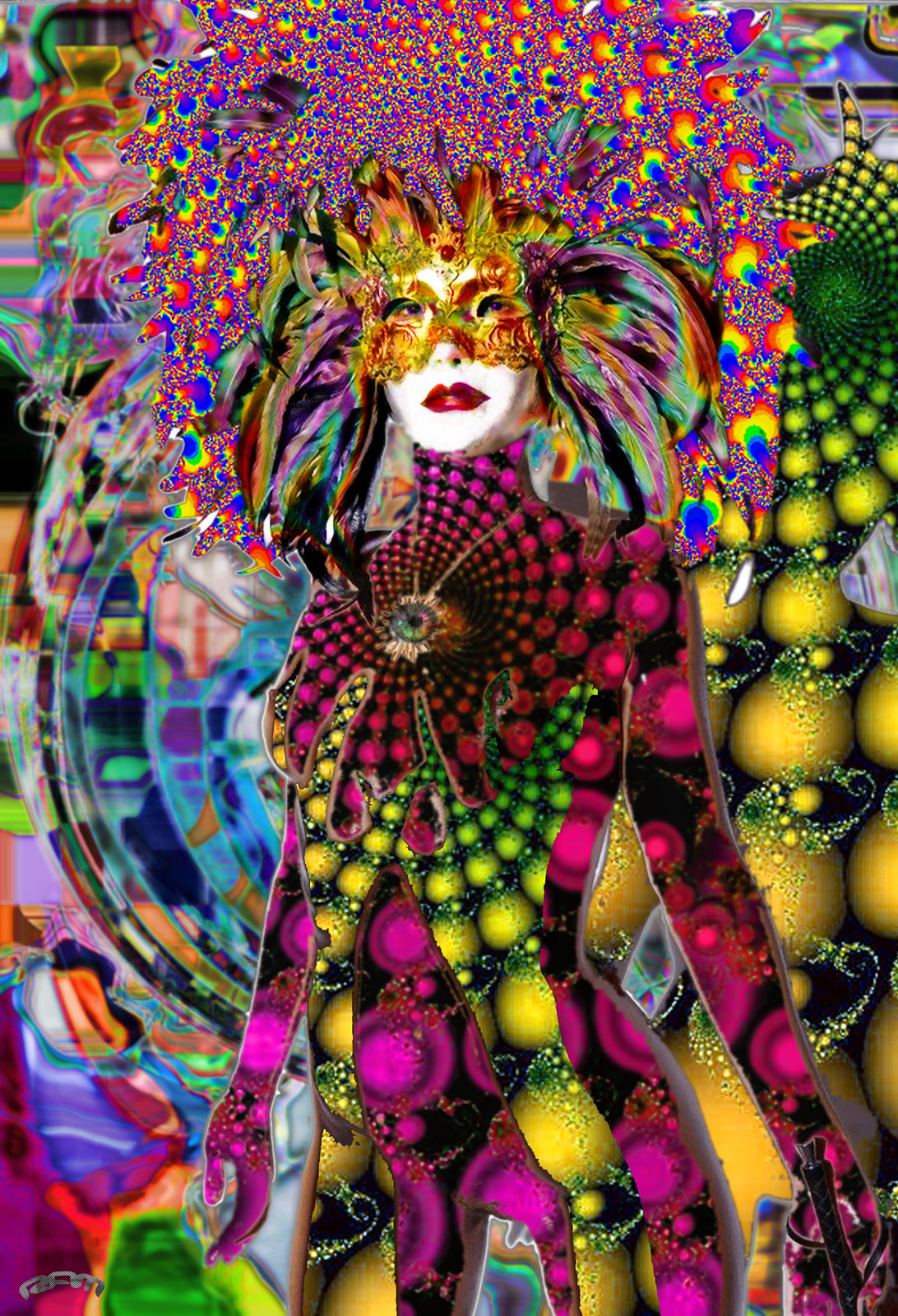
Masque by R. AyanaStrangely enough, Kent believes that these beings he describes as “loopy spirits” who dance around and “machine elves”, are all manifestations of the brain attempting to discern form in random noise. I believe his argument is in fact an irrational argument. Now let’s first define ‘irrational’ with the Oxford dictionary, which states that irrationality is “not endowed with reason”. Kent has attempted to endow the DMT experience with his version of reason, but his reasoning comes out looking irrational and unreasonable. The enchanted world is just the world that lies outside the territory of our known maps. In recognising an enchanted world, you are recognising that humanity circa 2015 has not figured everything out – and to believe THAT would of course be utterly irrational.

The path “back” to an integrated connected and enchanted world can be a long and arduous one. It can take a lot of time, as you really have to face yourself and be prepared to acknowledge a toxic state of being which is out of contact with reality. The process is much like a kind of repentance. It is an admission that your present state of being is out of touch and disconnected from so many aspects of reality. To perceive that perhaps most of your kind are just as disconnected is often too much cognitive dissonance for your regular Western industrialised person to face. The ego wants to believe in a monolithic, normalised, external reality as a standard to abide by, while the “normal” Western human reality is often very unhealthy and living out of integrity. Or as the mystic philosopher Jiddu Krishnamurti said, “It is no measure of health, to be profoundly normal in a sick society”.

The truth of psychedelic perception is that radical shifts are necessitated by new perceptions of how much bigger the world is, and how little we are embracing our potentials. By surrendering the artifices of culture into the abyss, one can come to a sense of freedom, unencumbered by restrictive memes and modes. Therein lies a more natural, honest, stable, un-neurotic, less schizoid and two faced mode, which is unforced, thoughtful, yet on track and aligned to internal values and intelligence. This is not enlightenment, but the beginnings of sanity, holistic wellbeing and the realisation of true human potential.
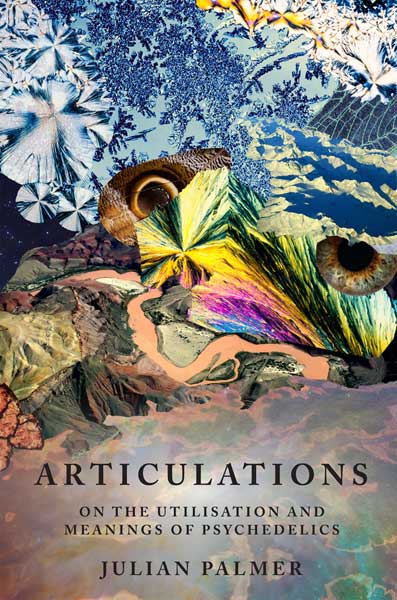

Articulations: On The Utilisation and Meanings of Psychedelics


From Graham Hancock @ http://grahamhancock.com/palmerj1/

For more information about entheogens (including ayahuasca) see http://nexusilluminati.blogspot.com/search/label/entheogens   
- Scroll down through ‘Older Posts’ at the end of each section


Hope you like this not for profit site -
It takes hours of work every day by a genuinely incapacitated invalid to maintain, write, edit, research, illustrate and publish this website from a tiny cabin in a remote forest
Like what we do? Please give anything you can -  
Contribute any amount and receive at least one New Illuminati eBook!
(You can use a card securely if you don’t use Paypal)
Please click below -


Spare Bitcoin change?


For further enlightening information enter a word or phrase into the random synchronistic search box @ the top left of http://nexusilluminati.blogspot.com


And see


 New Illuminati on Facebook - https://www.facebook.com/the.new.illuminati

New Illuminati Youtube Channel -  https://www.youtube.com/user/newilluminati/playlists

New Illuminati’s OWN Youtube Videos -  
New Illuminati on Google+ @ For New Illuminati posts - https://plus.google.com/u/0/+RamAyana0/posts

New Illuminati on Twitter @ www.twitter.com/new_illuminati


New Illuminations –Art(icles) by R. Ayana @ http://newilluminations.blogspot.com

The Her(m)etic Hermit - http://hermetic.blog.com


DISGRUNTLED SITE ADMINS PLEASE NOTE –
We provide a live link to your original material on your site (and links via social networking services) - which raises your ranking on search engines and helps spread your info further!

This site is published under Creative Commons (Attribution) CopyRIGHT (unless an individual article or other item is declared otherwise by the copyright holder). Reproduction for non-profit use is permitted & encouraged - if you give attribution to the work & author and include all links in the original (along with this or a similar notice).

Feel free to make non-commercial hard (printed) or software copies or mirror sites - you never know how long something will stay glued to the web – but remember attribution!

If you like what you see, please send a donation (no amount is too small or too large) or leave a comment – and thanks for reading this far…

Live long and prosper! Together we can create the best of all possible worlds…


From the New Illuminati – http://nexusilluminati.blogspot.com

Wednesday, 16 September 2015

Psychedelic Scientists


Psychedelic Scientists

Albert Hofmann and the Human Recondition by R. Ayana


“The most beautiful experience we can have is the mysterious. It is the fundamental emotion that stands at the cradle of true art and true science. Whoever does not know it and can no longer wonder, no longer marvel, is as good as dead, and his eyes are dimmed.”
– Albert Einstein


Psychedelics and related substances have contributed to a number of major scientific and technological breakthroughs and developments. Their highly ill-informed designation as Class A substances “with a high potential for abuse and no medical use” stands in stark contrast to what the accumulating scientific evidence has to say about these compounds.

A much neglected area of psychedelic science, ironically, is how psychedelics contribute to the creative scientific process. Outlawing psychedelics – as well as depriving people of medicines and therapeutic aids – is also depriving people of profoundly useful tools to enhance the creative, problem solving process.

A number of scientists have been open about their psychedelic use, but such people are likely to be in a profound minority, with others fearing repercussions for their honesty. It goes without saying how influential psychedelics were to the thinking of Harvard University psychologists Tim Leary, Richard Alpert and Ralph Metzner. Research was initially conducted with psilocybin, and in a more ordered scientific context, but LSD appeared on the scene and events at Harvard eventually culminated with Leary and Alpert being fired from the university.

This was a pivotal event that ignited the 1960s psychedelic revolution and counter culture movement, but a regrettable side effect of this was the political backlash against psychedelics, which had them classified as Schedule 1 substances, or Class A this side of the pond. This dramatically and suddenly halted all scientific research into substances otherwise considered to have been showing substantial promise in many areas and certainly worthy of scientific attention. From the government crackdown of the middle 60’s, it is only now, half a century later that the scientific taboo of researching these compounds is beginning to thaw slightly.


 Aldous Huxley


While not a scientist, but having a strong interest in the sciences, writer Aldous Huxley was heavily influenced by his psychedelic experiences, and he made some highly perceptive observations of the psychedelic state that modern science is now beginning to validate. In his famous mescaline trip, documented in his book The Doors of Perception and Heaven and Hell, he formulates a hypothesis of psychedelics acting via reducing the filtering valves of the brain (Huxley 1954). Half a century on from Huxley’s psychedelic musings, cutting edge neuroscience employing detailed fMRI brain imaging is confirming such a view, with psilocybin found to reduce blood flow to certain control hubs in the brain, which act to filter sensory information (Carhart-Harris et al. 2011). When asked about who should use psychedelics and why, Huxley had the following to say:

“…I think the people who would benefit most of all are professors. I think it would be extremely good for almost anybody with fixed ideas and with a great certainty about what’s what to take this thing and to realize the world he’s constructed is by no means the only world, that there are these extraordinary other types of universe.”

Dr John Lilly, physician, neuroscientist, psychoanalyst and philosopher was an expert in electronic brain stimulation, brain mapping, human-dolphin communication and the inventor of the isolation tank. His thinking was heavily influenced by his psychedelic drug use. The isolation tank comprises an enclosed space in pitch blackness and silence and warm salty water to allow floatation, so sensory input is absolutely minimised, so magnifying one’s ability to explore their inner space while free of any external distractions.

In the early 1960’s, Lilly was an early pioneer in charting the inner space of the human mind, taking large doses of LSD and having consciousness and metaprogramming exploration sessions in his tank, with the ultimate intention of reprogramming his mental circuits towards self-realization. Later, he switched to ketamine, after being introduced to the drug by Dr Craig Enright. After being cured of his frequent migraines through use of the drug, Lilly became obsessed and would take large quantities of ketamine with alarming frequency, being committed to a few psychiatric hospitals for brief episodes and experiencing two near fatal accidents while intoxicated. Lilly was undoubtedly brilliant but was well known for his eccentricity.

The scientific field of psychopharmacology was largely founded on research into psychedelics. The finding that chemicals could profoundly alter consciousness, and by extension were intimately tied to consciousness, dramatically altered the previous scientific view preceding the 1950’s, that brain activity was largely down to electrical activity. The close resemblance in the chemical structure of key neurotransmitter serotonin and LSD helped to cement this new view of chemistry playing a key role in brain activity. British pharmacologist Sir John H. Gaddum led a team in Edinburgh that discovered serotonin in the brain. On four separate occasions in 1953, Gaddum ingested LSD to study its effects in the first-person (Green 2008). He was the first person to postulate a relationship between LSD and serotonin, and on LSD’s influence on serotonin function being responsible for LSD’s psychedelic effects (Gaddum 1953). On this matter he went on to write the following: “The evidence for the presence of HT [serotonin] in certain parts of the brain may be used to support the theory that the mental effects of lysergic acid diethylamide are due to interference with the normal action of this HT.” (Amin et al. 1954).

Not only was this evidence of a fledgling pharmacological neuroscience in the making, but it was a highly perceptive observation that more recent psychedelic research has confirmed, which has highlighted the importance that serotonin receptors play in the production of psychedelic effects in the brain following psychedelic ingestion (Glennon et al., 1984; Lyon et al., 1988; Titeler et al. 1988).

Mathematician Ralph Abraham has been heavily influenced by use of psychedelics. Abraham was turned onto LSD by one of his students while at Princeton, and in 1969 experienced DMT for the first time. Abraham’s first experience with LSD ignited a lifelong fascination with the exploration of consciousness, and five years of inner and outer world travels. These explorations would have a profound aspect on all aspects of his life. His 1969 encounter with DMT played a pivotal role in is mathematical understanding of chaos theory and consciousness, based on geometry, topology, nonlinear dynamics and the theory of vibrating waves. Abraham states that psychedelics forever shifted his academic focus from that of pure mathematics to a more experimental and applied study of vibrations and forms. Psychedelics likely had a profound influence on the development of both chaos theory and fractal geometry (Abraham 2008).

Biochemist Dr Kary Mullis is open about his past LSD use, and considers his use of the compound to have played a major role in his visualising the mechanism of the Polymerase Chain Reaction (PCR), for which he was awarded the Nobel Prize in Chemistry in 1993. PCR is a technique used in molecular biology to amplify a single copy or a few copies of a segment of DNA by many orders of magnitude, generating thousands to millions of a particular DNA sequence in a short time. It is considered an often indispensable technique for medical and biological research for a variety of different applications. A crucial part of Mullis’s description, which follows, is that his insight came after his use of LSD. This boost to creative thinking following a psychedelic session was reported by scientists and engineers in the one and only study looking at psychedelics and creative problem solving in this group as shall be discussed.

“PCR’s another place where I was down there with the molecules when I discovered it and I wasn’t stoned on LSD, but my mind by then had learned how to get down there. I could sit on a DNA molecule and watch the [indistinct] go by…I’ve learned that partially I would think, and this is again my opinion, through psychedelic drugs…if I had not taken LSD ever would I have still been in PCR? I don’t know, I doubt it, I seriously doubt it.” (Mullis 1998).

Some sources state that Francis Crick’s use of LSD inspired visions of the DNA molecule. Such claims are false however. Crick and Watson’s famous discovery of the double helix of DNA came in 1953, with LSD only having been discovered ten years previously. It was still at this point rare and little known, and it was highly unlikely that the then impoverished and conventional Crick would have encountered it previous to this time. According to first-hand information from Crick’s biographer Matt Ridley obtained directly from Crick’s widow, Crick’s first encounter with LSD came in 1967, when he was gifted some by friend Henry Todd, many years after his shared discovery of the structure of DNA. While LSD may well have augmented Crick’s scientific contemplations, his major breakthroughs in molecular biology were all made previous to 1967.

The late, great psychopharmacologist Dr Alexander “Sasha” Shulgin was deeply inspired by his first ever psychedelic experience, with mescaline in the late 1950’s. From the experience, Shulgin understood “that our entire universe is contained in the mind and the spirit. We may choose not to find access to it, we may even deny its existence, but it is indeed there inside us, and there are chemicals that can catalyze its availability.”

Enlight by R. Ayana
This experience ignited in Shulgin a lifelong fascination in psychedelic chemistry; of the synthesis and experience of ingesting psychedelic compounds, comprising the two dominant chemical families of classical psychedelics, the tryptamines and phenethylamines, of which he synthesised and bioassayed over 230 different kinds. With Shulgin’s passing, his work and his creations live on and will continue to influence people’s consciousness far into the future.

The late, great chemist Dr Albert Hofmann had a spontaneous experience of a mystical nature as a young boy while out walking in the countryside, experiencing a joy and profound connection to nature. He stated “…my mystical experience of nature as a child…was absolutely like an LSD-experience…. I believe I was in some fashion born to that.” (Hofmann 2009). Hofmann’s invention and discovery is also mysterious. LSD was the 25th in a series of compounds synthesised from the ergot fungus (Claviceps purpurea) and at the time he was looking for a respiratory stimulant. After animal testing hadn’t revealed anything that suggested it held much promise in this regard, it was shelved for five years. Hofmann had a strange dream where the essence of LSD suggested he hadn’t seen all that it was capable of, and he had a feeling his work was not yet done with it (Hofmann 2009). Most scientists would have dismissed this, but Hofmann heeded this call of intuition. On April 16th 1943, he decided to synthesise a batch for testing. During this procedure he inhaled some or absorbed some through his fingers, and for two hours experienced clear psychedelic effects.

This two hour experience itself is very unusual and unheard of when it comes to all subsequent LSD experiences which tend to be much longer lasting, even at threshold doses. LSD expert Dr David Nichols has suggested Hofmann may have had another spontaneous mystical experience that happened to coincide with his discovery. Whatever the case, it seems Hofmann had an exquisite sensitivity to the effects of LSD, and along with his previous illuminating childhood experiences, it seems he was the right person in the right place at the right time to discover it. Three days later on April 19th, being a cautious man, Hofmann tested on himself what he thought would be a microscopic dose of 250 micrograms, and the rest, as they say, is history. Hofmann’s discovery shows that scientific breakthroughs don’t always come gradually via the standard methodological deduction process, but can occur as a sudden, intuitive or irrational flash of inspiration, like the fabled “Eureka” moment.

Hofmann is not the only scientist working with psychedelics to have been inspired by his dreams. Professor Steven Barker is a specialist in neurotheology and an expert on DMT. From a young age, Barker experienced highly vivid dreams, and at times dreams he’d later to come to know as having a psychedelic, hallucinatory aspect. Not content with the religious interpretation for such experiences, Barker was passionate about finding objective explanations, and this ultimately set him on a path that led him to devoting his life to researching altered states and psychedelics. On the subject of dreams, Barker stated that of “…all the myriad aspects of this still miraculous phenomenon called consciousness, I was and remain most fascinated and influenced by the experience of dreams. For me, dreaming was the first memorable journey into an altered state, traveling to what seemed, at the time, a separate reality.”

The anthropologist Jeremy Narby in his book The Cosmic Serpent explores this link between ayahuasca shamanism and molecular biology. Narby conducted two years of fieldwork in the Peruvian Amazon researching the ecology of the Ashánika tribe. He hypothesises that shamans may have access to information on the molecular level via their ingestion of ayahuasca (Narby 1995) and shamanism concerns “attempting to dialogue with nature” (Narby 2006). He accompanied three molecular biologists to the Amazon where they experienced an ayahuasca ceremony. While all three found the experience to be personally meaningful, experiencing the ayahuasca as an entity distinct from themselves, two of the three gained perspectives on their research they considered valuable following the session (Grant 2006).

Psychedelics may have also played a major role in the advent of modern computing. Both Bill Gates and Steve Jobs are known to have experimented with LSD. While Gates has been tight lipped regarding the nature of his experiences with the compound, Jobs has been much more open, positively referring to his experiences with LSD “as one of the two or three most important things he had done in his life” (Markoff 2005). Douglas Engelbart, the visionary who first proposed that we use computers to communicate and collaborate in a networked world, and introduced a score technical innovations, including videoconferencing, hyperlinks, networked collaboration, digital text editing, and the mouse, also found LSD to be beneficial. He experienced LSD under guided sessions provided by the International Foundation for Advanced Study (IFAS) under the only study looking at psychedelics and scientific creativity to be performed thus far. There is definitely a strong link between psychedelic use and the personal computing revolution, with Silicon Valley’s rise to the hub of the technology industry coinciding with the cultural explosion of LSD and other psychedelics. The full extent of this link remains unknown due to the political stigmatising of psychedelics and their use.

The concept of Deep Ecology, originally proposed by Norwegian philosopher Arne Næss, is very much in line with the psychedelic pantheist view of nature which views all life forms as having an inherent worth regardless of their usefulness to human needs. Both Næss and John Seed, another founding father of the Deep Ecology movement, were certainly inspired by their own use of LSD. In 1966 writer and former Merry Prankster Stewart Brand imagined perceiving the Earth from space in the midst of an LSD experience, and this inspired him to campaign for a photograph of the Earth to be taken from space, which it was in the year or two following, from both a satellite in orbit and from the moon. These images would be powerful symbols of the ecology movement, showing just how beautiful, alive and unique our planet is. John P. Allen, the inventor and Director of Research of Biosphere 2, the largest laboratory of global ecology in the world, was profoundly inspired by a Peyote ceremony experienced in a traditional setting with Huichol Indians. Mark Van Thilo, whose responsibility in the dome was to maintain the technical systems, was also influenced by his own experiences with psychedelics, and had a profound desire to link ecology with technology, perceiving no difference between the two. 

The description of the first ayahuasca experience of leading ethnopharmacologist Dr Dennis McKenna is a particularly eloquent and beautiful tribute to the profound ability of ayahuasca to connect us to the Earth. McKenna described seeing the Amazon from above the Earth, with the ayahuasca vine growing up towards him, the experience of the ayahuasca as a sentient plant intelligence. He experienced things from the point of view of a sentient water molecule, being drawn up into an Amazonian tree, and vividly experiencing photosynthesis. This was a profoundly moving and humbling experience, and sometime later he found himself once more above the Amazon, and was filled with an intense sadness, rage and shame at its destruction at human hands. At this point a quiet voice from behind his left shoulder said to him “You monkeys only think you’re running things. You don’t think we would really allow this to happen do you?” Dennis felt this voice represented the sum total of all species in the planetary biosphere (McKenna 2012). Such experiences with an ecological message seem to be commonly associated with ayahuasca.

Recent research using data comprising hundreds of thousands of people who have used psychedelics has found no link between psychedelic use and mental health issues, and in fact observed less cases of psychiatric hospital visits and suicides. The scientists who led the studies concluded that there was no reason for making psychedelics illegal on public health grounds, and in fact it should be against human rights for them to be illegal, and at the very least their current legal status should be urgently reconsidered (Hendricks et al. 2015; Johansen & Krebs 2015). Therapeutic and medicinal properties of psychedelics aside, by classifying them as Class A substances, without good reason, we could be denying people working in the fields of science and technology, in the creative arts and in other fields a set of profound tools that could be being integrated and used for creative expansion for the benefit of humanity. Given that our creative skills are essential for tackling all problems we face as a species, and given our ecological position, with the increasing impact we are inflicting upon the biosphere, it may be extremely unwise to deny people access to these tools.

The late Willis Harman performed a pilot study looking at psychedelics and creativity in scientists and engineers along with Myron Stolaroff, James Fadiman and others right before the government backlash ended all psychedelic research in the US and elsewhere, and the study was cut short by DEA intervention (Harman et al. 1966). In the trail, LSD and mescaline were administered to a small group of scientists and engineers in an attempt to boost their problem-solving skills, with each subject instructed to work on a professional problem. The quality of their output was evaluated through psychological tests, subjective reports and the eventual industrial or commercial validation of their finished product. Virtually every subject produced highly satisfactory outputs according to these assessments.

The psychedelics were found to have a highly beneficial effect on scientific creativity, via enhancing the imagination, inspiring novel thought, and boosting problem solving abilities, and some of the scientists reported that following the study their creative problem solving ability remained high in the clear sober light of day. Despite these highly positive initial results, this landmark study remains the one and only scientific investigation using psychedelics to enhance the creative, problem solving process in a scientific and engineering context. With the recent revival in psychedelic research, it is high time that this neglected area of study received the scientific attention it deserves.


Sus_1_grande 

Bibliography


Abraham, R. (2008) Mathematics and the Psychedelic Revolution. MAPS, MS #124.
Amin, A.H., Crawford, T.B. & Gaddum, J.H. (1954) The distribution of substance P and 5-hydroxytryptaime in the central nervous system of the dog. Journal of Physiology (London), 126, 596-618.
Carhart-Harris, R.L., Erritzoe, D., Williams, T. Stone, J.M., Reed, L.J., Colasanti, A., Tyacke, R.J., Leech, R., Malizia, A.L., Murphy, K., Hobden, P., Evans, J., Fielding, A., Wise, R.G. & Nutt, D.J. (2011) Neural correlates of the psychedelic state as determined by fMRI studies with psilocybin. Proceedings of the National Academy of Sciences of the United States of America, 109, 2138-2143.
Gaddum, J.H. (1953) Antagonism between lysergic acid diethylamide and 5-hydroxytryptamine. Journal of Physiology (London), 121, 15.
Glennon, R.A., Titeler, M. & McKenney, J.D. (1984) Evidence for 5-HT2 involvement in the mechanism of action of hallucinogenic agents. Life Sciences, 35, 2505-2511.
Grant, J. (2006) Discarded Science. Sterling Publishing, p. 185-186.
Green AR (2008). Gaddum and LSD: the birth and growth of experimental and clinical neuropharmacology research on 5-HT in the UK. British Journal of Pharmacology, 154, 1583-1599.
Harman, W.W., McKim, R.H., Mogar, R.E., Fadiman, J. & Stolaroff, M.J. (1966) Psychedelic agents in creative problem solving: A pilot study. Psychological reports, 19, (1), 211-227.
Hendricks, P.S., Thorne, C.B., Clark, C.B., Coombs, D.W. & Johnson, M.W. (2015) Classic psychedelic use is associated with reduced psychological distress and suicidality in the United States adult population. Journal of Psychopharmacology, 29, (3), 280-288.
Hofmann, A., Broeckers, M. & Liggenstorfer, R. (2009) Albert Hofmann und die Entdeckung des LSD: Auf dem Weg nach Eleusis, p. 2. AT Verlag.
Hofmann, A. (2009) LSD My Problem Child. 4th Edition. MAPS, Santa Cruz, California.
Huxley, A. (1954) The Doors of Perception and Heaven and Hell. Harper & Brothers.
Johansen, P.-O. & Krebs, T.S. (2015) Psychedelics not linked to mental health problems or suicidal behaviour: A population study. Journal of Psychopharmacology, 29, (3), 270-279.
Lyon, R.A., Titeler, M., Seggel, M.R. & Glennon, R.A. (1988) Indolealkylamine analogs share 5-HT2 binding characteristics with phenylalkylamine hallucinogens. European Journal of Pharmacology, 145, 291-297.
Markoff, J. (2005) What the Dormouse Said: How the Sixties Counterculture Shaped the Personal Computer Industry. Penguin Publishing Group, New York, US.
McKenna, D. (2012) The Brotherhood of the Screaming Abyss. North Star Press of St. Cloud Inc., Clearwater, Minnesota, US.
Mullis (1997) Horizon: Psychedelic Science. [TV Programme]. BBC, 27 February 1997.
Narby, J. (1999) The Cosmic Serpent: DNA and the Origins of Knowledge. Phoenix.
Narby, J. (2006) Intelligence in Nature. Jeremy P. Tarcher, p. 16.
Titeler, M., Lyon, R.A. & Glennon, R.A. (1988) Radioligand binding evidence implicates the brain 5-HT2 receptor as a site of action for LSD and phenylisopropylamine hallucinogens. Psychopharmacology (Berl), 94, 213-216.


For more information about psychedelics see http://nexusilluminati.blogspot.com/search/label/entheogens
- Scroll down through ‘Older Posts’ at the end of each section


Hope you like this not for profit site -
It takes hours of work every day by a genuinely incapacitated invalid to maintain, write, edit, research, illustrate and publish this website from a tiny cabin in a remote forest
Like what we do? Please give anything you can -  
Contribute any amount and receive at least one New Illuminati eBook!
(You can use a card securely if you don’t use Paypal)
Please click below -


Spare Bitcoin change?


For further enlightening information enter a word or phrase into the random synchronistic search box @ the top left of http://nexusilluminati.blogspot.com


And see


 New Illuminati on Facebook - https://www.facebook.com/the.new.illuminati

New Illuminati Youtube Channel -  https://www.youtube.com/user/newilluminati/playlists

New Illuminati’s OWN Youtube Videos -  
New Illuminati on Google+ @ For New Illuminati posts - https://plus.google.com/u/0/+RamAyana0/posts

New Illuminati on Twitter @ www.twitter.com/new_illuminati


New Illuminations –Art(icles) by R. Ayana @ http://newilluminations.blogspot.com

The Her(m)etic Hermit - http://hermetic.blog.com


DISGRUNTLED SITE ADMINS PLEASE NOTE –
We provide a live link to your original material on your site (and links via social networking services) - which raises your ranking on search engines and helps spread your info further!

This site is published under Creative Commons (Attribution) CopyRIGHT (unless an individual article or other item is declared otherwise by the copyright holder). Reproduction for non-profit use is permitted & encouraged - if you give attribution to the work & author and include all links in the original (along with this or a similar notice).

Feel free to make non-commercial hard (printed) or software copies or mirror sites - you never know how long something will stay glued to the web – but remember attribution!

If you like what you see, please send a donation (no amount is too small or too large) or leave a comment – and thanks for reading this far…

Live long and prosper! Together we can create the best of all possible worlds…


From the New Illuminati – http://nexusilluminati.blogspot.com