"All the World's a Stage We Pass Through" R. Ayana

Showing posts with label out of Africa debunked. Show all posts

Tuesday, 26 May 2015

Not Out of Africa: Alan Thorne's challenging ideas about human evolution


Not Out of Africa
Alan Thorne's challenging ideas about human evolution

http://upload.wikimedia.org/wikipedia/commons/f/f2/Sapiens_neanderthal_comparison.jpg


Anthropologist Alan Thorne holds casts of two of the skulls that have fueled a controversy about how and when early man reached Australia. The delicate skull at right, of a hominid known as Mungo Man, predates the larger, thicker skull on the left by tens of thousands of years, a reversal of expectations that has challenged traditional theories of evolution.
She came to him in 1968, inside a small, cheap suitcase — her burned and shattered bones embedded in six blocks of calcified sand. The field researchers who dug her up in a parched no-man's-land in southeastern Australia suspected that she was tens of thousands of years old. He was 28. Almost every day for the next six months, he painstakingly freed her remains from the sand with a dental drill, prizing out more than 600 bone chips, each no larger than a thumbnail. He washed them carefully with acetic acid, sealed them with a preservative, and pieced them together into a recognizable skeleton.

Looking closely at skull fragments, bits of arm bone, and a hint of pelvis, he became convinced that two things were true. First, the bones were human, Homo sapiens for sure, and they had held together a young woman. As he assembled this "monster three-dimensional jigsaw puzzle," Alan Thorne, then a lecturer in the department of anatomy at the University of Sydney, began asking himself whose bones they might actually have been. He had no idea that many years later, the answer to that question would rock the world of anthropology.

    Something else about this woman became clear early on— she had been important and powerful. The pattern of burn marks on her bones showed that after she died, her family burned the corpse, then smashed the bones. Later, they added more fuel and burned the bones a second time. This was an unusual ritual. Ancient Aboriginal women were typically buried without fuss. Thorne wondered if her descendants had tried to ensure that she did not return to haunt them; similar cremation rituals are still practiced by some Aboriginal groups today. As hours and days and months passed, he found himself thinking of her as a living, breathing person who'd spent her life encamped on the shores of Lake Mungo, in New South Wales. If this Mungo Lady turned out to be as ancient as field researchers thought, she would be the oldest human fossil ever found in Australia. To Thorne she was already the most mysterious.

In 1968 most anthropologists thought they had a grip on human evolution: Big-browed, thick-skulled humanoids had descended from walking apes. These hulking creatures were eventually replaced by the more advanced, fine-boned humans of our species— Homo sapiens. Throughout Australia, anthropologists had found only big-browed, thick-skulled fossils. That made Mungo Lady a puzzle. Lab analysis of her remains suggested she was 25,000 years old— old enough to be a grandmother to those specimens— but her skull bones were as delicate as an emu's eggshell. Thorne began to realize that she might be telling him a different story than the one he'd read in textbooks— that the delicate, fine-boned people had reached Australia before the big-brows.

    That was an exotic thought, and now, many years later, it is fueling the debate within anthropology over a single huge question: Where did Homo sapiens come from? Most researchers accept a theory referred to as "out of Africa." It holds that numerous species of hominids— beginning with Homo erectus— began migrating out of Africa almost 2 million years ago and evolved into several species. Then a new species called Homo sapiens evolved in Africa and migrated between 100,000 and 120,000 years ago to Europe, Asia, and Australia, consigning all the earlier hominids it encountered to extinction.

    Thorne preaches a revolutionary view called regional continuity. He believes that the species his opponents insist on calling Homo erectus was in fact Homo sapiens, and that they migrated out of Africa almost 2 million years ago and dispersed throughout Europe and Asia. As he sees it, there was no later migration and replacement: "Only one species of human has ever left Africa, and that is us."

    Why does this matter? Because if Thorne and his camp are right, much of what we think we know about human evolution is wrong. In the world according to Thorne, the human family tree is not divided into discrete species such as Homo erectus, Homo antecessor, Homo heidelbergensis, and Homo neanderthalensis. They are all Homo sapiens. Yes, Thorne agrees, from the outside all these hominids look different from each other, but so do humans today— a Korean, a Nigerian, and a Dane hardly resemble each other. Our ancestors displayed great variety, but they were similar in the only way that mattered: They were the same species, which meant they could have sex with each other and produce fertile offspring.

Mungo Lady started Thorne down the road to regional continuity. Six years after he reassembled her, Thorne and three assistants unearthed another small-boned skeleton only 1,600 feet from where she had been found. At burial, this body had been laid on its right side, knees bent, arms tucked between its legs. Certain features— the skull, the shape of the pelvis, and the length of the long bones— told Thorne he was looking at Mungo Man, which thrilled him. As a general rule, female skeletons are more delicate than male ones, so doubts about the uniqueness of Mungo Lady's delicate bones would be quashed by having an equally delicate male counterpart to study.

    Thorne's colleagues took their best guess at this specimen's age, as they had with Mungo Lady in 1968, based on radiocarbon dating and analysis of stratigraphy. They dated him to 30,000 years ago. As the oldest humans ever found down under, the finds were considered so important that the Australian government declared the sandy, bone-dry crater that was once Lake Mungo a national park in order to honor— and protect— the site. To the Aboriginal tribes, the pair became precious symbols of their early peopling of the continent.

    But Thorne assigned a meaning to the bones that resonated beyond Australia. To his mind, the presence of two such unusual skeletons suggested that the peopling of the Pacific was a richer, more complex process than anyone had ever imagined. Anthropologists had long assumed that the first Homo sapiens to reach Australia were fishermen who left Indonesia and got blown off course, ending up on the new continent. Thorne began to wonder whether the first journey from Indonesia to Australia was not an accident but an adventure, undertaken with confidence by intelligent, mobile people. Mungo Lady and Mungo Man closely resembled skeletons of people living in China at the same time. Had these people migrated in boats to Australia? Had there been successive waves of immigration by different peoples over tens of thousands of years? To imagine such things, Thorne had to abandon familiar notions of early man as a blundering primitive.

    He had already begun to do so. In the months he'd spent piecing together those braincases, he had begun to think of them as his elders, worthy of respect, capable of thought and imagination. That supposition was not an outrageous one for an Australian anthropologist to make. From childhood Thorne had grown up on a continent that was home to one of Earth's oldest continuous cultures. He'd learned a great deal about Aboriginal culture while working his way through college as a reporter at the Sydney Morning Herald. From where he stood, the ways of Mungo Man and Mungo Lady were not so different from those of modern Aborigines. He could easily picture two different tribes settling near Lake Mungo, one from nearby Java, another perhaps with roots in China. And once the two parties were encamped around the lake, it was not hard to imagine them crossbreeding.

    Those who believe in regional continuity tend to have a view of sexuality that is more generous and more inclusive than that of the out-of-Africa proponents. In the latter view, Homo sapiens led a kind of search-and-replace mission as they spread around the planet; these researchers believe that members of the new species would not have been able to successfully reproduce with members of earlier species, no matter how hard they tried. Thorne thinks that's nonsense. "European scientists have dominated this field for 150 years," he says. "And they've got a big problem in Europe. Namely, they've got to account for those Neanderthals. My opponents would say that Cro-Magnons"— humans identical to us who lived during the Ice Age— "simply 'replaced' Neanderthals with no intermingling. That's the part I object to. 'No intermingling.' Now, I ask you, does that sound like the human beings you know?"

    In the early 1970s, these ideas were pure speculation. Thorne had no proof of anything. The bones had told him what they could and then lapsed into silence. So he tucked them away and went on with his career. Three decades later, the bones spoke again.
Dueling Theories

Graphic by Matt Zang

In 1997 Thorne finally got the tool he needed to explore Mungo Lady and Mungo Man further. European scientists reported that they had successfully extracted fragments of mitochondrial DNA (mtDNA) from the remains of Neanderthal skeletons unearthed in Germany, Croatia, and Russia. This was stunning science; the Neanderthals had died out 35,000 years ago, and yet researchers had been able to harvest genetic matter from their bones as if they'd expired yesterday.

    It was the beginning of a revolution in paleoanthropology. Geneticists were hooking up with bone men everywhere. They were focusing on mtDNA because the mitochondria, which lie outside the nucleus, are easier to study— in a human cell there are only 37 mitochondrial genes compared with 100,000 genes found in the nucleus— and because it is the only DNA anyone has been able to isolate and interpret in ancient fossils. For reasons not yet understood, mtDNA survives the ravages of time better than nuclear DNA. And it has another interesting attribute: It's inherited only through the maternal line. Scientists seized upon this characteristic to try to build genetic family trees. Almost two years ago, geneticists working in Sweden and Germany reported studying the mtDNA of 53 living people from around the world. Within this small sample, they found that Africans shared a characteristic sequence of mtDNA, and that everyone else carried at least some portion of that sequence in their cells. The research suggests that all living humans had their roots in Africa. But Thorne doesn't put much stock in this report. He thinks the conclusions are questionable because samples taken in Africa today could be from people whose ancestors were not African.

    When the first Neanderthal studies were published in 1997, Thorne had already retired. He had traveled the world for 30 years, excavating sites and filming science documentaries for Australian television. His face and his ideas were as well known in Australia as Carl Sagan's once were in the United States. At the request of the Aboriginal council, Thorne still safeguarded the Mungo fossils. Because three more-sophisticated dating technologies were now available, he ordered new tests on 13 of the individuals in his care, and the results gave him a shock.


Skeletal Puzzle: Near the site where Mungo Man's skeleton was excavated, Alan Thorne demonstrates the strange pose in which the body was buried 60,000 years ago.

Center: In his right hand, Thorne holds a cast of Mungo Lady's charred skull; in his left hand, a cast of Mungo Man's skull.

Last: This bone chip is similar in size to the 350-odd chips from which Thorne pieced together Mungo Lady's skull. "Every day I'd sit down and I'd find 10 or so pieces that fit together. I could only work on her 50 minutes at a time, when my mind was fresh. Any longer and they all started to look alike. She took me six months."


    The ages came back first. Using the new technologies, his team found that the small-boned Mungo Lady and Mungo Man were actually 60,000 years old— twice as old as anyone had guessed. Thorne saw these dates as a crushing blow to the out-of-Africa theorists. No matter what his opponents said, there wasn't enough time on their 120,000-year clock for Homo sapiens to leave Africa, dash up to China, evolve from rugged Africans into small-framed Asians, invent boats, sail to Australia, march to the interior, get sick, and die. How much simpler everyone's life would be, he thought, if anthropologists could agree that some of the players in this drama had reached China 1.5 million years ago and continued to evolve there.

    After the dating, Gregory Adcock, a doctoral student in genetics at Australian National University, decided to check all 13 fossils for mtDNA. But first he set up stringent procedures. It's easy to contaminate specimens: More than once, scientists have been embarrassed when the "ancient DNA" they extracted turned out to be their own. To avoid this catastrophe, Adcock alone handled the specimens. He alone traveled between two testing labs. He sampled his own DNA and Thorne's to use as a control. Before sampling the ancient specimens, he tested five modern human and animal bones to make sure he'd perfected handling techniques. Then he drilled into each fossil and took a sample from the bone's interior, where no one could ever have touched it. Of more than 60 samples he analyzed, he reported only three contaminations. Ten of the 13 yielded DNA.

    The results were nothing less than remarkable: Among the 10 successful extractions was the world's oldest known human DNA— plucked from none other than Mungo Man. (No DNA was recovered from Mungo Lady, perhaps because she had been cremated.) Mungo Man also appeared to mock the findings of previous scientists: His mtDNA signature did not match anyone's, living or fossil, on Earth. There was no evidence that he was genetically related to ancient Africans.

    The findings were published in January 2001 by Adcock, Thorne, and five other researchers. What followed was intense disagreement. "People just fell over when they read this new stuff," says Alan Mann, an anthropologist at Princeton University and a moderate in the human-origins debate. "The people at Mungo were totally modern looking and were expected to carry the DNA we have, but they didn't. I think that makes for an incredibly complicated story. It's a stunning development."

    Thorne's critics were underwhelmed. "Alan is great at generating media interest. He's a former journalist, you know," says Chris Stringer, head of human origins at the Natural History Museum in London, a staunch advocate of the out-of-Africa model who is accustomed to his phone ringing off the hook every time Thorne fires another volley. "He has done some important work. I'm not saying his work is bad or wrong or whatever. Obviously, I have a different interpretation of it."

    Stringer and his colleagues laid into Thorne. First, they said it was unlikely that 10 of the 13 skeletons had yielded mtDNA. This was an unprecedented success rate, so they believed that there had to be contamination. Even researchers at Oxford University, in one of the world's finest labs, had contaminated specimens. Then they said that mtDNA lines died out all the time; the Australians were making much ado about nothing. This part was true: Twenty-five to 30 percent of mankind's mtDNA has been lost over the past million years when women gave birth to boys or didn't reproduce at all.

    Thorne concedes that mtDNA has evolved greatly over time, and all scientists working in this area have to be cautious. But as long as everyone is using mtDNA analysis as a basis for speculation, he asks why his work is regarded with such suspicion. Mungo Man and his alternative complement of genes were alive enough to make it to Australia and contribute to the peopling of a continent. Modern Aborigines didn't inherit Mungo Man's mtDNA, but they have certainly inherited the characteristics of his skull. "Eventually, all these people intermingled, and that's why the Aborigines have such diversity," he says.

    Stringer, for his part, maintains that the out-of-Africa model could account for a settlement in southern Australia 60,000 years ago. Africans, he says, would have had to travel only one mile toward Australia each year for 10,000 years to make that possible. In other words, the Homo sapiens who left Africa 100,000 years ago would have reached Indonesia with plenty of time to sail to Australia.

    In New York, Ian Tattersall, one of Thorne's closest friends, has long quibbled with his stance. "We've agreed to disagree," says Tattersall, curator of anthropology at the American Museum of Natural History. "I have a lot of respect for him; I just think he's barking up the wrong tree." Tattersall argues that Neanderthals were so obviously a separate species that Homo sapiens could not have bred with them.

    Thorne says his lifelong study of animals has taught him otherwise. In captivity, for example, jaguars have mated with leopards and pumas and produced fertile female offspring— although all three animals supposedly belong to different species. Polar bears and brown bears, wolves and coyotes, dromedaries and Bactrian camels also cross-mate. Darwin himself dismissed species as a term that is "arbitrarily given, for the sake of convenience."

In recent months Thorne and his team have examined every human fossil from Australia and Asia they could get their hands on. They're retesting their Mungo Man work, hoping to confirm the findings and fill in some of the remaining gaps in the fossilized man's mtDNA profile. To satisfy their critics, they are allowing three rival labs to analyze Mungo Man extractions. Results will be available by the end of this year. When they are, they will most likely be debated. This science is still too inchoate for either side to declare victory.

    Whatever the outcome, the bones from Lake Mungo have created change in Australia. The nation has committed to returning Lake Mungo and its environs to the Aborigines. Soon elders of the tribes living around Lake Mungo will decide when they will assume management of the land, artifacts, wildlife, and tourist trade. In 1991, standing near the metal stake that marks the spot where Mungo Lady was found, Thorne returned her bones to the elders of those tribes. At the time, elders debated whether to rebury her or preserve her. Thorne argued for the latter. "If you do away with her bones," he told them, "I'll always be right. You won't be able to refute my work. Someday there will be an aboriginal Alan Thorne, and he'll have a different way of looking at these bones. You have to give him that chance." The council voted for preservation. Today Mungo Lady inhabits a safe that can be opened only with a key, of which two copies exist. Aboriginal elders hold one; Thorne was presented with the other.

    Despite Thorne's proselytizing, only a small fraction of the world's anthropologists accept his theories. But he couldn't care less. These days, he draws inspiration from the old Sherlock Holmes maxim: "Once you eliminate the impossible, whatever remains, no matter how improbable, must be the truth."

    He points out that regional continuity is by far the simpler theory and can much more comfortably account for all the complicated twists and turns in the genetic evidence of human evolution now coming to light. "It argues that what is going on today is what has been going on for 2 million years, that the processes we see today are what have been going on in human populations for a very long time. You don't need a new species that has to extinguish all the other populations in the world. This is why out-of-Africa is the impossible, and regional continuity is not only not improbable but the answer and the truth."


- Scroll down through ‘Older Posts’ at the end of each section


Hope you like this not for profit site -
It takes hours of work every day by a genuinely incapacitated invalid to maintain, write, edit, research, illustrate and publish this website from a tiny cabin in a remote forest
Like what we do? Please give anything you can -  
Contribute any amount and receive at least one New Illuminati eBook!
(You can use a card securely if you don’t use Paypal)
Please click below -


Spare Bitcoin change?


Xtra Image – http://upload.wikimedia.org/wikipedia/commons/f/f2/Sapiens_neanderthal_comparison.jpg


For further enlightening information enter a word or phrase into the random synchronistic search box @ the top left of http://nexusilluminati.blogspot.com


And see


 New Illuminati on Facebook - https://www.facebook.com/the.new.illuminati

New Illuminati Youtube Channel - http://www.youtube.com/user/newilluminati


New Illuminati on Twitter @ www.twitter.com/new_illuminati


New Illuminations –Art(icles) by R. Ayana @ http://newilluminations.blogspot.com

The Her(m)etic Hermit - http://hermetic.blog.com


DISGRUNTLED SITE ADMINS PLEASE NOTE –
We provide a live link to your original material on your site (and links via social networking services) - which raises your ranking on search engines and helps spread your info further!

This site is published under Creative Commons (Attribution) CopyRIGHT (unless an individual article or other item is declared otherwise by the copyright holder). Reproduction for non-profit use is permitted & encouraged - if you give attribution to the work & author and include all links in the original (along with this or a similar notice).

Feel free to make non-commercial hard (printed) or software copies or mirror sites - you never know how long something will stay glued to the web – but remember attribution!

If you like what you see, please send a donation (no amount is too small or too large) or leave a comment – and thanks for reading this far…

Live long and prosper! Together we can create the best of all possible worlds…


From the New Illuminati – http://nexusilluminati.blogspot.com

Thursday, 15 January 2015

Out of Australia: 42,000 Year Old Fishing Hook Defies ‘Accepted’ Aboriginal History


Out of Australia
42,000 Year Old Fishing Hook Defies ‘Accepted’ Aboriginal History

http://wakeup-world.com/wp-content/uploads/2014/04/Aborignal-fishing.jpg


By Steven & Evan Strong


A little over two years ago, the somewhat intriguing headline “Gone fishing, 42,000 years ago” introduced an article in the Sydney Morning Herald newspaper which was based on the findings of a team of Australian archaeologists from the Australian National University (Canberra). Their 2011 discovery of a fish hook at East Timor, along with evidence of deep-sea fishing occurring up to 42,000 years ago, carried with it some unexpected repercussions and was the catalyst for a considerable reshuffling of deck-chairs on an African boat that supposedly made landfall in Australia around 50,000 years ago.

The problem is that the claims made by these scientists seem to contradict an elemental assumption underpinning what another group of eminent genetic experts concluded when examining the genome patterns found within a hundred year old piece of hair belonging to an Australian Aboriginal man. Quite simply as things stand, the conclusions of each investigation are in open defiance to each other and logic demands that at least one theory has to be wrong.


Gone Fishing… and Hunting


The recent archaeological dig at East Timor bears witness that modern humans possessed “quite sophisticated technology and watercraft”, and through use of hooks (like the one discovered) were engaged in “deep-sea fishing for large delicacies such as tuna”. The Australian researchers insist that a high degree of skill was essential “in catching the types of fish that would be challenging even today”.

If relying upon the accepted pre-historical narrative, the people exhibiting these “amazingly advanced maritime skills” must have originated in Africa. “An archaeologist at the Australian National University, Sue O’Connor” saw this settlement and activity as proof of African mariners’ ocean transit to Australia. She believes that “the first people who arrived in Australia at least 50,000 years ago must have had boats because they had to cross hundreds of kilometers of deep ocean trenches to get here from south-east Asia”.

Possibly… but there is more to this discovery than one solitary hook.

The analysis of bones found in the “oldest area of occupation… dated at 38,000 and 42,000 years old” of which “50% came from ocean fish, such as tuna and trevally” also included “small amounts of marine turtles, rats, bats, birds and snakes”. These people employed a highly sophisticated technology when deep-sea fishing and obviously co-operated extensively in fishing, sailing and living together. But not only did they sail and fish upon the open seas, food from coastal and inland areas was also consumed. The sea, although used often, was not the only place to hunt and gather food.

Until this discovery in East Timor, the only evidence of ancient maritime technology of this sophistication was the hypothetical settlement by Africans in Australia. At first glance this belief seems to be supported by the 42,000 year old dicovery in Timor. However, further analysis and comparison to recent genome research casts considerable doubt, and raises questions that can neither be answered nor accommodated by the Out-of-Africa theory.


Out of Africa  Europe  Asia  Australia


The findings of the recent genome analysis of Aboriginal genetics are absolute: whoever was fishing for tuna and other deep-sea fish off the coast of Timor 42,000 years ago were not of Asian or European ancestry. It has now been proven through genetics that the Asian and European races came into existence around 35,000 years ago. As such, the fact that human occupation in East Timor spans back no less than 42,000 years ago narrows the field of possible occupants from 4 to 2: the First Australians or Africans.

While genetic study can reveal the lineage of human evolution, it does not reveal geography, thus the scientists who conducted the analysis of the Australian Aboriginal genome could only make a “best guess” as to whether the Africans or Aboriginals were the source race, contingent on a “series of puzzles”. According to what these scientists found, the first theoretical migration out of Africa could only have been an express route straight through Asia at a considerable speed with absolutely no stop-overs. Always moving forward, these adventurous Africans supposedly raced across the globe at a cracking pace before settling only in Australia. According to the current understanding of the evolution of the human genome, these theoretical African explorers barely had time to set up a temporary camp before departing, never staying in one place as they purposefully raced across the Asian continent, then setting sail from Timor (the closest Asian island and the supposed final step in this momentous voyage across the ocean) and settling in the uninhabited and presumably unknown continent of Australia without leaving any genetic traces along their way.

So let’s examine this theory: if African migrants were constantly in transit with no intention of a permanently settling, why is it that birds, snakes and bats were hunted and eaten? The hunting or trapping of these land-based animals requires an intimate knowledge of the geography, climate, habitats and habits of these food sources, and yet the researchers found “38,000 bones from almost 2,900 fish” as part of their Timorese discovery. To catch that many fish with shell hooks takes considerable time, patience and presence, and its practice implies there was some form of long-term settlement. The people who sailed to this island were not merely passing through, stopping over to replenish supplies; the length of their tenure was born out by occupation dates ranging from 16,000 to 42,000 years.

The numbers just don’t add up, especially since the minimum starting date is 42,000 years. According to the results of the human genome studies, Australians were already well settled before that date, and elsewhere the Asian (and European) races had not come into existence. That being the case, who caught these thousands upon thousands of deep sea fish? As the facts stand, it was either pods of very skilled dolphins or non-Asian Homo sapien sapiens.

Logically, it cannot have been the hypothetical African Homo sapien sapiens who populated Australia after sprinting through Asia. There are no ancient African mtDNA, Y-Chromosomes or Genome patterning evident in the DNA of the Original people, nor African bones found in Australia. So all that is left in the boat are the resident Australians. And there is actually ample archaeological evidence found throughout the country, and many other locations off-shore, that substantiates the use of massive ocean-going boats by ancient Aboriginals.

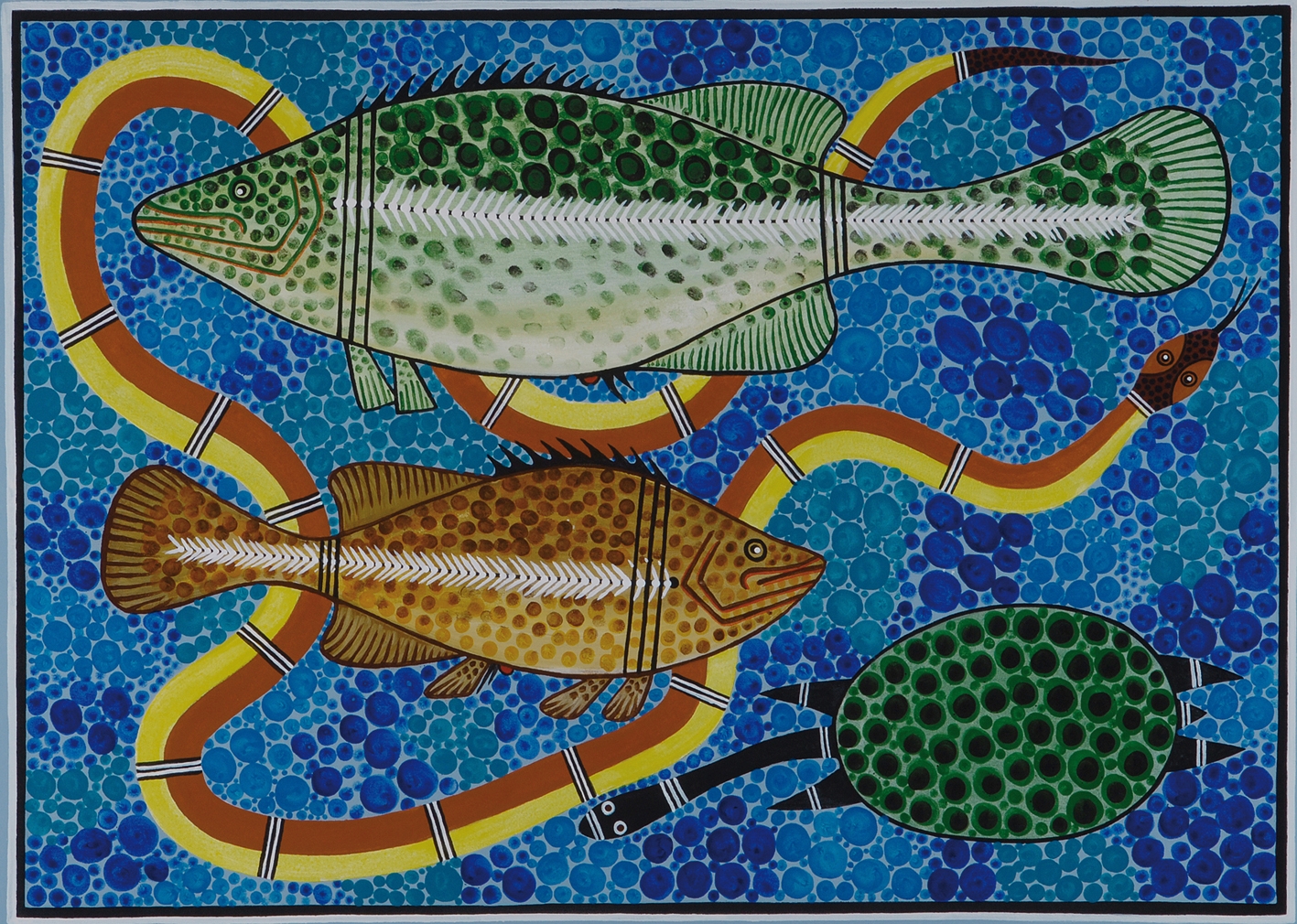
http://dreamcatcher.net/images/uploads/17441-medium.jpg

Well Before Their Time


Not only do we dispute from where the first ocean-going boats set sail, the upper limit of 42,000 years falls well short in our estimation. Research in Flores Island which, after Timor, is the next closest island to Australia, seems to indicate similar maritime technology and degrees of co-operative activity between various hominids was actually occurring no less than 800,000 years ago. In 1998, the late Professor Michael Morwood (1950-2013) published a paper detailing “indisputable” proof that “some 800,000 years ago Homo erectus… had reached the island of Flores”.

The unexpected arrival of what Morwood assumed to be Homo erectus so long ago involved “water crossings of at least 19 kilometres of open sea” in numbers large enough to establish a viable population. And due to the “impoverished nature of the ancient flora of the island” of Flores, they too, like those on Timor, must have been skilled mariners and fishermen/women or they would have perished if relying solely on what was readily available to hunt or gather.

Such a date, as sensational as it may seem, has never been openly challenged. According to researchers, “the dating is reliable – volcanic tuff deposits from above and below indisputable stone artefacts and associated extinct fauna were securely dated by the well-tried and tested fission-track method”. And yet these sound findings appear to have been quickly forgotten in academic circles. Despite the climate of academic selectivity, the issue still remains; every academic and official text denies that Homo erectus was able to invent such a boat, nor was bold and intelligent enough to embark on such a leap of faith into the unknown, yet this hard evidence exists.

One can only imagine the skills in communication, organization and imagination needed to construct the boat and convince others to step aboard, en route to an unknown destination across the sea. This leads to one of two logical explanations: either Homo erectus was much smarter than is claimed, or Homo sapien sapien evolved much earlier than is assumed.

In what must further muddy the waters for proponents of the 60,000 year old African theory, the ‘hobbits’ of Flores have been dated at between 18,000 to 96,000 years old. These extremely small hominids are regarded as entirely separate from the present-day taller indigenous people of Flores, a distinction which genetic and morphological studies have indisputably confirmed. From these studies we understood that these smaller people were also, as it was with Homo erectus, an import to Flores Island and could only have gotten to there by sailing a sizeable boat from an unknown destination.

But enough of Africa…. none of these archaeological findings make any sense if one assumes that Africa was the sole birth-place of modern humanity. It is only when the First Australians are acknowledged as the Original race from which Homo sapien sapiens evolved that these apparent irregularities can be resolved. The extensive array of scientific and historical evidence we have presented in previous articles merely reinforces what this recent archaeological discovery and genetic analysis unintentionally bear witness.

[For more information, check out Steven’s previous article: DNA Evidence De-Bunks Out-Of-Africa Theory of Human Evolution]


Walking Onto Site, Without Sight


Ever since we began our research into the First Australians’ ancient history, there has existed one ever-present obstacle: archaeologists and anthropologists who wander onto Original country rarely seek Original permission first, and most seem incapable of grasping anything of substance beyond the most basic and obvious. So much of what they assume and conclude is lost in translation, with no understanding of, or enquiry into, Original history and lore. To accurately comprehend and report the mysteries, esoteric powers, history and culture of the First Australians requires much more than a degree, clipboard, computer or camera…. it requires the guidance of the Original people, and the acuity to examine evidence without the baggage of historical pre-conception.

The sad part of the recent archaeological report from Timor, and so many others, is that the shell hook is merely an introduction that leads to much more enlightening avenues upon which to research and contemplate. There is more than one way to catch a fish! But as usual, mainstream academics are unwilling to progress any further than what they want to see, hindered by government regulation and a culture of closed-mindedness in their ranks. Thus their examination is restricted only to the hook, line and spear. Although the liaison and combined endeavour evidenced in Timor undoubtedly crosses the boundaries of ‘accepted’ history, further implications of this discovery are simply ignored in favour of the status quo.

As a perfect example, the first time that we saw the photograph of a group of Aboriginal men by a river engaged in an activity described by Jennifer Hoff in her book Bundjalung Jugun as an example of “a large group of tribesmen spearing fish”, we found her description as humorous as it was symptomatic. So caught up in her historical conditioning, this manifestly incorrect commentary highlights how little was understood of the First Australians. First up, there is not one spear visible or in use in the photograph. The men are definitely hunting for fish, and the devices, songs and participants are there for the lens to record…. but, despite claims that she consulted closely with the Bundjalung people (sic), such detail was beyond the limited vision of the photographer. There was no need to carry or brandish any weapon in this ancient activity; the most essential ingredient in this fishing expedition was the song given by the Elder standing with his arms outstretched. He was singing to his aquatic brothers and sisters: the dolphins.

In times when the Old Ways were observed, many coastal tribes made a compact with their aquatic kin who they regarded as their brothers and sisters. A few men would attract the dolphin’s attention by flailing leafy bushes against the water, while most silently stood with heads bowed in reverence and thanks. This sacred ancient alliance was forged in the Dreaming, and until the Elder who was the custodian of a song that consecrated this inter-species alliance stood and broke into song, the dolphins were at the ready but the hunt could never begin. Everything was dependent on the Elders voice and verse, all the hunters had to do was to stand in the shallow water and keep perfectly still. The rest was easy, they silently waited and watched as the dolphins drove a school of fish to their feet. Once their brethren had completed their part of the bargain, the catch was gathered up and divided, guaranteed food for all, and the Elder sang songs of thanks.


Dolphins Up and Down the Coast


This concord was neither limited to one area nor hidden from non-Aboriginal observers. In the mid 1860s, magistrates and police stationed at Stradbroke Island (QLD Australia) filed reports of the same coalition sharing in song, methods and catch. According to their eyewitness accounts, dolphins and humans worked as one and regarded each other as equal in every respect.

Before allowing the left-hemisphere of the brain time to object, it needs to be acknowledged that this ancient truth is also chronicled by the greatest historians from the oldest living culture in the world, via the Dreaming stories. In a ‘Bundjalung Confederation of Language and Tribes’ Dreaming story, “The Man Who Killed a Porpoise”, it is made clear that “the porpoises were the old people’s friends”. One day “two young men took their net down to the beach” and unintentionally caught a dolphin. Being “puzzled about porpoises”, one of the men “wanted to know how they came to be so clever”, so he “killed the porpoise and cut it open”. The next time the men went down to the beach in preparation for another shared hunt, the dolphins did not respond to the beating of branches or song. The “Old-men” knew something was amiss and didn’t take long to identify the culprit. “Because he did such a bad thing, they took him and killed him with a boomerang… like an axe. Then they threw his body into the sea, and tossed the boomerang in after it”. This narrative from the Dreaming serves two purposes; it is both a factual account of a well-known form of co-operative enterprise, and a warning to any who transgress and interfere in any way with dolphins.

Of those who may be prepared to conceded that such extraordinary events could possibly occur, many will undoubtedly prefer to believe that this practice was all part of days long gone and of no relevance today. We disagree. The next account is of the exact same partnership, still in operation less than two decades ago in the 1990’s on the Evans River (NSW Australia). This interaction between species was known of by many locals and, confirming its authenticity, the same story was shared with me by two Original people present on the river-bank on the day in question, both of whom offered pledges of absolute honesty when they recalled what happened on that memorable and sacred day.

Even when the two old men made their way down the river bank, those assembled on the two banks were still none the wiser. They had been summoned to attend by these Elders, but no-one knew what purpose sitting on the side of the bank would serve. They had no hook, tackle or net. As the boat was freed from its moorings and slowly drifted towards the middle of the river, no-one spoke or had the slightest idea what was supposed to happen.

The two men seated in the boat broke into song, some of the Old words were familiar to those assembled, but many were not. Even though the dinghy was nearly two kilometers (1.2 miles) from the ocean, it didn’t take long before the dolphins responded to their ancient call. It wasn’t so much their unexpected appearance that caught the spectators unaware, but the offerings they were directing towards the old men. The school of fish were frantic. Close behind were around ten dolphins in close pursuit, and ahead an escape route which was getting shallower and narrower. For many fish there seemed to be one available avenue of escape: the small boat. Fish were quite literally jumping out of the water and into the laps of the elderly crew of two. Barely a minute passed before the dinghy was so laden with fish there was a real possibility it would sink. The load was lightened by throwing some fish out of the boat in thanks, as the Old men slowly rowed the boat towards the shore.

As was (and still is) the custom and law, the catch was shared equally between the two Elders seated in the boat, those watching from the riverbank and their aquatic kin swimming in the river.


Killer Whales


It would be a mistake to assume that these mid-sized dolphins were the only animals with which the Aboriginal people could establish communication and share endeavours. The largest of their species, the killer whale, was also willing to hunt as a partner.

The numerous stories of the famous killer whales (Orcas) at Twofold Bay (NSW Australia) herding and capturing many species of whales then seeking out their partners’ whaling boats and guiding them back to their prey may seem a myth, but it isn’t. There are literally hundreds of accounts testifying to the truthfulness of these unusual events, and many were meticulously researched and documented. However, the inspiration and motivation behind this extraordinary example of co-operation was far less publicised.

As is often the case, it all began in the Dreaming. Remarkably, even European accounts acknowledge that this practice was of Aboriginal inspiration and was occurring well before their arrival. According to the Original custodians, this long-standing arrangement was reached at a time well past. The Yuin people decided to light fires all along the headland to arouse the curiosity of their reincarnated aquatic brothers and sisters: the killer whales. After they gained their attention, one Elder limped along the top of the headland, grimacing as he dragged himself near the cliff’s edge. Once their empathy was stirred, the killer whales gathered together and drove a whale of a different species onto the beach below. They were deceived; they acted from compassion, believing the old man was incapable of hunting and would therefore starve. But so the pattern began. Every time the killer whales beached a whale for the Original people, the Elders would cut out the tongue and lips as a ‘payment’ which they called the Law of the Tongue. This obligatory offering of what was a delicacy to the Orcas, became an eternal Law.

Of course a different version of this relationship is told by white commentators, one which is far more accommodating to accepted European history. But this does no more than reflect a tendency of academics to denigrate and reinterpret any aspect of Aboriginal society that contradicts their preferred interpretation of the world and its ancient history.

In an account of this activity published in The Daily Telegraph (June 5th, 2006), researcher Jeremy Stevens claims the reverence and inter-species kinship shared by the Originals and the whales was purely due to deduction and never the outcome of a special relationship. He alleges that “the Yuin Aboriginal people had observed orcas herding baleen whales and the killer whales were soon regarded as the re-incarnated spirits of Yuin ancestors… the Yuin came to believe the orcas were providing food for the tribes”. Jeremy Stevens feels such an empathetic relationship never existed, and that the associated songs, ceremonies and Dreaming story are fabrications that were used to explain the normal activity of the orcas, irrespective of any tribal ritual or song.

But there are obvious contradictions in Stevens’ reasoning. Firstly, his assumption that Original people observed the orcas and merely leveraged the opportunity they presented requires that the Original people were previously able to survive and thrive in this coastal region without a viable means of fishing, until the orcas provided one. Moreover, he showed no understanding of the motivation that originally inspired these killer whales to share in the hunt in the first place. The reality is that Jeremy Stevens was never going to accept the Aboriginal explanation, instead he ameliorated and reworked an ancient Original truth into something more comforting and less threatening to non-Original sensibilities and history. So let us ignore this poorly researched piece of shallow journalism.

The Law of the Tongue was widely accepted by Aboriginals and white whalers alike as sacrosanct and compulsory. The offering of the tongue and lips was a reflex reaction, and an essential part of the hunt. And so it continued for centuries, until one arrogant white captain refused to make payment after a successful hunt. Despite the vociferous protests from crew members, pleading with him to obey the Original Law that both peoples obeyed, he considered himself to be above such primitive superstition and refused to make the exchange. From that fateful day, the compact was broken and the killer whales moved on. The Aboriginals left the area in disgust at this desecration and the custom rapidly stopped.

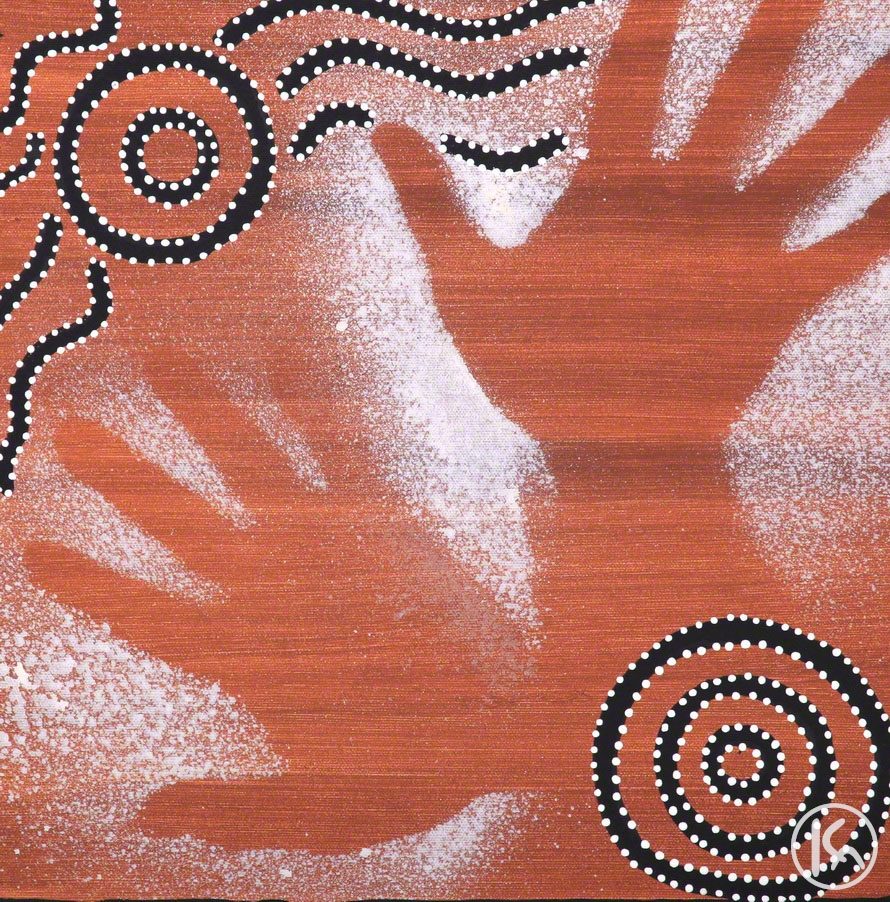
http://www.aboriginalartstore.com.au/media/17960/aboriginal_spirituality_photo_slideshow.CACHE-1000x1000.jpg

The Final Word


This article has two complementary agendas: to provide evidence of the Original peoples’ maritime history, and to highlight how the sciences of genetics and archaeology are subjective pursuits where, in many cases, the researchers’ academic conditioning and cultural baggage narrows their focus and blinds them to the bigger picture. It makes no difference whether the observer is an author, archaeologist, photographer or reporter, the professionals I have discussed today approached the task primed only to record what was convenient, what could be absorbed into their pre-conceived limitations, and what was never there in the first place.

Earlier in this article, I alluded to the fact that most scholars are ‘restricted only to the hook, line and spear’. In their haste to prove currently-held theories, they failed to conduct genuine scientific enquiry and simply ignored or reinterpreted any evidence that was inconvenient to the status quo. Excited by one shell hook, they fabricated many spears, and then cast out the same tired old African theory without consideration of the wider historical implications of the facts.

Whether the greatest casualties are the opportunities lost or historical truths denied, there is a reason this tragic state of affairs came about; disrespect for the Original people and their ways, and the distrust this causes. Darkinoong Elder Auntie Beve’s response to archaeologists wandering on to her country uninvited was the initial inspiration behind this article, and highlights why this impasse still exists:

“They have written much that was never to have left country. They have written much that was never near the truth… there is much we never tell or show them because of this… the Old people knew when they were being belittled so they put their tongue in their cheek and said “yes boss, you know it all”.

Academic preconceptions and cultural disrespect will never uncover the truth of our origins. The only way this sorry state of affairs can be overcome is with a broadness of the mind and an openness of the heart.


About the authors:

strongs  42,000 Year Old Fishing Hook Defies Accepted Aboriginal HistorySteven Strong is an Australian-based researcher, author and former high school teacher. Evan Strong is a researcher, historian and author with a Bachelor degree in the Social Sciences. Their work is to explore the ancient story of the Original people, a narrative that was almost lost to aggressive European colonisation.

For more information visit http://ForgottenOrigin.com


From Wake Up World @ http://wakeup-world.com/2014/04/03/42000-year-old-fishing-hook-defies-accepted-aboriginal-history/


For more information Australian aboriginal people see http://nexusilluminati.blogspot.com/search/label/australian%20aborigines
For more information about humans NOT originating in Africa see http://nexusilluminati.blogspot.com/search/label/out%20of%20Africa%20debunked  
- Scroll down through ‘Older Posts’ at the end of each section


Hope you like this not for profit site -
It takes hours of work every day by a genuinely incapacitated invalid to maintain, write, edit, research, illustrate and publish this website from a tiny cabin in a remote forest
Like what we do? Please give anything you can -  
Contribute any amount and receive at least one New Illuminati eBook!
(You can use a card securely if you don’t use Paypal)
Please click below -


Spare Bitcoin change?


Xtra Images – http://dreamcatcher.net/images/uploads/17441-medium.jpg 
http://www.aboriginalartstore.com.au/media/17960/aboriginal_spirituality_photo_slideshow.CACHE-1000x1000.jpg


For further enlightening information enter a word or phrase into the random synchronistic search box @ the top left of http://nexusilluminati.blogspot.com


And see


 New Illuminati on Facebook - https://www.facebook.com/the.new.illuminati

New Illuminati Youtube Channel - http://www.youtube.com/user/newilluminati


New Illuminati on Twitter @ www.twitter.com/new_illuminati


New Illuminations –Art(icles) by R. Ayana @ http://newilluminations.blogspot.com

The Her(m)etic Hermit - http://hermetic.blog.com


DISGRUNTLED SITE ADMINS PLEASE NOTE –
We provide a live link to your original material on your site (and links via social networking services) - which raises your ranking on search engines and helps spread your info further! This site is published under Creative Commons Fair Use Copyright (unless an individual article or other item is declared otherwise by the copyright holder). Reproduction for non-profit use is permitted & encouraged,  - if you give attribution to the work & author. Please include a (preferably active) link to the original (along with this or a similar notice).

Feel free to make non-commercial hard (printed) or software copies or mirror sites - you never know how long something will stay glued to the web – but remember attribution!

If you like what you see, please send a donation (no amount is too small or too large) or leave a comment – and thanks for reading this far…

Live long and prosper! Together we can create the best of all possible worlds…


From the New Illuminati – http://nexusilluminati.blogspot.com