"All the World's a Stage We Pass Through" R. Ayana

Showing posts with label nutrition. Show all posts

Thursday, 30 June 2016

Climate Change Ruins Food: Rising CO2 is reducing nutritional value of food, impacting ecosystems


Climate Change Ruins Food
Rising CO2 is reducing nutritional value of food, impacting ecosystems
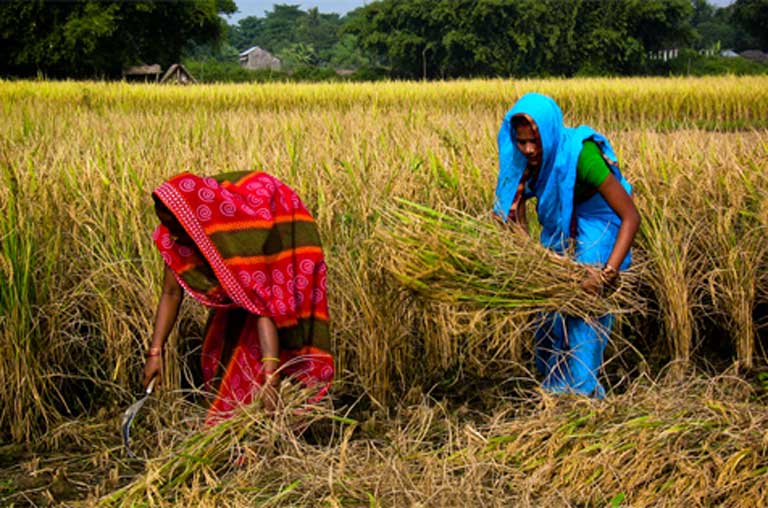
Women harvest rice in Nepal. An estimated two billion people are already deficient in dietary zinc and iron, an aspect of malnutrition that has been termed “hidden hunger”. Some researchers think that shifts in nutritional content in major crops as a consequence of increasing atmospheric carbon dioxide could lead to more people being at risk of mineral deficiencies. Photo courtesy of the International Rice Research Institute on Flickr under a CC BY-NC-SA 2.0 license.


 Women harvest rice in Nepal. An estimated two billion people are already deficient in dietary zinc and iron, an aspect of malnutrition that has been termed “hidden hunger”. Some researchers think that shifts in nutritional content in major crops as a consequence of increasing atmospheric carbon dioxide could lead to more people being at risk of mineral deficiencies. 
Photo courtesy of the International Rice Research Institute on Flickr under a CC BY-NC-SA 2.0 license.


Heightened atmospheric CO2 levels are cutting the proportions of protein and other vital nutrients in plants, impacting crops, people, pollinators and ecosystems.
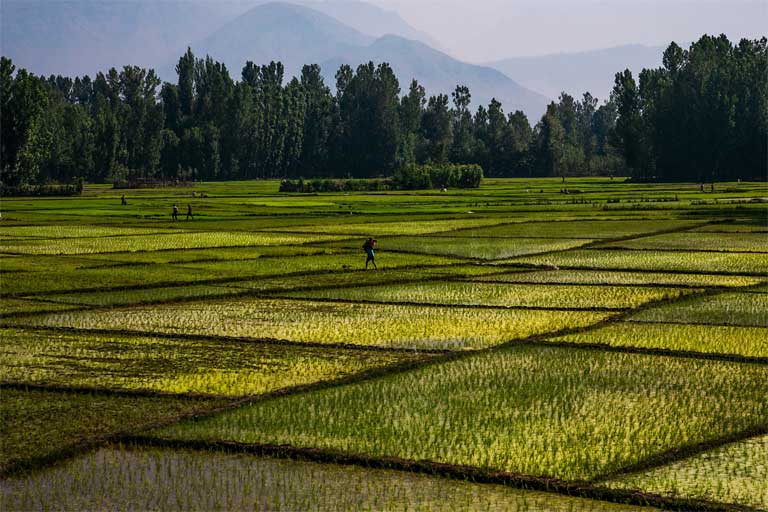

Rice fields in Kashmir, India. Staple crops such as rice and wheat are forecast to become less nutritious as a result of increasing carbon dioxide levels in the atmosphere. Photo courtesy of sandeepachetan.com travel photography on Flickr under CC BY-NC-ND 2.0 license
Rice fields in Kashmir, India. Staple crops such as rice and wheat are forecast to become less nutritious as a result of increasing carbon dioxide levels in the atmosphere. 
Photo courtesy of sandeepachetan.com travel photography on Flickr under CC BY-NC-ND 2.0 license


  • As CO2 levels rise, so do carbohydrates in plants, increasing food’s sugar content. While carbon-enriched plants grow bigger, scientists are finding that they contain proportionately less protein and nutrients such as zinc, magnesium and calcium.
  • A meta-analysis of 7,761 observations of 130 plant species found that overall mineral concentrations in plants declined by about 8 percent in response to elevated CO2 levels — 25 minerals decreased, including iron, zinc, potassium and magnesium.
  • New research found that as atmospheric CO2 rose from preindustrial to near current levels, the protein content in goldenrod pollen fell by 30 percent. Bees and other pollinators rely heavily on goldenrod as protein-rich food for overwintering. The loss of pollinators could devastate many of the world’s food crops.
  • Research into the correlation between CO2 concentrations and the nutrient content of food is in its early stages. More study is urgently needed to determine how crops and ecosystems will be altered as fossil fuels are burned, plus mitigation strategies.


Among the myriad impacts climate change is having on the world, one in particular may come as a surprise: heightened atmospheric CO2 levels might be adversely affecting the nutritional quality of the food you eat. As carbon dioxide in the atmosphere continues to increase, you could end up eating more sugar and less of important minerals such as zinc, magnesium and calcium — without even realizing it. Those effects could also be reverberating up the food chain and altering ecosystems in as yet poorly understood ways.

For plants, a rise in atmospheric carbon dioxide actually boosts productivity by stimulating photosynthesis. They make more carbohydrate and grow larger — seemingly a good thing. But because other nutrients don’t increase and can’t keep pace with the augmented carbohydrate, this potential boon to our food supply isn’t all that it seems: plants end up having a higher carbohydrate to protein ratio, and relatively lower concentrations of minerals.

Put simply: atmospheric carbon dioxide acts as a sort of fertilizer to grow bigger, leafier plants, but those larger broccolis and lettuces actually contain less nutritional value per portion than their predecessors grown in the preindustrial, pre-fossil fuel world.

And that could be a problem for the world’s already malnourished people, for bees seeking protein-rich pollen so they can safely overwinter, and for ecosystems that could be thrown out of balance by changes in plant nutrition.

The human implications of these ongoing changes to our food supply came under the spotlight in April when the US Global Change Research Program (USGCRP) published a major report on the impact of climate change on human health. One of its key findings was that rising carbon dioxide will reduce the nutritional quality of food.

Allison Crimmins, of the US Environmental Protection Agency, and a lead author of the food safety chapter in the USGCRP report, told Mongabay about some of the ways in which this is likely to be felt around the world: “In certain developing countries, reduced nutritional value of foods will aggravate existing protein deficiencies, particularly in children. In the US and other developed countries however, dietary protein deficiencies are uncommon. In those cases, an increased ratio of carbohydrates and fewer essential minerals — essentially more starchy and more sugary foods — could potentially contribute to or exacerbate existing chronic dietary deficiencies or obesity risks, though how big a role this impact would play on a person’s overall nutrition remains uncertain.”


Deciphering the CO2 / plant nutrition relationship


In a 2014 study that informed the USGCRP report, researcher Irakli Loladze, of the Bryan College of Health Sciences, described the projected increase in dietary starch and carbohydrate as comparable to adding a “spoonful of sugars” to each 100 grams (3.5 ounces) of dry plant matter. When we’re being told not to eat more than a few teaspoons-worth of sugar per day, this sounds like a lot.

What will be the consequences, Loladze asks, if this additional sugar intake is unavoidable and lifelong? How, for example, might that extra daily suger exacerbate the health problems of the 25 million Americans, 98.4 million Chinese, and 65 million Indians who are part of the growing global diabetes epidemic? And how might those health impacts escalate as atmospheric carbon levels rise annually through the 21st century?

Loladze’s meta-study — which examined thousands of observations of plants grown under high carbon dioxide conditions — was an attempt to prove a theoretical prediction he made back in 2002. We’ve known for decades that plants grown under high carbon dioxide conditions have reduced protein concentrations, and the mechanism behind that change is fairly well understood: more carbohydrate dilutes the protein within the leaf. In addition, increased CO2 changes the rate of transpiration — the uptake of water through the roots and evaporation through the leaves — and affects the amount of nutrients plants draw from the soil. However, higher rates of photosynthesis have different effects on different minerals.
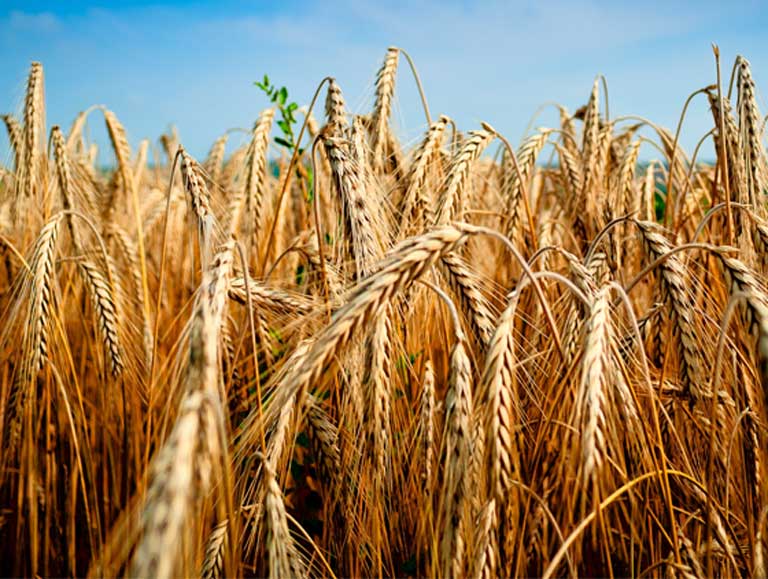

Wheat. Carbon dioxide promotes plant growth by boosting photosynthesis and carbohydrate production in the plant. But other nutrients don’t keep pace with this increase, resulting in higher carbohydrate to protein ratios, and lower concentrations of minerals. These shifts in nutritional quality could have implications for human health around the world. Photo courtesy of Žarko Å uÅ¡njar on Flickr, under a CC BY-SA 2.0 license


A theory known as ecological stoichiometry — which examines the balance of chemical elements in living systems — led Loladze to reason that minerals should also be affected by a proportional increase in carbohydrate synthesis and the associated knock-on effects this has on plant metabolism. But although a few studies supported his hypothesis in the early 2000s, the evidence was limited.

“There was considerable opposition to my idea,” Loladze told Mongabay. “The stoichiometric theory [upon which I based my argument] was not well known back then. Being a mathematician, I was viewed by some plant experts as an outsider with simplistic arguments that would not pan out in the real world.”

No one would fund the large-scale research effort Loladze needed to investigate his prediction further. Lacking backing and unemployed, he remained determined to test his theory with data. “With no money and no academic affiliation, the only way to get data was to compile [findings] from the existing literature,” he said.

Meanwhile, scientists around the world were increasingly studying the CO2 nutrient effects that interested Loladze, but their results were perplexing: while increases in atmospheric carbon decreased plant mineral concentrations in some studies, minerals increased in others, or showed no significant change

Loladze combined the data from numerous studies — that together had highly variable results — into one large meta-analysis, and he found a clear signal in the noise. A decade after he began work, he proved his prediction to be correct: when he collated the results of 7,761 observations of 130 plant species, he found that overall mineral concentrations in plant tissues declined by around 8 percent in response to elevated carbon dioxide levels. In all, 25 minerals were found to decrease, including iron, zinc, potassium and magnesium.
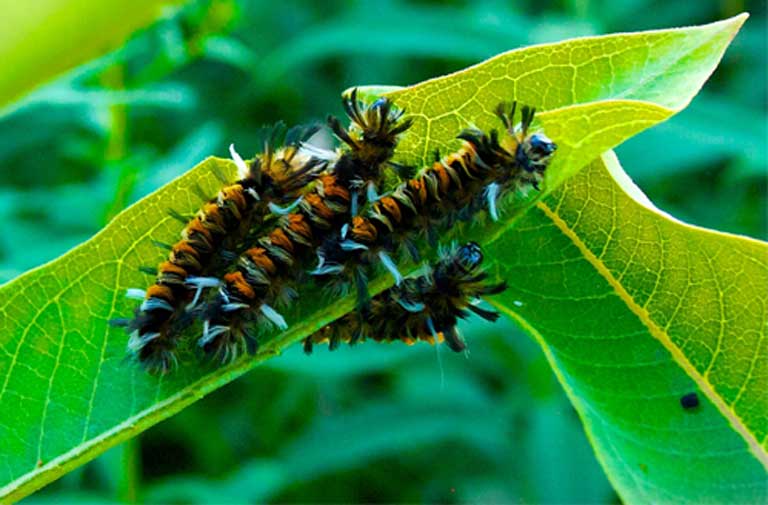

Tussock moth caterpillars feeding on leaves. Plants and the insects that feed on them form the basis of most terrestrial ecosystems, so nutritional shifts caused by rising atmospheric carbon dioxide levels will likely have impacts that extend up the food chain, but as ecosystems are so complex, it’s difficult to predict exactly how those changes will play out over time. Photo courtesy of Bjorn Watland on Flickr under a CC BY-SA 2.0 license


“One important aspect of Loladze’s study is its emphasis on trace elements, like zinc,” James Elser, of Arizona State University, and a proponent of the ecological stoichiometry theory on which Loladze based his work, told Mongabay. “These are often neglected in considerations of plant nutrition but agronomists and others are increasingly aware of the importance of these trace elements [not only] in limiting crop production, but also in human health and are now provisioning them in fertilizers.”

At the same time Loladze was looking at all available data on the nutrient responses of plants, Samuel Myers of Harvard University was also trying to pinpoint the impact of carbon dioxide on plant mineral content.

Whereas Loladze included data on wild as well as food crop species, and non-edible tissues as well as edible, Myers focused specifically on zinc and iron in six food crops. His research team grew the crops under different atmospheric CO2 conditions, and found a similar pattern: both zinc and iron declined by about 5-10 percent in wheat, rice, soybeans, and field peas when grown in a high carbon dioxide setting.


On the trail of trace elements and “hidden hunger”


Although a more consistent picture is now emerging of what happens to plant nutrients as carbon dioxide levels rise, it’s still not clear exactly how serious a problem this will be for people’s health.

Minor changes in mineral concentrations are unlikely to affect people already consuming more than sufficient quantities for good health, like many in the industrialized world. And if edible plants grow larger under higher carbon dioxide, then simply eating more may compensate for the reduced mineral concentration, though this could have consequences in terms of extra calories consumed.
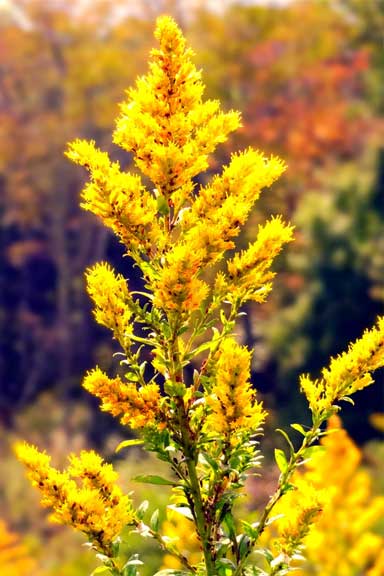

Goldenrod in Virginia, USA. This is an essential late season source of food for bees, but a recent study found that with rising carbon dioxide levels, the nutritional quality of its pollen is decreasing. This could affect bee survival over the winter. Pollinators such as bees play a crucial part in our food supply. Photo courtesy of Bridget Leyendecker on Flickr under a CC BY 2.0 license.Goldenrod in Virginia, USA. This is an essential late season source of food for bees, but a recent study found that with rising carbon dioxide levels, the nutritional quality of its pollen is decreasing. This could affect bee survival over the winter. Pollinators such as bees play a crucial part in our food supply. Photo courtesy of Bridget Leyendecker on Flickr under a CC BY 2.0 license.


This picture changes markedly in the developing world. Deficiencies in micronutrients are globally common there, with an estimated 2 billion people lacking in dietary zinc and iron — a serious problem long recognized by the United Nations. As the USGCRP report stated, “Globally, chronic dietary deficiencies of micronutrients such as vitamin A, iron, iodine, and zinc contribute to “hidden hunger,” in which the consequences of the micronutrient insufficiency may not be immediate­ly visible or easily observed. This type of micro­nutrient deficiency constitutes one of the world’s leading health risk factors and adversely affects metabolism, the immune system, cognitive devel­opment and maturation — particularly in children.” The report also noted that around 40 percent of people in the US are likely consuming less than the average daily requirement of calcium and magnesium.

Given the current prevalence of “hidden hunger” some experts expect that rising CO2 levels and corresponding declines in plant nutrition could have a major impact on the health of those already suffering from, or at risk of, malnutrition — with developing nations in Africa and Asia likely to be the hardest hit.

But more research is needed to quantify potential impacts. Studies such as those done by Loladze and Myers have so far only looked at the plants themselves, and not the food products that arise from them, cautions Elser. This “doesn’t necessarily represent the nutritional contents of the foods at the point of consumption, once they have been processed and prepared. So, the ultimate nutritional impact of the CO2 effect requires more investigation.”

“I agree that the conclusions in both [studies] are somewhat alarming, but they should be taken for what they are — just a couple of papers making estimations of potential impact that need to be verified by agroecology, climate, types of foods, etc,” Patrick Webb, Professor of Nutrition at Tufts University, told Mongabay. “And remember that over the [20th century] time-frames the [studies] refer to, there is a rapid expansion of bio-fortified cropping (non-GMO) and a surge in processed food consumption globally, much of which is micrononutrient fortified. I only say this to point out that these papers don’t lead to a conclusion that ‘we’re going to run out of nutrients!’ Simply, that we need to be wary of these kinds of potentially negative impacts of GHGs [greenhouse gases] even on our food supply, and such impacts are bound to be greater in some places than others.”
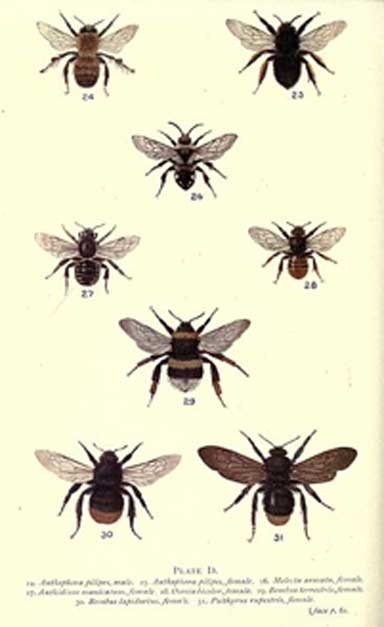

Native bees, wasps, butterflies, moths, flies and other wild pollinators are vital to the world’s agriculture and to ecosystems. No one knows for certain how rising carbon dioxide levels and corresponding falling protein levels in plants will impact these species long term. Image by Edward Sanders courtesy of the Biodiversity Heritage LibraryNative bees, wasps, butterflies, moths, flies and other wild pollinators are vital to the world’s agriculture and to ecosystems. No one knows for certain how rising carbon dioxide levels and corresponding falling protein and mineral levels in plants will impact these species long term. Image by Edward Sanders courtesy of the Biodiversity Heritage Library


“[T]he issues are being discussed among international agriculture researchers, certainly,” continued Webb, who is also Director for USAID’s Feed the Future Nutrition Innovation Lab. “The challenge… is to document the pace of change [in plant nutritional value] for different regions of the world, for different kinds of crops. Only then will we know what kinds of policy changes need to be [put] in place to respond to what is happening (or not happening) at a scale significant enough to warrant action.”

Last year Myers and his colleagues looked at what projected declines in crop zinc content could mean for people in 188 countries. They found that under predicted increases in atmospheric carbon dioxide, 138 million more people would be at risk of zinc deficiency by 2050, largely concentrated in Africa and South Asia.

“The effect we have identified highlights an issue of social justice,” Myers and his co-authors wrote. “The wealthy world’s CO2 emissions are putting the poor in harm’s way.”

While the problem can theoretically be solved by identifying the regions and populations most at risk from hidden hunger, and then focusing mitigations such as mineral fortification programs there, logistical hurdles will likely prevent fortified foods from reaching everyone who need them, now and into the future, Loladze points out in his 2014 paper. Another option is to explore crop cultivars for selective breeding that may be less susceptible to nutrient declines under higher carbon dioxide levels.

Loladze also urges more research, asserting that a greater understanding of exactly how nutrient declines occur could be an important step in responding to their effects. “Elucidating the relative role of each mechanism — dilution [of nutrients] by carbohydrates, reduced transpiration, altered demands for nutrients and so on — and linking them to genomic changes will help us to develop mitigation strategies.”


Food chain and ecosystem changes


While the full impact on human health of hidden hunger is still being investigated, we’re not the only ones likely to be affected: as plants form the basis of most terrestrial ecosystems “changes in plant based nutrition will extend up to all feeding organisms as part of the food chain,” Lewis Ziska of the US Department of Agriculture told Mongabay.

“Generally this means that the vegetation [in a CO2 enriched environment] is of poorer quality for the animals consuming it — insect herbivores, deer, etc,” Elser explained. “However, this is not necessarily always the case. For example, lower nitrogen content in grass [a consequence of the carbohydrate dilution effect] has been shown to favor the success of locusts.”
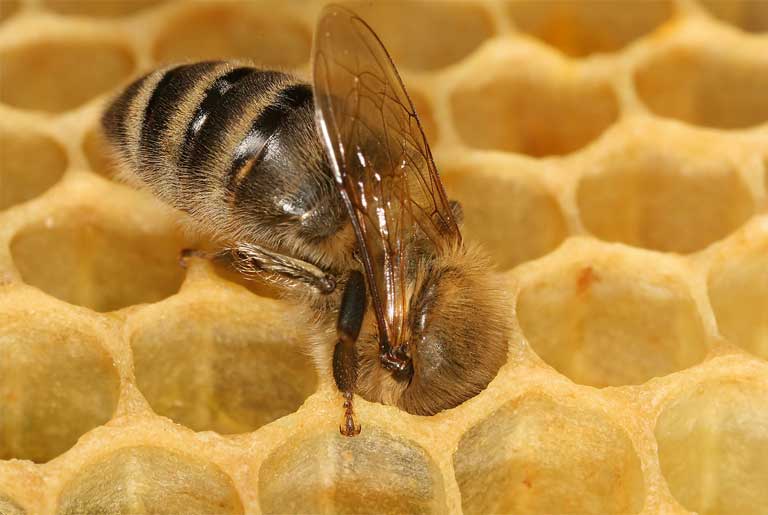

A worker bee in a honeycomb. The serious decline of protein in goldenrod, an important fall crop that sustains North American bees through the winter, could be harming these pollinators, but more study is needed to separate out this particular dietary stressor from other major stressors including chemical pesticide use. How CO2 levels are impacting other pollen-providing plants and pollinators around the world has not been studied. Photo by Richard Bartz, Munich Makro Freak & Beemaster Hubert Seibring licensed under the Creative Commons Attribution-Share Alike 2.5 Generic license


Studies have shown that some insect herbivores can compensate for the less nutrient rich plants found in high CO2 environments by eating more, but their growth, development, and reproduction can be affected, Loladze said. Crop damage may also be higher if insects need to consume greater plant quantities to survive. Some laboratory studies have shown that even with compensatory feeding to make up for deficiencies, insects are more likely to starve to death, or could end up consuming damaging quantities of toxic compounds. In the wild, generalist species may respond by switching plant hosts, and over time evolutionary responses could be expected too.

Another ecosystem outcome is the lower nutrient content found in dead leaves, Elser added. “This can slow down the cycling of nutrients in soil and thus impact subsequent productivity of the grassland or forest.”

Research just published by Ziska and his colleagues illustrates another important way CO2 induced nutritional changes are likely impacting wild ecosystems and human food crops. His team examined Smithsonian National Museum specimens of the flowering plant goldenrod collected between 1824 and 2014, to see how pollen quality changed as atmospheric carbon dioxide levels rose — they saw a high correlation. As carbon dioxide concentrations rose from preindustrial levels of 280 parts per million to near current levels of 398 parts per million, the protein content in the most recent pollen samples fell by 30 percent. The greatest protein drop was seen between 1960 and 2014, when atmospheric CO2 levels rose most dramatically.
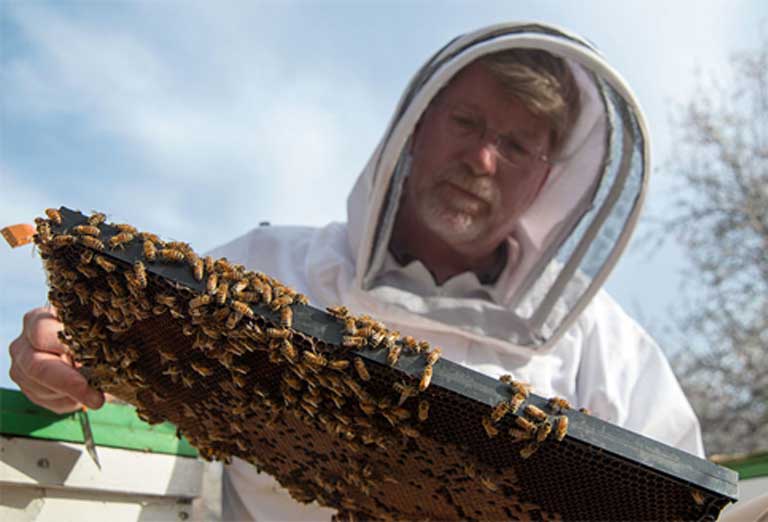

US Department of Agriculture Agricultural Research Service entomologist Dr. Jeff Pettis examines a bee colony in McFarland, CA in 2014. Bees are one of nature’s many pollinators and are crucial to the production for fruits and vegetables —including apples, squash and almonds. Honeybees are responsible for pollinating approximately $15 billion worth of US crops annually. Their disappearance would have massive repercussions for our food supply. Photo by David Kosling / USDA.


The team also ran a two-year experiment that grew goldenrod under an equivalent range of carbon dioxide concentrations, as well as at levels that are predicted for the coming decades. They observed similar protein declines.

Myers described these findings as “really fascinating,” and explained their significance: “This is important because goldenrod is one of the most ubiquitous late-blooming plants that provides fodder for bees before they overwinter.” Ziska and colleagues say that goldenrod is recognized as being “essential to native bee and honey bee health and winter survival”.

Not only is this likely to directly impact bee populations, “It is reasonable in the case of pollinators to suggest that reduced nutrition will increase vulnerability to other stressors; these other stressors could include things like neonics [pesticides] and/or invasives such as Varroa destructor [parasitic mites],” Ziska said. The loss of pollinators worldwide would drastically impact the many insect pollinated foods we enjoy today ranging from apples to oranges, almonds to cashews, cabbages to broccoli, coffee to tomatoes and blueberries.

“We are starting to design some experiments to see what these changes in protein content might mean for bee behavior and their effectiveness as pollinators,” Myers said. Research Myers and colleagues published last year quantified the role that pollinators play in ensuring human health via food nutrition. Their study concluded that without pollinators as many as 1.4 million additional people would die each year due to non-communicable diseases and micronutrient deficiencies.


The urgent need for research


The complexity of natural systems, and the numerous confounding factors that affect human health and animal health, make it difficult to foresee exactly how CO2 impacts on the food chain will play out for people or ecosystems. Mitigation strategies may be successful to a degree, once we know what we’re up against. Even better would be to rapidly cut fossil fuel emissions, making sure that long-term carbon dioxide increase predictions don’t materialize.

“The impact on the nutrition of our food is a direct effect of rising greenhouse gas emissions, so it is vital that we reduce these emissions,” Crimmins said. “Taking action on climate change now and reducing the world’s greenhouse gas emissions is not just an environmental imperative; it is crucial for protecting public health.”

“Bottom line is that humanity is operating like a monkey in a rocket ship,” Myers concluded. “We used to be passengers with all the other living creatures on the planet but we have climbed up into the cockpit and taken control. Now we are pushing buttons and flipping levers and rapidly changing most of the biophysical conditions on the planet with really very little idea what the consequences will be for our own health and wellbeing or that of the rest of the biosphere. Undoubtedly, there will be many more surprises along the way.”
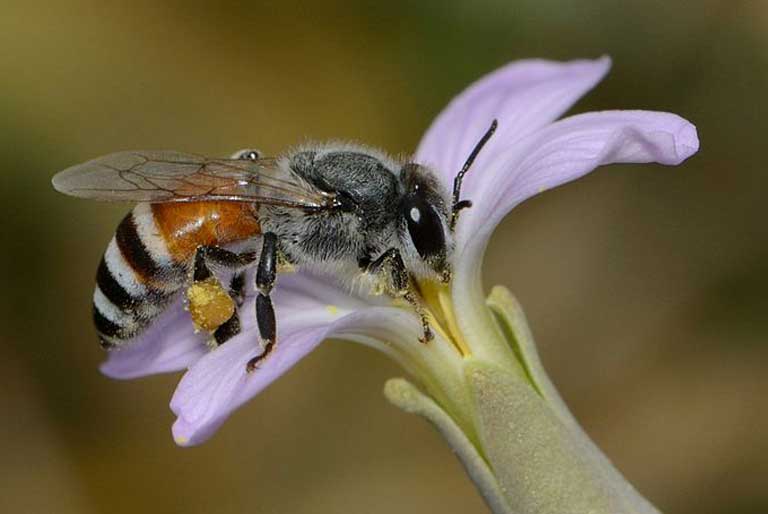

A dwarf honey bee (Apis florea). The study of the impacts of carbon dioxide levels on plant nutrition has barely begun to be studied. As CO2 levels rise we are moving into uncharted territory. Photo by Gideon Pisanty (Gidip) licensed under the Creative Commons Attribution 3.0 Unported license


A dwarf honey bee (Apis florea). The impacts of carbon dioxide levels on plant nutrition has barely begun to be studied. As CO2 levels rise we are moving into uncharted territory. Photo by Gideon Pisanty (Gidip) licensed under the Creative Commons Attribution 3.0 Unported license


Citations


DeLucia, E.H., Nabity, P.D., Zavala, J.A., and Berenbaum, M.R. (2012) Climate Change: Resetting Plant-Insect Interactions. Plant Physiology 160: 1677-1685
Loladze, I. (2002) Rising atmospheric CO2 and human nutrition: toward globally imbalanced plant stoichiometry? Trends in Ecology and Evolution 17: 457-461
Loladze, I. (2014) Hidden shift of the ionome of plants exposed to elevated CO2 depletes minerals at the base of human nutrition. eLife 3:e02245. DOI: 10.7554/eLife.02245
Müller, C., Elliott, J., and Levermann, A. (2014) Fertilizing hidden hunger. Nature Climate Change 4: 540-541
Myers, S.S., Zanobetti, A., Kloog, I. et.al. (2014). Increasing CO2 threatens human nutrition. Nature 510: 139-142
Myers, S.S., Wessells, K.R., Kloog, I., Zanobetti, A., and Schwartz, J. (2015) Effect of increased concentrations of atmospheric carbon dioxide on the global threat of zinc deficiency: a modelling study. Lancet Global Health 3: e639-e645
Smith, M.R., Singh, G.M., Mozaffarian, D., and Myers, S.S. (2015) Effects of decreases of animal pollinators on human nutrition and global health: a modelling analysis. The Lancet 386: 1964-1972
Ziska, L., Crimmins, A., Auclair, A., DeGrasse, S., Garofalo, J.F., Khan, A.S., Loladze, I., Pérez de León, A.A., A. Showler, J. Thurston, and I. Walls, (2016) Ch. 7: Food Safety, Nutrition, and Distribution. The Impacts of Climate Change on Human Health in the United States: A Scientific Assessment. U.S. Global Change Research Program, Washington, DC, 189–216. http://dx.doi.org/10.7930/J0ZP4417
Ziska, L.H., Pettis, J.S., Edwards, J., Hancock, J.E., Tomecek, M.B., Clark, A., Dukes, J.S., Loladze, I. and Polley, H.W. (2016) Rising atmospheric CO2 is reducing the protein concentration of a floral pollen source essential for North American bees. Proc. R. Soc. B. 283: 20160414
Article published by Glenn Scherer


For more information about climate change see http://nexusilluminati.blogspot.com/search/label/climate%20change  
- Scroll down through ‘Older Posts’ at the end of each section


Do you LIKE this uniquely informative site?
Hours of effort by a genuinely incapacitated invalid are required every day to maintain, write, edit, research, illustrate, moderate and publish this website from a tiny cabin in a remote forest.
Now that most people use ad blockers and view these posts on phones and other mobile devices, sites like this earn an ever shrinking pittance from advertising sponsorship. This site needs your help.
Like what you see? Please give anything you can -  
Contribute any amount and receive at least one New Illuminati eBook!
(You can use a card securely if you don’t use Paypal)
Please click below -


Spare Bitcoin change?


And it costs nothing to share this post on Social Media!
Dare to care and share - YOU are our only advertisement!


For further enlightening information enter a word or phrase into the random synchronistic search box @ the top left of http://nexusilluminati.blogspot.com


And see


 New Illuminati on Facebook - https://www.facebook.com/the.new.illuminati

New Illuminati Youtube Channel -  https://www.youtube.com/user/newilluminati/playlists

New Illuminati’s OWN Youtube Videos -  
New Illuminati on Google+ @ For New Illuminati posts - https://plus.google.com/u/0/+RamAyana0/posts

New Illuminati on Twitter @ www.twitter.com/new_illuminati


New Illuminations –Art(icles) by R. Ayana @ http://newilluminations.blogspot.com

The Her(m)etic Hermit - http://hermetic.blog.com


DISGRUNTLED SITE ADMINS PLEASE NOTE –
We provide a live link to your original material on your site (and links via social networking services) - which raises your ranking on search engines and helps spread your info further!

This site is published under Creative Commons (Attribution) CopyRIGHT (unless an individual article or other item is declared otherwise by the copyright holder). Reproduction for non-profit use is permitted & encouraged - if you give attribution to the work & author and include all links in the original (along with this or a similar notice).

Feel free to make non-commercial hard (printed) or software copies or mirror sites - you never know how long something will stay glued to the web – but remember attribution!

If you like what you see, please send a donation (no amount is too small or too large) or leave a comment – and thanks for reading this far…

Live long and prosper! Together we can create the best of all possible worlds…


From the New Illuminati – http://nexusilluminati.blogspot.com

Thursday, 28 January 2016

The Fallacious Germ Theory


The Fallacious Germ Theory

germ theory terrain theory


The Germ Theory is the belief that germs are the primal cause of disease.  Nutrition and exercise play a small role, but it’s really the all-pervading germ that makes you sick.  That’s why we “catch cold” thereby expelling the responsibility outside ourselves.  It’s reassuring, I mean, at least you didn’t do anything wrong.

With this mistaken ideology we lose our innate power to heal ourselves, what Hippocrates called vis medicatrix naturae.  After all, since it was something outside of your body that made you sick.  In order to get well you must also seek help from an outside force, namely vaccines and doctors in general.

Luckily we don’t live in a bizarro reality like that.  We don’t “catch disease”, we create it.  It is not a sick person’s fault for being sick, since they never learned in school how the human body actually operates, but ultimately the responsibility lies with the individual.

germsGerms do not cause disease.  The precautions we take to eliminate germs do.  These include but are not limited to: antibiotics, disinfectants, food irradiation, hand sanitizers, and vaccines which are designed to protect us from the nefarious germ.  We also get sick from our compromised food supply, malnutrition,  and inability to recognize what the human body needs.

When we think we “get sick”, what is really happening is our bodies are attempting to discard toxic material.  “Getting sick” is allowing the body to detoxify itself from toxemia (toxic blood), which is caused by living a toxic life.

Germs do not cause disease, disease causes germs.  Germs are the body’s scavengers, the garbage men of your cells.  If they are present that means that the conditions where they lie are unfavorable.  Change the conditions of the ‘terrain’, and the germs will morph back into their healthy state.

It is easier for us to put the blame on an outside invader, thereby shifting the responsibility outside of ourselves.  But health can only come from within.  As Antoine Béchamp said: “Disease is born of us and in us.”  That same is true for health.

The immune system is a conceptual bodily system we sort of just made up.  It doesn’t actually exist, at least not in the way we think of it.  The respiratory system, digestive system, circulatory system, nervous system, lymphatic system, etc, these are all clearly distinct systems of the human body. Where is the immune system?  Can you point to it?  What composes it?  If anything, it’s the lymphatic system that comes closest to being what we call the “immune system”, as it is responsible for detoxing  the body from toxins and waste material.


Germ Fiction 
Germ Fiction


We’ve learned that the healthier a person is the less likely they are to get sick.  This aspect of the immune system is correct, but the naming of it is all wrong.  Immunity does not exist.  Germs don’t invade your body and cause disease, so “building up immunity” and “strengthening your immune system” to ward off those nasty germs is a lost cause.   We can only build our health by providing the body with what it needs, and steering clear of chemicals, vaccines, medicines, and other magical allopathic potions that are supposed to provide health but only cause more iatrogenic deaths.

Science is like a new religion.  Once originally called ‘Natural Philosophy’, this new form of worship disregards common sense for the appeal to the authority and other logical fallacies.  There is no longer any bit of philosophy in it.  The love of wisdom has been lost.  Science is no longer “science” when funding biases dominate our scientific community.  The almighty dollar is the universally accepted icon of worship and in scientism the shareholders are the Gods.


holy cross church


Doctors are the new priests and holy communion has been replaced with vaccinations.  The scientific method is swapped out for blind faith in the system.  Doctors tell us we can’t obtain health without their injections and injunctions.  Perhaps we should ignore these authority figures and make up our own mind based on intuition and common sense instead of blind faith and dogma.

Most people who believe in science also believe that germs make us sick and defenses must be ‘built up’ to keep us safe.  We mistakenly think exposing ourselves to these ‘germs’ builds our defenses, antibodies, etc, thereby ‘strengthening our ‘immune system’. But, there is no “immune system”.  There is only health, and we build health by providing salubrious conditions for the human body, not by exposing ourselves to poison in hopes that it will ‘make our immune system stronger’.   People who seem to have better ‘immune systems’ than others are just healthier in general, and the healthier you are, the less likely you are to get sick.  It’s as simple as that.

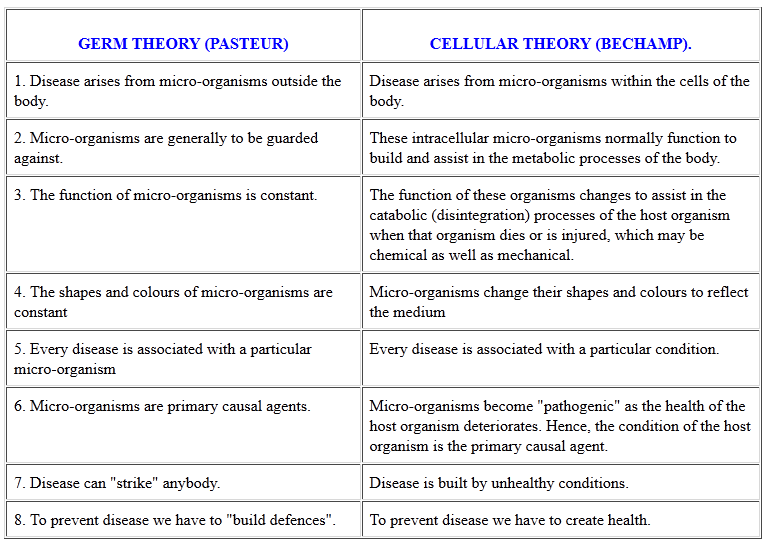
In 1864, French chemist Louis Pasteur fathered “The Science of Bacteriology” and “The Germ Theory of Disease Causation” by demonstrating the existence of various micro-organisms— and concluding that these germs cause pathogenic changes in living cultures within the laboratory setting.

The germ theory states that diseases are due solely to invasion by specific aggressive micro- organisms. A specific germ is responsible for each disease, and micro-organisms are capable of reproduction and transportation outside of the body.  With the germ theory of disease, no longer did we have to take responsibility for sickness caused by our own transgressions of the laws of health. Instead, we blamed germs that invade the body.

The germ theory effectively shifted our personal responsibility for health and well-being onto the shoulders of the medical profession who supposedly knew how to kill off the offending germs. Our own personal health slipped from our control.

Almost everyone in the Western world has been nurtured on the germ theory of disease: that disease is the direct consequence of the work of some outside agent, be it germ or virus.   

-Arthur M. Baker


germ theory is wrong


It was Antoine Béchamp (1816-1908), a contemporary of Pasteur, who discovered the true nature of germs.  He found they were pleomorphic (capable of changing from one type of organism to another).  With this theory, it is the conditions where germs live that is important (the terrain), instead of the germ itself.

As Florence Nightingale put it: “There are no specific diseases, there are specific disease conditions”.


Pasteur himself, in one of the most quoted deathbed statements perhaps of all time, recanted the Germ Theory and admitted that his rivals had been right, and that it was not the germ that caused the disease, but rather the environment in which the germ was found: “Bernard acail raison; le terrain c’est tout, le germe c’est rien.”  He was referencing  his nemesis Claude Bernard, a proponent of the Terrain Theory and contemporary of Antoine Béchamp.


Howard Hencke, in his 1995 book The Germ Theory: A Deliberate Aberration, notes that it was critical for the new medical industry, “… to indoctrinate the public in the Western world with the belief that the salvation from all, especially physical ailments, lay outside the individual’s system and responsibility, because it was caused by external factors…and that chemical remedies (drugs) will keep him free from disease, independent of his own vigilant responsibility.”

Some 17 years before Pasteur, the most famous nurse in history, Florence Nightingale, put it like this:

“Diseases are not individuals arranged in classes, like cats and dogs, but conditions growing out of one another. Is it not living in a continual mistake to look upon diseases as we do now, as separate entities, which must exist, like cats and dogs, instead of looking upon them as conditions, like a dirty and a clean condition, and just as much under our control; or rather as the reactions of kindly nature, against the conditions in which we have placed ourselves?   I was brought up to believe that smallpox, for instance, was a thing of which there was once a first specimen in the world, which went on propagating itself, in a perpetual chain of descent, just as there was a first dog, (or a first pair of dogs) and that smallpox would not begin itself, any more than a new dog would begin without there having been a parent dog.   Since then I have seen with my own eyes and smelled with my own nose smallpox growing up in first specimens, either in closed rooms or in overcrowded wards, where it could not by any possibility have been ‘caught’, but must have begun.   I have seen diseases begin, grow up, and pass into one another. Now, dogs do not pass into cats.”

In other words, certain diseases, like smallpox for instance, did not originate from one original specimen.  The AIDS virus didn’t come from one sick monkey.  The different symptoms our bodies display are falsely categorized into different diseases. Disease cannot be classified into categories since they are all the same thing.  They are the body’s attempts to heal, manifesting themselves in different ways depending on the person and the unfavorable conditions they find themselves in.

If you have the flu or a fever, your cellular terrain has been compromised.  Your body’s temperature rises because it detoxes itself more efficiently at higher temperatures.   Hippocrates once said  “Give me fever and I can cure every disease.”  He understood that what we call ‘disease’ today in Western Medicine, is really the body’s attempt to heal.


health


We don’t ‘catch cold’, we create sickness.  As Béchamp said, “Disease is born of us and in us.”

This pathological zeitgeist of allopathy and pseudoscience is sheer madness. We can listen to the ‘trained professionals’ -who also suggest we cut off a section of our penis– or we could listen to common sense and intuition, as well as investigate the suppressed medical literature.  Onward we go.

“Had it not been for the mass selling of vaccines, Pasteur’s germ theory of disease would have collapsed into obscurity.”  – E. Douglas Hume


vaccines


Vaccination did not save us from deadly diseases.  All ‘diseases’ were in steep decline well before the vaccine was introduced.

We can forget about the nefarious germs and trying to kill them all by whatever means necessary, but we should also remember not to crap where we eat. Cleanliness is next to godliness.  There is a big difference between being scared of germs and living a clean life.  Fear is employed by the authorities to manufacture consent.   Fear is the opposite of Love, and Love is ultimately knowledge.  Knowledge must be cultivated, free of bias and cognitive dissonance.


virchow


“If I could live my life over again, I’d devote it to proving that germs seek their natural habitat, disease tissue, rather than being the cause of disease tissue.”
-Dr. Rudolph Virchow, renowned scientist, considered the ‘Father of Pathology’


You could think of it like this; Mosquitoes seek the stagnant water, but don’t cause the pool to become stagnant.  It’s the same way with germs.


“Germs seek their natural habitat – diseased tissue – rather than being the cause of diseased tissue.”
-Antoine Béchamp


“if we see flies on a manure pile which do we think is more intelligent – to fight disease be swatting flies or to remove the pile of manure.”
-Dr. J. Baldor, Surgeon, Florida

It is more important to know what sort of person has a disease than to know what sort of disease a person has.
-Hippocrates


There was another theory at the time that actually made sense.  I’m talking about the Terrain Theory, or Pleomorphism, or the Cellular Theory of disease causation.  The idea that, instead of poisoning our bodies, like we would do with antibiotics(anti-life) to kill an ‘infection’, we would instead provide the right conditions for the body to heal itself, and forget about trying to kill everything in sight.


germ theory is bunk


Which one makes more sense to you?  Most healthy people live their lives according to the Terrain Theory just out of common sense.   Most people will never hear about this suppressed medical science, and will take the authority figure’s advice as sacrosanct truth.

It makes sense that if you are sick you probably shouldn’t consume poison.  Western medicine, in their infinite wisdom, begs to differ.  They think the germ is all that matters and it just needs to be eliminated.  But germs only thrive under certain conditions.

Perhaps we should just provide the right conditions for our body and if we do encounter one of these pernicious ‘germs’, we can rest assured because it won’t ‘stick’.  Using their own flawed and ambiguous terminology, you would be ‘immune’ to the ‘germs’.

So, what’ll it be?  Should we continue living in the flawed paradigm of disease-management by treating the symptom?  Or should we reject the belief system that passes for modern science and create HEALTH by addressing the root cause of the problem?

Treating the root cause of dis-ease with diet and lifestyle makes a lot of sense, but unfortunately suppressing the symptoms with drugs and surgery makes a lot of dollar$


organic food


Foolish the doctor who despises the knowledge acquired by the ancients.  
~Hippocrates

Whenever a doctor cannot do good, he must be kept from doing harm.
- Hippocrates


Natural forces within us are the true healers of disease.
- Hippocrates


gmo free


“Was the government to prescribe to us our medicine and diet, our bodies would be in such keeping as our souls are now.”
-      Thomas Jefferson, Notes on the State of Virginia

It is simply no longer possible to believe much of the clinical research that is published, or to rely on the judgment of trusted physicians or authoritative medical guidelines. I take no pleasure in this conclusion, which I reached slowly and reluctantly over my two decades as an editor of The New England Journal of Medicine. Marcia Angell, M.D.


The description of the disease seems to change according to the drug that’s being marketed.
- Ray Peat, PhD


iatrogenesis


“If the germ theory were founded on facts, there would be no living being to read what’s written.”
-      Dr. George White


“Disease is the crisis of purification of toxic elimination. Symptoms are the natural defenses of the body”
– Hippocrates – 460 bc


iatrogenetic death chart


Iatrogenesis is the technical term for ‘death by medicine’ In the U.S this is the third leading cause of death according to JAMA


“The most serious disorders may be provoked by the injection of living organisms into the blood…into a medium not intended for them may provoke redoubtable manifestations of the gravest morbid phenomena.”
– Bechamp

“…doctors fight the imaginary foe without ceasing. The people are so saturated with the idea that disease must be fought to a finish that they are not satisfied with conservative treatment. Something must be done, even if they pay for it with their lives, as tens of thousands do every year. This willingness to die on the altar of medical superstition is one very great reason why no real improvement is made in fundamental medical science.”
– Toxemia Explained 1926


health care


Again Dr. Tilden nails it:
“… every so-called disease is a crisis of Toxemia; which means that toxin has accumulated in the blood above the toleration point, and the crisis, the so-called disease – call it cold, flu, pneumonia, headache, or typhoid fever – is a vicarious elimination. Nature is endeavoring to rid the body of toxin. Any treatment that obstructs this effort at elimination baffles nature in her effort of self-curing.”


“Bacteria and parasites cannot cause disease processes unless they find their own peculiar morbid soil in which to grow and multiply.”  -Henry Lindlahr, MD


disease polio


Contrary to popular beLIEf, Vaccines did not save us from deadly disease.


Rene Dubos of the Rockefeller Institute: “Reasons why the germ theory became popular are: First, it fit neatly into the mechanistic theories of the universe that were popular in the nineteenth century. Second, it fit human nature. Man, apparently, ever ready to avoid responsibility and place causation outside himself, found an easy scapegoat in the bad little organisms that flew about and attacked him. After all, it wasn’t too long ago that evil spirits had been responsible for man’s ills. Third, it fit ‘commercial nature’ When we place causation outside ourselves, we create vast armies of attackers and defenders, assailants and protectors.

The reason why Béchamp was mainly ignored and Pasteur elevated to hero status is to be found in the different personalities and the lure of commercial success. Bechamp was a dedicated scientist and researcher, but he had no skills at politics and ass-kissing. Pasteur, on the other hand, was an expert at both. He ingratiated himself with the rich and powerful, and even became a favorite of French royalty.”


graph England Measles


“Do not automatically believe in anything , especially what you are told. Convince yourself of something by observing it with your own eyes. And, after having perceived a new fact, do not lose sight of it again until it is fully explained.”
— Wilhelm Reich

disease


People have been educated to be terrified of bacteria and to believe implicitly in the idea of contagion: that specific, malevolently-aggressive disease germs pass from one host to another. They also have been programmed to believe that healing requires some powerful force to remove whatever is at fault. In their view, illness is hardly their own doing.

The ‘germ era’ helped usher in the decline of hygienic health reform in the 19th century and, ironically, the people also found a soothing complacency in placing the blame for their ill health on malevolent, microscopic ‘invaders’, rather than facing responsibility for their own insalubrious lifestyle habits and their own suffering.

Pasteur was a chemist and physicist and knew very little about biological processes. He was a respected, influential and charismatic man, however, whose phobic fear of infection and belief in the “malignancy and belligerence” of germs had popular far-reaching consequences in the scientific community which was convinced of the threat of the microbe to man. Thus was born the fear of germs (bacteriophobia), which still exists today. Before the discoveries of Pasteur, medical science was a disorganised medley of diversified diseases with imaginary causes, each treated symptomatically rather than at their root cause. Up to this time, the evolution of medical thought had its roots in ancient shamanism, superstition and religion, of invading entities and spirits. The profession searched in vain for a tangible basis on which to base its theories and practices. Pasteur then gave the profession the “germ”.

By the 1870s, the medical profession fully adopted the germ theory with a vengeance that continues today. The advent of the microscope made it possible to see, differentiate and categorise the organisms. Invading microbes were now seen as the cause of disease.

The medical-pharmaceutical industry began their relentless search for the perfect drug to combat each disease-causing microbe—of which there are now over 10,000 distinct diseases recognised by the American Medical Association.

The universal acceptance of the germ theory and widespread bacteriophobia resulted in frenzied efforts to avoid the threat of germs. A whole new era of modem medicine was then inaugurated, including sterilisation, pasteurisation, vaccination, and fear of eating raw food.


It is frequently overlooked that around 1880, Pasteur changed his theory. According to Dr Duclaux, Pasteur stated that germs were  “ordinarily kept within bounds by natural laws, but when conditions change, when its virulence is exalted, when its host is enfeebled, the germ is able to invade the territory which was previously barred to it.”

This is the premise that a healthy body is resistant and not susceptible to disease. With the advent of Pasteur’s mysterious germ, however, medicine cloaked itself under the guise of ‘science’ and ever since has succeeded in keeping the public ignorant of the true nature of dis- ease.   
 -Arthur M. Baker – Exposing the Myth of the Germ Theory


germ


Don’t be scared of me anymore! Just take care of your body and it will take care of you!

Suppressing Symptoms


The Dream & Lie of Louis Pasteur
Tell Me Simply by Kenneth S. Jaffrey
Toxemia Explained by J.H. Tilden
The Cause of Disease by Kenneth S. Jaffrey
Is Modern Medicine Founded on Error?
Questioning the “VIRUS” Theory – German New Medicine


For more information about alternative medical views see http://nexusilluminati.blogspot.com/search/label/alternative%20healing  
For more information about vaccination see http://nexusilluminati.blogspot.com/search/label/vaccination  
- Scroll down through ‘Older Posts’ at the end of each section


Hope you like this not for profit site -
It takes hours of work every day by a genuinely incapacitated invalid to maintain, write, edit, research, illustrate and publish this website from a tiny cabin in a remote forest
Like what we do? Please give anything you can -  
Contribute any amount and receive at least one New Illuminati eBook!
(You can use a card securely if you don’t use Paypal)
Please click below -


Spare Bitcoin change?


For further enlightening information enter a word or phrase into the random synchronistic search box @ the top left of http://nexusilluminati.blogspot.com


And see


 New Illuminati on Facebook - https://www.facebook.com/the.new.illuminati

New Illuminati Youtube Channel -  https://www.youtube.com/user/newilluminati/playlists

New Illuminati’s OWN Youtube Videos -  
New Illuminati on Google+ @ For New Illuminati posts - https://plus.google.com/u/0/+RamAyana0/posts

New Illuminati on Twitter @ www.twitter.com/new_illuminati


New Illuminations –Art(icles) by R. Ayana @ http://newilluminations.blogspot.com

The Her(m)etic Hermit - http://hermetic.blog.com


DISGRUNTLED SITE ADMINS PLEASE NOTE –
We provide a live link to your original material on your site (and links via social networking services) - which raises your ranking on search engines and helps spread your info further!

This site is published under Creative Commons (Attribution) CopyRIGHT (unless an individual article or other item is declared otherwise by the copyright holder). Reproduction for non-profit use is permitted & encouraged - if you give attribution to the work & author and include all links in the original (along with this or a similar notice).

Feel free to make non-commercial hard (printed) or software copies or mirror sites - you never know how long something will stay glued to the web – but remember attribution!

If you like what you see, please send a donation (no amount is too small or too large) or leave a comment – and thanks for reading this far…

Live long and prosper! Together we can create the best of all possible worlds…


From the New Illuminati – http://nexusilluminati.blogspot.com