"All the World's a Stage We Pass Through" – R. Ayana

Showing posts with label harappa. Show all posts

Monday, 17 February 2014

Ancient Irradiated Ruins and The Mohenjo Daro ‘Massacre’

Ancient Irradiated Ruins 
and The Mohenjo Daro ‘Massacre’

Mohenjo Daro Masacre

by April Holloway

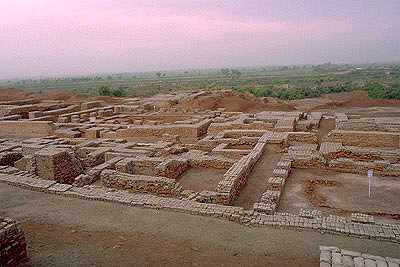
In the 1920s, the discovery of ancient cities at Mohenjo Daro and Harappa in Pakistan gave the first clue to the existence more than 4,000 years ago of a civilization in the Indus Valley to rival those known in Egypt and Mesopotamia. These cities demonstrated an exceptional level of civic planning and amenities. The houses were furnished with brick-built bathrooms and many had toilets. Wastewater from these was led into well-built brick sewers that ran along the centre of the streets, covered with bricks or stone slabs.

Cisterns and wells finely constructed of wedge-shaped bricks held public supplies of drinking water. Mohenjo Daro also boasted a Great Bath on the high mound (citadel) overlooking the residential area of the city. Built of layers of carefully fitted bricks, gypsum mortar and waterproof bitumen, this basin is generally thought to have been used for ritual purification.

However, in contrast to the well-appointed houses and clean streets, the uppermost levels at Mohenjo Daro contained squalid makeshift dwellings, a careless intermingling of residential and industrial activity and, most significantly, a series of more than 40 sprawled skeletons lying scattered in streets and houses.  Paul Bahn (2002) describes the scene:

In a room with a public well in one area of the city were found the skeletons of two individuals who appeared desperately to have been using their last scraps of energy to crawl up the stair leading from the room to the street; the tumbled remains of two others lay nearby. Elsewhere in the area the ‘strangely contorted’ and incomplete remains of nine individuals were found, possibly thrown into a rough pit. In a lane between two houses in another area, another six skeletons were loosely covered with earth.

Numerous other skeletons were found within layers of rubble, ash and debris, or lying in streets in contorted positions that suggested the agonies of violent death.


A Violent Massacre

 The remains of these individuals led many archaeologists at the time to conclude that these people all died by violence. Sir Mortimer Wheeler, who excavated at Mohenjo Daro in 1950s, believed they were victims of a single massacre and suggested that the Indus civilization, whose demise was unexplained, had fallen to an armed invasion by Indo-Aryans, nomadic newcomers from the northwest, who are thought to have settled in India during the second millennium BC.  Wheeler claimed the remains belonged to individuals who were defining the city in its final hours. He was so convincing that this theory became the accepted version of the fate of the Indus civilization.

However, many of his claims simply did not add up. There was no evidence that the skeletons belonged to ‘defenders of the city’ as no weapons were found and the skeletons contained no evidence of violent injuries.   Some archaeologists suggested that the influx of Indo-Aryan people occurred after the decline of the Indus civilization while others questioned whether an Indo-Aryan invasion of the subcontinent even took place at all.


Flood and Disease

An alternative theory was put forward that the city suffered extensive flooding and that people died off as a result of water-borne diseases such as cholera.  Recent investigations revealed considerable evidence of flooding at Mohenjo Daro in the form of many layers of silty clay. The Indus River was prone to change its course and through the centuries moved gradually eastward, leading periodically to flooding within the bounds of the city. Indeed, the massive brick platforms on which the city is constructed and the fortifications around parts of it seemed to have been designed to provide protection against such floods.  Conditions would have been ideal for the spread of water-borne diseases, especially cholera, although cholera epidemics cannot be proved to have occurred.

The conclusion that many mainstream archaeologists now make is that the ‘massacre’ victims from Mohenjo Daro were simply the victims of the natural tragedy of fatal disease rather than that of human aggression.  But this conclusion also has many holes – why did the remains of individuals appear in contorted positions, almost frozen at the very moment of death? Why did they appear to have been struck down suddenly? Surely if they died of disease their bodies would have been buried and not found scattered around the city?


Evidence of Atomic War?

There exist a growing number of ‘alternative archaeologists’ and researchers who have not settled for theories that do not satisfactorily explain the conditions of the skeletal remains and who have sought other explanations. 

One such individual is David Davenport, British Indian researcher, who spent 12 years studying ancient Hindu scripts and evidence at the site where the great city once stood. In his book Atomic Destruction in 2000 B.C. he reveals some startling findings: the objects found at the site appeared to be fused, glassified by a heat as high as 1500°C, followed by a sudden cooling. Within the city itself there appeared to be an ‘epicentre’ about 50 yards wide within which everything was crystallized, fused or melted, and sixty yards from the center the bricks are melted on one side indicating a blast. 

A. Gorbovsky in his book Riddles of Ancient History, reported the discovery of at least one human skeleton in the area with a level of radioactivity approximately 50 times greater than it should have been due to natural radiation. Davenport claimed that what was found at Mohenjo Daro corresponded exactly to what was seen at Nagasaki and Hiroshima.

Davenport's theory was met with intense interest from the scientific community. Nationally known expert William Sturm said: “the melting of bricks at Mohenjo Daro could not have been caused by a normal fire”, while Professor Antonio Castellani, a space engineer in Rome said: “it's possible that what happened at Mohenjo Daro was not a natural phenomenon”.

Since there is no indication of a volcanic eruption at Mohenjo-Daro, one answer that has been put forward is that the ancient city might have been irradiated by an atomic blast.  If true, it would be impossible to ignore the conclusion that ancient civilization possessed high technology.

Parallels were quickly drawn to the Mahabharata, the Indian epic, which indeed speak of doom and destruction. It reads:

... (it was) a single projectile
Charged with all the power of the Universe.
An incandescent column of smoke and flame
As bright as the thousand suns
Rose in all its splendor... 


...it was an unknown weapon,
An iron thunderbolt,
A gigantic messenger of death,
Which reduced to ashes
The entire race of the Vrishnis and the Andhakas. 


...The corpses were so burned
As to be unrecognizable.
The hair and nails fell out;
Pottery broke without apparent cause,
And the birds turned white. 


After a few hours
All foodstuffs were infected...
....to escape from this fire
The soldiers threw themselves in streams
To wash themselves and their equipment.


The description is unnervingly similar to the effects of an atomic bomb explosion – an incredibly bright blast, a column of rising smoke and fire, fallout, intense shockwaves and heatwaves, and the effects of radiation poisoning.

If Mohanjo Daro was destroyed by a nuclear catastrophe, who created the weapons and how? If not, then what was it that produced enough heat to vitrify rock and bricks? What could explain the high degree of radioactive traces in the skeletons? How did all of them die, in one instant? We believe it is time to stop accepting the sanitized view of the world provided to us by mainstream science and to begin digging a little deeper.


References

Bahn, P. (2002). Written in Bones: How Human Remains Unlock the Secrets of the Dead. London: New Burlington Books.

Davenport, D. (1979). Atomic Destruction in 2000 B.C. Milan, Italy

Gorbovsky, A. (1966). Riddles of Ancient History. Moscow: Soviet Publishers.


From Ancient Mysteries @ http://www.ancient-origins.net/ancient-places-asia/mohenjo-daro-massacre-00819


New Illuminati comments: This evidence - including residual radioactivity - could equally apply to a plasma strike from space and/or the Sun.
 

For more information about Harappa see http://nexusilluminati.blogspot.com/search/label/harappa
For more information about Mohenjo Daro see http://nexusilluminati.blogspot.com/search/label/mohenjo%20daro
- See ‘Older Posts’ at the end of each section


Hope you like this not for profit site -
It takes hours of work every day to maintain, write, edit, research, illustrate and publish this website from a tiny cabin in a remote forest
Like what we do? Please give enough for a meal or drink if you can -  
Donate any amount and receive at least one New Illuminati eBook!
Please click below -

Video - http://www.youtube.com/watch?v=_y5VhCowxN0


For further enlightening information enter a word or phrase into the random synchronistic search box @ http://nexusilluminati.blogspot.com


And see


 New Illuminati on Facebook - https://www.facebook.com/the.new.illuminati

New Illuminati Youtube Channel - http://www.youtube.com/user/newilluminati/feed


New Illuminati on Twitter @ www.twitter.com/new_illuminati


The Her(m)etic Hermit - http://hermetic.blog.com


The Prince of Centraxis - http://centraxis.blogspot.com (Be Aware! This link leads to implicate & xplicit concepts & images!)


DISGRUNTLED SITE ADMINS PLEASE NOTE –
We provide a live link to your original material on your site (and links via social networking services) - which raises your ranking on search engines and helps spread your info further! This site is published under Creative Commons Fair Use Copyright (unless an individual article or other item is declared otherwise by the copyright holder) – reproduction for non-profit use is permitted & encouraged, if you give attribution to the work & author - and please include a (preferably active) link to the original (along with this or a similar notice).

Feel free to make non-commercial hard (printed) or software copies or mirror sites - you never know how long something will stay glued to the web – but remember attribution! If you like what you see, please send a donation (no amount is too small or too large) or leave a comment – and thanks for reading this far…

Live long and prosper! Together we can create the best of all possible worlds…


From the New Illuminati – http://nexusilluminati.blogspot.com


Friday, 24 January 2014

10 Mysteries That Hint At Forgotten Advanced Civilizations


10 Mysteries That Hint At 
Forgotten Advanced Civilizations


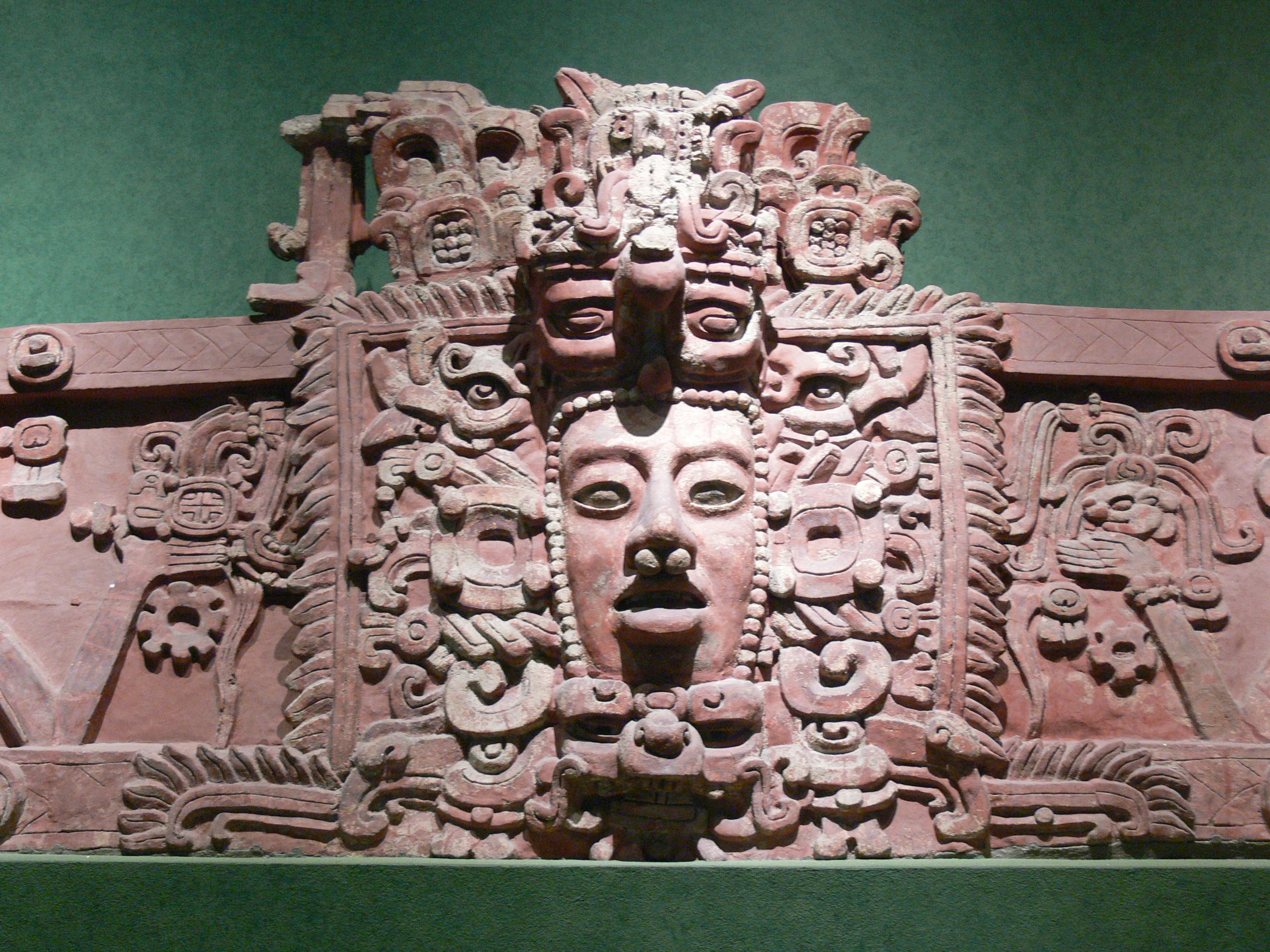
http://upload.wikimedia.org/wikipedia/commons/8/84/Maya-Maske.jpg


Prehistory literally means the time “before we had written records” (roughly the time before the 4th Century BCE) and ancient history is the time since our recorded history. Our concept of ancient history was originally firmly determined by the bible. Written from an insular point of view, the histories of some ancient cultures were distorted, badly neglected or even omitted. 

The existence of inexplicable monuments, certain man-made marvels and archaeological finds pertaining to our ancient and prehistory, are leading more and more archaeologists to believe long forgotten advanced civilizations existed. As most of our ancient records were lost during the destruction of the great libraries, the following genuine mysteries are the only remnants of their existence.


10. Ancient Devices

Safe Image 

Ancient knowledge was a lot more refined and developed than we have been taught hitherto. From batteries to planispheres, an assortment of gadgets have been excavated and found. Two notable finds were the Nimrud lens and the famous Antikythera Mechanism. The 3,000 year old Nimrud lens was discovered at the palace of Nimrud, in Iraq. Some experts believe the lens was part of an ancient telescope the Babylonians used, hence their advanced knowledge of astronomy. And the famous Antikythera Mechanism (200 BC.) was created to calculate the movements of the sun, moon and planets to predict celestial events. Unfortunately, we can only speculate on the ways many of these devices were created, used and why the ancient knowledge pertaining to them disappeared for millennia afterwards.


9. The Rama Empire

74733-004-3Be1018B

Despite wars and several invasions, India’s ancient history was largely preserved. Long believed to date from about 500 BC.; discoveries in the past century have pushed back the origins of Indian civilization thousands of years. In the Indus Valley, the cities of Harappa and Mohenjo Daro were discovered. The cities were so sophisticated and well-planned, that archaeologists believe they were conceived as a whole before construction on them begun.

The Harappa culture also remains an enigma. Its origins and deterioration is hidden, its dialect is unknown and the writing is completely indecipherable. At the site no differences in social class can be discerned and there are no temples or religious buildings. No other culture, including those of Egypt and Mesopotamia, has revealed the same degree of planning and development.


8. The Longyou Caves

Xinsrc 231201291403657211306

Considered by the Chinese to be the “Ninth Wonder of the Ancient World”, the origin of the 24 caves thus far uncovered is an unfathomable mystery. Discovered in 1992, no historical record or evidence of the work involved to excavate the almost million cubic meters of stone exists. The chiseling was done in such a way that it left a consistent pattern throughout the caves which some experts believe to be symbolic.

The patterns are similar to those found on pottery that has been dated between 500 and 800 BC. Stone carvings and pillars can be viewed in the cave that has been opened up for public viewing. There is also a rumor that seven of the caves have a distribution pattern that matches the seven stars of the Big Dipper.


7. Nan Madol

Nan-Madol-520

Off the island of Pohnpei in Micronesia, lies the ancient city of Nan Madol. Built on a coral reef exclusively from colossal basalt rocks (some weighing up to 50 tons), the city is intercrossed by a multitude of canals and connected via submerged tunnels. Its scale has been compared to the Great Wall of China and the Great Pyramid, even though the Pyramid-stones only weigh about 3 tons each. No records exist as to who built the city, when it was built or for what reason.

Radiocarbon dating has placed its construction in 200 BCE. The origin of the basalt rocks that make up the city is unknown, as is the methods used to transport them there and stack them as high as 50 feet, and as thick as 17 feet. Human bones uncovered by archaeologists are remarkably larger than the local Micronesians of the area today.


6. The Stone Age Tunnels

Article-2022322-0D47A59700000578-168 634X882

From Scotland to Turkey, underneath hundreds of Neolithic settlements, archaeologists have uncovered evidence an extensive network of underground tunnels. From almost 2, 300 feet (700 m) in Bavaria Germany to 1, 200 feet (350m) in Austria, the fact that these tunnels survived for 12, 000 years is a testimony to the skill of the builders and of the sheer size the original network must have been. Even though they do not all link up, experts believe people used these tunnels to travel safely regardless of which danger they were facing. Throughout the system there also appears to be storage rooms and seating.


5. Pumapunku and Tiwanaku
Puma Punku is one of four structural arrangements in the ancient Pre-Inca city of Tiwanaku in South America. The age of the megalithic ruins is extremely controversial as they have been prodded, excavated, and looted since they were discovered and as such, experts say they have been contaminated in every way possible. The consensus is that they are older than the pyramids, with claims of up to 15, 000 years. Even the Incas didn’t know its history. The massive stones used in the construction bear no chisel marks and were finely cut to interlock with the others. A lot of the stones were cut so precisely that the builders clearly had an extremely sophisticated knowledge of stone-cutting, engineering and geometry. The city also had a functioning irrigation system, waterproof sewage lines and hydraulic mechanisms. With no record of its inhabitants or their methods, the technologies and processes used during its construction remains an enigma to experts.


4. Metal Cramps/Clamps

Figure-43.-Metal-Clamps

Continuing the mystery of Pumapunku; at this site as well as those of Koricancha, Ollantaytambo, Yuroc Rumi and in ancient Egypt, metal clamps were used in their largest structures. Evidence of the grooves and holes in which they were used can still be observed.

At first archaeologists believed that clamps were brought to these grooves to be placed, but recent scans have revealed that metal was poured into these indentations, which means the builders had portable smelters. It is said that the metals used could only be melted at very high temperatures; temperatures the ancients (to our knowledge) were not capable of.

One has to wonder why this technology as well as the incredible methods used to build these megalithic ruins became lost in the immediate centuries afterwards. A technology developed continues to fan out, but a less advanced civilization will lose the technology in time if they have not acquired the essentials.


3. The Baalbek Enigma

Roman-Structures-At-02-500

The archaeological site of Baalbek in Lebanon has some of the most well-preserved Roman ruins in the world. Called Heliopolis in ancient times, the temple ruins are truly amazing to behold. What makes this site mysterious though, is the massive megalithic ruin mound upon which the Romans built. Making the their ruins look pale in comparison, these monoliths that can weigh up to 1, 200 tons each are the largest worked slabs of stone in the world.

Some archaeologists believe that the history at the site goes back about 9000 years, as excavations have revealed Middle Bronze Age (1900-1600BC) and Early Bronze Age (2900-2300 BC) evidence on top of each other. Apart from the mystery as to how these stones were brought to the site from where they were quarried; given the site’s location and the space available to maneuver, architects and engineers claim that we have no known lifting technologies available to us today, that can lift and position these stones. They are simply beyond the construction capabilities of any accepted ancient or modern-day builders.


2. The Giza Plateau

800Px-Sphinx Partially Excavated2

Volumes have been written on the mysteries of ancient Egypt. We now know that the Great Pyramid’s construction was so accurate and beyond comprehension that it was probably never meant to house a king’s remains. Furthermore, as it has been proven that the Sphinx’s erosion came mainly from rainfall before the area became a desert, it is at least 7, 000 – 9, 000 years old with some believing it could even be older than that.

The sudden rise of the Egyptian civilization in the 3rd millennium BC has led many experts to believe that theirs were a legacy of an earlier, forgotten civilization. Apart from the Sphinx, further pre-dynastic construction is evident in Khafre’s Mortuary and Valley Temples, and Menkaure’s Mortuary Temple as they were built from limestone blocks excavated during the Sphinx’s construction and has the same evident erosion.


1. Gobleki Tepe

Gobekli-Full 35417 600X450

Dating back to the end of the last ice age (12, 000 years ago), the recently discovered temple complex in south-eastern Turkey has been called the most important archaeological discovery of modern times. Predating pottery, writing, the wheel and metallurgy; its construction implies a level of sophistication and complexity thus far not associated with Palaeolithic civilizations.

With a construction date thousands of years earlier than Stonehenge, the site consists of 20 round structures (4 have been excavated so far) and elaborately carved pillars up to 18 feet tall and weighing up to 15 tons each. Nobody can say with any certainty who created the site, or why, but one has to wonder how these supposed hunter-gatherers had advanced knowledge of masonry and stonework if they were the first civilization…


Originally posted on: Listverse via Higher Perspective @ http://altering-perspectives.com/2013/10/10-mysteries-that-hint-at-forgotten.html

For more information about lost civilisations see http://nexusilluminati.blogspot.com/search/label/lost%20civilisation
- See ‘Older Posts’ at the end of each section


Hope you like this not for profit site -
It takes hours of work every day to maintain, write, edit, research, illustrate and publish this website from a tiny cabin in a remote forest
Like what we do? Please give enough for a meal or drink if you can -  
Donate any amount and receive at least one New Illuminati eBook!
Please click below - 


Xtra image - http://upload.wikimedia.org/wikipedia/commons/8/84/Maya-Maske.jpg
Video -  http://www.youtube.com/watch?v=kkhnTP5Fs4o&feature=player_embedded


For further enlightening information enter a word or phrase into the random synchronistic search box @ http://nexusilluminati.blogspot.com


And see


 New Illuminati on Facebook - https://www.facebook.com/the.new.illuminati

New Illuminati Youtube Channel - http://www.youtube.com/user/newilluminati/feed


New Illuminati on Twitter @ www.twitter.com/new_illuminati


The Her(m)etic Hermit - http://hermetic.blog.com


The Prince of Centraxis - http://centraxis.blogspot.com (Be Aware! This link leads to implicate & xplicit concepts & images!)


DISGRUNTLED SITE ADMINS PLEASE NOTE –
We provide a live link to your original material on your site (and links via social networking services) - which raises your ranking on search engines and helps spread your info further! This site is published under Creative Commons Fair Use Copyright (unless an individual article or other item is declared otherwise by the copyright holder) – reproduction for non-profit use is permitted & encouraged, if you give attribution to the work & author - and please include a (preferably active) link to the original (along with this or a similar notice).

Feel free to make non-commercial hard (printed) or software copies or mirror sites - you never know how long something will stay glued to the web – but remember attribution! If you like what you see, please send a donation (no amount is too small or too large) or leave a comment – and thanks for reading this far…

Live long and prosper! Together we can create the best of all possible worlds…


From the New Illuminati – http://nexusilluminati.blogspot.com


Sunday, 3 October 2010

Sunken Ice Age City Off Indian Coast: Carbon Dating Says 7,500 B.C.

Sunken Ice Age City Off Indian Coast
Carbon Dating Says 7,500 B.C.
 
by Linda Moulton Howe


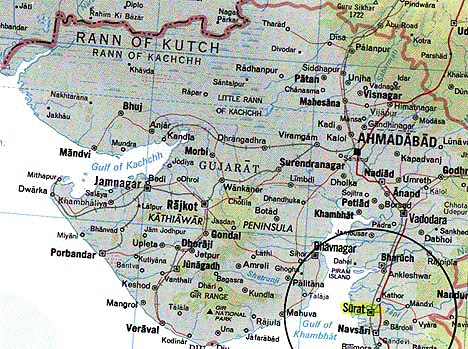
The underwater archaeological site that could be more than 9,000 years old  is about 30 miles west of Surat in the Gulf of Khambhat (Cambay) in northwestern India.
In mid-January 2002, marine scientists in India announced they had sonar images of square and rectangular shapes about 130 feet down off the northwestern coast of India in the Gulf of Khambhat (Cambay). Noting sonar shapes with 90-degree angles, the Indian Minister of Science and Technology ordered that the site be dredged. What was found has surprised archaeologists around the world and was the subject of a private meeting attended by the Indian Minister in charge of investigating the underwater site about thirty miles off the coast from Surat.
An American who traveled to that private meeting was Michael Cremo, researcher in the history of archaeology for the Bhakti Vedanta Institute in India and author of the book Forbidden Archaeology. I talked with him in India about the dredging operation, what the ocean engineers found and the implications of first carbon dating of artifacts at more than 9,000 years.
Michael Cremo, Researcher of Ancient Archaeology and Author, Forbidden Archaeology: "Within the past few months, the engineers began some dredging operations there and they pulled up human fossil bones, fossil wood, stone tools, pieces of pottery and many other things that indicated that it indeed was a human habitation site that they had. And they were able to do more intensive sonar work there and were able to identify more structures. They appeared to have been laid out on the bank of a river that had been flowing from the Indian subcontinent out into that area.
L.M.H.: According to the news releases, they have done a radiocarbon testing on a piece of wood from the underwater site that is now yielding an age of 9,500 years which would place it near the end of the last Ice Age.
Yes, those are the indications that are coming. There were actually two radiocarbon dates: one about 7500 years old and another about 9500 years old. The 9500 year old one seems to be the strongest one. That's the one they are going with. This was announced by Minister Joshi (Murli Manohar Joshi is Indian Minister for Ocean Technology) at this meeting I attended in Hyderabad, India. He said there is going to be more work going on. It's difficult because it's very difficult to see down there. There is a very swift current. So, it's going to have to be a pretty massive effort, but he said the government of India is willing to put the resources behind it to do whatever it takes to further confirm these discoveries.
I also spoke in Hyderabad with an independent archaeologist not connected with the Indian government, but who has a deep interest in these discoveries and he says they are still going to have to send divers down there. Up to this point, they have not sent divers down. The information they have is based on the sonar readings and the dredging they have done. Eventually, they are going to have to find a way to get people down there to take a closer look at this. I think this effort is going to go on.
Now, another American archaeologist, Richard Meadows of Harvard University, is proposing there should be an international effort here. On the surface that sounds like a good idea, but it also may be an effort of American archaeologists and others to control the project. I don't think they want to see a civilization being as old as it appears to be according to these new finds at 9500 years ago. So, I would hope the Indian archaeologists and government would be very cautious about letting outsiders in there who might have a different agenda and who might try to control what gets let out about this very important discovery. It could be quite revolutionary.
Even if we don't know what the cultural background of the people is, if it does happen to be a city that is 9500 years old, that is older than the Sumerian civilization by several thousand years. It is older than the Egyptian, older than the Chinese. So it would radically affect our whole picture of the development of urban civilization on this planet.
Now, if it further happens that additional research is able to identify the culture of the people who lived in that city that's now underwater - if it turns out they are a Vedic people, which I think is quite probable given the location of this off the coast of India - I think that would radically change the whole picture of Indian history, which has basically been written by western archaeologists.
    

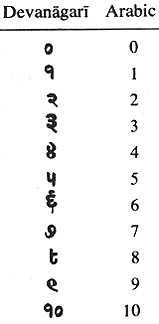
The most archaic Sanskrit (Devanagari) is that of the Vedas, multiple books written in thousandsof hymns and verses arranged in song cycles. The Vedas say that "God-men" brought Sanskrit to Earth men as a language of musical tones. Above on the left is a comparison of the numerals 1 through 10 in Devanagari Sanskrit compared to Arabic. On the right are some examples of Devanagari vowels and diphthongs. Sources: The New Encyclopaedia Britannica, 15th Edition © 1993 and Sanskrit Keys to the Wisdom Religion © 1968 by Judith Tyberg.
 Ever since the 19th Century, there has been a huge debate about the actual history of India. When the Europeans first came there, they noticed that the people in India who had the Sanskrit language as the main language of their literature - they noticed that the European languages were similar (in word concepts), so that meant the Europeans and East Indians had to be related. The 19th Century scientists also noticed that the Sanskrit culture - or Vedic culture, as it is sometimes called after the ancient Indian literature, Vedas, which means knowledge; the literature is called the Vedic literature - so, the scientists noticed that it appeared to be older than the European cultures.
Since the European languages were related to the Sanskrit of the Vedas that could only mean that the European peoples had to have come out of India somehow and then gone to Europe with their languages that differentiated into Russian, English, Spanish, German and the rest of them. The European investigators didn't like that idea because it would have given the Vedic culture a position superior to their own. So, these early cities in the Indus Valley like Harappa and Mohenjo-Daro have been identified by archaeologists such as Richard Meadows and others as being non-Vedic. They think the Vedic culture came into India maybe 3500 years ago.
L.M.H.: Isn't that inconsistent with the concept of the Vedas of the Krishna character who comes and says the universe is teeming with life and appears to have knowledge about other habitations in the cosmos and is talking from an age that would go back at least 9,500 years?
Oh, absolutely, Linda. In these ancient Sanskrit writings, there is no hint at all that the culture came from anywhere else.
L.M.H.: And if they are the prime source and if the Vedic literature can be taken literally, then it implies that there were cities there inhabited at least several thousand years ago.
Yes, and there has been other research going on in that area. For example, the Rig Veda, which is one of the earliest Vedic literatures, talks about a mighty river called the Saraswati that flowed from the Himalayan mountains down to the Arabian Sea, down in that area of northwestern India. And such a river doesn't exist there today. So, what happened is that people thought therefore the Rg Veda cannot be talking about India. It has to be talking about some other place outside of India where there was some kind of river.
But what happened that is quite interesting a few years ago is that archaeologists in India started studying the satellite photographs from American satellites like LANDSAT had been providing and they noticed there was a dry river channel that began up in the Himalayas, a huge river that went down almost to that Bay of Khambaht (Cambay) we are talking about (the location of the underwater city site). And then later, they found that on the banks of that river there were 800 to 1000 urban sites, archaeological sites.
So, it does appear that what the Rg Veda was talking about, a mighty river lined with cities in India over 5,000 years ago - that has to be true. The last time that river had water in it was over 5,000 years ago?
L.M.H.: Is there a possibility that there could have been some sort of non-human co-habitation on the continent of India let's say 50,000 years ago that could explain all of the Vedas?
Yes. In Kashmir, the valley of Kashmir, it appears it was many years ago a lake. Now, there is an ancient Sanskrit manuscript that tells of a lake that existed in that area, so that account is there in some ancient writings. Now, according to modern geological reporting, about 40,000 years ago Kashmir was indeed a lake in the valley of Kashmir in northern India. It was covered by a huge lake and it was blocked on the southern end by a little range of mountains. And at a certain point, something happened and it broke open and the lake drained out. That happened about 40,000 to 50,000 years ago. So, it is interesting that you've got this ancient historical record that talks about this lake. And if it is to be taken literally, then it means that somebody must have seen this lake as it existed 50,000 years ago and wrote about it."

More Information

Harappan Civilization (ca. 3000 - 1500 B.C.)

Until the recent Bay of Khambaht discovery, one of the oldest advanced urban centers in India investigated by archaeologists is Harappa and Mohenjo-Daro in present day Pakistan along the Indus River. Will anything in the Bay of Khambaht discovery resemble the structures of the very ancient and mysterious Harappan Civilization?


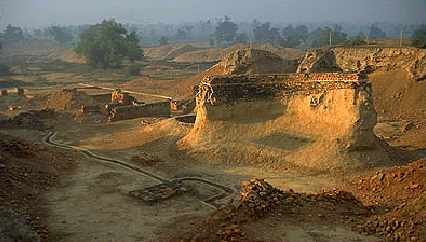
Harappa archaeology dig in Indus River valley showing heights and depths of structures, many built on mounds 3500 years ago. Source: North Park University, Chicago, Illinois.


Excavated walls of a Harappan urban city, one of the most mysterious cultures of the ancient Indian world more than 3,000 years ago. The people were literate and used the Dravidian Sanskrit language, only part of which has been deciphered today. The artifacts from Harappa and Mohenjo-Daro in the Indus Valley of Pakistan are extraordinary in beauty and detail.
Source: North Park University, Chicago, Illinois.


Some Details from Harappan Urban Sites:


Mysterious white rings made of brick dot the landscape where Harappan people lived, but archaeologists do not know the function. One guess is platforms for spreading and drying of grains.
Source: North Park University, Chicago, Illinois.


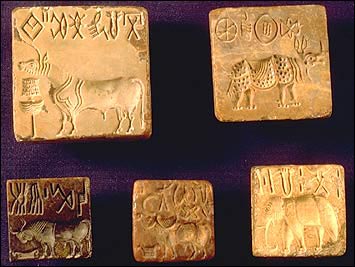
The first objects unearthed from Harappa and Mohenjo-Daro were small stone seals inscribed with elegant depictions of animals, including a unicorn-like figure
in upper left, and marked with Indus script writing which still baffles scholars.
These seals are dated back to 2500 B. C. Source: North Park University, Chicago, Illinois.


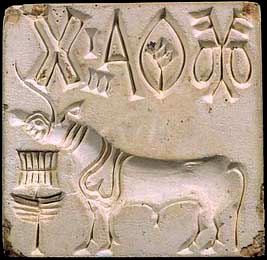
This seal is a close-up of the unicorn-like animal found in Mohenjo-daro, measures 29mm (1.14 inches) on each side and is made of heated Steatite.
"Steatite is an easily carved soft stone that becomes hard after firing. On the top are four pictographs of an as yet undeciphered Indus script, one of the first writing systems in history." Image sourceDept. of Archaeology and Museums, Govt. of Pakistan.

Book: Forbidden Archaeology by Michael Cremo and Richard Thompson
Websites:
http://campus.northpark.edu/history/WebChron/India/Harappa.html
http://www.harappa.com/har/har0.html
http://www.harappa.com/walk/21.html
http://www.harappa.com/figurines/iindex.html
http://www.mcremo.com
Credits:
Copyright © 2002 Linda Moulton Howe
All Rights Reserved.
earthfiles@earthfiles.com

You can hear Real Audio of this report
provided by 1090WJKM Radio
Cedar Vine Manor, Lebanon, Tennessee
From www.earthwires.com via http://www.hermetics.org/cambay.html

For further enlightenment see –

The Her(m)etic Hermit - http://hermetic.blog.com


This material is published under Creative Commons Copyright – reproduction for non-profit use is permitted & encouraged, if you give attribution to the work & author - and please include a (preferably active) link to the original along with this notice. Feel free to make non-commercial hard (printed) or software copies or mirror sites - you never know how long something will stay glued to the web – but remember attribution! If you like what you see, please send a tiny donation or leave a comment – and thanks for reading this far…

From the New Illuminati – http://nexusilluminati.blogspot.com