"All the World's a Stage We Pass Through" R. Ayana

Showing posts with label deforestation. Show all posts

Wednesday, 21 September 2016

How millions of trees brought a broken landscape back to life

How millions of trees brought a broken landscape back to life

 
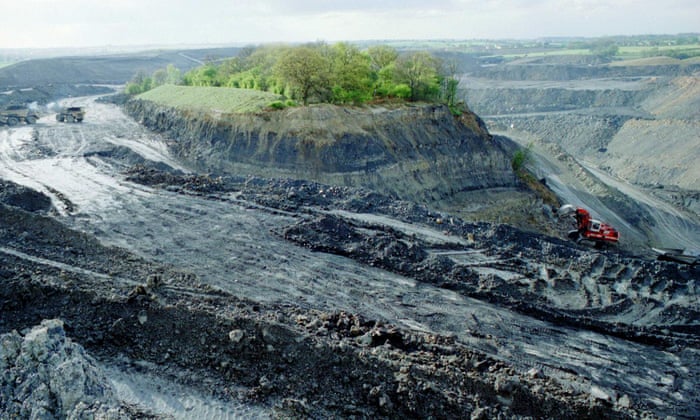
Hicks Lodge in Leicestershire was left scarred by opencast mining Photograph: National Forest


After 25 years, the decision to site the National Forest amid derelict coal and quarry workings has borne spectacular fruit


Twenty-five years ago, the Midlands villages of Moira, Donisthorpe and Overseal overlooked a gruesome landscape. The communities were surrounded by opencast mines, old clay quarries, spoil heaps, derelict coal workings, polluted waterways and all the other ecological wreckage of heavy industry.

The air smelt and tasted unpleasant and the land was poisoned. There were next to no trees, not many jobs and little wildlife. Following the closure of the pits, people were deserting the area for Midlands cities such as Birmingham, Derby and Leicester. The future looked bleak.

Today, a pastoral renaissance is taking place. Around dozens of former mining and industrial communities, in what was the broken heart of the old Midlands coalfield, a vast, splendid forest of native oak, ash and birch trees is emerging, attracting cyclists, walkers, birdwatchers, canoeists, campers and horse-riders.

Britain’s trees have come under increasing attack from exotic diseases, and the grants for planting woodland are drying up, so the 200 sq miles of the National Forest come as a welcome good news story. The new woodland in the Midlands is proving that large-scale tree planting is not just good value for money, but can also have immense social, economic and ecological benefits.

In this one corner of the Midlands, more than 8.5m trees have been planted in 25 years, hundreds of miles of footpath have been created and 500 abandoned industrial sites have been transformed. The landscape and ecology of semi-derelict Britain has been revived and rewilded with trees.

“I came here from Staffordshire 62 years ago,” says Graham Knight, a former coalface engineer who lives near Moira and now works for a retraining charity. “It was clay pits, quarries, coal mines, chimneys, sewer pipes, and kilns then. It was very unhealthy, pretty grim. It was a hard life and it toughened people up. The area went into steep decline when the industry closed and almost everything disappeared. It has changed from a wasteland to an environment that we envied.

“People love trees. They like to see forests and woods. In those days you would go to a place like this for holidays. People are moving in and communities are growing.”

Many of the young trees in the National Forest are little more than whips because hundreds of hectares are being planted every year as more derelict sites are taken over. But the trees that were dug in 25 years ago now stand 30ft tall and need to be thinned.

Along with the maturing trees have come buzzards and red kites, skylarks, butterflies, otters, bats and owls.


“This is the first major forest planted in England for 1,000 years. We have taken a black hole and given it new life”


As the trees continue to grow, insects, small mammals and flora will come too, says John Everitt, director of the not-for-profit National Forest company, which has taken over many of the area’s old industrial workings and also advises landowners and farmers about switching from low-grade farmland to forest and woodland.

“This is one of the largest landscape transformations in the United Kingdom, the first major forest to have been planted in England for 1,000 years. We have taken a black hole and given it a new lease of life; given people a new landscape they can identify with. We can say that air pollution is better, the rivers are cleaner, the water is being retained better and soil is being better conserved.
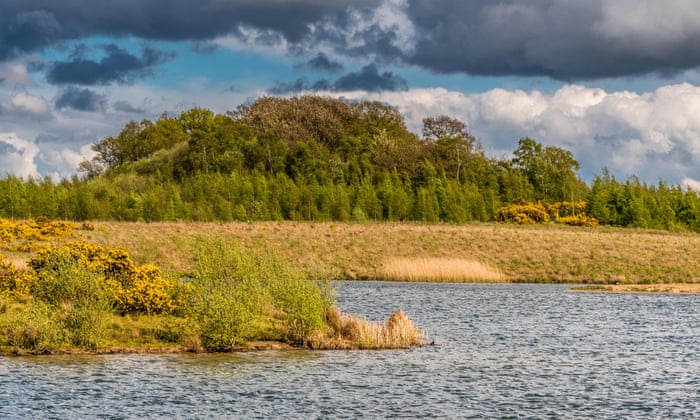

 
Hicks Lodge is now a lakeside haven for wildlife Photograph: Alamy Stock Photo


“We are a typical piece of Middle England,” he adds. “This is not closed canopy, wall-to-wall forest, but forest in the medieval sense with a mosaic of habitats, of trees, open grassland, pastures, and communities. We are roughly half way there. We have planted about 8.5m trees and we expect to plant 16-17m.”

The idea of recreating a new national forest was born in the old Countryside Commission in the late 1980s and was backed first by Tory politicians such as Michael Heseltine and John Gummer and then by Labour ministers, including Michael Meacher, says the National Forest’s director of operations, Simon Evans.

“The first trees were planted in 1991 when the ambition was for 33% of the 200 sq miles to be forested from a starting point of 6- 7%. The idea was to take an area that had very few trees and bring it up to the level of somewhere like Surrey. There were remnants of ancient forest but at the core there were no trees at all,” he says.

This pioneering regeneration experiment has had a low profile and has gone largely unnoticed by environment groups, possibly because it has cost so little and, for many years while the trees were so small, there was very little to see.

Only £60m of public money has been spent in the first 25 years and most of that has come from European Union farm subsidies which would have gone to landowners anyway.

Everitt says: “£60m is the equivalent of just two miles of three-lane motorway, or one mile of HS2 [rail link]. It is peanuts, incredible value for money.” He argues that the forest has already attracted nearly £1bn of inward investment, created many hundreds of jobs, stimulated house prices in the area and led directly to hundreds of new tourism, leisure and wood-based businesses starting up.

“It is one of the very few long-term projects for which a government had a vision and that successive ones have followed through and supported. It’s very hard to argue against it. Why would you not do this? It has cost just £2.5m a year and brings in so many benefits in health and economics. It shows that the principle of using the environment and trees to regenerate a place and stimulate growth can work anywhere.”
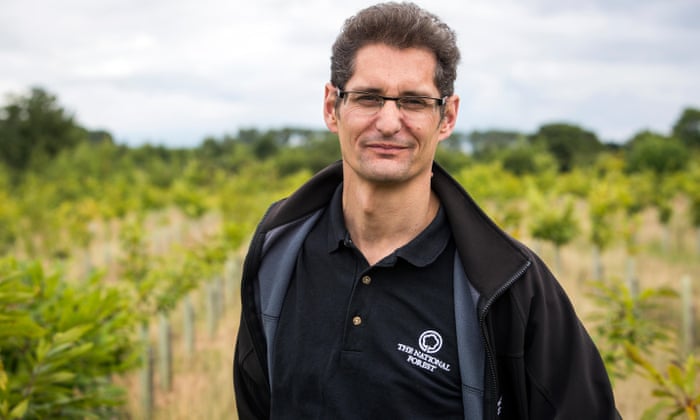

 
John Everitt, Chief Executive of The National Forest Photograph: David Sillitoe for the Observer


Conservationists and regeneration experts now claim that the National Forest is absolute proof that tree planting on a large scale can increase wealth, change the identity of a place and pay for itself hundreds of times over.

A second major new forest has now been proposed for elsewhere in Britain, possibly south Wales or a rural area of northern England.

“People understand the economic and aesthetic benefits of trees,” says Everitt. “They are very popular. They can be a backcloth to many other activities. People prefer a wooded landscape. I do not understand why the idea is not used more. I think politicians may not be environmentally literate.

“There was an active demand by local people for the forest to come here. It did not need to be imposed on people, but it took some time before the farmers embraced the idea fully,” he says. “All the surveys done in the past 20 years suggest that the transformation of the landscape has been popular, giving communities a new sense of place and identity.”


“I do not understand why the idea is not used more. I think politicians may not be environmentally literate”


The challenge is to ensure that the flourishing of the National Forest is not an isolated success. Elsewhere, Britain’s tree planting is grinding to a halt. Figures last month from the Forestry Commission showed that only 700 hectares of new woodland was planted last year, instead of a goal of 5,000. Woodland areas damaged by storms and other extreme weather are not being replaced and ancient woodland is under threat from infrastructure projects such as the high-speed train line HS2 and airport expansions.

Grant schemes have been cut and those that still exist are said to be confusing, and hard to access.

“We have to present tree planting as a solution; people have to understand that it is a good thing to plant trees,” says Andrew Heald, technical director of forest industry body ConFor (Confederation of Forest Industries).

Government committed last year to the planting of 11m trees by 2020, but Britain is likely to remain near the bottom of the European league table for tree cover, with around 13%. In addition, Britain’s forests are threatened with devastation by tree diseases. Recent academic analysis has warned that all the ash trees in the UK and across Europe are likely to be wiped out by a “double whammy” of a bright green borer beetle and the fungus that causes ash dieback.

“Between ash dieback and the emerald ash borer, it is likely that almost all ash trees in Europe will be wiped out, just as the elm was largely eliminated by Dutch elm disease,” said Peter Thomas, a tree ecologist at Keele University whose analysis was published in March’s Journal of Ecology.

The same problems face the National Forest, says Everitt. “There are grants available for tree planting, but they are not that attractive now. Good woodland schemes are not available now.

“But the National Forest is protected because it has so many species. Last year, we had our cases of dieback and it is now spreading quite rapidly; 15-20% of the trees that have been planted are probably ash. Many of them will be replaced naturally. But there may not be huge die-off here because we are thinning around 20% of the trees. We must understand that this forest is not just about its trees. Trees are important, of course, but they are the setting for everything else.”


For more information about reafforestation see http://nexusilluminati.blogspot.com/search/label/reafforestation   
For more solutions to apparently intractable problems see http://nexusilluminati.blogspot.com/search/label/solutions   
- Scroll down through ‘Older Posts’ at the end of each section


Do you LIKE this uniquely informative site?
Hours of effort by a genuinely incapacitated invalid are required every day to maintain, write, edit, research, illustrate, moderate and publish this website from a tiny cabin in a remote forest.
Now that most people use ad blockers and view these posts on phones and other mobile devices, sites like this earn an ever shrinking pittance from advertising sponsorship. This site needs your help.
Like what you see? Please give anything you can -  
Contribute any amount and receive at least one New Illuminati eBook!
(You can use a card securely if you don’t use Paypal)
Please click below -


And it costs nothing to share this post on Social Media!
Dare to care and share - YOU are our only advertisement!


For further enlightening information enter a word or phrase into the random synchronistic search box @ the top left of http://nexusilluminati.blogspot.com


And see


 New Illuminati on Facebook - https://www.facebook.com/the.new.illuminati

New Illuminati Youtube Channel -  https://www.youtube.com/user/newilluminati/playlists

New Illuminati’s OWN Youtube Videos -  
New Illuminati on Google+ @ For New Illuminati posts - https://plus.google.com/u/0/+RamAyana0/posts

New Illuminati on Twitter @ www.twitter.com/new_illuminati


New Illuminations –Art(icles) by R. Ayana @ http://newilluminations.blogspot.com

The Her(m)etic Hermit - http://hermetic.blog.com


DISGRUNTLED SITE ADMINS PLEASE NOTE –
We provide a live link to your original material on your site (and links via social networking services) - which raises your ranking on search engines and helps spread your info further!

This site is published under Creative Commons (Attribution) CopyRIGHT (unless an individual article or other item is declared otherwise by the copyright holder). Reproduction for non-profit use is permitted & encouraged - if you give attribution to the work & author and include all links in the original (along with this or a similar notice).

Feel free to make non-commercial hard (printed) or software copies or mirror sites - you never know how long something will stay glued to the web – but remember attribution!

If you like what you see, please send a donation (no amount is too small or too large) or leave a comment – and thanks for reading this far…

Live long and prosper! Together we can create the best of all possible worlds…


From the New Illuminati – http://nexusilluminati.blogspot.com

Monday, 4 July 2016

It's Time to Stop Living on the Earth and Start Cohabitating With Her – The Earth is a Sentient Living Organism


It's Time to Stop Living on the Earth and Start Cohabitating With Her –
The Earth is a Sentient Living Organism


by Liz Bentley


Contrary to the common belief that the Earth is simply a dense planet whose only function is a resource for its inhabitants, our planet is in fact a breathing, living organism. When we think of the Earth holistically, as one living entity of its own, instead of the sum of its parts, it takes on a new meaning. Our planet functions as a single organism that maintains conditions necessary for its survival.


James Lovelock published in a book in 1979 providing many useful lessons about the interaction of physical, chemical, geological, and biological processes on Earth.

Throughout history, the concept of Mother Earth has been a part of human culture in one form or another. Everybody has heard of Mother Earth, but have you ever stopped to think who (or what) Mother Earth is?


What is Gaia?


Lovelock defined Gaia as "...a complex entity involving the Earth’s biosphere, atmosphere, oceans, and soil; the totality constituting a feedback or cybernetic system which seeks an optimal physical and chemical environment for life on this planet."

Through Gaia, the Earth sustains a kind of homeostasis, the maintenance of relatively constant conditions.

The truly startling component of the Gaia hypothesis is the idea that the Earth is a single living entity. This idea is certainly not new. James Hutton (1726-1797), the father of geology, once described the Earth as a kind of superorganism. And right before Lovelock, Lewis Thomas, a medical doctor and skilled writer, penned these words in his famous collection of essays, The Lives of a Cell:

"Viewed from the distance of the moon, the astonishing thing about the earth, catching the breath, is that it is alive. The photographs show the dry, pounded surface of the moon in the foreground, dry as an old bone. Aloft, floating free beneath the moist, gleaming, membrane of bright blue sky, is the rising earth, the only exuberant thing in this part of the cosmos. If you could look long enough, you would see the swirling of the great drifts of white cloud, covering and uncovering the half-hidden masses of land. If you had been looking for a very long, geologic time, you could have seen the continents themselves in motion, drifting apart on their crustal plates, held afloat by the fire beneath. It has the organized, self-contained look of a live creature, full of information, marvelously skilled in handling the sun."

John Nelson illustrated the “Breathing Earth,” (below) which are two animated GIFs he designed to visualize what a year’s worth of Earth’s seasonal transformations look like from outer space. Nelson--a data visualizer, stitched together from NASA’s website 12 cloud-free satellite photographs taken each month over the course of a year. Once the images were put together in a sequence, the mesmerizing animations showed what Nelson describes as “the annual pulse of vegetation and land ice.”


As the climate changes, the planet comes alive. Earth appears to breathe when ice cover grows and melts--in and out, in and out.

White frost radiates out from the top of the globe and creeps south in all directions. It travels through Siberia, Canada, and northern Europe, heading towards the equator located around the circle’s edge, but ends before the top of Africa. The Mediterranean Sea is the visible body of water on the top left hand side, and the Great Lakes make up a small network of dark blue shapes on the land mass to the right.

The Earth acts as a single system - it is a coherent, self-regulated, assemblage of physical, chemical, geological, and biological forces that interact to maintain a unified whole balanced between the input of energy from the sun and the thermal sink of energy into space.

In its most basic configuration, the Earth acts to regulate flows of energy and recycling of materials. The input of energy from the sun occurs at a constant rate and for all practical purposes is unlimited. This energy is captured by the Earth as heat or photosynthetic processes, and returned to space as long-wave radiation. On the other hand, the mass of the Earth, its material possessions, are limited (except for the occasional input of mass provided as meteors strike the planet). Thus, while energy flows through the Earth (sun to Earth to space), matter cycles within the Earth.

The idea of the Earth acting as a single system as put forth in the Gaia hypothesis has stimulated a new awareness of the connectedness of all things on our planet and the impact that man has on global processes. No longer can we think of separate components or parts of the Earth as distinct. No longer can we think of man’s actions in one part of the planet as independent. Everything that happens on the planet - the deforestation/reforestation of trees, the increase/decrease of emissions of carbon dioxide, the removal or planting of croplands - all have an affect on our planet. The most difficult part of this idea is how to qualify these effects, i.e. to determine whether these effects are positive or negative. If the Earth is indeed self-regulating, then it will adjust to the impacts of man. However, as we will see, these adjustments may act to exclude man, much as the introduction of oxygen into the atmosphere by photosynthetic bacteria acted to exclude anaerobic bacteria. This is the crux of the Gaia hypothesis.


One of the early predictions of this hypothesis was that there should be a sulfur compound made by organisms in the oceans that was stable enough against oxidation in water to allow its transfer to the air. Either the sulfur compound itself, or its atmospheric oxidation product, would have to return sulfur from the sea to the land surfaces. The most likely candidate for this role was deemed to be dimethyl sulfide.

Published work done at the University of Maryland by first author Harry Oduro, together with UMD geochemist James Farquhar and marine biologist Kathryn Van Alstyne of Western Washington University, provides a tool for tracing and measuring the movement of sulfur through ocean organisms, the atmosphere and the land in ways that may help prove or disprove the controversial Gaia theory. Their study appears in this week's Online Early Edition of the Proceedings of the National Academy of Sciences (PNAS).

The Story of Water by Alick Bartholomew, is another unique publication in that it reflects the author’s deep knowledge of the principles of whole geophysical systems, which helps us understand the Earth as an integrated Gaia system that sustains us. The book begins by describing our usual view of water based on Western science and then deftly moves on to the frontier sciences that embrace water as the source of life in terms of biological systems, quantum energy fields, etheric fields, spirals, vortices, and as a medium for communications and memory. An understanding of these principles can lead to strategies for treating our water in ways that guarantee a sustainable future for humankind.


Terence Mckenna on Gaia and our desire for Permanence 


How Does Gaia Work?


The homeostasis regulated by the Earth is much like the internal maintenance of our own bodies; processes within our body insure a constant temperature, blood pH, electrochemical balance, etc. The inner workings of Gaia, therefore, can be viewed as a study of the physiology of the Earth, where the oceans and rivers are the Earth’s blood, the atmosphere is the Earth’s lungs, the land is the Earth’s bones, and the living organisms are the Earth’s senses. Lovelock calls this the science of geophysiology - the physiology of the Earth (or any other planet).

To understand how the Earth is living, let’s take a look at what defines life. Physicists define life as a system of locally reduced entropy (life is the battle against entropy). Molecular biologists view life as replicating strands of DNA that compete for survival and evolve to optimize their survival in changing surroundings. Physiologists might view life as a biochemical system that us able to use energy from external sources to grow and reproduce. According to Lovelock, the geophysiologist sees life as a system open to the flux of matter and energy but that maintains an internal steady-state.

Beyond the scientific importance of what we have discussed here, we might do well to consider some of the more poetical thoughts of the originator of the theory:

"If Gaia exists, the relationship between her and man, a dominant animal species in the complex living system, and the possibly shifting balance of power between them, are questions of obvious importance... The Gaia hypothesis is for those who like to walk or simply stand and stare, to wonder about the Earth and the life it bears, and to speculate about the consequences of our own presence here. It is an alternative to that pessimistic view which sees nature as a primitive force to be subdued and conquered. It is also an alternative to that equally depressing picture of our planet as a demented spaceship, forever traveling, driverless and purposeless, around an inner circle of the sun."

The strong Gaia hypothesis states that life creates conditions on Earth to suit itself. Life created the planet Earth, not the other way around. As we explore the solar system and galaxies beyond, it may one day be possible to design an experiment to test whether life indeed manipulates planetary processes for its own purposes or whether life is just an evolutionary processes that occurs in response to changes in the non-living world.


Sources:

nationalgeographic.com
bibliotecapleyades.net
phys.org


Liz Bentley is a graduate in geology, professional photographer and freelance journalist with an acute insight into fossil records and climatology.


James Lovelock: The Vanishing Face of Gaia


For more information about Gaia see http://nexusilluminati.blogspot.com/search/label/gaia  
- Scroll down through ‘Older Posts’ at the end of each section


Do you LIKE this uniquely informative site?
Hours of effort by a genuinely incapacitated invalid are required every day to maintain, write, edit, research, illustrate, moderate and publish this website from a tiny cabin in a remote forest.
Now that most people use ad blockers and view these posts on phones and other mobile devices, sites like this earn an ever shrinking pittance from advertising sponsorship. This site needs your help.
Like what you see? Please give anything you can -  
Contribute any amount and receive at least one New Illuminati eBook!
(You can use a card securely if you don’t use Paypal)
Please click below -


Spare Bitcoin change?


And it costs nothing to share this post on Social Media!
Dare to care and share - YOU are our only advertisement!


For further enlightening information enter a word or phrase into the random synchronistic search box @ the top left of http://nexusilluminati.blogspot.com


And see


 New Illuminati on Facebook - https://www.facebook.com/the.new.illuminati

New Illuminati Youtube Channel -  https://www.youtube.com/user/newilluminati/playlists

New Illuminati’s OWN Youtube Videos -  
New Illuminati on Google+ @ For New Illuminati posts - https://plus.google.com/u/0/+RamAyana0/posts

New Illuminati on Twitter @ www.twitter.com/new_illuminati


New Illuminations –Art(icles) by R. Ayana @ http://newilluminations.blogspot.com

The Her(m)etic Hermit - http://hermetic.blog.com


DISGRUNTLED SITE ADMINS PLEASE NOTE –
We provide a live link to your original material on your site (and links via social networking services) - which raises your ranking on search engines and helps spread your info further!

This site is published under Creative Commons (Attribution) CopyRIGHT (unless an individual article or other item is declared otherwise by the copyright holder). Reproduction for non-profit use is permitted & encouraged - if you give attribution to the work & author and include all links in the original (along with this or a similar notice).

Feel free to make non-commercial hard (printed) or software copies or mirror sites - you never know how long something will stay glued to the web – but remember attribution!

If you like what you see, please send a donation (no amount is too small or too large) or leave a comment – and thanks for reading this far…

Live long and prosper! Together we can create the best of all possible worlds…


From the New Illuminati – http://nexusilluminati.blogspot.com