"All the World's a Stage We Pass Through" R. Ayana

Showing posts with label atomic. Show all posts

Friday, 6 August 2010

Fallujah’s health fallout ‘worse’ than Hiroshima, Nagasaki

 Fallujah’s health fallout ‘worse’ than Hiroshima, Nagasaki


'Depleted Uranium' -War Crimes &Crimes Against Humanity
Iraqi Cancer Rates v. Hiroshima


Mutagenic and carcinogenic agents' blamed for soaring infant mortality, cancers

In Fallujah, a city just 50 miles from Baghdad, life has never been the same since April 2004, when U.S. Marines declared the entire area a free-fire zone and proceeded to do what Marines do best. Packing the most destructive weaponry in the world, American soldiers laid siege to the city, deploying depleted uranium munitions, white phosphorus and tons of conventional ballistics.

Operation Vigilant Resolve went on for a full month. Though U.S. forces allowed an estimated 70,000 women, children and elderly leave the city, to this day the campaign to recapture Fallujah is beset with allegations of war crimes.
In the wake of America's "shock and awe" bombing campaign to take Baghdad, radiation detectors as far away as the United Kingdom noticed a fourfold spike in radioactivity in the atmosphere. At the time, the Department of Defense bragged that the substance, a nuclear byproduct with a fraction of the radioactivity as standard uranium, is commonly ingested by Americans, in food, drinking water and the air, allegedly with no ill effects. Officials went on to say its use would cause "no impact on the health of people and the environment."

Today, according to a study by the International Journal of Environmental Research and Public Health [PDF link], rates of cancer, leukemia, infant mortality and sexual mutations in Fallujah are higher than those reported in the aftermath of the Hiroshima and Nagasaki nuclear detonations.

"Iraqi doctors in Fallujah have complained since 2005 of being overwhelmed by the number of babies with serious birth defects, ranging from a girl born with two heads to paralysis of the lower limbs," a report by The Independent noted. "They said they were also seeing far more cancers than they did before the battle for Fallujah between US troops and insurgents."

Images of Iraqi children born horribly mutated are extremely difficult to look at and not for the feint of heart.

An earlier study by the same scientific journal found that while chronic low-dose exposure to depleted uranium does not necessarily produce a straightforward set of symptoms, large doses can cause acute toxicity in the kidneys.

"Adult animals that were exposed to depleted uranium during development display persistent alterations in behavior, even after cessation of depleted uranium exposure," they summarized. "Adult animals exposed to depleted uranium demonstrate altered behaviors and a variety of alterations to brain chemistry. Despite its reduced level of radioactivity evidence continues to accumulate that depleted uranium, if ingested, may pose a radiologic hazard."

A 2007 study by Chemical Research in Toxicology similarly found depleted uranium particles to be cytotoxic and clastogenic to lung cells in particular.

It was first introduced on the battlefield during the Gulf war in 1990, and has been used in U.S. armor and munitions ever since. It was widely suspected as the culprit in the numerous cases of Gulf War syndrome. According to USA Today, soldiers reported becoming "unusually fatigued, and others said that their joints ached. They experienced headaches, rashes and hair loss, and their memories occasionally failed them. In some cases, the symptoms were severe enough to require hospitalization."

"In Fallujah the rate of leukemia is 38 times higher, the childhood cancer rate is 12 times higher, and breast cancer is 10 times more common than in populations in Egypt, Jordan, and Kuwait," researchers write. "Heightened levels of adult lymphoma and brain tumors were also reported. At 80 deaths out of every 1,000 births, the infant mortality rate in Fallujah is more than five times higher than in Egypt and Jordan, and eight times higher than in Kuwait."

The study's data was gathered by passing out surveys to 711 households in Fallujah. From those homes, a total of 4,843 individuals responded.

"This study was intended to investigate the accuracy of the various reports which have been emerging from Fallujah regarding perceived increases in birth defects, infant deaths and cancer in the population and to examine samples from the area for the presence of mutagenic substances that may explain any results," they summarize. "We conclude that the results confirm the reported increases in cancer and infant mortality which are alarmingly high."

From http://rawstory.com/rs/2010/0724/study-health-effects-felt-fallujah-widespread-nuking-hiroshima-nagasaki/
For more on depleted uranium see http://newilluminati.blog-city.com/index.cfm?search=depleted+uranium


For further enlightenment see –

The Her(m)etic Hermit - http://hermetic.blog.com


This material is published under Creative Commons Copyright (unless an individual item is declared otherwise by copyright holder) – reproduction for non-profit use is permitted & encouraged, if you give attribution to the work & author - and please include a (preferably active) link to the original along with this notice. Feel free to make non-commercial hard (printed) or software copies or mirror sites - you never know how long something will stay glued to the web – but remember attribution! If you like what you see, please send a tiny donation or leave a comment – and thanks for reading this far…

From the New Illuminati – http://nexusilluminati.blogspot.com

Monday, 10 May 2010

Tainted nuke plant water reaches major NJ aquifer

Tainted nuke plant water reaches major NJ aquifer

Unsafe and Unclear – No Substitute for renewables

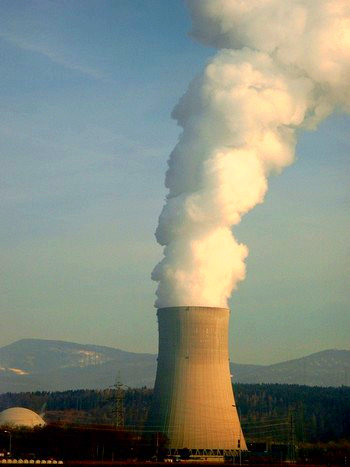
http://blog.nj.com/ledgerupdates_impact/2009/04/large_Oyster-Creek.JPG

By WAYNE PARRY

LACEY TOWNSHIP, N.J. – Radioactive water that leaked from the nation's oldest nuclear power plant has now reached a major underground aquifer that supplies drinking water to much of southern New Jersey, the state's environmental chief said Friday.
The state Department of Environmental Protection has ordered the Oyster Creek Nuclear Generating Station to halt the spread of contaminated water underground, even as it said there was no imminent threat to drinking water supplies.
The department launched a new investigation Friday into the April 2009 spill and said the actions of plant owner Exelon Corp. have not been sufficient to contain water contaminated with tritium.
Tritium is found naturally in tiny amounts and is a product of nuclear fission. It has been linked to cancer if ingested, inhaled or absorbed through the skin in large amounts.
"There is a problem here," said environmental Commissioner Bob Martin. "I am worried about the continuing spread of the tritium into the groundwater and its gradual moving toward wells in the area. This is not something that can wait. That would be unacceptable."
The tritium leaked from underground pipes at the plant on April 9, 2009, and has been slowly spreading underground at 1 to 3 feet a day. At the current rate, it would be 14 or 15 years before the tainted water reaches the nearest private or commercial drinking water wells about two miles away.
But the mere fact that the radioactive water — at concentrations 50 times higher than those allowed by law — has reached southern New Jersey's main source of drinking water calls for urgent action, Martin said.
He ordered the Chicago-based company to install new monitoring wells to better measure the extent of the contamination, and to come up with a plan to keep it from ever reaching a well.
The contamination is not a new issue, plant spokesman David Benson said, questioning the need for Martin's order.
"We have monitoring wells on site, and the tritium concentration is down steadily, sometimes by as much as 90 percent," he said. "We are drilling more wells, and we will work closely with the state. We have been all along."
Should the plant fail to stem the spread of the contaminated water, the state will do it and bill the company for three times the cost as a penalty, the environmental department said.
Department spokesman Lawrence Ragonese said there are several potential ways to address the contamination, including pumping tainted water out of the ground, or injecting a different part of the aquifer with water to force the plume of contaminated water backward and away from wells.
No option has yet been decided upon.
The radioactive water leaks were found just days after the plant got a new 20-year license in 2009 that environmentalists had bitterly fought for four years. Those problems followed corrosion that left the reactor's crucial safety liner rusted and thinned.
The Nuclear Regulatory Commission and Exelon insist Oyster Creek can operate safely until it is 60 years old. But environmental groups disagree.
"The bad news is Exelon's Oyster Creek plant... has now become a major threat to South Jersey's drinking water," said David Pringle of the New Jersey Environmental Federation. "The good news is NJDEP Commissioner Martin is taking aggressive action to safeguard our water and hold Exelon accountable for this leaky 40 year old plant."
Julia LaMense of the Eastern Environmental Law Clinic hailed the state's action and condemned the NRC "for letting it come to this."
"It's a sad day when the 'wait and see' approach taken in response to yet another 'trust us' from Exelon results in exactly what we feared — contamination of one of the most significant aquifers in the region," she said.
Oyster Creek went online Dec. 1, 1969, the same day as the Nine Mile Point Nuclear Generating Station near Oswego, N.Y. But Oyster Creek's original license was granted first, technically making it the oldest of the nation's 104 commercial nuclear reactors that are still operating.
Located about 60 miles east of Philadelphia and 75 miles south of New York City, Oyster Creek generates 636 megawatts of electricity, enough to power 600,000 homes a year, and provides 9 percent of New Jersey's electricity.
By WAYNE PARRY, Associated Press Writer Fri May 7, 6:50 pm ET


Image - http://blog.nj.com/ledgerupdates_impact/2009/04/large_Oyster-Creek.JPG

For further enlightenment enter a word or phrase into the search box @  New Illuminati:

or http://newilluminati.blog-city.com  (this one only works with Firefox)

And see

The Her(m)etic Hermit - http://hermetic.blog.com
 http://newilluminati.blog-city.com (this one only works with Firefox)


This material is published under Creative Commons Copyright (unless an individual item is declared otherwise by copyright holder) – reproduction for non-profit use is permitted & encouraged, if you give attribution to the work & author - and please include a (preferably active) link to the original along with this notice. Feel free to make non-commercial hard (printed) or software copies or mirror sites - you never know how long something will stay glued to the web – but remember attribution! If you like what you see, please send a tiny donation or leave a comment – and thanks for reading this far…

From the New Illuminati – http://nexusilluminati.blogspot.com

Friday, 27 March 2009

Should nuclear fuels be taken out of national hands?

Should nuclear fuels be taken out of national hands?


HOW do you manage a global boom in nuclear power while discouraging weapons proliferation? Uranium and plutonium are most likely to find their way into weapons via the enrichment and reprocessing of fuel for nuclear power plants. If all of the countries now planning to go nuclear also handle their own fuel cycles, the proliferation risk could skyrocket.

The answer may be to put the fuel cycle entirely under international control. Many governments, international agencies and arms control experts are calling for the establishment of international fuel banks, and eventually fuel production plants, that would pledge to supply nuclear materials to any country so long as it meets non-proliferation rules. The US already supports the idea, at least for new nuclear powers, and last month the European Union (EU) pledged €25 million towards the first fuel bank. Yet this means countries with new nuclear programmes would have to place control of their fuel supply at least partly in foreign hands. Could it actually work?

Last year saw fresh predictions of the proliferation of nuclear weapons, especially in the politically explosive Middle East. The most critical situation is Iran, which has rejected international demands to stop enriching uranium. In a reportreleased last month, the International Atomic Energy Agency (IAEA) warned that Iran's uranium enrichment is expanding, and the agency could not exclude military use. Analysts at the Institute for Science and International Security in Washington DC, an anti-proliferation think tank, say the country could have enough for a nuclear weaponthis year. With some nations in the region already nuclear, neighbouring countries could feel pressure to follow suit (see "Nuclear Middle East"). At the same time, many are looking to acquire their own nuclear industries, meaning there will soon be far more weapons-grade material around (see graph at http://www.newscientist.com/articleimages/mg20126903.100/1-should-nuclear-fuels-be-taken-out-of-national-hands.html).

For most nuclear newcomers in the region and elsewhere, the move to nuclear power is largely independent of military concerns. Nuclear power capacity worldwide could almost double by 2030, says Vilmos Cserveny, head of external relations at the IAEA, mainly because poor countries face climbing oil prices and crippling electricity shortages. The problem is that countries that may not have the infrastructure needed to enforce stringent controls will be managing nuclear materials for the first time. Of the nuclear power plants now under construction, says Cserveny, around half are in developing countries, especially in Asia (see chart).

The world does not need more enrichment plants to fuel this expansion; there are plenty, especially in Russia. Of the 30 countries already with nuclear power, only 14 enrich their own fuel - the rest buy it in. However, some countries may be wary of depending on foreign powers for their energy and might want to make and reprocess their own fuel. Every new fuel plant increases the risk that fissile material will find its way into weapons, so the challenge is to find ways to guarantee fuel supplies without countries building their own facilities, says Cserveny.

According to a growing number of analysts, agencies and governments, the solution is internationally managed reprocessing plants. The idea was first proposed in 1946, but no plan has ever been agreed on. In 2003, though, it resurfaced when IAEA chief Mohammed El-Baradei began promotingso-called multilateral nuclear arrangements (MNAs).In recent months, interest from countries that already have nuclear power has increased steeply. "Multilateral mechanisms should offer a real alternative to countries to forego developing their own national enrichment and reprocessing capabilities," Javier Solana, EU high representative, said in Brussels in December.

In a first step towards MNAs, the EU last month granted €25 million towards the creation of an IAEA emergency nuclear fuel stockpile that any country can tap should its commercial supply be cut off due to political disputes. It's not the only proposal to ensure an international fuel supply. In a report for the European Parliament published in December, Ian Anthony of the Stockholm International Peace Research Institute (SIPRI) documents nine separate proposals from experts and governments. Along with the IAEA fuel bank, there are four for putting existing enrichment plants under international control and four more to build new, super-safe enrichment plants that would be international from the start.


Newcomers to nuclear power could be reluctant to put their fuel cycles in international hands if existing nuclear powers, such as the US, Russia and the UK, continue to control their own. Several proposals call for every nuclear country to join in.
 
In fact, long-standing resentments over the rich world's monopolisation of nuclear technology have made developing countries wary of any effort to ask them to rely on the nuclear powers for their energy security, says Oliver Meier of the Arms Control Association, a think tank based in Washington DC.

Why would they place themselves at the mercy of foreigners for their energy? "Partly because it is very expensive to make and reprocess nuclear fuel," Meier suggests. Spiralling costs are already leading to consolidation in the nuclear fuel industry, so a multilateral future may not be so unlikely, says Anthony. And for nations like Egypt and Iran, for example, a shared fuel source and stringent inspections would mean each could be sure that the other is not quietly proliferating - at least in theory.

To further assuage concerns over shared fuel, Germany has suggested that some countries should cede sovereignty over a piece of territory where fuel cycle companies could build facilities that would then be run by the IAEA. It could even be at Natanz, Iran's enrichment plant, says Meier. This might seem unpalatable to some western governments, but "the alternative, Iran going it alone without inspections, is worse", he says.

Some countries could cede sovereignty over a piece of territory where internationally run facilities could be built. Geoffrey Forden of the Massachusetts Institute of Technology thinksthat Iran should set up a commercial partnership with western and regional governments to put Natanz under joint control. Iran would have to promise not to enrich anywhere else, and accept inspections; the IAEA-operated plant would then make enough fuel for Iranian reactors and those in the rest of the region. Staff would be multinational and chances for subterfuge would be limited. "The plan meets the bottom line on both sides," he says.


Nuclear middle east


Iranisn't the only Middle Eastern nation that has observers worried about nuclear proliferation. Nine other countries in the region plan to build around 12 nuclear power plants over the next decade. This will produce enough plutonium in spent fuel for 1700 nuclear weapons, says David Albright of the Institute for Science and International Security in Washington DC, an anti-proliferation think tank. With nuclear weapons already in Israel, Pakistan, India and potentially Iran, there is motivation to acquire them.

If the newcomers acquire fuel production and reprocessing facilities then the risk of material finding its way into weapons will rise sharply. Inspections might prevent this, but only eight countries in the region - including Iran - have signed the International Atomic Energy Agency's most stringent inspections agreement, known as the Additional Protocol. Only four countries enforce it. Egypt says it will never sign. Both it and Turkey reject a proposed moratorium on enrichment and reprocessing in the region put forward by, among others, Sweden's Weapons of Mass Destruction Commission.

Meanwhile, Gulf states have decided it makes business sense to sell their ever-scarcer oil and buy nuclear power for themselves. In December, the US agreed to sell a nuclear reactor to the United Arab Emirates. Both sides say the UAE will forego enrichment and sign the protocol. Yet it's unclear whether the signed deal stipulates this, says Henry Sokolski, who serves on the US Congress's anti-proliferation commission.

07 January 2009 by Debora Mackenzie

From issue 2690of New Scientist magazine, page 6-7. Subscribe and get 4 free issues.
For similar stories, visit the Energy and Fuelsand Weapons TechnologyTopic Guides


For further enlightening information enter a word or phrase into the search box @  New Illuminati:

@  http://nexusilluminati.blogspot.com (or click on any tag at the bottom of the page for direct references – case sensitive)

And see

The Her(m)etic Hermit - http://hermetic.blog.com


This material is published under Creative Commons Copyright (unless an individual item is declared otherwise by copyright holder) – reproduction for non-profit use is permitted & encouraged, if you give attribution to the work & author - and please include a (preferably active) link to the original along with this notice. Feel free to make non-commercial hard (printed) or software copies or mirror sites - you never know how long something will stay glued to the web – but remember attribution! If you like what you see, please send a tiny donation or leave a comment – and thanks for reading this far…

From the New Illuminati – http://nexusilluminati.blogspot.com