Hemp is Better for Everything
Cannabis-Based Batteries Could
Change the Way We Store Energy Forever

by Marco
Torres

Although hemp (cannabis sativa) and
marijuana (cannabis sativa var. indica) come from a similar species of plant, they
are very different and confusion has been caused by deliberate misinformation
with far reaching effects on socioeconomics as well as on environmental
matters.
Hemp is the most universally useful plant we have at our disposal. The history of mankind's use of hemp can be traced way back in time to between about 5000 - 7000 BC.
Industrial hemp and hemp seed could transform the economy of the world States in a positive and beneficial way, and therefore should be exploited to its full potential, especially relating to energy storage.
Hemp is the most universally useful plant we have at our disposal. The history of mankind's use of hemp can be traced way back in time to between about 5000 - 7000 BC.
Industrial hemp and hemp seed could transform the economy of the world States in a positive and beneficial way, and therefore should be exploited to its full potential, especially relating to energy storage.
David Mitlin, Ph.D., explains that supercapacitors are energy storage devices that have huge potential to transform the way future electronics are powered. Unlike today's rechargeable batteries, which sip up energy over several hours, supercapacitors can charge and discharge within seconds. But they normally can't store nearly as much energy as batteries, an important property known as energy density. One approach researchers are taking to boost supercapacitors' energy density is to design better electrodes. Mitlin's team has figured out how to make them from certain hemp fibers -- and they can hold as much energy as the current top contender: graphene.
"Our device's electrochemical performance is on par with or better than graphene-based devices," Mitlin says. "The key advantage is that our electrodes are made from biowaste using a simple process, and therefore, are much cheaper than graphene."
The race toward the ideal supercapacitor has largely focused on graphene -- a strong, light material made of atom-thick layers of carbon, which when stacked, can be made into electrodes. Scientists are investigating how they can take advantage of graphene's unique properties to build better solar cells, water filtration systems, touch-screen technology, as well as batteries and supercapacitors. The problem is it's expensive.
Mitlin's group decided to see if they could make graphene-like carbons from hemp bast fibers. The fibers come from the inner bark of the plant and often are discarded from Canada's fast-growing industries that use hemp for clothing, construction materials and other products. The U.S. could soon become another supplier of bast. It now allows limited cultivation of hemp, which unlike its close cousin, does not induce highs.
Since the 1950s, the United States has been lumped hemp into the same category of marijuana, and thus the extremely versatile crop was doomed in the United States. Hemp is technically from the same species of plant that psychoactive marijuana comes from. However, it is from a different variety, or subspecies that contains many important differences.

Industrial hemp has very low Tetrahydrocannabinol (THC) levels, which is the principal psychoactive constituent. Compared to marijuana which is specifically cultivated for personal psychoactive use, it is nearly impossible to "get high" on hemp. Marijuana that can be smoked usually contains between 5-10% THC, industrial hemp contains about one-tenth of that. In order to get a psychoactive effect, one would need to smoke more than a dozen hemp cigarettes over a very short period of time to achieve any kind of psychoactive effect.
The reason for the low THC content in hemp is that most THC is formed in resin glands on the buds and flowers of the female cannabis plant. Industrial hemp is not cultivated to produce buds, and therefore lacks the primary component that forms the marijuana high. Furthermore, industrial hemp has higher concentrations of a chemical called Cannabidiol (CBD) that has a negative effect on THC and lessens its psychoactive effects when smoked in conjunction.
Scientists had long suspected there was more value to the hemp bast -- it was just a matter of finding the right way to process the material.
"We've pretty much figured out the secret sauce of it," says Mitlin, who's now with Clarkson University in New York. "The trick is to really understand the structure of a starter material and to tune how it's processed to give you what would rightfully be called amazing properties."
His team found that if they heated the fibers for 24 hours at a little over 350 degrees Fahrenheit, and then blasted the resulting material with more intense heat, it would exfoliate into carbon nanosheets.
Mitlin's team built their supercapacitors using the hemp-derived carbons as electrodes and an ionic liquid as the electrolyte. Fully assembled, the devices performed far better than commercial supercapacitors in both energy density and the range of temperatures over which they can work. The hemp-based devices yielded energy densities as high as 12 Watt-hours per kilogram, two to three times higher than commercial counterparts. They also operate over an impressive temperature range, from freezing to more than 200 degrees Fahrenheit.
"We're past the proof-of-principle stage for the fully functional supercapacitor," he says. "Now we're gearing up for small-scale manufacturing."
Governments have cooperated with powerful corporate lobbyists the ensure that hemp is lumped into the same category as marijuana. The primary reason is that hemp has too many abundant resources for fuel, housing, food, medicine that corporations cannot exploit. Think about how many polluting conglomerates would go down if hemp was permitted as a resource. The oil, pharmaceutical, supplement and constructions industry would need to radically shift their business model to survive.
Mitlin, who conducted the research while at the University of Alberta, acknowledges funding from Alberta Innovates Technology Futures, National Institute for Nanotechnology (Canada) and Alberta Livestock and Meat Agency.
Environmental
Benefits of Hemp
* Hemp results in a 95.5% fuel-to-feed ratio when used for pyrolysis the thermochemical process that converts organic matter into fuel.
* Biomass has heating value of up to 8,000 BTU/lb., with virtually no residual sulphur or ash during combustion.
* Hemp is the #1 producer of biomass per acre in the world. Biomass energy expert Lynn Osburn estimates that 1 1/2 to 3 1/2 million acres of hemp would replace all of Canada's fossil fuel demands.
* From 75°/O to 90% of all paper was made with hemp fiber until the late 1800's.
* An acre of hemp will produce as much pulp for paper as 4,1 acres of trees over a 20 year period.
* The hemp paper-making process requires no dioxin-producing chlorine bleach and uses 75% to 85% less sulphur-based acid.
* Hemp paper is suitable for recycle use 7 to 8 times, compared with 3 times for wood pulp paper.
* Hemp produces the strongest, most durable natural soft-fiber on earth. Until the 1 820's, up to 80% of all textiles and fabrics for clothes, canvas, linens and cordage were made principally from hemp.
* Hemp cloth is stronger, more durable, warmer and more absorbent than cotton. Best of all. ' grown in Canada, cotton cannot.
* An acre of land will produce 2 to 3 times as much fiber as cotton, about 1,000 Ibs. of fiber per acre.
* Hemp grown in most parts of Canada will require no herbicide, fungicide or insecticide applications. Up to ½ of all agricultural pesticides used in North America are applied to the cotton crop.
* Natural, organic hemp fiber breathes and is recyclable, unlike petroleum-based synthetic fibers.
* A fully mature hemp plant may contain 1/2 of its dry-weight in seed.
* Once hemp seed oil has been extracted, the remaining seed cake is second only to soya bean for protein content and is an excellent source of nutrition for either farm animals or humans.
Agricultural
Benefits of Hemp
* England, France and Spain have all legalized low THC varieties of hemp for an agricultural crop. England planted 1,500 acres of hemp as a first year crop. Reports from England state that farmers are receiving in excess of 3,000$ per acre for their hemp crop.
* Low THC hemp is not suitable as a psychoactive drug.
* A Canadian report from the late 1800's demonstrated that hemp works very well in rotation with bean and corn crops.
* In 1991 Ontario farmers receiver 290$ and 240$ per acre for grain corn and soya bean respectively.
* Hemp was grown successfully in Canada for over 100 years. For a period in the late 1800's Canada produced 'hi: of all England's hemp requirements. At kite time, England was the largest hemp consumer in the world.
* In the 1930's, a South Western Ontario newspaper reported that Canadian grown hemp was among the best in the world and far superior to tropical hemp.
* In Canada hemp can be grown successfully from our southern borders to approximately 60O North Latitude, the parallel that divides the North West Territories from the provinces. This remarkable range is possible due to hemp's short growing season, usually 90 to 110 days.
* The hemp plant will reach a height of up to 5m (16ft.) and sink a main tap root down 1 ft. This tap root will draw nutrients from deep in the soil and make them available to subsequent crops when the hemp leaves are shed on the soil. This extensive root system also helps to alleviate the problem of soil compaction.
* Hemp is very easy on the soil and returns up to 60% of the nutrients it takes from the soil, when dried in the field.
* A report from Kentucky states that hemp was grown on the same land for 14 consecutive years without soil depletion or reduction in yield.
* Hemp is very economical crop to grow since it requires virtually no pesticide applications.
* Hemp is also relatively drought-resistant and has been relied upon several times during drought-induced famine for its high protein seed.
* Hemp is very resistant to increased UV radiation and should not suffer decreased yields, unlike soya bean and corn.
Sources:
acs.org
sacredearth.com
preventdisease.com
cannabisculture.com
Marco Torres is a research specialist, writer and consumer advocate for healthy lifestyles. He holds degrees in Public Health and Environmental Science and is a professional speaker on topics such as disease prevention, environmental toxins and health policy.
From Prevent Disease
@ http://preventdisease.com/news/14/081814_Cannabis-Based-Batteries-Could-Change-Store-Energy-Forever.shtml
Hemp Eats Radiation, Cleans Toxic Metals from Soil
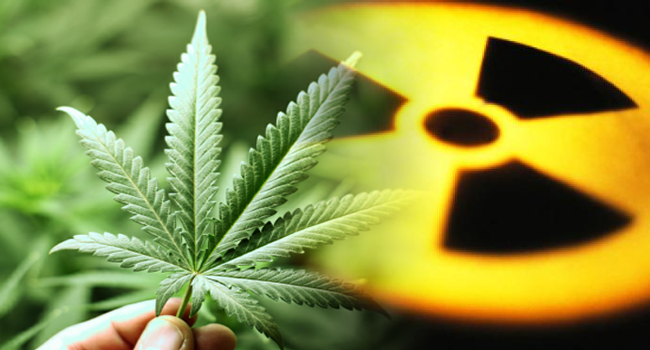
Image: Valhallah
Movement
It appears the uses of hemp are endless. In addition to myriad industrial products such as paper, construction material, clothing, food and fuel, hemp is also known to draw out toxic substances from the soil. In other words, not only does hemp provide humans with innumerable products, it also helps to clean the environment of the mistakes we have made in the past. It has already been discovered that hemp may be extremely useful in the removal of cadmium from the soil and other toxic metals, as well as radiation.
In fact, hemp has been seen as so successful in removing radiation from the soil that it is even being considered for use in Fukushima for the purposes of drawing out radiation. the process by which hemp cleans polluted soil is called phytoremediation – a term given to the process of using green plants to clean up the environment or “remediate” soil or water that has been contaminated with heavy metals and excess minerals. Two plants that are members of the mustard family as well as sunflowers have been known to do the same for many years. And hemp is now finding itself in the same category.
As MintPress News wrote on October 6, 2015,
A
group of representatives of Consolidated Growers and Processors, PHYTOTECH, and
Ukraine’s Institute of Bast Crops experimented
in the late 1990s with using industrial hemp, a form of the plant that’s
high in fiber but low in psychoactive or medical benefits, near the site of the
Chernobyl nuclear disaster, where a great deal of agricultural land is still
unusable because of the presence of radiation and heavy metals still lingering
from the 1986 meltdown.
“Hemp
is proving to be one of the best phyto-remediative plants we have been able to
find,” said Slavik Dushenkov, a research scientist with PHYTOTECH.
In
2009, scientists
from Belarus also experimented with hemp in areas polluted by
Chernobyl. The disaster contaminated nearly 20 miles around the site.
The
Belarusian scientists noted that one added benefit of industrial hemp over
other phytoremediation plants is that it can also be used to produce biofuel,
potentially adding a second use for the crop after it removes toxins from the
soil.
“As
with the Chernobyl incident, scientists are finding radioactive emissions and
toxic metals–including iodine, cesium-137, strontium-90, and
plutonium–concentrated in the soil, plants, and animals of Japan, but also now
throughout the United States and all along the West Coast – from Canada to
Mexico,” Sarich wrote for Nation of Change.
She writes:
Hemp’s resilience to contaminants in soil is well-documented. Even as early as 1975, a studypublished in the Agronomy Journal described how soil characteristics influenced elemental uptake and could even affect final cannabinoid profile in psychoactive strains. To illustrate this, fifteen sites with varying soil profiles were planted with the same strain of Afghan cannabis, and their harvests tested for metal content. Researchers concluded that differences could be used to determine geographic origin of cannabis through foliar analysis.
In 1995, the Polish Institute of Natural Fibres released a study demonstrating that tested varieties were able to withstand high levels of heavy metals in soil without impacting plant growth, yield or fibre quality. However, little research has been done into the safety of using fibres in clothing or other forms of industry, and this issue must be investigated fully in order to establish the possible uses for hemp grown in such conditions.
As a proven, valuable tool in the fight to repair human-inflicted damage to our soils and ecosystems, hemp could potentially benefit hundreds of thousands of sites across the globe—it is estimated that in the USA alone there are 30,000 sites requiring remediation. As is so often the case, US restrictions on hemp cultivation preclude any large-scale operations from being implemented, and the contaminated sites are largely left unremediated, through lack of both funding and interest on the part of the government.
While some researchers such as the Belarusian researcher above suggest that the hemp plants that have been used for phytoremediation purposes could then be used as a biofuel – the truth is, we simply don’t know if this is possible because the toxins may be once again released into the environment. Yet knowing that hemp can be used to extract the substances to begin with is itself an amazing discovery. Indeed, it seems we can chalk one more productive use for a plant that has been in the cross hairs of the law enforcement community, federal, state and local governments, corporations and other relevant monopoly interests. It is time the American people fully recognize benefits of hemp as a longterm solution to many issues and immediately demand that a senseless war on a plant be ended.
This article (Hemp Eats Radiation, Cleans Toxic Metals From Soil) can be republished under this share-alike Creative Commons license with attribution toBrandon Turbeville, the article link and Natural Blaze.com.
Brandon Turbeville – article archive here – is an author out of Florence, South Carolina. He is the author of six books, Codex Alimentarius — The End of Health Freedom, 7 Real Conspiracies, Five Sense Solutions and Dispatches From a Dissident, volume 1and volume 2, The Road to Damascus: The Anglo-American Assault on Syria, and The Difference it Makes: 36 Reasons Why Hillary Clinton Should Never Be President. Turbeville has published over 600 articles dealing on a wide variety of subjects including health, economics, government corruption, and civil liberties. Brandon Turbeville’s podcast Truth on The Tracks can be found every Monday night 9 pm EST at UCYTV. He is available for radio and TV interviews. Please contact activistpost (at) gmail.com.
From Natural Blaze
@ http://www.naturalblaze.com/2016/01/hemp-eats-radiation-cleans-toxic-metals-from-soil.html
Hempcrete – a whole (not so) new low energy material
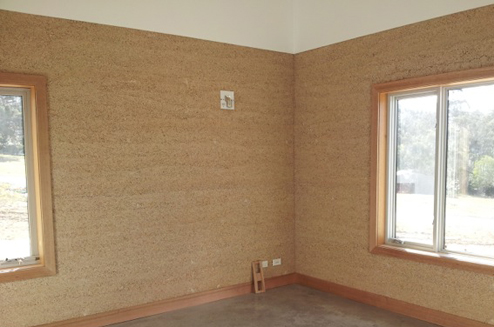
Everything old is new again. We are so often returning to new interpretations of traditional low-tech ideas in our search for a path forwards. Hempcrete is just such a material, and now sits squarely on the palette of materials available to us for low energy building materials. It’s not new (the oldest existing example being 300 years old), it can be square but also any shape you like (free up your imagination!), and it is definitely a great way forward (sequesters carbon). So what is it?
The industrial hemp plant has a tough woody stem, which is chopped up into short pieces of various sizes called ‘hurd’, and when combined with a simple lime binder, undergoes a pozzolanic reaction, effectively petrifying, or turning to concrete. The full cure time is several months, but it sets in hours, allowing building work to proceed quickly.
What are the advantages of the material, from seed in the ground, through construction, operation, and deconstruction?
Agriculture:
- fast growing cycle
- no irrigation required
- no pesticide required
- no fertiliser required
- low capital investment for the farmer
- government regulators license planting, but you can’t smoke industrial hemp, it’s a different species to ‘weed’
Design:
- carbon negative/sequestration…
- In 1 cubic metre mix of hempcrete, emitted CO2 is:
- 110kg of hemp hurd = – 202 kg (CO2 absorbed)
- 220 kg of lime binder = +94 kg (CO2 released)
- Total sequestration = -108 kg/m3 of wall built
- thermally efficient – good R value/thickness, eg 250mm thick wall provides R2.8~3.5 depending upon the density selected
- moisture & humidity control is extremely high – solves problems of non-breathable buildings, and this is increasingly important!
- flexible – can be adapted to virtually any shape or detail: crisp/rectilinear or soft/curved
Construction:
- Codemark certified under the National Construction Code (previously the BCA)
- can be formed in situ
- can be precast or in blocks (not yet in Australia, but people are working on it)
- flexible – can be built in short sections or in long lengths, helping site management
- skills easily learnt – no need for a specialist team of highly skilled trades
Deconstruction:
- easily deconstructed – no need for noisy jackhammers
- recyclable – can be used again as aggregate in other mixes, or will compost as fill
Training – we are working with leading hempcrete suppliers and Building Designers Australia to bring a hands-on real building design and construction workshop to Sydney in the first half of 2013. Stay tuned.
More information can be found on these websites:
Hempcrete Australia
Australian Hemp Masonry Company
Hemp Gallery
From Envirotecture
@ http://www.envirotecture.com.au/hempcrete-a-whole-not-so-new-low-energy-material/
For more information about hemp see http://nexusilluminati.blogspot.com/search/label/hemp
- Scroll down
through ‘Older Posts’ at the end of each section
Hope you like this not
for profit site -
It takes hours of work every day by
a genuinely incapacitated invalid to maintain, write, edit, research,
illustrate and publish this website from a tiny cabin in a remote forest
Like what you see? Please give anything
you can -
Contribute any amount and receive at
least one New Illuminati eBook!
(You can use a card
securely if you don’t use Paypal)
Please click below -
Spare Bitcoin
change?
Xtra Image – http://www.hempforfuture.com/assets/uploads/2014/10/hemp6.jpeg
Video - https://youtu.be/mYdXLSdpD3E
For further enlightening
information enter a word or phrase into the random synchronistic search box @
the top left of http://nexusilluminati.blogspot.com
And see
New Illuminati – http://nexusilluminati.blogspot.com
New Illuminati on Facebook - https://www.facebook.com/the.new.illuminati
New Illuminati Youtube Channel - https://www.youtube.com/user/newilluminati/playlists
New Illuminati’s OWN Youtube Videos
-
New Illuminati on Google+ @ For
New Illuminati posts - https://plus.google.com/u/0/+RamAyana0/posts
New Illuminati on Twitter @ www.twitter.com/new_illuminati
New Illuminations –Art(icles) by
R. Ayana @ http://newilluminations.blogspot.com
The Her(m)etic Hermit - http://hermetic.blog.com
DISGRUNTLED SITE ADMINS PLEASE NOTE –
We provide
a live link to your original material on your site (and links via social
networking services) - which raises your ranking on search engines and helps
spread your info further!
This site
is published under Creative Commons (Attribution) CopyRIGHT (unless an
individual article or other item is declared otherwise by the copyright
holder). Reproduction for non-profit use is permitted & encouraged - if you
give attribution to the work & author and include all links in the original
(along with this or a similar notice).
Feel free
to make non-commercial hard (printed) or software copies or mirror sites - you
never know how long something will stay glued to the web – but remember
attribution!
If you
like what you see, please send a donation (no amount is too small or too large)
or leave a comment – and thanks for reading this far…
Live long
and prosper! Together we can create the best of all possible worlds…
From the New Illuminati – http://nexusilluminati.blogspot.com