Can we reverse the ageing process by putting young blood
into older people?
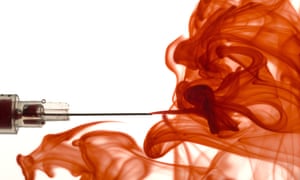
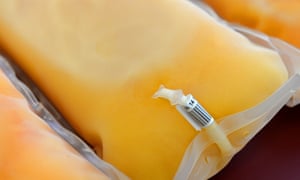
Young human blood may
hold the secrets to ageing. Photograph: Photobooth/Getty Images
A
series of experiments has produced incredible results by giving young blood to
old mice. Now the findings are being tested on humans. Ian
Sample meets the scientists whose research could
transform our lives
On an August
morning in 2008, Tony Wyss-Coray sat in a conference room at the Veterans
Affairs hospital in Palo Alto, California, waiting for his lab’s weekly meeting
to begin. Wyss-Coray, a professor of neurology at Stanford University, was
leading a young group of researchers who studied ageing and neurodegeneration.
As a rule, the gatherings were forgettable affairs – the incremental nature of
scientific progress does not lend itself to big surprises. But a lab member
scheduled to speak that day had taken on a radical project, and he had new
results to share.
Saul
Villeda, an ebullient PhD student with slick black hair and a goatee, had spent
the past year engrossed in research that called to mind the speculative medical
science of the middle ages. He was investigating whether the old and frail
could be rejuvenated by infusions of blood from the young. The hypothesis was
not as absurd as it might sound.
Villeda
had conducted pilot studies with pairs of surgically conjoined mice that shared
a blood supply for several weeks. Young mice received blood from older mice,
and old mice received blood from younger ones. Villeda wanted to see the effect
on their brains. Neurons in ageing brains lose their connections and start to
die off; ultimately, the brain shrinks and becomes less effective. A region
called the hippocampus, crucial for memory and learning, is one of the first to
deteriorate with age, causing people’s memories and thought processes to
falter.
Villeda’s
work took skill. A mouse brain is the size of a peanut. To remove one for
inspection is not difficult, but Villeda then had to cut each brain into wafers
1/25th of a millimetre thick using a cryomicrotome, a machine that resembles a
benchtop deli slicer. Villeda took multiple slivers from about 40 mice and then
stained them with a dye that binds to newborn neurons. Under a microscope the
baby brain cells stand out like little brown trees.
The day
before the lab meeting, Villeda and his colleague Kurt Lucin arrived early for
work. With a small paintbrush, Villeda swept each brain slice, one after
another, onto a microscope slide, and counted the tiny brown tree shapes. It
took hours: he had about 200 slivers to inspect, from old and young mice. After
totting up the newborn neurons in each section, he tapped the number into a
statistics program. He finished after 10pm.
Though it
was late, Villeda made Lucin stay with him to crunch the numbers. “It had been
such a long experiment. I thought, if it doesn’t work, he’s here. We can go and
grab a drink,” Villeda told me recently. He clicked a button on the screen
marked “analyse”. The statistics program took all the data and calculated the
average number of newborn neurons in the brains of each group of mice. A moment
later, bar charts popped up on the screen.
Villeda got
three hours’ sleep that night. The next morning, he stood up at the lab meeting
and revealed to his colleagues what young blood did to the ageing brain. “There
was a palpable electricity in the room,” Wyss-Coray recalled. “I remember
seeing the images for the first time and saying, ‘Wow.’” Old mice that received
young blood experienced a burst of brain cell growth in the hippocampus. They
had three to four times as many newborn neurons as their counterparts. But that
was not all: old blood had the opposite effect on the brains of young mice,
stalling the birth of new neurons and leaving them looking old before their
time.
Old mice
that received young blood experienced a burst of brain cell growth in the hippocampus
The other
scientists in the room were stunned. Some were sceptical. Could it be real?
“This could be big,” said Wyss-Coray. “If an old mouse starts to make more
neurons when you give it young blood? That is amazing.”
Since that
meeting seven years ago, research on this topic has moved on dramatically. It
has led some to speculate that in young blood might lie an antidote to the
ravages of old age. But the apparent rejuvenating properties of young blood
must be treated with healthy scepticism. The hopes they raise rest solely on
mouse studies. No beneficial effects have ever been proven in humans. Then
again, no one has ever looked.
That is
about to change. In October 2014, Wyss-Coray launched the first human trial of
young blood. At Stanford School of Medicine, infusions of blood plasma from
young people are being given to older people with Alzheimer’s disease.
The results are expected at the end of the year. It is the greatest test yet for
the medical potential of young blood.
For
much of history, people sought to halt ageing to achieve immortality – or
at least to live for hundreds of years. These days, scientists tend to have
more modest aims. In wealthy nations, basic healthcare and medical advances
have driven up lifespan for the past century. Five years from now, for the
first time in human history, there will be more over-60s than children under
five years old. In 2050, two billion people will be 60 or older, nearly double
the number today.
Behind that
statistic lies a serious problem. People are living longer, but they are not
necessarily living better. The old struggle with chronic conditions, often many
at once: cancer, respiratory disease, heart disease, diabetes, arthritis,
osteoporosis, dementia.
In
the first human trial of the effects of young blood, at Stanford University,
infusions of blood plasma from young people are being given to older people.
Photograph: Ralf Hirschberger/dpa/Corbis
Medical
researchers tend to tackle these diseases separately. After all, the illnesses
are distinct: cancer arises from mutated DNA; heart disease from clogged up
blood vessels; dementia from damaged brain cells. The biological processes that
underpin the pathologies vary enormously. Each, then, needs its own treatment.
Yet some researchers take another view: the greatest driver of disease in old
age is old age itself. So why not invent treatments for ageing?
The idea has
caught on, though it is still far from mainstream. Google’s secretive Calico operation, founded in
2013, is putting hundreds of millions
of dollars into anti-ageing research. Craig Venter, the
genetics entrepreneur, has launched a company called Human Longevity to find
the genes that lead to long life. Meanwhile, scientists have asked the US Food
and Drug Administration to approve trials of well-known drugs, such as the
diabetes treatment, metformin, in the hope of uncovering anti-ageing effects.
"People are
living longer, but they are not necessarily living better. The old struggle
with chronic conditions"
Scientists
may never halt the process entirely: ageing is an opaque and complex mingle of
molecular pathways. But they might learn how to stop changes that underpin the
worst chronic diseases. They want to extend healthspan, not lifespan. The
stakes are enormous. Over the next decade, the cost of dementia care in Britain
alone will rise to £24bn, a 60% increase on the cost in 2007. Last year, the
World Health Organisation called the rise
in chronic illness due to the greying population a major public health
challenge.
Wyss-Coray
is not the first person to wonder whether the answer to the problem of ageing
might lie in human blood. One of the first physicians to propose blood
transfusions to rejuvenate older people was Andreas Libavius,
a German doctor and alchemist. In 1615 he proposed connecting the arteries of
an old man to those of a young man. He had high hopes for the procedure. “The
hot and spirituous blood of the young man will pour into the old one as if it
were from a fountain of youth, and all of his weakness will be dispelled,” he
claimed, in an account told in the Textbook of Bloodbanking and Transfusion
Medicine by Sally Rudmann. It is unclear how it turned out; there is no record
of the transfusion happening.
The
fledgling years of the Royal Society, founded in London in 1660, witnessed some
of the earliest experiments in blood transfusion. When Robert Boyle, one of the
society’s founders, compiled a wishlist of scientific projects, the top entry
was “The prolongation of life”. That might be achieved, he hoped, by replacing
old blood with new.
Progress in
science takes more than hope. With no knowledge of blood groups or coagulation
factors, the early transfusion experiments were deadly. Before long, the
procedure was banned, first in France, and then England. The pope endorsed the
bans in 1679, and transfusion all but ceased for a century. When advances in
medicine allowed its return, the emphasis was on healing the sick, not helping
the aged.
It is 400
years since Libavius proposed that young blood could rejuvenate older people.
At the time, the idea was radical and dangerous. Even though modern science has
made blood transfusions safe, blood remains a mysterious fluid: it ferries more
than 700 proteins and other substances around our bodies; many are known, but
what they do is less clear. Wyss-Coray suspects that among them are factors
that orchestrate the ageing process. If scientists can understand how they
work, the ageing process might be laid bare. It could be slowed down, or
perhaps even reversed.
When
Wyss-Coray was in his 20s and 30s, he did not much care about ageing.
“You have no understanding of what the problems are,” he recently told me, in
his soft Swiss-German accent. Sitting in his office at the Veterans Affairs
hospital, surrounded by books on immunology and biology, Wyss-Coray was
fashionably unshaven, with a crop of blonde hair and lively blue eyes framed by
dark rimmed glasses. “Now I see that the brain starts to slow down. I’m not as
quick any more at grasping things, or remembering faces. I used to see a person
for a few minutes and I’d remember their face. I couldn’t understand how they’d
not remember who I was. And now it happens to me. It annoys the crap out of
me.”
For
Wyss-Coray, ageing has become much more than a personal bugbear. In 2014, the
prestigious US journal, Science, named his work on young blood one of its
breakthroughs of the year. He is regularly invited to give talks at conferences
and the world’s top universities; in January, he spoke at the World Economic
Forum in Davos. “In almost every talk I give, people make comments or jokes
about vampires.” He slumped back in his chair and groaned. Another question
also crops up: “I have people asking me, ‘Are you taking young blood?’” He
assured me that he was not, and screwed up his face in horror, but it’s easy to
see why they ask; he looks much younger than his 50 years.
Tony
Wyss-Coray is a professor of neurology at Stanford university Photograph: Tony
Wyss-Coray
Wyss-Coray
was the first in his family to go to university. From the start, he set his
sights on a career in the US. In 1993, he began as a postdoctoral fellow at the
well-regarded Scripps Research Institute in La Jolla, California, studying
HIV-related dementia. The work led to Alzheimer’s research, focusing on how the
immune system played a role in the disease. In 2002, he joined Stanford
University’s medical school, where he remains a faculty member.
Much of Wyss-Coray’s
research on Alzheimer’s used mice that were genetically modified to develop the
disease. This kind of experimentation has major limitations. Alzheimer’s mice
mimic the forms of disease that run in families because of specific mutations,
but they cannot tell us much about the origins of the sporadic forms of
Alzheimer’s, which account for 99% of human cases. “People always joke: if
you’re a mouse and you have Alzheimer’s, we can cure you, no problem,”
Wyss-Coray told me. For humans, however, nothing so far has worked.
Frustrated
by the limitations of his experiments, Wyss-Coray looked for better ways to
understand how the disease first arose in humans. Brain scans and cognitive
tests were out – neither revealed anything about disease at the molecular
level. Nor would it make sense to study the brains of the dead, as scientists
had traditionally done: the subtle neurological changes that lead to
Alzheimer’s are set in motion two or three decades before patients are
diagnosed, which meant old brains told you how bad the rot got, but not how the
rot got started.
Wyss-Coray
wondered if blood might hold the answer. Human blood travels 96,000 kilometres
along the arteries, veins and capillaries of the circulatory system. It
circulates through every organ. What if blood picked up information as it
streamed around the body? What if its molecular makeup reflected the state of
the brain, as it aged and changed with disease?
He assembled
an international team of two dozen scientists to test the idea. They analysed
blood plasma from more than 200 Alzheimer’s patients, and compared the profiles
with those from healthy people. The findings, published in 2007, made headlines
around the world. By measuring the levels of certain proteins in plasma,
Wyss-Coray’s team believed they had found an accurate way to diagnose
Alzheimer’s years before it began to take its toll. Wyss-Coray set up Satoris,
a private company, to commercialise the research.
The study
was too good to be true. Wyss-Coray’s later efforts to develop the test showed
it was unreliable. In the course of this work, however, he had come across
something intriguing. He noticed that in healthy people, the levels of certain
proteins in blood fell with age. By 20 years old, most had already dropped
steeply. Meanwhile, the levels of other proteins ramped up. Some doubled or
tripled in old age. What the changes meant, no one knew.
One
floor up from Wyss-Coray’s lab is the office of Thomas Rando, a neurologist
and deputy director of the Stanford Center on
Longevity. On his desk sits a small display of chemistry lab glassware and
dozens of miniature figurines of the New York Giants. It was Rando who hired
Wyss-Coray in 2002. “Tony is incredibly creative,” Rando told me. “He thinks
about neuroscience in the context of the whole organism, as opposed to someone
who has tunnel vision of the brain.”
In 2005,
Rando oversaw a series of important experiments that would become closely
intertwined with Wyss-Coray’s work. The question Rando wanted to investigate
centred on stem cells. The body’s tissues need stem cells to remain healthy and
in good working order, but in older people, stem cells stop doing their job –
this is why wounds heal so much slower as we age. Rando wondered whether stem
cells failed in old animals because they no longer got the right signals. What
if something in young blood turned them back on again? Perhaps he could make
older people heal as fast as young ones.
Rando’s
experiments involved an unsettling but remarkable procedure in which mice were
cut along the flanks and sewn together, wound-on-wound. This procedure,
pioneered by the 19th-century French physiologist Paul Bert, is known as
parabiosis. Bert’s work on conjoined rats demonstrated that, once their wounds
had healed, the animals developed a single, shared circulatory system.
For a long
time, experiments involving parabiosis were gruesome. In 1956, Clive McCay, an
American gerontologist at Cornell University who was pursuing a similar line of
research to Wyss-Coray, described his own attempts to conjoin rats in the
Bulletin of the New York Academy of Medicine. “If the two rats are not adjusted
to each other,” he wrote, “one will chew the head of the other until it is
destroyed.” Grim though it was, McCay’s work hinted that young blood might have
rejuvenating properties.
Though other
scientists took up McCay’s experiments and got similarly encouraging results,
the work was effectively abandoned in the 1970s. Not knowing what to make of
their findings, researchers moved on to other projects. Only when parabiosis
was resurrected at Stanford did scientists start to make sense of the
anti-ageing effects.
Parabiosis
is different today: ethics committees are strict and the surgical procedure has
improved. The animals are genetically matched, so there is no risk of immune
rejection. Once they have recovered from the operation, paired animals tend to
eat normally and to make nests together. But the procedure is still disturbing
– it would be a stretch to call the animals happy.
Scientists
in Rando’s lab joined old and young mice for five weeks and looked at how well
they repaired little tears in muscle tissue. The young blood activated stem
cells in the old mice that swiftly regenerated their damaged muscles. The young
mice, however, fared worse for their exposure to old blood. Their stem cells
became sluggish, and their tissues healed more slowly. Rando saw hints of
another effect too, but needed more evidence before he could publish: the old
mice had begun to grow new brain cells.
The results
led Wyss-Coray and Rando to collaborate. The kinds of proteins Wyss-Coray had
seen rise and fall in blood were known to have effects on biological processes.
What if they had driven the changes Rando had seen in muscle? Might they
similarly revitalise the brain? Rather than being mere signatures of age, the
proteins might be chemical cues for the ageing process itself.
Saul
Villeda carried out the early research on the restorative properties of young
blood. Photograph: Saul Villeda
Wyss-Coray
asked his PhD student Saul Villeda to investigate. Villeda grew up in Pasadena
on the outskirts of Los Angeles. His parents had immigrated illegally from
Guatemala in the 1970s, and took jobs in factories, or as janitors. They became
legal residents when Saul was a boy. Villeda had not planned on being a
scientist when he went to college at the University of California in LA. But he
enjoyed physiology classes: “I instantly fell in love with research,” he told me.
“The idea that you were investigating something completely new and that you
could come up with your own experiments to figure things out was amazing.” When
he told his parents he wanted to be a university scientist, they didn’t really
know what he meant. “I took them to my undergraduate lab to show them what a
scientist looked like,” he said. “I think that really helped them understand.”
After
Villeda presented his work on conjoined mice to Wyss-Coray at the lab meeting
in August 2008, he went on to look at proteins in old and young blood. He found
that the old mice, like old humans, had high levels of a protein called CCL11
in their blood. If you injected CCL11 into young mice, their learning and
memory declined. The protein hampered the growth of new neurons. The young mice
struggled to remember the location of a hidden platform in a water maze, and
took longer to recognise a place where they had received a small but unpleasant
electric shock. Villeda published the landmark research in 2011.
But the study
failed to answer a major question: could proteins in young blood restore the
mental capacities that old animals lost? Testing this was by no means easy. A
mouse’s wits can be examined in a water maze, but two mice sewn together? It
would be impossible to know how much one had led the other. Wyss-Coray believed
that rather than experimenting with conjoined mice, the only option was to take
blood from young mice, strip out the blood cells, and inject the plasma into
old ones. This, too, was difficult. One mouse yields about 200 microlitres of
plasma, the yellowish fluid that contains all the proteins. That is enough for
two injections into another mouse. For an experiment that requires 10
injections into 10 old mice, you need to siphon the blood from 50 young mice.
Villeda was
reluctant to do the experiment. He didn’t think it would work. But he changed
his mind when he performed electrical measurements on slices of brain tissue
and found that exposure to young blood strengthened the connections between
neurons that had weakened in old mice. He went ahead with the plasma
injections. Each mouse had one injection every three days for 24 days. The
plasma came from three-month-old mice, the equivalent of human beings in their
20s, and went into 18-month-old mice, the equivalent of a human in their 60s.
The results
were dramatic. Old mice given young plasma jabs aced the water-maze test, and
quickly remembered the cage where they had earlier received an electric shock.
They performed like mice half their age. “That time, I showed Tony the data
one-on-one,” Villeda told me. “I was freaking out. I said: ‘I have to see this
again.’”
Not everyone
was impressed. The journal Nature rejected the study in 2012; its reviewers
felt the work was not a big enough leap forward. So Wyss-Coray and Villeda sent
it along to a sister publication, Nature Medicine. The editors there wanted to
know precisely how young blood helped old mice. Villeda, who had just opened
his own lab at the University of California in San Francisco, said he would
find out.
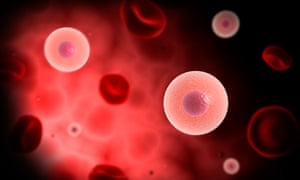
A
microscopic view of a plasma cell inside a blood vessel. Photograph: Alamy
Villeda
looked at how young blood altered the way genes are expressed in old mice. He
noticed a stark difference among genes that help neural connections strengthen
and weaken, a process crucial for learning and memory. In normal ageing, the
genes that control this “synaptic plasticity” become less active. Young plasma
jabs ramped the gene activity back up again.
From the
pattern of genes affected, Villeda traced the mechanism back to a master
regulator in the brain, a protein known as CREB, which behaves like a switch
that turns on many genes at once, and is instrumental in memory and learning
from birth. To confirm young plasma was working through CREB, Villeda’s PhD
student Kristopher Plambeck designed a virus that turned the master regulator
off. When they injected the virus into old mice, young plasma had a much
reduced effect on their brains. The animals performed better, but only
slightly. It showed that young plasma worked through CREB, though not
exclusively.
The study
was published in Nature Medicine in 2014. Immediately, emails flooded in to
Wyss-Coray’s inbox. Alzheimer’s patients wanted infusions of young blood. So
did numerous aged billionaires. One, who flies around in a jet with his name
emblazoned on the side, invited Wyss-Coray to an Oscars after-party this year.
(He didn’t go.) Another correspondent wrote with a more disturbing offer: he
said he could provide blood from children of whatever age the scientists
required. Wyss-Coray was appalled. “That was creepy,” he said.
Wyss-Coray
and Villeda were not the only scientists making headway in this area. Two
members of the team behind Rando’s 2005 paper on stem cells had moved to the
University of California, Berkeley, where they found that oxytocin, often called
the love hormone, rejuvenated old muscle tissue. Another, Amy Wagers, had begun
working at Harvard. She showed that when given young plasma, old mice regained
their stamina. On a treadmill, the treated mice ran for an hour on average,
compared with only 35 minutes for untreated ones.
Wagers
picked out one factor, known as GDF11, as a rejuvenating protein in young
blood. In Villeda’s most recent paper, published in July 2015, he found a
second factor, B2M, which peaks in the blood of old mice, as it does in old
humans: when injected into young mice, B2M impairs their memories.
The studies
all point in one direction. Among the hundreds of substances found in blood are
proteins that keep tissues youthful, and proteins that make them more aged.
Wyss-Coray has a hypothesis: when we are born, our blood is awash with proteins
that help our tissues grow and heal. In adulthood, the levels of these proteins
plummet. The tissues that secrete them might produce less because they get old
and wear out, or the levels might be suppressed by an active genetic programme.
Either way, as these pro-youthful proteins vanish from the blood, tissues
around the body start to deteriorate. The body responds by releasing
pro-inflammatory proteins, which build up in the blood, causing chronic
inflammation that damages cells and accelerates ageing.
“This opens
an entirely new field. It tells us that the age of an organism, or an organ
like the brain, is not written in stone. It is malleable. You can move it in
one direction or the other,” says Wyss-Coray. “It’s almost mythological that
something in young organisms can maintain youthfulness, and it’s probably
true.”
As a
business proposition, the transfusion of young blood raises all kinds of
fears. It raises the spectre of a macabre black market, where teenagers bleed
for the highest bidder, and young children go missing from the streets. Then
there is the danger of unscrupulous dealers selling fake plasma, or plasma
unsafe for human infusion. The fears are not unfounded: health has become one
of the most lucrative sectors for criminals and con artists.
Havocscope, an online database, tracks
the latest prices of all manner of black market goods and services. For $600
you can buy an AK-47 in Europe. A rhino-horn dagger will cost you $14,000. The
services of a group of former military snipers? That will be $800,000. The list
includes human organs too, mostly lungs, kidneys and livers. Today, a healthy
seller can expect about $5,000 for their kidney. The organ broker who handles
the deal can make a hefty profit, selling it on for $150,000 to a wealthy
patient who needs a transplant.
In some
countries, there is already a legal market for blood plasma. In the wake of the
BSE crisis of the 1990s, plasma donations are not used in the UK. But in the
US, donors can make $200 a month (plus loyalty points) from plasma donations.
The fresh plasma is separated from the blood, and the red blood cells returned
to the bloodstream, in a sitting that lasts 90 minutes. The plasma is used in
medical procedures, to treat coagulation disorders and immune deficiencies. The
business is completely legitimate, but if young plasma is proved to have
anti-ageing effects, the risk of backstreet operators setting up will soar.
When I asked Wyss-Coray if the prospect worried him, he looked serious.
“Absolutely,” he said. “There are always going to be nutcases.”
"The
transfusion of young blood raises the spectre of a macabre black market where
teenagers bleed for the highest bidder"
These are
worst-case scenarios. The Stanford trial may find that simply injecting young
plasma into old people has little or no effect. Wyss-Coray confesses that he
suspects as much. He believes that rejuvenating older people might take a more
potent brew than natural plasma. He has in mind a concentrated blend of 10 or
20 pro-youthful factors from young blood, mixed with antibodies that neutralise
the effects of ageing factors found in old blood.
In January
2014, Wyss-Coray set up Alkahest, a company that aims to separate plasma into
its constituent parts, and combine them into a potent, rejuvenating cocktail.
In Silicon Valley, scientists frequently launch start-up companies on the back
of early-stage research – an alignment of the commercial and the scientific
that some researchers still frown upon. Sergio Della Sala, a professor of human
cognitive neuroscience at the University of Edinburgh, warns that creating a
business before the science is done can raise a conflict of interest. “Science
should first understand then sell,” he said. “We should always be skeptical
when these two factors are reversed.”
Wyss-Coray
formed Alkahest with Karoly Nikolich, an entrepreneur and neuroscientist at
Stanford, who immigrated to the US from Hungary in the 1970s. I met Nikolich at
his office in Menlo Park in February. He has thin hair, a full grey moustache
and a mind filled with stories. Sat at a table on the sun-drenched roof
terrace, Nikolich, handed me an Alkahest business card. The company logo is a
blue droplet. Inside it is a golden disc.
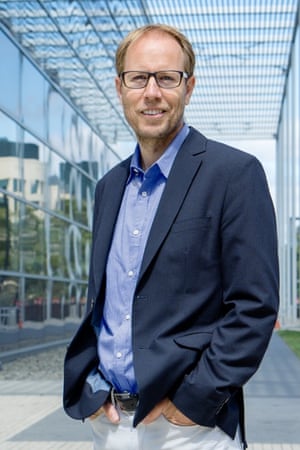
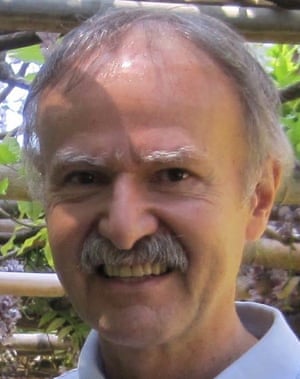
Karoly
Nikolich, co-founder with Tony Wyss-Coray of Alkahest, the company trying to
identify the key proteins in plasma that rejuvenate or age human tissues.
Photograph: Karoly Nikolich
Nikolich got
to know Wyss-Coray in 2005. He had taken on the job of executive director of
the Neuroscience Institute at Stanford University and over the years, Nikolich
kept tabs on Wyss-Coray’s progress – from the Alzheimer’s blood test to the
rejuvenating properties of young blood. But it wasn’t until spring 2012 that
plans to form a company emerged. Nikolich had flown to Hong Kong to visit the
family of Chen Din-hwa, a Chinese billionaire known as the King of Cotton Yarn.
Three years earlier, Chen had died, aged 89, with Alzheimer’s disease. His grandson told
Nikolich that towards the end of his life, Chen barely recognised his own
family. Then he had a plasma transfusion for an unrelated condition, which
seemed to have a spectacular effect. His mind was clearer. He was suddenly
cogent.
Nikolich
told them about Wyss-Coray’s research and the potential for plasma-based
therapies that revitalised the ageing brain. Before long, the conversation
turned to starting a company. The family invested a year later. The money got
Alkahest established and ready to launch the first human trial of young plasma.
Alkahest’s
ultimate goal – to identify the key proteins in plasma that rejuvenate or age
human tissues and then manufacture a product that uses them – could take 10 to
15 years. In the near term, the company has another strategy. Earlier this
year, the Spanish blood products firm, Grifols, pledged
$37.5m for a 45% stake in Alkahest. With another $12.5m, the company will
bankroll more research in exchange for rights to Alkahest’s first products.
Over the next two years, Alkahest will take human plasma and divide it into
fractions that are rich in different proteins. Each fraction will then be
tested in mice to see if they boost brain function. Any that do will be swiftly
introduced into human trials and developed into the first generation of
products.
And what
then? One enormous obstacle for hopes of plasma therapy is the limited supply.
In a rough extrapolation from the mouse studies, Nikolich estimates that the
globe’s entire plasma supply would be sufficient for only half a million of the
world’s 15 million Alzheimer’s patients. “That means big questions about who
gets treatment and who does not,” he said.
A
short drive from the Palo Alto Veterans Affairs hospital is Stanford University’s
School of Medicine, where the Alkahest trial is running. The woman in charge of
the trial is Sharon Sha, a specialist in behavioural neurology who spends much
of her time with patients who have Alzheimer’s. When I visited in February,
Sha, a cheery woman with dark shoulder-length hair, was running late for a
meeting in her third-floor office. But she was delayed for good reason: she had
been infusing young plasma into an Alzheimer’s patient enrolled on the trial –
a procedure that cannot be rushed.
The Alkahest
trial is small. Sha can enrol only 18 people aged 50 to 90 with mild to
moderate Alzheimer’s disease. Each receives a unit of young human plasma or
saline once a week for four weeks. They have the next six weeks off, then have
four more weeks of infusions. Those who had plasma first time around get saline
and vice versa. The process is blinded, so neither the patients, nor their
carers, nor Sha herself, know who is receiving what. Throughout the trial,
doctors will look for cognitive improvements. Only at the end of the trial, as
soon as October this year, will Sha analyse the findings.
Sharon
Sha is in charge of the blood plasma trial at Stanford University’s School of
Medicine. Photograph: Sharon Sha
Big
questions lie ahead. Even if none of the patients benefit from young plasma,
the research is far from finished. The plasma for the trial comes from donors
under 30, and it may not be potent enough. The patients on the trial have
dementia already, and may be too far gone to rescue.
Earlier this
year, John Hardy of University College London, who is the most cited
Alzheimer’s researcher in Britain, saw Wyss-Coray’s latest data at a meeting in
London. “It’s really interesting work,” he told me. “It’s woken everybody up.”
Nonetheless, Hardy is cautious; he suspects that young plasma will be less
effective in people than in mice, because people live so much longer, and in
far more varied environments. But, he said: “I would guess this will still
point us towards pathways involved in ageing more generally.”
If patients
improve with infusions of young plasma, scientists will be ecstatic. But the
finding would need to be replicated, ideally at other hospitals, and in more
patients, in order to convince researchers. If any benefits stand the test of time,
the studies will move on, to tease out the best doses and ages at which to give
plasma, how patients’ brains change, and whether improvements make a real
difference to the life of someone who can no longer recognise their own family.
Then there
is safety. Toying with the ageing process might backfire. Rando is concerned
that pumping pro-youthful proteins into people for years could end up giving
them cancer. Wyss-Coray agrees it is a worry, but points out that long-term
growth hormone therapy appears to be safe. “We just don’t know yet whether or
not it will be a problem,” he said.
Rando is
more upbeat about infusing patients with pro-youthful proteins for short
periods. An elderly person having surgery might get an infusion to help them
heal like a teenager. “Let’s say it works. If you can target tissues and
improve wound healing in older people, that would be a feasible approach. It
would not be about making 90-year-olds younger, or having people live to 150.
It’s about healthy living, not longer living,” he said.
In the 20
years that Wyss-Coray has lived in the US, his attitude to ageing has swung
from disinterest to fascination. Why does a mouse live for three years and a
human for 80? He sees its effects on a personal level too. He gets frustrated
when a word fails to come as quickly as it once did, but knows how much worse
it must be for people noticing the early signs of dementia: their words and
memories slipping away into the gloom.
The carers
of the patients enrolled in the young-blood trial keep journals to record how
well the patients are doing. Among their pages may be signs of hope, that
perhaps in the days after an infusion, a patient does a little bit better. “If
it actually works? That would be huge. Every patient would want it,” Wyss-Coray
said. He smiled. “I’d probably have to turn off my email and go somewhere
else.”
- Scroll down
through ‘Older Posts’ at the end of each section
Hope you like this
not for profit site -
It takes hours of work every day by
a genuinely incapacitated invalid to maintain, write, edit, research,
illustrate and publish this website from a tiny cabin in a remote forest
Like what we do? Please give anything
you can -
Contribute any amount and receive at
least one New Illuminati eBook!
(You can use a card
securely if you don’t use Paypal)
Please click below -
Spare Bitcoin
change?
And see
New Illuminati’s OWN Youtube Videos
-
DISGRUNTLED SITE ADMINS PLEASE NOTE –
We provide a live link to your original material on your site (and
links via social networking services) - which raises your ranking on search
engines and helps spread your info further!
This site is published under Creative Commons (Attribution) CopyRIGHT
(unless an individual article or other item is declared otherwise by the copyright
holder). Reproduction for non-profit use is permitted
& encouraged - if you give attribution to the work & author and include
all links in the original (along with this or a similar notice).
Feel free to make non-commercial hard (printed) or software copies or
mirror sites - you never know how long something will stay glued to the web –
but remember attribution!
If you like what you see, please send a donation (no amount is too
small or too large) or leave a comment – and thanks for reading this far…
Live long and prosper! Together we can create the best of all possible
worlds…