Cosmic Catastrophe
Occluded History of our Solar System
By Gerard Deva

“All cosmological theories assumed that the planets have evolved in their places for billions of years… Venus was formerly a comet and joined the family of planets within the memory of mankind… We claim that the Earth’s orbit changed more than once, and with it the length of the year; that the geographic position of the terrestrial axis and its astronomical direction changed repeatedly and that at a recent date the polar star was in the constellation of the Great Bear.”
- Immanuel Velikovsky in Worlds in Collision, p.361
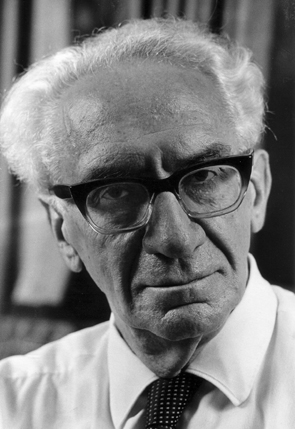
The story starts in 1939. Dr Velikovsky, a practicing psychoanalyst who had studied with Freud, went to the US to research a book on three dominant figures of the ancient Mediterranean world – Moses, Oedipus and Akhnaton. When he was nearly complete a question arose about the timing of the Exodus of the Hebrews from Egypt. Although recorded in detail by the Hebrews, there was no equivalent record in Egyptian history. Why not?
Under the conventional chronology of Egyptian history, the time period usually considered for the Exodus causes problems. For many other events in Hebrew history there appear to be no Egyptian counterparts either – but these two nations existed beside each other for centuries, according to the Hebrews. Velikovsky’s answer to this lack of correlation was to suggest that the accepted chronology of ancient Egypt was out by five hundred years. He noted that our dating of Egyptian periods came from the dynastic records handed down by Aegyptus and Agrippa, and that the reins of the Pharaohs – used to date Egyptian history – had been strung together one after another to arrive at our modern conventional chronology.
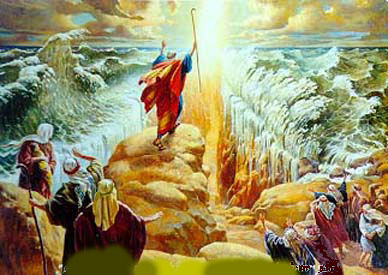
The key to the ‘missing’ half millennium was that there were many ‘co-regnal’ periods when the reins of monarchs overlapped or were indistinct. In Velikovsky’s revised chronology many events in Hebrew history were found to have their counterpart in the Egyptian record. He found papyri that described the events of Exodus, relating descriptions of the ‘plagues’ as they occurred in Egypt and the death of a pharaoh and his chariots in a watery vortex - and dated the fragments to the reign of Akhnaton - the ‘Heretical Pharaoh’ who ruled in times of utter chaos – and his father, Amenophis III.
The new chronology was built from the archaeological evidence found in the ruins of ancient Egypt. From remaining papyrus and pottery, tomb paintings and monuments a new story emerged. Because the histories of Greece, Assyria, Babylon and Judea were all dated from the dynastic records of Egypt, Velikovsky’s work became highly controversial. In 1945 this was limited to a specialist field, but his next publication in 1950 aroused widespread controversy. Worlds in Collision was Velikovsky’s explanation of the cause of this amnesia in our collective memory.
The Comet Venus

The ancient civilization of Egypt was nearly destroyed in a cosmic catastrophe that endangered the entire planet, according to Velikovsky. Everywhere, huge resources were devoted to the study of the skies. It’s widely known that ancient civilizations in Asia, the Americas, Europe and the Middle East were highly advanced in astronomy. While we accept this as a common feature of our past, why were so many people interested in the study of the movements of the planets?
Why is the alignment of astronomical instruments found in Babylon 2.5 degrees out from the present alignment of the Earth? Why did calendars constructed between the middle of the second millennium BCE and 800 BCE have 360 days and month of thirty days? Why do even earlier calendars have days, months and years of different lengths again? Velikovsky’s answer was that the Earth and Mars had been involved in repeated near collisions with a gigantic cometary body since recorded history began.
The events described in the Exodus and in Egyptian papyri are a vivid description of an age in chaos – plagues, turmoil and darkness, and the flight of the Hebrews from Egypt toward a ‘column of fire’ in Sinai.
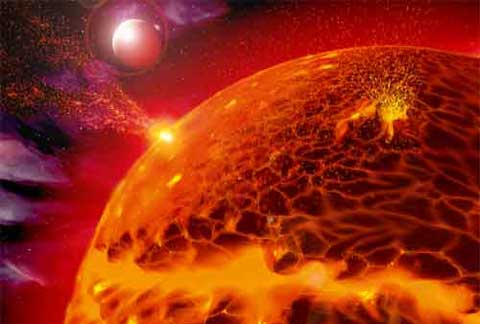
The Earth was momentarily slowed down and its axis slightly altered as the comet passed by. Electrostatic forces caused discharges to arc between the Earth and the comet, turning the skies to fire and the forests to flame. The crust was rent, volcanoes erupted, earthquakes rocked and darkness enveloped the world – the time of Exodus.
Seven hundred years later Isiah, Joel and Amos described another series of upheavals; the Sun appeared to stand still in the sky. Although slightly dislodged from its axis and orbit again, the Earth fared better this second time. These were, in fact, the last two acts of a cosmic drama; the earliest act of which we have records is called ‘The Deluge’.
Velikovsky believed that the origin of the comet that was responsible for changes in the Earth’s orbit was the proto-star we know as Jupiter. This idea enraged the scientific community, but his theories about the natures of Jupiter and Venus have not yet been proven wrong. He said that because Venus was younger than the other planets, its surface temperature would be much hotter and its atmosphere denser than astronomers believed; these predictions were proven correct.
He predicted Venus would be found to have orbital anomalies in relation to other planets. Venus has since been found to rotate on its axis in reverse direction to the other planets, and its day is longer than its year. We now know that parts of the atmosphere of Venus rotate in four days (with winds of up to 400 kilometres per hour) while the planet itself rotates in 243 days. Both these rotations are retrograde.
One of Velikovsky’s hypotheses for the slowing of the Earth’s rotation which made the Sun appear to stand still was that the planet was engulfed in the extended atmosphere of the comet Venus. Some of the diurnal rotation of the Earth was imparted to this dust cloud according to Velikovsky, which fits the eccentric characteristics of the Venusian atmosphere.
The comet spiraled past the Earth in an ever-decreasing path around the Sun before taking up its present orbit as the planet Venus. He cites further evidence to show that the Earth interacted with Mars on a number of occasions when writing was better developed than during the times of the Venusian encounters, after Venus flipped Mars out of its orbit. Disturbances caused by the passages of Mars consisted of earthquakes and electrical discharges. Most of the ‘Mars events’ took place within a ninety year period.
This may all sound far fetched, but Velikovsky’s evidence and the predictions he made from it have stood the test of nearly six decades of investigation. As in his previous work, Velikovsky amassed an impressive range of evidence to support his case.
Mythic Keys

To support his interpretation of the Hebrew and Egyptian histories Velikovsky searched the records of the civilizations of the eighth and fifteenth centuries BCE. In his last book he described his many years of research as sitting at the feet of sages “to listen to those who lived close to the events of the past… I realized very soon that the ancient sages lived in a frightened state of mind”. What became quickly apparent was the similarity of the events these people had experienced, and the fear that global upheavals associated with planetary encounters had inspired.
The legends of the past are folklore, but the similarity of motifs from five continents and the Pacific Ocean islands is striking; witches on brooms, the dragon and the scorpion, an animal with many heads and a winged body, a woman whose veils stream behind her – these images are universal cosmic myths recording the characteristic shapes possessed by comets. Velikovsky tracks the motif of the Sun being trapped in its movement through the tales of the Polynesians, Hawaiians and North American Indians. Like Middle Eastern civilizations, they have the story of the Sun being snared and freed by a mouse. In the Hawaiian version Mauii caught and beat the Sun, which begged for mercy and promised to go more slowly ever after. At the same time new islands appeared.
The Ute tribe of North America tell of a piece of the Sun setting fire to the world, which was broken off by a rabbit after the Sun rose, went down and rose again. Cultures on the other side of the globe speak of the Sun setting, rising and setting again, when the solar orb remained an extra hour in the sky during Joshua’s famous battle.
The legend of the cosmic battle of the planetary gods is familiar to us all. In the Homeric epics the Greeks choose Athena/Venus for their protector, the Trojans Ares/Mars – and they fought their battles while the gods struggled in the skies above. A similar situation existed in ancient Mexico. The Toltecs worshipped Quetzal-couatl/Venus, but the later Aztecs revered Huitzilopachtil/Mars. The identity, conflict and features of the planetary gods are consistent across the ancient world. Similarly, many potentates across the world named the cometary newcomer after themselves.
Chinese chronicles record two suns doing battle in the sky and the disturbances of the other planets this caused. Mars was pursued by Venus, the Earth shook, glowing mountains collapsed, “the customs of the age are thrown into disorder… all living beings harass one another”. An old textbook of Hindu astronomy has a chapter on planetary conjunctions. A planet can be struck down or merely vanquished, and the victor in these encounters is usually the planet Venus. A juncture of the planets is called a yuga in Hindu astronomy; the ages of the world are also called yugas.
An association of the planet Mars with the wolf is also common. In Babylon one of the seven names of Mars was ‘wolf’. An Egyptian god with the head of a wolf prowled the land and the Romans used the wolf – the legendary wet-nurse of Romulus and Remus, who are said to have founded Rome in 687 BCE - as the animal symbol for Mars. Slavic mythology has a god in the shape of the wolf, Vukadlak, who devoured the Sun and Moon. In the Icelandic epic the Edda, the god that darkens the Sun is the wolf Fenris, who battled the serpent Midgard in the heavens above. A Chinese astronomical chart quotes ancient sources in saying “once Venus ran into the Wolf Star”.
Nature’s Evidence

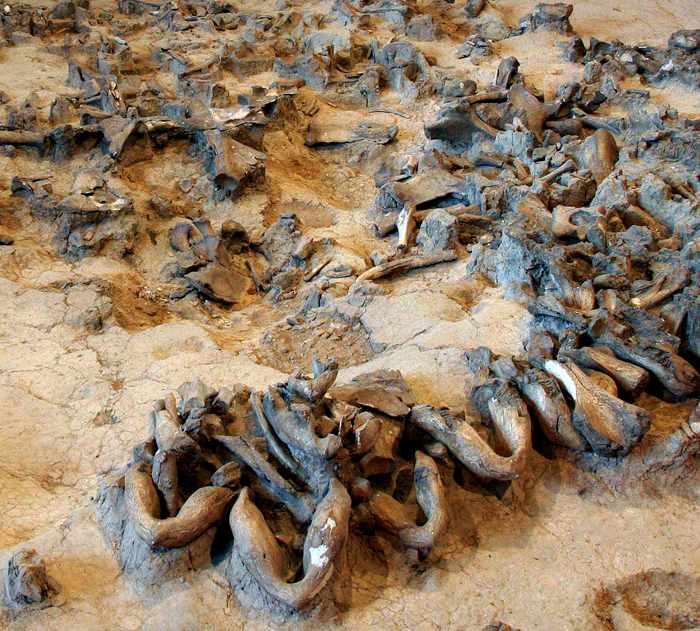
In Earth in Upheaval, Velikovsky excluded all references to ancient literature, tradition and folklore; “This I have done with intent, so that careless critics cannot decry the entire work as tales and legends. Stones and bones are the only witnesses.” All over the coast of Alaska there are great heaps of smashed bones of extinct animals mingled with uprooted trees and the occasional flint spearhead. Four layers of volcanic ash can be found in these remains of splintered trees and dismembered bodies. In polar regions of Siberia and on the Arctic islands there are hills of broken wood piled hundreds of feet high, and beyond them hills of mammoth bones cemented together by frozen sand.
On one island the bones of these animals were found with fossilised trees, leaves and cones. When the mammoth lived in Siberia there was abundant vegetation. Spitsbergen is nearly 76 degrees north latitude; yet fossil flowers and corals and beds of coal thirty feet thick have been found there. Antarctica is known to have seams of coal at a latitude of 85 degrees. For this coal to have formed, the southern polar region must have had great forests in the past. How can relatively recent and sudden changes in the Earth’s climate and simultaneous widespread destruction of plant and animal species be explained?
The violence of this destruction can be seen across Western Europe, where every major rock fissure is filled with the bones of animals, splintered and smashed into fragments. One 1,400 ft hill in France is capped by the remnants of mammoths, reindeer, horses and other animals. America has beds of fossil bones containing a hundred bones per square foot, deposited in sand. Some of these are over two hundred feet high. The hills of the Himalayas and Burma contain similar beds of bones. In China, among these fractured bones, the skeletons of seven humans were found. European, Melanesian and Eskimo types were lying together. Extinct and extant species of animals have been found mixed together in English deposits.
Wreckords

The conventional theory of slow and uniform geological processes cannot explain these deposits – instead, they are evidence of major catastrophes, many of which have struck the planet during the time of modern humans’ existence. Velikovsky suggests a giant tidal wave engulfed the world that picked up and carried plants and animals over a great distance and smashed them intermingled into common graves.
This and the transformation of the Earth’s climate are explained as consequences of the rapid change of the Earth’s axis brought about by a near-collision with another planet. [The fact that the axis has tilted in relatively recent times is hardly in dispute – one must only glance at the distribution of ice sheets during the last glaciation to show that the poles must have titled about twenty degrees since the ice age principally ended about 13,000 years ago. Einstein wondered at the cause of a tilt of such magnitude, and conducted a protracted correspondence with Velikovsky and Charles Hapgood – who theorised that the crust regularly tilted around the mantle when the axial wobble became too pronounced – regarding their ideas about global catastrophe. Much of this debate has been somehow forgotten or misplaced in the new millennium, and Velikovsky’s ideas of smaller, more recent and repeated axial tilts have barely been considered – Ed.]
The geological record tells a similar compelling story to that which paleontologists have unearthed. At 1,400 ft (over 400 metres) altitude in the Andes there are high water surf marks lined with undecayed seashells. There are many ruins surrounded by terraces for cultivation on the now high and dry western side of the Andes. On the east side, cultivated terraces continue far past the permanent snowline. Before the last lava sheet spread over Columbia human settlements were there, the remnants of which have been found. That the Andes Mountains were raised in fairly recent times by unimaginable forces is one conclusion.
The ocean floor around the globe also bears witness to flows of lava and volcanic ash which covered a violently shifting bedrock while tidal waves battered the continents. There were once large areas of dry land and relatively recently formed beaches lie preserved in many places where the Atlantic Ocean now lies.
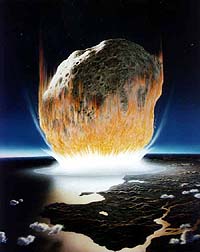
The bottom of the seas show that the Earth has been showered with meteorites on a very large scale, leaving clay deposits rich in nickel, radium and iron. When the Earth’s axis was shifted by the interaction of the Earth’s and the other planets’ magnetic fields, magnetic eddy currents formed in the atmosphere. These generated great heat and melted rocks on the surface. As this rock cooled, it reformed with a different magnetic polarity to surrounding strata. All over the world, similar local rock formations are found with their magnetic polarities reversed. For this to be the case the Earth’s magnetic field must have been reversed when these rocks were formed. Also, rocks with this inverted polarity are far more strongly magnetised than the Earth’s magnetic field alone can account for.
Why was volcanic activity so common in the recent past? How was the sea floor raised and lowered around the world? As the Earth’s axis shifted in earlier times, the inertia of air and water caused hurricanes and tidal waves; the stress on the planet caused vulcanism and an outpouring of magma, sending up clouds of volcanic ash that threw a cloak of darkness over a sunless world.
{As the Earth is not perfectly round but an oblate spheroid with an equatorial bulge, when the planet tilts on its axis areas which move off the raised area of the bulge will sink in relation to the sea level, and areas that tilt onto or nearer the equator will usually rise – up to two miles or more. Thus a continent can easily sink in the span of a single night, leaving only the mountaintops of Cuba and a few smaller islands as evidence of its former existence - and Lake Titicaca is full of salt water and contains species that have elsewhere become extinct since the ice age; its bed and the entire surrounds have been abruptly tilted, it’s surrounded by extensive ruins and the vast irrigated areas of an advanced civilization - and the irrigated areas and the lake itself are located above the point where rain ceases to fall; the lake has had no inflow for around 13,000 years - Ed}
The heat generated by these forces evaporated seas. In some places torrential downpours formed great streams running through recently opened fissures in the Earth’s crust which suddenly eroded the landscape. Elsewhere, snow fell and covered the land with continental ice sheets. At the poles, permanent snow cover grew as the land cooled. Climatic changes, ice cover, mountain building and the reverse magnetic orientation of contiguous strata of rocks are explained by Velikovsky’s theory of cosmic catastrophe. However, the accepted view of the Earth’s geological history is known as uniformitarianism; where the gradual workings of natural forces have produced the world as we know it. Needless to say, Velikovsky aroused as great a controversy in geology as he had previously in archaeology and astronomy. The defenders of uniformitarianism disliked Velikovsky’s ideas at least as much as their fellow scientists had.
Velikovsky Attacked

Publication of Worlds in Collision caused a violent reaction; astronomers everywhere denounced and decried the book. They threatened to blacklist Macmillan, the publisher, which was forced to withdraw the book from circulation. Under pressure, Macmillan transferred publication rights to Doubleday - who did not have a textbook department - and burned the unsold copies. In reviews in reputable journals and public statements, academics and scientists even criticized some of Velikovsky’s works before anyone had read the manuscripts.
Vehement conferences were held to show that Velikovsky’s theories were wrong. Dr Immanuel Velikovsky died on November Seventeenth,1979 at the age of eighty-four. As more is learned about our solar system, some scientists have realized that his theories might conflict with accepted ideas, but not actually conflict with the facts.
Rising From Amnesia
Velikovsky theorized that humanity suffered a collective amnesia on the subject of catastrophes. As a reaction to the repeated near-destruction of human civilization, a deep scar has been left in the human psyche. Although the solar system has been settled for 2,700 years, he notes a seven hundred year cycle in the human collective consciousness. Christianity in the first century CE and Islam in the seventh were both founded in apocalyptic visions of the transformation of the world by fire. The fourteenth century was the time of the Black Death and the Hundred Years War, which reduced the population of Western Europe by two-thirds.
Velikovsky’s fear was that in the Twenty-First Century this trauma would be reenacted by humanity, who are now in possession of the means of our own destruction.
An examination of the facts may help the recall of our racial memory, the suppression of which could be the cause of great violence in our history.

The Books of Dr Immanuel Velikovsky
Mankind in Amnesia - 1982
By Gerard Deva
Many ‘cometary’ bodies have been shown to have ‘planetary’-scale masses and many scientific assumptions regarding the stability and formation of the solar system have been proven incorrect. Recent carbon dates assigned to many sites and artefacts also conform with Velikovsky’s theories and many of the challenges he has made to conventional theories have remained unanswered - except by his theory.
Readers familiar with the works of Zechariah Sitchin will note the parallels between his translations of Sumerian cosmological records and the hypotheses of Velikovsky. Hapgood’s The Path of the Pole is also an excellent read, and Worlds in Collision is an excellent place to start for anyone who intends to read Velikovsky’s extraordinarily erudite, detailed and fully footnoted works. His detractors should read his evidence before criticising it – but although many of these books were once found everywhere, most are now out of print and only available second hand. Is anyone out there dedicated enough to scan heaps of pages - and proofread and correct the resultant OCR text? The web awaits…
- R.A.
For further enlightening information enter a word or phrase into the search box @ New Illuminati or click on any label/tag at the bottom of the page @ http://nexusilluminati.blogspot.com
And see
The Her(m)etic Hermit - http://hermetic.blog.com
New Illuminati – http://nexusilluminati.blogspot.com
New Illuminati on Facebook - http://www.facebook.com/pages/New-Illuminati/320674219559
This material is published under Creative Commons Copyright (unless an individual item is declared otherwise by copyright holder) – reproduction for non-profit use is permitted & encouraged, if you give attribution to the work & author - and please include a (preferably active) link to the original along with this notice. Feel free to make non-commercial hard (printed) or software copies or mirror sites - you never know how long something will stay glued to the web – but remember attribution! If you like what you see, please send a tiny donation or leave a comment – and thanks for reading this far…
From the New Illuminati – http://nexusilluminati.blogspot.com