"All the World's a Stage We Pass Through" R. Ayana

Showing posts with label maunder minimum. Show all posts

Tuesday, 15 December 2015

Cold Sun Rising: New studies flip climate-change notions upside down


Cold Sun Rising
New studies flip climate-change notions upside down
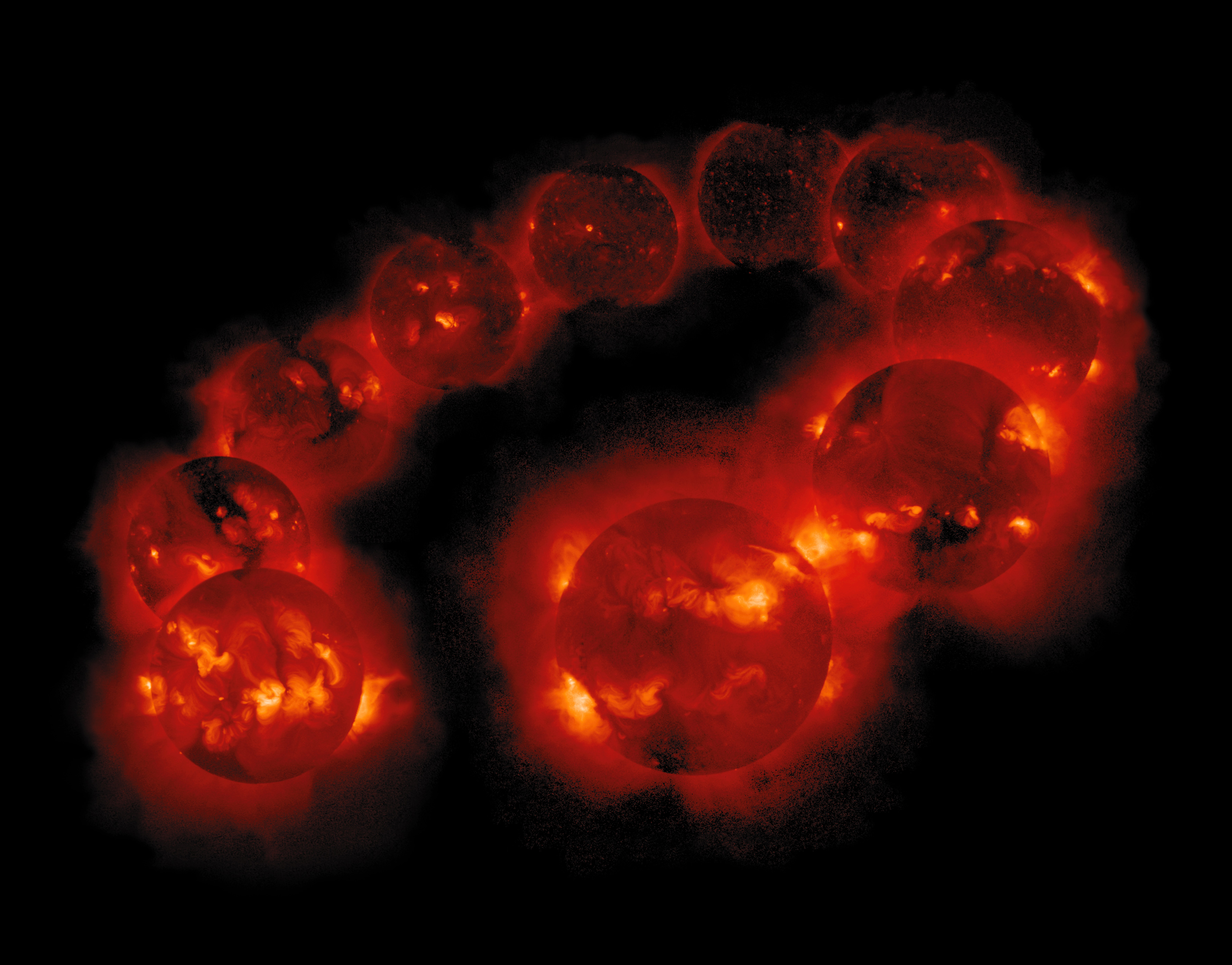
https://upload.wikimedia.org/wikipedia/commons/c/c2/The_Solar_Cycle_XRay_hi.jpg

by Sam Khoury


The sun will go into "hibernation" mode around 2030, and it has already started to get sleepy. At the Royal Astronomical Society's annual meeting in July, Professor Valentina Zharkova of Northumbria University in the UK confirmed it - the sun will begin its Maunder Minimum (Grand Solar Minimum) in 15 years. Other scientists had suggested years ago that this change was imminent, but Zharkova's model is said to have near-perfect accuracy.

So what is a "solar minimum"?

Our sun doesn't maintain a constant intensity. Instead, it cycles in spans of approximately 11 years. When it's at its maximum, it has the highest number of sunspots on its surface in that particular cycle. When it's at its minimum, it has almost none. When there are more sunspots, the sun is brighter. When there are fewer, the sun radiates less heat toward Earth.

But that's not the only cooling effect of a solar minimum. A dim sun doesn't deflect cosmic rays away from Earth as efficiently as a bright sun. So, when these rays enter our atmosphere, they seed clouds, which in turn cool our planet even more and increase precipitation in the form of rain, snow and hail.


Solar cycles
https://upload.wikimedia.org/wikipedia/commons/c/c1/2000_Year_Temperature_Comparison.png


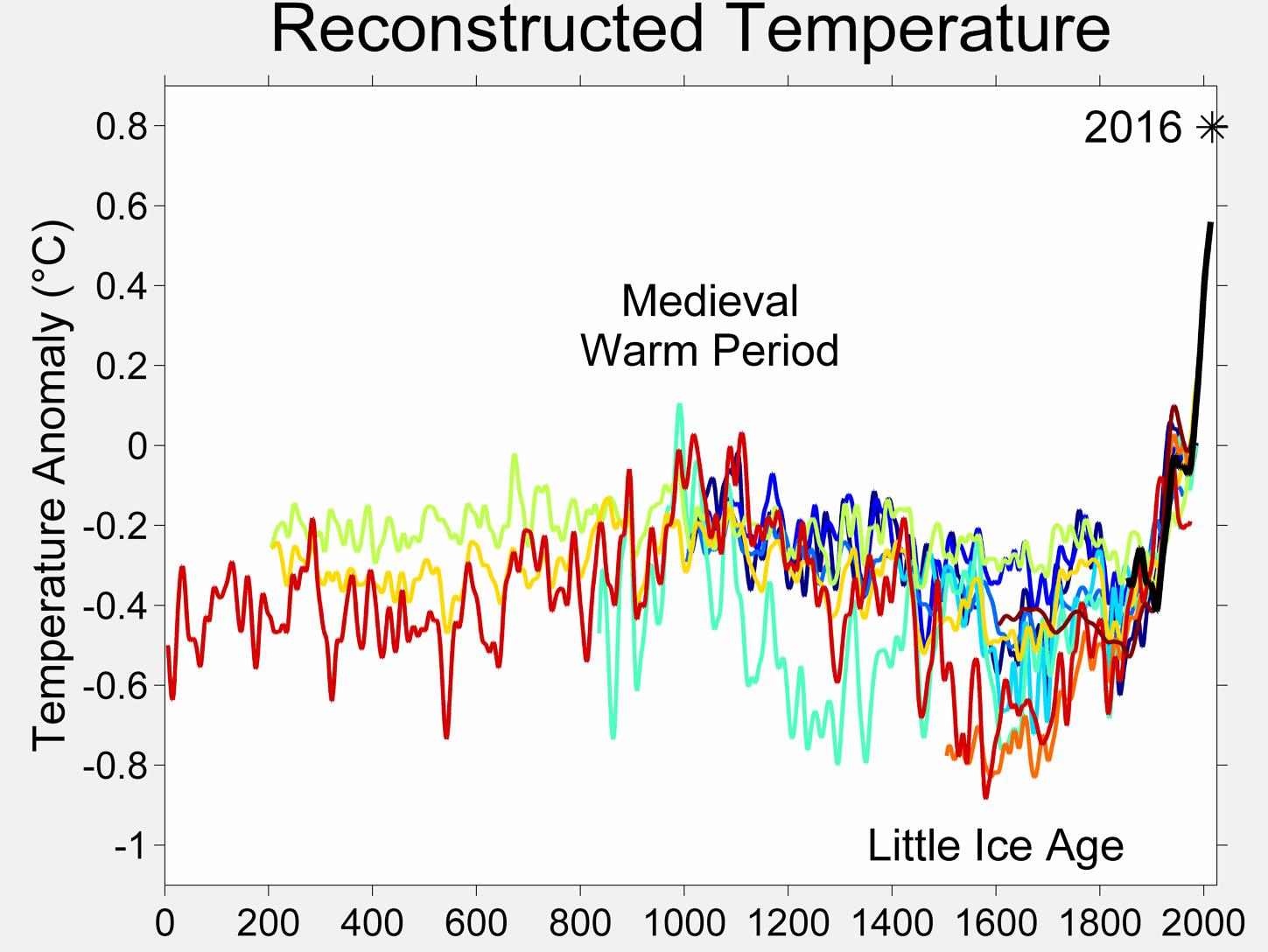
Since the early 1800s we have enjoyed healthy solar cycles and the rich agriculture and mild northern temperatures that they guarantee
. During the Middle Ages, however, Earth felt the impact of four solar minimums over the course of 400 years.

The last Maunder Minimum and its accompanying mini-Ice Age saw the most consistent cold, continuing into the early 1800s.

The last time we became concerned about cooler temperatures - possibly dangerously cooler - was in the 1970s. Global temperatures have declined since the 1940s, as measured by Pacific Decadal Oscillation. The PDO Index is a recurring pattern of ocean-atmosphere climate variability centred over the Pacific Ocean. Determined by deep currents, it is said to shift between warm and cool modes. Some scientists worried that it might stay cool and drag down the Atlantic Decadal Oscillation with it, spurring a new Ice Age. The fear was exacerbated by the fact that Earth has been in the current inter-glacial period for 10,000 years (depending on how the starting point is gauged).

If Earth were to enter the next Ice Age too quickly, glaciers could advance much further south, rainforests could turn into savannah, and sea levels could drop dramatically, causing havoc.

The BBC, all three major American TV networks, Time magazine and the New York Times all ran feature stories highlighting the scare. Fortunately, by 1978 the PDO Index shifted back to warm and the fear abated.


Climate science vs the sceptics


By the 1990s the UN's Intergovernmental Panel on Climate Change (IPCC) had formed the "97 per cent consensus"
. The consensus was that Earth was warming more than it should, not just due to natural causes but also human activity. This was termed Anthropogenic Global Warming. The culprit was identified as carbon dioxide generated from the burning of fossil fuels.

CO2 is a greenhouse gas and its increase in the atmosphere could be dangerous, the panel claimed. Some of these scientists, particularly those working at the US National Oceanic and Atmospheric Administration (NOAA), Nasa's Goddard Institute for Space Studies and Britain's Meteorological Office, have gone so far as to declare CO2 as the primary driver of climate on Earth. This modern "climate science" has stirred unprecedented controversy in the field. Sceptics, clinging to more traditional approaches, say the science has been corrupted by the billions of dollars in government funding for climate-change research and agencies and industries that claim to be "fighting climate change". The counter-argument is that the sceptics are backed by the oil, gas and coal industries or are affiliated with conservative political groups.

The biggest bone of contention between the two groups is how the data are assessed. In the United States, the recorded temperature data go back to 1880, and elsewhere not even that far. Those data have to be "stapled on" to the ice-core data used to determine temperatures in earlier times. This has led to controversial representations, such as the infamous "hockey stick" graph released by the IPCC that gave the impression the world is hotter now than ever. Many scientists slammed the graph as wholly unrealistic, insisting that previous eras, such as the medieval warm period and the Holocene maximum were warmer than today.

Another issue is the urban "heat island" effect. Black asphalt roads and concrete structures absorb heat from the sun. Roy Spencer, a climatologist at the University of Alabama and former IPCC alumnus, charged in 2013 that the NOAA was "warming up" readings at rural temperature stations to match the urban ones rather than the reverse. A spokesman for the NOAA responded but stopped short of denying it.

In the 2009 "climategate scandal", e-mails and documents from IPCC-affiliated scientists were leaked that indicated they had manipulated data and reports to jibe with the AGW theory. References were made to "hiding the decline" through the use of "tricks". Then in 2012 Anthony Watts, a meteorologist and self-described whistle-blower, caught the NOAA changing temperature data from the 1930s to make the decade appear colder than it had been. Another whistle-blower, blogger Tony Heller, although clearly aligned with conservative groups like the Heartland Institute, has amassed impressive data. He claims that, since 1997, the world has actually been getting colder and Goddard and the NOAA are committing "climate fraud". The NOAA has declined to respond.

[NI Comments: Each year heat (and cold) records are broken somewhere on Earth, indicating that climate instabilities from greenhouse gases pouring into the atmosphere are indeed causing massive changes and currently injecting chaos into the biosphere]


http://c3headlines.typepad.com/.a/6a010536b58035970c0120a62f87f3970c-800wi


Mini Ice Age | Sunspots and Cooling Earth Temperatures

(11:49)


Global cooling?


Around 2000, the PDO Index started to blow cold again
, possibly causing global warming to "pause", as the mainstream scientists describe it. IPCC-affiliated scientists as well as Nasa and the NOAA attribute the pause to other factors. This is when the plot thickens.

Solar cycle 24 - two cycles prior the cycle that's expected to bottom out into a Maunder Minimum - was weak. In 2013-14 it reached its maximum far below average. Meanwhile extreme cold-weather anomalies have occurred around the world. Last year "polar vortices" slammed into the central US and Siberia as a third hovered over the Atlantic. All 50 US states, including Hawaii, had temperatures below freezing for the first time in recorded history. Snowfall records were broken in cities in the US, Canada, Italy, New Zealand, Australia, Japan and elsewhere. Southern American states and central Mexico, where snow is rare, got heavy snow, as did the Middle East.

This past summer the cold didn't let up, with more temperature records across the US and rare summer snows seen in Canada, the US and China. Birds have migrated early in the last two years. Antarctic sea ice set a new record in 2013 and it was broken again in 2014.

Not even Thailand was immune. In 2014 Bangkok hit its coldest low in 30 years, while 63 lives were lost in the North.

Scientists at the Climate and Environmental Physics and Oeschger Centre for Climate Change Research at the University of Berne in Switzerland have recently backed up theories that support the sun's importance in determining the climate on Earth. A paper published last year by the American Meteorological Society contradicts claims by IPCC scientists that the sun couldn't be responsible for major shifts in climate. Judith Curry, chair of the School of Earth and Atmospheric Sciences at the Georgia Institute of Technology, rejected IPCC assertions that solar variations don't matter. Among the many studies and authorities she cited was the National Research Council's recent report "The Effects of Solar Variability on Earth's Climate".

Other researchers and organisations are also predicting global cooling - the Russian Academy of Science, the Astronomical Institute of the Slovak Academy of Scientists, the Institute of Terrestrial Magnetism Russia, Victor Manuel Velesco Herrera at the National University of Mexico, the Bulgarian Institute of Astronomy, Dr Tim Patterson at Carleton University in Canada, Drs Lin Zhen at Nanjing University in China, just to name a few.

For now nevertheless, the IPCC and other authoritative agencies are sticking to their CO2-dominant climate-forcing theory. They attribute the cold spells to a disruption in the jet stream caused by Anthropogenic Global Warming. Some of their theories have heads being scratched, for instance the "pause" in global warming they attribute to heat being absorbed deep into the oceans. When Antarctic ice reached record levels in 2013, scientists were "baffled" because the water beneath the ice was warm, they claimed. In climate science old and new, nothing is certain.

We conclude with a bit of good news, though. Recent research has determined that the famous Stradivarius violin owes its unique, esteemed sound to the last Maunder Minimum. The solar condition changed the texture of the trees that provided the wood from which the instrument was crafted. So lovers of classical music can place their orders for the next generation of incomparable violins, coming - giving the trees time to mature - in about 100 years.

 http://mmbiz.qpic.cn/mmbiz/JicBjrAqO4fQXhj5x5Zw5iaQ6qSwB2xmbZ7T3y0VmUJwDeU0j7libBAHXC3BMzaKlqicokNSFGKWicO4GbIy42M3ianQ/0?wx_fmt=jpeg


New Ice Age Near - 58 part evidence

(2:32:33)


For more information about global cooling see http://nexusilluminati.blogspot.com/search/label/global%20cooling
For more information about the Sun see http://nexusilluminati.blogspot.com/search/label/sun
- Scroll down through ‘Older Posts’ at the end of each section


Hope you like this not for profit site -
It takes hours of work every day by a genuinely incapacitated invalid to maintain, write, edit, research, illustrate and publish this website from a tiny cabin in a remote forest
Like what we do? Please give anything you can -  
Contribute any amount and receive at least one New Illuminati eBook!
(You can use a card securely if you don’t use Paypal)
Please click below -


Spare Bitcoin change?


Images –  https://upload.wikimedia.org/wikipedia/commons/c/c2/The_Solar_Cycle_XRay_hi.jpg
https://upload.wikimedia.org/wikipedia/commons/c/c1/2000_Year_Temperature_Comparison.png
http://c3headlines.typepad.com/.a/6a010536b58035970c0120a62f87f3970c-800wi
http://mmbiz.qpic.cn/mmbiz/JicBjrAqO4fQXhj5x5Zw5iaQ6qSwB2xmbZ7T3y0VmUJwDeU0j7libBAHXC3BMzaKlqicokNSFGKWicO4GbIy42M3ianQ/0?wx_fmt=jpeg


For further enlightening information enter a word or phrase into the random synchronistic search box @ the top left of http://nexusilluminati.blogspot.com


And see


 New Illuminati on Facebook - https://www.facebook.com/the.new.illuminati

New Illuminati Youtube Channel -  https://www.youtube.com/user/newilluminati/playlists

New Illuminati’s OWN Youtube Videos -  
New Illuminati on Google+ @ For New Illuminati posts - https://plus.google.com/u/0/+RamAyana0/posts

New Illuminati on Twitter @ www.twitter.com/new_illuminati


New Illuminations –Art(icles) by R. Ayana @ http://newilluminations.blogspot.com

The Her(m)etic Hermit - http://hermetic.blog.com


DISGRUNTLED SITE ADMINS PLEASE NOTE –
We provide a live link to your original material on your site (and links via social networking services) - which raises your ranking on search engines and helps spread your info further!

This site is published under Creative Commons (Attribution) CopyRIGHT (unless an individual article or other item is declared otherwise by the copyright holder). Reproduction for non-profit use is permitted & encouraged - if you give attribution to the work & author and include all links in the original (along with this or a similar notice).

Feel free to make non-commercial hard (printed) or software copies or mirror sites - you never know how long something will stay glued to the web – but remember attribution!

If you like what you see, please send a donation (no amount is too small or too large) or leave a comment – and thanks for reading this far…

Live long and prosper! Together we can create the best of all possible worlds…


From the New Illuminati – http://nexusilluminati.blogspot.com

Saturday, 12 May 2012

The mini ice age starts here?

The mini ice age starts here?


North Pole

 
The bitter winters afflicting much of the Northern Hemisphere are only the start of a global trend towards cooler weather that is likely to last for 20 or 30 years, say some of the world’s most eminent climate scientists.

Their predictions – based on an analysis of natural cycles in water temperatures in the Pacific and Atlantic oceans – challenge some of the global warming orthodoxy’s most deeply cherished beliefs, such as the claim that the North Pole will be free of ice in summer by 2013.

According to the US National Snow and Ice Data Centre in Colorado, Arctic summer sea ice has increased by 409,000 square miles, or 26 per cent, since 2007 – and even the most committed global warming activists do not dispute this.
 

The scientists’ predictions also undermine the standard climate computer models, which assert that the warming of the Earth since 1900 has been driven solely by man-made greenhouse gas emissions and will continue as long as carbon dioxide levels rise. 


 They say that their research shows that much of the warming was caused by oceanic cycles when they were in a ‘warm mode’ as opposed to the present ‘cold mode’.

This challenge to the widespread view that the planet is on the brink of an irreversible catastrophe is all the greater because the scientists could never be described as global warming ‘deniers’ or sceptics.

However, both main British political parties continue to insist that the world is facing imminent disaster without drastic cuts in CO2.


This image of the UK taken from NASA's multi-national Terra satellite on Thursday shows the extent of the freezing weather

This image of the UK taken from NASA's multi-national Terra satellite shows the extent of the freezing weather in 2010


As Britain froze in 2010, Climate Change Secretary Ed Miliband maintained in a parliamentary answer that the science of global warming was ‘settled’.

Among the most prominent of the scientists is Professor Mojib Latif, a leading member of the UN’s Intergovernmental Panel on Climate Change (IPCC), which has been pushing the issue of man-made global warming on to the international political agenda since it was formed 22 years ago.

Prof Latif, who leads a research team at the renowned Leibniz  Institute at Germany’s Kiel University, has developed new methods for measuring ocean temperatures 3,000ft beneath the surface, where the cooling and warming cycles start.

He and his colleagues predicted the new cooling trend in a paper published in 2008 and warned of it again at an IPCC conference in Geneva last September [2009].

Last night he told The Mail on Sunday: ‘A significant share of the warming we saw from 1980 to 2000 and at earlier periods in the 20th Century was due to these cycles – perhaps as much as 50 per cent.

'They have now gone into reverse, so winters like this one will become much more likely. Summers will also probably be cooler, and all this may well last two decades or longer.

‘The extreme retreats that we have seen in glaciers and sea ice will come to a halt. For the time being, global warming has paused, and there may well be some cooling.’

As Europe, Asia and North America froze last week, conventional wisdom insisted that this was merely a ‘blip’ of no long-term significance.

Though record lows were experienced as far south as Cuba, where the daily maximum on beaches normally used for winter bathing was just 4.5C, the BBC assured viewers that the big chill was merely short-term ‘weather’ that had nothing to do with ‘climate’, which was still warming.

The work of Prof Latif and the other scientists refutes that view. 

On the one hand, it is true that the current freeze is the product of the ‘Arctic oscillation’ – a weather pattern that sees the development of huge ‘blocking’ areas of high pressure in northern latitudes, driving polar winds far to the south.

Meteorologists say that this is at its strongest for at least 60 years.

As a result, the jetstream – the high-altitude wind that circles the globe from west to east and normally pushes a series of wet but mild Atlantic lows across Britain – is currently running not over the English Channel but the Strait of Gibraltar.


A composite photograph released last year to highlight the issue of melting ice and global warming
A composite photograph released to highlight the issue of melting ice and global warming


However, according to Prof Latif and his colleagues, this in turn relates to much longer-term shifts – what are known as the Pacific and Atlantic ‘multi-decadal oscillations’ (MDOs).

For Europe, the crucial factor here is the temperature of the water in the middle of the North Atlantic, now several degrees below its average when the world was still warming.

But the effects are not confined to the Northern Hemisphere. Prof Anastasios Tsonis, head of the University of Wisconsin Atmospheric Sciences Group, has recently shown that these MDOs move together in a synchronised way across the globe, abruptly flipping the world’s climate from a ‘warm mode’ to a ‘cold mode’ and back again in 20 to 30-year cycles. 

'They amount to massive rearrangements in the dominant patterns of the weather,’ he said yesterday, ‘and their shifts explain all the major changes in world temperatures during the 20th and 21st Centuries.

'We have such a change now and can therefore expect 20 or 30 years of cooler temperatures.’

Prof Tsonis said that the period from 1915 to 1940 saw a strong warm mode, reflected in rising temperatures. 


Pictures of the snow in Tiananmen Square in Beijing, China, last week show the city is the coldest it has been since 1970
Pictures of the snow in Tiananmen Square in Beijing, China [2010], show the city at the coldest it has been since 1970


But from 1940 until the late Seventies, the last MDO cold-mode era, the world cooled, despite the fact that carbon dioxide levels in the atmosphere continued to rise.

Many of the consequences of the recent warm mode were also observed 90 years ago.

For example, in 1922, the Washington Post reported that Greenland’s glaciers were fast disappearing, while Arctic seals were ‘finding the water too hot’. 

It interviewed a Captain Martin Ingebrigsten, who had been sailing the eastern Arctic for 54 years: ‘He says that he first noted warmer conditions in 1918, and since that time it has gotten steadily warmer.

'Where formerly great masses of ice were found, there are now moraines, accumulations of earth and stones. At many points where glaciers formerly extended into the sea they have entirely disappeared.’

As a result, the shoals of fish that used to live in these waters had vanished, while the sea ice beyond the north coast of Spitsbergen in the Arctic Ocean had melted.

Warm Gulf Stream water was still detectable within a few hundred miles of the Pole. In contrast, Prof Tsonis said, in January 2010, 56 per cent of the surface of the United States was covered by snow.

‘That hasn’t happened for several decades,’ he pointed out. ‘It just isn’t true to say this is a blip. We can expect colder winters for quite a while.’

He recalled that towards the end of the last cold mode, the world’s media were preoccupied by fears of freezing.

For example, in 1974, a Time magazine cover story predicted ‘Another Ice Age’, saying: ‘Man may be somewhat responsible – as a result of farming and fuel burning [which is] blocking more and more sunlight from reaching and heating the Earth.’

Prof Tsonis said: ‘Perhaps we will see talk of an ice age again by the early 2030s, just as the MDOs shift once more and temperatures begin to rise.’

Like Prof Latif, Prof Tsonis is not a climate change ‘denier’. There is, he said, a measure of additional ‘background’ warming due to human activity and greenhouse gases that runs across the MDO cycles.


'This isn't just a blip. We can expect colder winters for quite a while'


But he added: ‘I do not believe in catastrophe theories. Man-made warming is balanced by the natural cycles, and I do not trust the computer models which state that if CO2 reaches a particular level then temperatures and sea levels will rise by a given amount.

'These models cannot be trusted to predict the weather for a week, yet they are running them to give readings for 100 years.’

Prof Tsonis said that when he published his work in the highly respected journal Geophysical Research Letters, he was deluged with ‘hate emails’.

He added: ‘People were accusing me of wanting to destroy the climate, yet all I’m interested in is the truth.’

He said he also received hate mail from climate change sceptics, accusing him of not going far enough to attack the theory of man-made warming.

The work of Profs Latif, Tsonis and their teams raises a crucial question: If some of the late 20th Century warming was caused not by carbon dioxide but by MDOs, then how much? Tsonis did not give a figure; Latif suggested it could be anything between ten and 50 per cent.

Other critics of the warming orthodoxy say the role played by MDOs is even greater.

William Gray, emeritus Professor of Atmospheric Sciences at Colorado State University, said that while he believed there had been some background rise caused by greenhouse gases, the computer models used by advocates of man-made warming had hugely exaggerated their effect.


Dr David Viner stands by his claim that snow will become an 'increasingly rare event'


According to Prof Gray, these distort the way the atmosphere works. ‘Most of the rise in temperature from the Seventies to the Nineties was natural,’ he said. ‘Very little was down to CO2 – in my view, as little as five to ten per cent.’

But last week, die-hard warming advocates were refusing to admit that MDOs were having any impact.

In March 2000, Dr David Viner, then a member of the University of East Anglia Climatic Research Unit, the body now being investigated over the notorious ‘Warmergate’ leaked emails, said that within a few years snowfall would become ‘a very rare and exciting event’ in Britain, and that ‘children just aren’t going to know what snow is’. 

Now the head of a British Council programme with an annual £10 million budget that raises awareness of global warming among young people abroad, Dr Viner last week said he still stood by that prediction: ‘We’ve had three weeks of relatively cold weather, and that doesn’t change anything.

'This winter is just a little cooler than average, and I still think that snow will become an increasingly rare event.’ 

The longer the cold spell lasts, the harder it may be to persuade the public of that assertion.


Help This Unique Site Survive
Donate any amount and receive at least one New Illuminati eBook!
Just click in the jar -


For further enlightening information enter a word or phrase into the search box @  New Illuminati or click on any label/tag at the bottom of the pagehttp://nexusilluminati.blogspot.com


And see


 New Illuminati on Facebook - https://www.facebook.com/the.new.illuminati

New Illuminati Youtube Channel - http://www.youtube.com/user/newilluminati/feed


The Her(m)etic Hermit - http://hermetic.blog.com


This material is published under Creative Commons Fair Use Copyright (unless an individual item is declared otherwise by copyright holder) – reproduction for non-profit use is permitted & encouraged, if you give attribution to the work & author - and please include a (preferably active) link to the original along with this notice. Feel free to make non-commercial hard (printed) or software copies or mirror sites - you never know how long something will stay glued to the web – but remember attribution! If you like what you see, please send a tiny donation or leave a comment – and thanks for reading this far…


From the New Illuminati – http://nexusilluminati.blogspot.com


Thursday, 29 December 2011

Plasma Changes in the Solar System


Plasma Changes in the Solar System


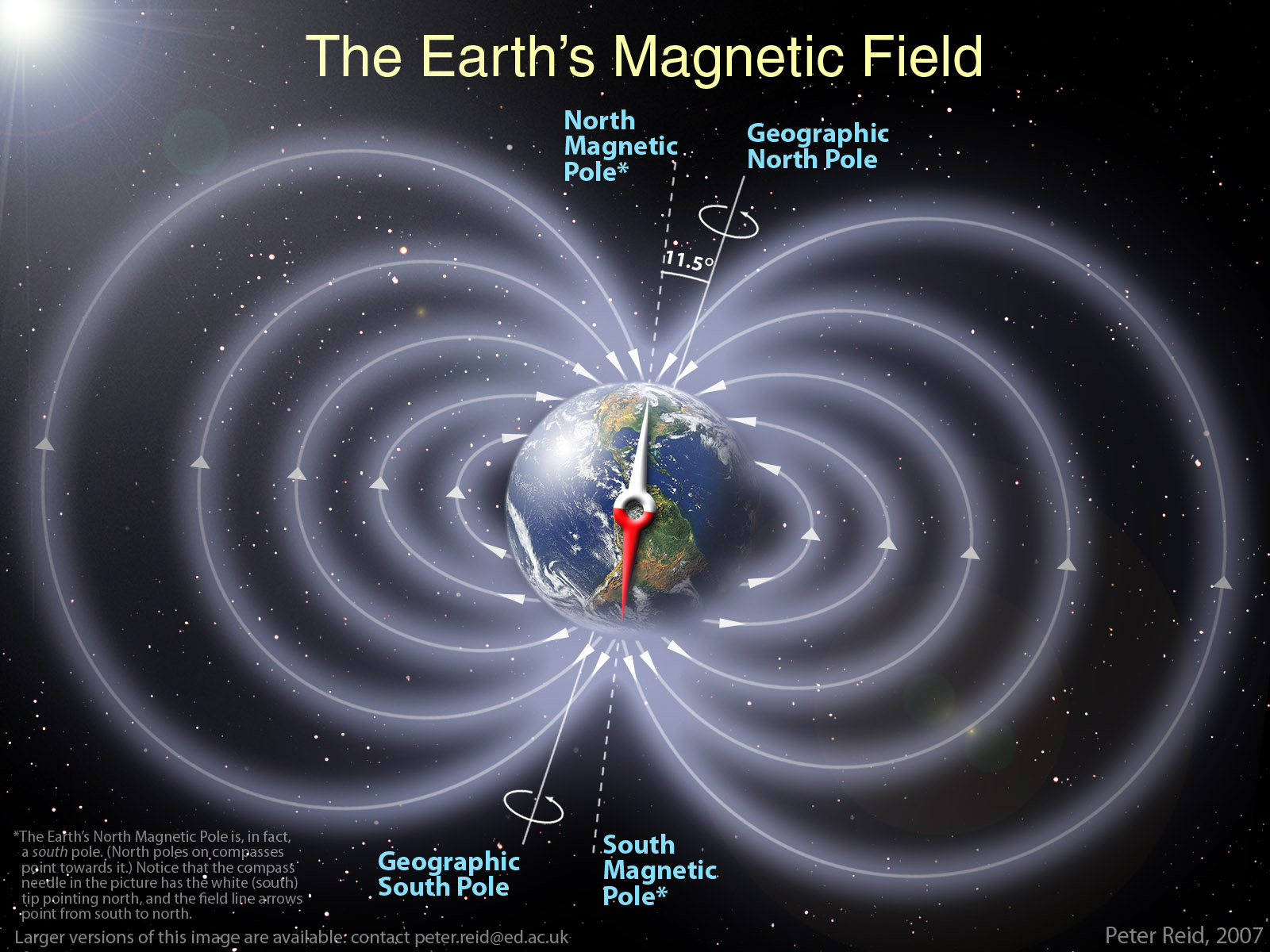
http://usahitman.com/wp-content/uploads/2011/07/earth-magfield.jpg


by Mark Heley

The increasing amount of plasma that has been entering our solar system over the last couple of decades has been receiving a lot of attention in the run up to 2012. A Russian team of scientists, headed by the planet physicist Dr. Alexey Dmitriev, has been following this phenomenon. Their research suggests that this influx of plasma may be responsible for some of the recent dramatic climate changes.  


The Role of Plasma in Recent Solar System Changes

A team from the Siberian Russian Academy of Sciences has been investigating changes in the heliosphere, the electromagnetic envelope that surrounds our solar system. The heliosphere acts like a giant protective sheath surrounding our sun and the entire solar system as we travel through space. Normally, it functions as a giant deflector, protecting us from a potentially harmful influx of cosmic radiation and keeping conditions within the inner solar system relatively stable. However, it is now being bombarded with so much radiation that an unprecedented amount is breaking through. This is reaching our sun and all of the planets of the solar system, including our own.


What is a plasma?

A plasma is a partially ionized gas and is sometimes called the fourth state of matter. The behavior of plasma is quite unlike those of solids, liquids, and gases. In nature, plasmas are usually found in gas-like clouds, as in the case of interstellar nebulae. Other examples of plasmas include ball lightning and the phenomenon of the aurora borealis.

The increase in incoming interstellar plasma, Dmitriev suggests, is dramatically impacting the behavior of our sun and its solar system. "Strong evidence exists that these transformations are being caused by highly charged material (in) interstellar space which have broken into the interplanetary area of our solar system," Dmitriev wrote in 1997.


Changes in Interstellar Space

For much of the twentieth century, space was visualized as a near vacuum. The astronomical reality, it is now being discovered, is actually quite different. Our solar system moves through something called the Local Interstellar Space Medium (LISM).

The LISM is not uniformly empty at all, but has greater and lesser amounts of plasmic flux density created by the presence of highly charged particles. The amount of energy within empty interstellar space is actually highly variable. Scientists are now coming to realize that space has more in common with our terrestrial oceans, with their complex tides and currents, than was previously recognized.

The quantity of plasma, in the form of ionized hydrogen, helium, and hydroxyl, that we encounter in the LISM is a critical variable for what happens in the wider behavior of our solar system. This increased influx of energy is the fundamental cause of the multiple magnetic and climatic changes that have recently been observed in the sun and across all of the planets. Dmitriev even goes as far as to say the consequence of the increase in this interstellar plasmic energy is far more important, in his opinion, than human greenhouse gas emissions are in the creation of our planet's current global warming crisis.


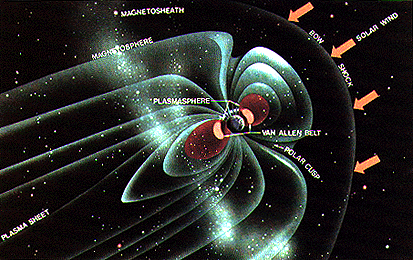
http://www.magneticpoleshift.net/wp-content/uploads/2011/06/poleshift3.jpg

Changes in the Heliosphere

The heliosphere itself has exhibited a dramatic change in behavior over the last ten years. The transition through this increased plasma flux has expanded the heliosphere's bow shock wave in front of the solar system more than ten-fold. Dmitriev gives an extensive catalogue of changes he claims this has caused within the solar system.


Recent Planetary Changes

--Significant physical, chemical, and optical changes observed on Venus; an inversion of dark and light spots detected for the first time and a sharp decrease of sulfur-containing gases in its atmosphere.

--The first stages of atmosphere generation on the Moon, where a growing sodium-based atmosphere that reaches 5,500 miles in height has been detected.

--Changes in the atmosphere of Mars, including a cloudy growth in the equatorial region and unusual growth in ozone concentration.

--Significant melting of the Martian polar ice caps.

--A doubling of the magnetic field intensity on Jupiter after the series of impacts from the fragments of the Shoemaker-Levy comet in 1994; also, the appearance of large auroral anomalies, excessive plasma generation, and radiation belt brightening.

--The creation of an ionic flux tube between Jupiter and the volcanic regions of its moon, Io. This stream of plasma is millions of miles in length and is 1 million amperes in strength. It is affecting Jupiter's magnetic field and intensifying its plasma genesis.

--Reporting of auroras and a visible increase in brightness on Saturn.

--Abrupt large-scale growth of magnetosphere intensity and an increase in brightness on Uranus.

--A change in light intensity and light-spot dynamics on Neptune.

--A growth of dark spots on Pluto.

  Dmitriev notes that Uranus and Neptune, which are magnetically conjugate planets, have both undergone magnetic pole shifts in recent decades. Earth is magnetically conjugate to Jupiter, so he theorizes that the dramatic changes on Jupiter could well have consequences for our planet.

The claim of a direct causal link between the increase in plasma entering the solar system and recent planetary changes is still very controversial, but Dmitriev's research is quite comprehensive and is backed up with extensive scientific references. It seems likely that the increase in this cosmic energy does have some role to play in influencing climate, but it may be one of many contributing factors, rather than a sole cause. Dmitriev himself points out that planetary changes are complex affairs with many interdependent factors. It is the total sum of all these influences that actually determines what happens.


http://www.vorchester.com/vnews/images/solar_flare.jpg

Changes to the Sun

There have also been some recent dramatic changes to the Sun. The Ulysses spacecraft sent by NASA to measure the magnetic field of the sun found the magnetic fields of the poles enormously diminished. The magnetic poles of the sun usually reverse at the end of an eleven-year sunspot cycle. At the end of the most recent cycle, the poles only moved to the sun's equator and did not completely invert. This behavior alters everything that was previously believed about the sun's magnetic field. Effectively, the sun no longer has a single north or south magnetic pole; instead, it has four poles located in the equatorial regions.

The data gathered by the Ulysses spacecraft showed that the Sun's magnetic field interacts with the rest of the solar system in a much more complex fashion than previously believed. NASA scientists determined that the polar magnetic field is much weaker than previously observed and the amount of cosmic dust entering the solar system is thirty times more than expected.


X-Ray Flares

After the peak of the last eleven-year sunspot cycle in 1999, the sun has had a number of extremely large x-ray flare events. One of these, on April 2, 2001, was so large that it went off the scale completely. The previous scale ran to X-20 as the highest category, but this solar flare had to be categorized as an X-22 event. The x-ray burst was not in the direction of Earth, but a much smaller x-ray flare in 1989 was responsible for knocking out the whole Canadian power grid. If the X-22 event had hit Earth, possible consequences could have included major power outages, interruption of the Internet, damage to telecommunications and GPS satellites, and even the wiping of computer hard drives. The most powerful flare observed since then happened on November 4, 2003. It lasted eleven minutes and produced an x-ray flux of X-28.

The Carrington Event

These recent events, though very significant, are not actually the largest solar flares ever recorded. That honor goes to a flare that happened on September 1, 1859. This has become known as the Carrington event after Richard Carrington, the young English astronomer who saw the event as it happened from his private observatory.

It was a remarkable piece of luck that he happened to be observing the sun at the particular moment that the flare erupted, because the event lasted for less than five minutes. In that time, a huge knot of sunspots appeared and generated a plume that was by far the biggest observed in the 160 years records have been kept.

Before dawn on the following day, a huge firework display of auroral lights bathed Earth, reaching as far south as the Caribbean. The rainbow-hued lights were so brilliant that it was said to be possible to read by them as if it were daylight. The Carrington event also caused major disruption to the telegraph system worldwide.

Conventional astronomy suggests that a flare of this size may only happen once every 500 years or so, but even greater flares have been observed on other stars. Some of these stellar megaflares have emitted quantities of radiation that would be likely to cause major loss of life on Earth.


http://www.sott.net/image/image/s2/56538/full/01superstorm_thumbstills.jpg

The Maunder Minimum

Sunspot activity has been broadly increasing since the Maunder minimum period from 1645 to 1715, when there were very few sunspots. At a typical peak of the sunspot cycle, there may be as many as 1,000 spots a year, but during the Maunder minimum the number of spots dropped as low as one or two a year for a thirty-year period. This was also the peak of what has been called the Little Ice Age. This was a period of approximately 400 years, from the fifteenth to the nineteenth centuries, when the drop in temperature was so great that the winter mortality rate in Europe increased dramatically. In London, the river Thames froze over completely every winter. The edge of the Atlantic ice pack moved southward during the Maunder minimum and glaciers started expanding.

The Maunder minimum was named after the astronomer Edward Maunder, who measured and photographed sunspots at the Greenwich Royal Observatory. It was his studies of this unusual period in history that led to his discovery of the important eleven-year sunspot cycle.


Sunspot Cycles

The general increase in the Sun's activity has been consistent for more than 100 years, but it seems to have reached a peak in sunspot cycle 22 from 1986 to 1996. Sunspot cycle 23 began in 1996 and ended in 2008. The cycle was six months late and weaker than normal.

Cycle 24 was due to start in March 2008, but it is more than a year late already. As of March 2009, there was still no sunspot activity whatsoever. This is the longest period that the sun has been spotless for more than 100 years. Considering the maximum of this cycle is due in 2012, this might seem to suggest that the peak of the cycle may again be less than the recent average. Yet, generally this cycle is still predicted to be 30-40 percent more intense than the last one. The official prediction of the NOAA Space Weather Prediction Center is a peak of ninety sunspots in August 2012. There are also some predictions that delay in the cycle may cause the sun to suddenly burst into violent activity with another series of x-ray megaflares in the X-20+ range, or even cause another Carrington event.

NASA's THEMIS satellite found that a 4,000-mile-thick layer of solar particles has gathered and is rapidly growing within the outermost part of the magnetosphere, a protective bubble created by Earth's magnetic field. This is causing a breach in the planet's magnetic defenses. This is not a problem at solar minimum, but at peak solar activity it could allow up to twenty times more plasma to impact Earth, making some of the worst solar storms in decades possible.


Solar Shutdown

The sharp downturn in the sunspot cycle may mark the point where solar activity significantly decreases as the sun enters the beginning of another minimum period. The result of this would be dramatic cooling; in some ways, it could have worse consequences than global warming. The lack of activity in solar cycle 24 has prompted concerns about this.

This shift in global temperature could have a substantial impact on the agricultural belts of Europe, North America, and Russia, which are responsible for a substantial part of the world's current food supply These are vulnerable to a downward temperature change of more than a few degrees. Greater decreases in temperature are certainly possible if the sunspot cycle fails to gain momentum.

For Europe, the possible collapse of the gulfstream and its underwater equivalent, the Atlantic warm convector, could signal a massive change in climate. The warming these currents provide prevents European countries from being as cold as those on the equivalent latitudes in North America. Without them, some of the most populated parts of the European continent would be under Arctic conditions.


 http://www.bibliotecapleyades.net/imagenes_ciencia/earthchanges24_01.gif

Cosmic Rays and Climate Change

Dmitriev is not the only scientist who thinks this influx of cosmic rays has a major part to play in the recent increases in global temperature. Henrik Svensmark is the head of Center for Sun-Climate Research at the Danish Space Research Institute. In his book The Chilling Stars: A New Theory of Climate Change, he suggests that when cosmic radiation, especially protons, hit Earth's atmosphere, the reaction they cause has the effect of creating clouds. The more cosmic rays there are the greater the cloud cover.

A shutdown in solar activity and a decrease in the magnetic field of the sun leave our planet more open to the influx of plasmic energy from outside the solar system. This then leads to an increase in cloud cover and the kind of climate change we are now seeing. Svensmark predicts we could be about to enter a new Maunder minimum-like period and that global temperatures are about to rapidly cool.

Dr. Nir Shaviv, an astrophysicist, also thinks cosmic rays affect our planet's climate. By reconstructing the temperature on Earth over the past 500 million years, Shaviv thinks he has found that changes in the amount of cosmic rays are responsible for more than two-thirds of Earth's temperature changes, making it the most important driver of climate change over long periods of time.

Shaviv hypothesizes that the sun's passage through the spiral arms of the Milky Way appears to have been the cause behind the major Ice Ages over the past billion years. He has correlated variations in the cosmic-ray flux to the solar system's orbit around the center of the galaxy and through its spiral arms. In the more crowded spiral arms, like our Orion arm, there is a higher density of cosmic rays. Shaviv agrees with Svensmark that the result of this increase is that Earth becomes cooler.

The study of meteorites that have hit Earth during its passage through the arms of the Milky Way have shown up to 10 percent more cosmic-ray damage than those sustained elsewhere. Shaviv believes that kind of cosmic ray variation could alter global temperatures by as much as 15 percent. This would be sufficient to turn the Ice Ages on or off.

Both Svensmark and Shaviv are considered climate skeptics who dispute the extent to which the creation of greenhouse gases is contributing to the current climate change. The year 2012 is significant in the context of research into cosmic rays because:

--It coincides with the next predicted solar sunspot maximum, and recently discovered breaches in Earth's magnetosphere make us more vulnerable to solar-flare events.

--The effects of increased cosmic dust and radiation entering the solar system will be likely to accelerate by this point, which coincides with 2012.

According to these scientists, whether the planet cools or heats up depends on the balance of solar activity and cosmic radiation.

It is not necessary to agree to with their views on climate change to share their conclusion that an increase of cosmic radiation may cause significant changes. Svensmark points out that it is actually well established and uncontroversial that solar activity has a direct influence on the eleven-year variation of stratospheric pressure levels found in the upper atmosphere. The electromagnetic fields of our planet are highly sensitive and respond to a range of influences from solar wind to tropical storms. A tenfold increase in cosmic radiation is likely to affect these fields and the upper and lower atmosphere of the planet in ways that may be unpredictable. The debate is to what extent and how these changes will manifest.


Earth Changes and the Pole Shift

In the approach to 2012, Earth is undergoing a variety of major geophysical changes unprecedented in scale and effect. The causes of some of these appear to be manmade, but others appear to be responses to changes in the behavior of the sun and an increase in cosmic radiation. There is widespread speculation linking these events with a planetary catastrophe in 2012, possibly a reversal of Earth's poles.


Earth Changes

The fact that Earth's climate is in a state of rapid change is now well established. Climate change is a notoriously difficult area in which to make accurate predictions. One of the major problems is that science has become very specialized, which makes assessing all the different factors that act on a system as large as a planet challenging. While the unusually high concentration of carbon dioxide in the atmosphere is certainly having some effect on climate, the influence of solar activity and cosmic rays on global temperature may be equally, if not more, important. If the sun's behavior changes, Earth's climate is likely to respond. Assessing these trends and the balance of probabilities is a matter of fierce debate.

Other important changes are also happening. There appears to be an increase in the number and severity of extreme weather events such as tropical storms, flash flooding, droughts, and tornadoes. There is also evidence that major geophysical events like earthquakes and volcanic activity appear to be increasing substantially. For instance:

--In the last fifty years, the number of tornadoes has doubled and there has been a dramatic increase in the geographical area in which tornadoes are found.

--The number of recorded earthquakes in the last century has increased by 500 percent and measurements of volcanic activity are up by at least 200 percent. This may be at least partly due to the increase in the number of seismic and volcanic detectors around the world. The spread of humans into what were once remote parts of the world may also be a factor.


Increase in Plasma

The increase in plasma entering our solar system affects our planet in a variety of ways. The incoming plasma is magnetized to the poles of the earth and concentrates in these regions, creating the effect of the polar auroras. The radiation belts around the planet and Earth's magnetic field are also affected. Scientists from the Russian Academy of Sciences are predicting wide-ranging and various changes for our planet. The direct effects of increasing cosmic rays include:

--Increased plasma generation in the ionosphere.

--Increased magnetic storms in the magnetosphere.

--Increased number of cyclones in the atmosphere.

K. M. Hiremath, from the Indian Institute of Astrophysics in Bangalore, has studied variations in the Asian monsoons and concluded that there is a causal connection between solar activity, incoming cosmic rays, and rainfall. He has also found a significant connection with the cycles of El Niño.


The Magnetic Pole Shift

Dmitriev's point of view on the pole shift is that it is already happening. In fact, he believes that the shift actually began in 1885. In the last 100 years, Earth's magnetic south pole has traveled almost 560 miles toward, and into, the Indian Ocean. The magnetic north pole has moved more than 170 miles between 1973 and 1994 in the direction of Siberia via the Arctic Ocean. The rate of the magnetic pole's movement has also increased in the last century compared with fairly steady movement in the previous four centuries.

Oregon State University researchers investigating the sediment record from Arctic lakes have been able to use carbon dating to track changes in the magnetic field. They found that the north magnetic pole has shifted significantly in the last 1,000 years. It generally migrated between northern Canada and Siberia, but has occasionally moved in other directions. The causes of these magnetic changes are related to changes in behavior of the electrical flow in the iron at the core of the planet. This, in turn, is influenced by incoming plasma at the poles of Earth.

Earth's magnetic field is not uniform and is becoming less so. There are a number of areas called world magnetic anomalies that generate a substantial magnetic field independently of the two poles. The four most significant ones are in Canada, Siberia, Antarctica, and Brazil. These anomalies have recently undergone significant growth.

Earth's magnetic field has decreased by around 10-15 percent in strength since it was measured by Carl Friedrich Gauss in 1835. Fluctuations in the magnetic field are cyclical, and a downward trend has been observed for around the last 4,000 years. Most scientists believe this trend could just as easily reverse.

Dmitriev thinks the movement in the magnetic poles and the growth in magnetic anomalies indicate something very dramatic is going on in the core of our planet. The scale of these changes indicates something beyond even the magnitude of the Gothenburg magnetic flip event that happened around 14,200 years ago, when the magnetic poles migrated to near the equator. He believes the signs suggest a complete magnetic pole reversal is already underway.

Dmitriev estimates the speed of this process will increase to around 125 miles or more a year in the near future, and that we should prepare for the consequences of this in a globally coordinated way. The appropriate response, he says, should be to draw up a "global, ecology-oriented, climate map which might reveal (the location of) these global catastrophes."


The Impact of Technological Civilization on the Biosphere

One of the most important and unpredictable variables in the process of rapid magnetic change that Dmitriev reports is the effect our industrial and technological civilization is having on our planet. The extent of human impact on the biosphere is now so great that we are impacting the electromagnetic skeleton of the planet. More than 30 percent of disturbances in the magnetosphere are now caused by electricity production, transmission, or consumption.

For example, the Van Allen radiation belts over the eastern United States have moved inward from more than 200 miles above the surface of the planet to slightly more than six miles. This is caused by the massive amount of energy being transmitted between the power stations around the Great Lakes to the eastern seaboard. The transmission route runs along one of Earth's magnetic meridians, and the frequency of electricity transmission in the United States is at 60Hz, which is resonant with the ionosphere.


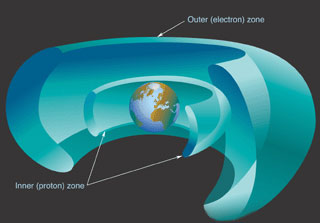
http://www.redicecreations.com/news/2005/10oct/poleshift1.jpg


What are the Van Allen radiation belts?

These are two belts of plasma surrounding Earth that are held in place by the planet's magnetic field. The inner belt extends 200-6,000 miles from Earth's surface and has a high concentration of protons. The outer belt extends 12,000-26,000 miles and is made of electrons.

This is just one of the many ways in which we are changing our electromagnetic environment, potentially with unforeseen consequences. This may well dramatically complicate the changes that already appear to be happening as a result of the extra-solar energy shift. Dmitriev regards these events as irreversible and fundamental. Possible outcomes, he predicts, may include a major reorganization of life on Earth. He concludes that the combination of the manmade technological impact on the planet and the increase of magnetic saturation coming into the solar system mean we are entering a period of rapid and unstoppable geophysical change.


Changes in the Magnetic Field Affecting Nature

Some species and habitats are more sensitive than others to the effects of these changes. Unfortunately, some of those animals and insects that may be most severely affected occupy key ecological niches in the world's ecosystem.

Bees

The rapid decline in bee population, known as Colony Collapse Disorder (CCD), may be a symptom of the change in the earth's magnetic polarity. While some scientists believe that bees find their hives by following polarized lines of light in the sky, research at National Tsing Hua University of Taiwan into magnetic reception in bees has shown the presence of magnetite. This suggests they have magnetic homing senses.

Changes in Earth's magnetic field and the influence of manmade electromagnetic pollution are possible causes of the dramatic bee decline. A survey commissioned by the Apiary Inspectors of America found losses of more than 30 percent in the bee population from CCD. Some scientists estimate that life on Earth is so dependent on bee pollination that the current human population would be unable to feed itself just eight years after the collapse of the bee colonies.


Whales

Whales may also have a biomagnetic sense, which allows them to navigate by sensing Earth's magnetic fields. Whales following magnetic field lines could beach themselves in areas where the field lines intersect with the coast.

A study in the United Kingdom by Margaret Klinowska found a correlation between local magnetic field lines and sites where whales were stranded on shore. The biomagnetic theory may also explain why there are multiple-species strandings. The use of underwater sonar has also been implicated in whale beachings.


Frogs

The weakened magnetosphere allows more ultraviolet light to penetrate through the atmosphere to the surface. Frogs and other moist-skinned amphibians are among the species most sensitive to these increases in ultraviolet radiation. There has been a recent sharp decline in frog and other amphibian populations in both tropical and temperate climates.
 

Humans

New Scientist magazine has reported research showing how human behavior is influenced by changes in Earth's magnetic field. Oleg Shumilov of the Institute of North Industrial Ecology Problems in Russia looked at activity in Earth's geomagnetic field from 1948 to 1997 and found that it grouped into three seasonal peaks every year: one from March to May, another in July, and the last in October. He also found that geomagnetism peaks matched up with peaks in the number of emotional disorders such as depression, anxiety, mood swings, and even suicides in the northern Russian city of Kirovsk.

 
Responding to the Electromagnetic Crisis

If the rapid increase in manmade electromagnetic emissions is left unchecked, it seems likely there will be an increase in consequences for human health and the health of the biosphere. The combination of a number of other geophysical effects converging in 2012 may mean that this impact is compounded. These effects include:

--Weakened magnetosphere.

--Solar maximum due in 2012.

--Increase in interstellar plasma and cosmic rays.

--Movement of the magnetic poles.

One possible scenario is that at the solar maximum around 2012, a massive solar eruption on the scale of the Carrington event could pass through the weakened magnetosphere of Earth. This could massively impact our global communications systems and computer networks and dramatically accelerate the changing motion of the magnetic poles. If the magnetic flux of the flare event is of sufficient magnitude to overwhelm the ring main of Earth's magnetic field, it could theoretically produce a rapid magnetic pole shift.

The sun's recent behavior does suggest that major solar eruptions are quite likely at the next solar maximum. The Carrington event megaflare happened at the end of the 300-year-long solar shutdown of the Maunder minimum period. This was followed by more than 100 years of increased solar activity on the sun. During this period, the strength of the sun's magnetic field more than doubled. The recent decline in the sun's polar magnetic field may mark the end of that warm period.

It may be that during the shift to a colder period, the sun's behavior goes into oscillation between less and much greater activity, increasing the likelihood of megaflare events. It is also possible that a Carrington event megaflare could signal the beginning, as well as the end, of one of these periods of much decreased solar activity and colder temperatures on Earth. The flare that caused the shutdown of the Canadian power grid in 1989 was rated as an X-20 event; a Carrington event flare could be twenty times that size.


http://www.2012-info.net/image/40390967.jpg

Electromagnetic Disruption

In the event of a really large solar event, not only might our electromagnetic infrastructure be damaged, but the resulting impact on the biosphere may require us to act to stabilize the electromagnetic field of the planet. This may require turning off sources of electromagnetic pollution that are considered essential services.

Some of the major industrial sources of electromagnetic disruption include:

--Electricity power grids.

--Mobile phone networks.

--Satellite communications networks.

--ELF communication systems.

--Radar.

--Microwave networks like WiFi and CCTV monitoring systems.

--Auroral research projects like HAARP.


Power Lines

Power lines lose energy in the process of transmission. Where power lines are very long, they can lose as much as 40 percent of the total energy transmitted. This electromagnetic energy leaking out into the atmosphere has a very pronounced effect on the ionosphere and can cause it to warp and bend. Many major power lines transport currents in the range 750 megavolts and some carry up to 1,500 megavolts. Extremely low frequency (ELF) waves from power lines are probably the biggest source of manmade electromagnetic radiation into Earth's atmosphere. ELF pollution has been doubling every decade for the last thirty years, and the average intensity of the manmade ELF magnetic fields is now more than ten times stronger than the natural planetary and cosmic background. Other significant contributors to ELF pollution include radar stations and hydroelectric power plants.


Electromagnetic Warfare

The electromagnetic spectrum has been used in the past for more than energy transmission and communication. On July 4, 1976, a radio mast in Kiev started emitting a complex harmonic ELF signal based around 11 Hz that spread across the world. This powerful signal upset radio communications everywhere and was named the Russian woodpecker after the buzz-saw sound it made. The intention behind this was to deliberately broadcast frequencies that were damaging to human health and mental well-being. These transmissions ended after the fall of the Soviet Union, but they illustrate how much influence ELF signals can have. ELF waves will penetrate anything and everything, which is why ELF transmissions are used for submarine communication.


http://api.ning.com/files/*sf-w3DBVv3A9ovCA07Izm6zXwc4NA8lT*DsChlSuKFJ3Ab20eZlW5-u2kJQC*YEN6ws*nEHXxf0j80vrKDZoOnmAWGFpIe-/708622097.jpeg

HAARP and Disruption of the Ionosphere

The highly controversial High-Frequency Active Auroral Research Program (HAARP) is the most versatile and largest radio-frequency radiation transmitter in the world. The HAARP Ionospheric Research facility based in Alaska is a high-power transmitter and antenna array operating in the high-frequency (HF) range. The transmitter is capable of delivering up to 3.6 million Watts to an antenna system consisting of 180 antennas arranged as a rectangular array.

HAARP's research focuses on plasmas and the relationship between the sun's energy and events on Earth. There have been some claims that HAARP could perform significant weather-control experiments. Radio operators monitoring HAARP transmissions noticed a correlation between RF output from the station and the growth of hurricanes Katrina and Rita into dangerous storms in 2005. This may be coincidental, but the ionosphere is delicate. High-energy physicist Dr. Elizabeth Rauscher has predicted that if a big enough hole is punched through it, it could pop.

A major breach in the planet's ionosphere, on top of its already weakened magnetosphere, could change the effect of a major solar event from severe to potentially disastrous. The ionosphere is part of a complex system responsible for stabilizing the planet's atmosphere. The hole in the ozone layer, which has been caused by the human production of chlorofluorocarbons (CFCs), is an example of the kind of negative impact human activity can unexpectedly have on the sensitive upper atmosphere.

Even radical action to reduce the electromagnetic impact of humans may not stabilize a magnetic pole shift whose progress is already steady and unstoppable. Failure to take action, however, may accelerate the rate of change, which may prove seriously undesirable. A final possibility is that manmade electromagnetic tinkering with Earth's magnetic field may actually induce or catalyze such an event.


Magnetic Versus Physical Pole Shift

In a physical pole inversion of the planet, the planet actually rolls over on its axis. A physical pole shift would likely be catastrophic for the global ecology. One probable consequence would be major crustal displacement, as the flip causes tectonic plates and continents to collide with each other.

Patrick Geryl, author of How to Survive 2012, strongly believes a complete magnetic pole reversal will inevitably trigger a disastrous physical pole shift, simply because Earth's core is iron and therefore will respond to the new polarity. This is an overly simplistic view that is not supported by scientific or historical evidence.

There is no evidence that this has happened during previous magnetic pole shifts and nothing to indicate why it should happen this time. An event like this has happened once before in the geological record, but not for many hundreds of millions of years. His belief that a pole shift is certain in 2012 has led Geryl to conclude that the only reasonably safe places to be in such an event will be in special unsinkable ships or deep underground, high up in a major mountain range. Even then, survival is not guaranteed.

Geryl believes Earth reversing its direction of spin will initiate the pole shift. This idea comes from Greg Braden's book Approaching Zero Point, in which he examines a scenario where Earth's rotation actually slows, momentarily stops, and then reverses in the opposite direction This theory would require an unknown force to negate Earth's spin, slow it to a halt without tearing the crust of Earth from its mantle, and then reverse the force so that Earth spins in the opposite direction. The forces responsible for the miniscule slowing Earth is already undergoing would in no way be adequate to do this, nor would any other known force in our solar system.


http://www.netegory.net/wp-content/uploads/2011/11/magnetic+pole+shift.jpg

The Schumann Frequency

Another idea put forward in Braden's Approaching Zero Point is that the fundamental frequency of the earth is shifting upward. This change in planetary vibration is said to be responsible for creating the current Earth changes. The frequency Braden is talking about is called the primary Schumann resonance. This is a function of the amount of time it takes for electromagnetic waves to travel around the planet. It is calculated by dividing the speed of light by the circumference of Earth.

The primary Schumann frequency is 7.8Hz, and varies slightly with changes in the ionosphere. Neither the speed of light nor the circumference of Earth is changing, so the primary Schumann resonance is not going to fundamentally alter either.

Despite the scientific inaccuracy, Braden should be given credit for articulating ideas whose popularity seem to come from their resonance with many peoples' intuitive perceptions of the changes happening on our planet. The vibrations of our planet are changing, but in a much more complex way unrelated to the Schumann frequency.

The notion of Earth reversing its direction of spin mirrors in some ways the much more subtle change of polarity represented by the winter solstice meridian crossing the galactic equator. The science may be wrong, but the notions of a pole shift and an ascending planet tap into the popular psyche in a powerful way. Better science can reveal much more and help us get a clearer view, but the value of new ideas and speculations like these is that they get people to ask important questions.

The kind of massive tsunami in the movie 2012 would probably only be induced by a physical pole shift rather than a magnetic one. An event of this magnitude could possibly trigger a wave of water a mile and a half high that could circumnavigate the globe. Very little of human civilization would be likely to survive.

The mechanism of a magnetic pole reversal is not well understood and the consequences are difficult to quantify, but they are likely to be some significant ones, including major climatic disruption.

--Some scientists think that the poles can spontaneously migrate from one orientation to the other over the course of a few decades to a few thousand years.

--Others think the geodynamo at the earth's core first turns itself off spontaneously and then restarts itself with the magnetic North Pole pointing either north or south.

--External events such as an asteroid impact are not thought to cause magnetic field reversals. The ages of impact craters do not line up with the timing of previous reversals.

--The mainstream scientific opinion is that the current wandering of the magnetic poles does not foretell a magnetic pole shift and no such event is likely in our immediate future.

The historical record shows, however, that magnetic pole shifts are quite frequent events over a geological time scale and it is inevitable that one will happen sooner or later. This could be as long as a few thousand years away but it will certainly happen at some point, as it has happened many times before. In the last 25 million years, the poles have inverted once every 250,000 years, on average. In the last million years, the inversions have happened closer to once every 125,000 years. Estimates for the amount of time a magnetic field reversal would take to complete vary widely, from 5,000 years to a couple of months.


Magnetic Field Drops to Zero

As the magnetic field inverts, the strength of the magnetosphere would likely drop to zero. This would mean our main planetary defense against incoming cosmic radiation would be removed. There is a theory that these periods of magnetic cancellation are responsible for jumps in evolution because the massive increase in cosmic radiation triggers genetic mutations.

An extended period of magnetic cancellation and increased exposure to the solar wind could also result in major disruption to life and possible species extinction. In some ways, a rapid pole reversal may be more desirable than a slower one. At least a functioning magnetosphere provides protection from the solar wind.


The Chandler Wobble

A good indicator of the possibility of changes in the physical poles of Earth is an effect called the Chandler wobble. This is the change in the spin of the earth on its axis. It's named after Seth Carlo Chandler, an American astronomer who first discovered the wobble back in 1891 after thirty years of observations. The effect causes Earth's physical poles to move in an irregular circle. This wobble has a seven-year cycle. The wobble:

--Produces a very small ocean tide, the pole tide, which is the only tide not caused by bodies outside Earth.

--Has varied in amplitude since its discovery, reaching its largest size in 1910 and fluctuating noticeably from one decade to another.

--Is caused by fluctuating pressure on the bottom of the ocean, caused by temperature and salinity changes and wind-driven changes in the circulation of the oceans, according to the Jet Propulsion Laboratory

Independent researcher Micheal Mandeville of www.earthchanges-bulletin.com has been exhaustively analyzing trends in seismic and volcanic activity from around the world. Using a very detailed statistical analysis, Mandeville claims to have found correlations between the position and motion of the pole with increases and decreases in earthquakes and volcanic eruptions. These correlations are sufficiently consistent, he claims, to conclude that the Chandler wobble stresses Earth's crust, which in turn creates a cycle of earthquakes and volcanic activity.

The Anomaly of the Wobble

For a six-week period beginning in November 2005, there was no discernable wobble motion in Earth. The track of the spin axis began to slow down, and by about January 8, 2006, it ceased nearly all relative motion. Mandeville suggests that the anomaly in Earth's wobble could be a response to the massive earthquake and the devastating tsunami of December 26, 2004.

After an initial earthquake that measured 9.3 on the Richter scale, a cluster of several thousand earthquakes followed, including dozens of earthquakes greater than 6.0 in magnitude and at least three above 7.0. This caused substantial uplifting, down-warping, and lateral movement in the two tectonic plates that could have ruptured their mutual junction.

The scale of this tectonic activity is by far the greatest on the planet in the last twenty years. Mandeville theorizes this could have caused warping that pushed the Indian continental plate deep enough down into the liquid mantle of Earth to cause a measurable drag on the spin of the equator.

Another contributing factor to this anomaly may be the shifting location of the magnetic north pole, which is currently migrating toward the north spin axis of the wobble. During the past eighty years, for unknown reasons, this rate of drift has been accelerating. The change of the wobble and the drifting of the pole may be seen as symptoms of the early stages of a pole reversal. However, neither of these events necessarily means a complete inversion is imminent or likely.

Alternate Theories

An extended wandering of the poles, also known as a geomagnetic excursion, remains more likely than a complete reversal. The most compelling evidence that a complete pole reversal may be about to occur comes from Dmitriev's theory that incoming interstellar plasma is responsible for current planetophysical changes. The poles of both Uranus and Neptune have both flipped within the last decade. If this is due to the influx of interstellar plasma into our solar system as Dmitriev believes, our own planet is being subjected to these same conditions.

It is not necessary to insist that a pole shift must be about to occur in 2012 to conclude that Earth is entering a period of major geophysical change. There are many contributing factors to this, including increasing cosmic radiation, climate change, and the technological impact of humanity.

On the other hand, the combination of the weakening of Earth's magnetosphere, the large increase in interstellar plasma, and the solar maximum due in 2012 may produce large-scale effects for life on Earth. Given these circumstances, the possibility of a sudden magnetic pole shift cannot be completely discounted, but it is far from inevitable. However, most scientists think a magnetic pole shift is highly unlikely in the near future and that it would be gradual, rather than sudden. 

heley big.jpg


excerpted from The Everything Guide to 2012released in 2009 by F+W Media, Inc.

From reality Sandwich @ http://www.realitysandwich.com/polar_reversals


For further enlightening information enter a word or phrase into the search box @  New Illuminati or click on any label/tag at the bottom of the page @  http://nexusilluminati.blogspot.com


And see

The Her(m)etic Hermit - http://hermetic.blog.com


This material is published under Creative Commons Fair Use Copyright (unless an individual item is declared otherwise by copyright holder) – reproduction for non-profit use is permitted & encouraged, if you give attribution to the work & author - and please include a (preferably active) link to the original along with this notice. Feel free to make non-commercial hard (printed) or software copies or mirror sites - you never know how long something will stay glued to the web – but remember attribution! If you like what you see, please send a tiny donation or leave a comment – and thanks for reading this far…

From the New Illuminati – http://nexusilluminati.blogspot.com