"All the World's a Stage We Pass Through" R. Ayana

Thursday, 22 October 2009

US paid reward to Lockerbie witness, Abdelbaset al-Megrahi papers claim

US paid reward to Lockerbie witness, Abdelbaset al-Megrahi papers claim

Scottish detectives discussed secret payments of up to $3m made to witness and his brother, documents claim

Abdelbaset Ali Mohmed Al Megrahi boards a plane at Glasgow Airport 
Abdelbaset al-Megrahi's documents would have formed part of an appeal against his conviction for the Lockerbie bombing. Photograph: Danny Lawson/PA

Two key figures in the conviction of the Lockerbie bomber were secretly given rewards of up to $3m (£1.9m) in a deal discussed by Scottish detectives and the US government, according to legal papers released today.
The claims about the payments were revealed in a dossier of evidence that was intended to be used in an appeal by Abdelbaset al-Megrahi, the Libyan convicted of murdering 270 people in the bombing of Pan Am flight 103 in 1988.

Megrahi abandoned his appeal last month after the Libyan and Scottish governments struck a deal to free him on compassionate grounds because he is terminally ill with prostate cancer. Now in hospital in Tripoli, Megrahi said he wanted the public to see the evidence which he claims would have cleared him.

"I continue to protest my innocence – how could I fail to do so?," he said. "I have no desire to add to the upset of many people I know are profoundly affected by what happened in Lockerbie. My intention is only for the truth to be made known."

The documents published online by Megrahi's lawyers today show that the US Department of Justice (DoJ) was asked to pay $2m to Tony Gauci, the Maltese shopkeeper who gave crucial evidence at the trial suggesting that Megrahi had bought clothes later used in the suitcase that allegedly held the Lockerbie bomb.

The DoJ was also asked to pay a further $1m to his brother, Paul Gauci, who did not give evidence but played a major role in identifying the clothing and in "maintaining the resolve of his brother". The DoJ said their rewards could be increased and that the brothers were also eligible for the US witness protection programme, according to the documents.

The previously secret payments were uncovered by the Scottish Criminal Cases Review Commission (SCCRC), which returned Megrahi's conviction to the court of appeal in 2007 as a suspected miscarriage of justice. Many references were in private diaries kept by the detectives involved, Megrahi's lawyers said, but not their official notebooks.

The SCCRC was unable to establish exactly how much the brothers received under the DoJ's "reward-for-justice" programme but found it was after Megrahi's trial and his first appeal in 1992 was thrown out.

A memo written by "DI Dalgleish" to "ACC Graham" in 2007 confirms the men received "substantial payments from the American authorities".

The inspector claims the rewards were "engineered" after Megrahi's trial and appeal were over, but said there was "a real danger that if [the] SCCRC's statement of reasons is leaked to the media, Anthony Gauci could be portrayed as having given flawed evidence for financial reward." Instead, he claimed, the reward was intended to ensure the Gaucis could afford to leave Malta and start new lives "to avoid media and other unwanted attention".

However, the documents disclose that in 1989 the FBI told Dumfries and Galloway police that they wanted to offer Gauci "unlimited money" and $10,000 immediately. Gauci began talking of a possible reward in meetings with Dumfries and Galloway detectives in 1991, when a reward application was first made to the DoJ.

The evidence, which was due to be heard by the appeal court next month, also discloses that Gauci was visited 50 times by Scottish detectives before the trial and new testimony contradicting the prosecution's claims that Megrahi bought the clothes on 7 December 1988 – the only day he was in Malta during the critical period.

In 23 police interviews, Gauci gave contradictory evidence about who he believed bought the clothes, the person's age, appearance and the date of purchase. Two identification experts hired by Megrahi's appeal team said the police and prosecution breached the rules on witness interviews, using "suggestive" lines of questioning and allowing "irregular" identification line-ups.

Two new witnesses also disproved the prosecution claim that Megrahi was in Gauci's shop on 7 December, his lawyers said. Gauci said the area's Christmas lights were not on when the clothes were bought. The current Maltese high commissioner to the UK, Michael Rufalo, then the local MP, told the SCCRC the lights were switched on on 6 December, raising further inconsistencies in the prosecution case.

It has also emerged that Scottish police did not tell Megrahi's lawyers that another witness, David Wright, had seen two different Libyan men buying very similar clothes on a different day; evidence that psychologists believe may have confused Gauci and again clouded the prosecution case.

Dumfries and Galloway police said only a court could properly consider this material, and supported previous criticism of Megrahi's decision to release his appeal papers by Elish Angiolini, the lord advocate. "We will not be taking part in any discussion or debate concerning the selective publications made by Mr Megrahi," a statement said.

"We have nothing more to add other than to echo the lord advocate's recent comments pointing out that Mr Megrahi was convicted unanimously by three senior judges and his conviction was upheld unanimously by five judges, in an appeal court presided over by the lord justice general, Scotland's most senior judge. Mr Megrahi remains convicted of the worst terrorist atrocity in UK history."

A spokesman for the US Department of Justice also refused to comment, since Megrahi had voluntarily withdrawn his appeal. He said: "None of the allegations in the SCCRC referral, or the grounds of appeal filed by Megrahi, were finally adjudicated by the Scottish High Court of Justiary (the appropriate judicial forum) because Megrahi withdrew his appeal before the court could rule. Consequently, the U.S. Department of Justice will not comment further on his aborted appeal."

See also – Megrahi: 'A convenient scapegoat?'

More on this story


For further enlightenment enter a word or phrase into the search box @  New Illuminati:


And see

The Her(m)etic Hermit - http://hermetic.blog.com


This material is published under Creative Commons Copyright (unless an individual item is declared otherwise by copyright holder) – reproduction for non-profit use is permitted & encouraged, if you give attribution to the work & author - and please include a (preferably active) link to the original along with this notice. Feel free to make non-commercial hard (printed) or software copies or mirror sites - you never know how long something will stay glued to the web – but remember attribution! If you like what you see, please send a tiny donation or leave a comment – and thanks for reading this far…

From the New Illuminati – http://nexusilluminati.blogspot.com

Tuesday, 20 October 2009

Ram Dass on Attachment And Addiction

Ram Dass on Attachment And Addiction


(9:24) From http://www.youtube.com/watch?v=T3ixRqOauq4&feature=player_embedded


For further enlightenment enter a word or phrase into the search box @  New Illuminati:


And see

The Her(m)etic Hermit - http://hermetic.blog.com


This material is published under Creative Commons Copyright (unless an individual item is declared otherwise by copyright holder) – reproduction for non-profit use is permitted & encouraged, if you give attribution to the work & author - and please include a (preferably active) link to the original along with this notice. Feel free to make non-commercial hard (printed) or software copies or mirror sites - you never know how long something will stay glued to the web – but remember attribution! If you like what you see, please send a tiny donation or leave a comment – and thanks for reading this far…

From the New Illuminati – http://nexusilluminati.blogspot.com


Monday, 19 October 2009

Endless Crusade: Religion poisons everything, but war makes hell on Earth

Endless Crusade

Religion poisons everything, but war makes hell on Earth

https://farm4.staticflickr.com/3697/11022308573_d220c511ce_b.jpg

The new millennial anti-Islamic crusade is progressing apace. Throughout carefully massaged histories written by victors, regional conflicts and major wars have usually been caused by off-the-shelf lies and unconvincing fabrications. This is nothing new; most conflicts are wrought for ‘reasons’ utterly different to those provided to gullible populations of sporty team players and nationalistic ignoramuses.

Everyone knows the one-sided war in Iraq (truly a massacre of innocents, using overwhelming asymmetrical force) was based on so-called ‘sexed up’ intelligence reports. Who did the sexing up – the bald faced lying – that made this all possible? It was lying lawyer/politicians that you probably voted for. Everyone knows the leaders of the ‘free world’ lied to their own citizens as thoroughly as they misled all the other peoples of Earth.

Anyone with half a brain could see what was happening prior to the year 2000, when US Republicans lied and cheated their way back into the White House while the world watched aghast. They’d earlier publicly promised they’d do whatever it took to regain the reins of power - just as, bold as brass in the knowledge that no-one would hold them to account for their crimes, they announced in early 2001 that they’d henceforth be altering intelligence reports. Which is the party that the military perpetually backs and fills and votes for, after all? Who butters the warmongers’ bread – and who recalls that since the 1980s the US economy has been designed to run on war? Without war not only would Amerika fail to dominate the rest of the world, but its economy would immediately collapse. Despite apparent recent changes in voter patterns and in the general zeitgeist, the Bush dynasty of Emperor Georges I and II ended the promise of US democracy and snuffed out the light of liberty. But the writing’s been on the wall for decades.

Credible threats have been thin on the ground since World War Two, and ever since that time most large scale wars and minor military incursions have been based on incredible threats and outright lies. Since the 1970s (at least) ‘intelligence’ has filled the news with subtle and unsubtle prods encouraging Western people to see a war against Islam as inevitable - even as desirable to superstitious fools who think of religions as football teams. The same malefactors have twisted the minds of gullible people in the Islamic world, turning them into a formfitting complement of purblind brutalising warriors.

Defacto crusades can be made to last forever, spilling profits into the coffers of corporate warmongers as swiftly as they spill the blood of innocents into oil-tarred sands. They certainly did so the last time around, when the feudal monarchies of the world conspired in an endless centuries-long struggle to conquer a distant ‘holy land’ and murder any who stood in their way. Those who forget the lessons of history…


http://farm4.static.flickr.com/3070/2611730190_f08e9fed32_o.jpg


Killers for Christ

Everyone knows the Iraq war was based on a lie, and yet the fighting goes on and on and on – longer now than all the bloody years of World War One or Two. Everyone with a memory should recall that hawkish US warmongers planned to invade Afghanistan long before the fabricated emergency of 9/11. They should realise that the ‘Patriot Act’ had been prepared long before that false flag attack, readied to turn the land of the free into a terrified homeland free of the brave and bereft of regard for truth or honour.

It’s obvious now that Weapons of Mass Destruction were always a lie. Many thousands stood in the streets and denounced the lie even before the Long War began. All those intelligent farsighted protesters were derided as ‘unpatriotic’ and ‘cowardly’ and the juggernaut war rolled over millions of innocent people – millions of deaths which fed the maw of bestial corporate clowns in the corridors of power.

A CIA front organisation called ‘al Qaeda’ was stitched up with a crime committed by smiling politicians and their shadowy puppetmasters. Where is this deadly group of terrorists today? Right where they always were – they only exist in the imaginary world of Misters Fixit, the gunman Cheney and brutal Rumsfeld; selling news for Mister Murdoch, NBC, ABC and all the rest of the pile of lowest common denominator crud-sellers, who can’t understand why people won’t believe their lies as readily as they once did.


Has anyone in Amerika – or all their ‘allies’ in crimes against the Afghan people – noticed that the war is no longer against the fictitious al Qaeda, but someone else entirely - the indigenous Taliban? How could this happen, without anyone seeming to notice? Hasn’t anyone read 1984? Hasn’t anyone heard of the historical Great Game, or noted contemporary movents of billionaire-owned gas and oil through vulnerable pipelines in these unstable territories?

And the corporate liars and soap-sellers of the co-opted and mediated mass media have the hide to deride the independent commentators of the Internet. Oil’s ain’t oils and power is power; it’s almost as simple as that.

Meanwhile, the real perps have got away with mass murder as usual! They’re still raking in billions and trillions, laughing all the way to the banks they own as they suck the world dry. Look at oil, at cars and tanks, at GMO foods, nuclear power and weaponry, insecticides, patented lifeforms, bullets and guns; their filthy hands desecrate everything they touch. All substantial manufacturers and miners are owned and/or controlled by the perpetrators of these crimes against humanity, along with the Fortune 500 and any profitable company backed by self-blinding shareholders.

There’s no need to blame scapegoat Jews or the Sultan of Brunei - the pillars of your society are rotten to the core; all your heroes have feet of clay and foreign holiday homes stuffed with cash and servile slaves. They’re the same old barren-minded robber barons of yore, still dressing their corpulent corporate frames in silken cloth and gilded fripperies – and the peasants they own are still too stupid and preoccupied to notice they’re being fattened for slaughter. 

How could Amerikans – whose nation was forged in protest and revolt against distant murderers, tyrants who ruled with a sense of unending entitlement, stand by and allow this to happen to their country – and, because of this dereliction, to the entire world?

https://blogger.googleusercontent.com/img/b/R29vZ2xl/AVvXsEhAeP-D2S1d8IVPA8p7wX3NB8KkTnfJsq7DZJS8aC_uM96V7oG67vtnU5tcUh8OLOrmt3EMharhyS0QONOtIwLTthF2MiZ-h4qh5FyZ_eTwhlFV-yE76wTdTMQhcEtnC5kM7WsB6NwyUps/s400/06Dore_Crusades024.jpg


Long Time, Short Memory

All these events have been on the drawing board for a VERY LONG TIME. When I heard what was planned for the New Millennium back in the 1970s, the events of our era had already been plotted, believe it or not. Yet it seemed outlandish to expect educated populations to Fall for these age-old tricks, even if they’d still worked so well in the trumped-up Vietnamese phoney war. It seemed unlikely that an unending ‘crusading’ war wouldn’t be seen for what it was by the newly educated populations of wealthy nations – an endless money-making exercise in a new incarnation of the same old Royal Game.

It seemed unlikely that the world’s people would be blinded to the death of the planetary ecosystem and the rape of a dying world by the fog of manufactured wars; unlikely that they’d fail to see what was happening under their very noses, crimes committed by their own hands. Unlikely they’d allow the Nazis to take over again, or fail to recognise the same old wolves kitted out in the same old daggy wool.

It seemed foolish to believe that the broken-backed Nations of Islam could be conflated with a ‘credible threat’ that would ensure continual profits for power mongers – or that the ruined Temple of Solomon might eventually become an excuse to start World War Three and implement global control or genocidal policies of conquest; but believe it or not, this madness is still on the cards and the worst is probably yet to come, for the self-proclaimed King of the World desires to be crowned in an establishment befitting the ancient credentials of Rex Mundi.

I was obviously as naïve as all the war-loving dolts in Christendom and Islam.

If you keep people numb and dumb and ensure some or many fall through huge gaps in inadequate social safety nets as examples to the rest, the fearful mug punter will swallow pretty well anything – even tranquillising rat poison in their tapwater and biocides sprayed on their food. Anyone foolish enough to tell them they’re poisoning themselves and their kids will be derided or attacked. As we’ve seen throughout times past, most coopted football-worshipping proles will roll over and present their bellies or loins to grinning death’s head tyrants when real rightist Nazis take over their societies through guile and stealth. They’ll ignore what’s happening so long as it doesn’t happen to them (until it’s too late), blaming ‘socialists’ and ‘do-gooders’ for the demise of liberty while they cry out to unseeable sky gods to save them from themselves.

As I write, the second huge dust storm in as many weeks (supposedly a once-in-a-lifetime event) is coated my lungs with irreplaceable powdered soils, blown thousands of miles from a landscape desiccated by bare dirt farming and daft desperate cattle ranching on unsuitable land. The dust of ages flees to the seas and fertilises this surviving green fragment of a once global paradise, where I type on a solar-powered laptop. The radio news (this slice of paradise is thankfully too far out for TV) is full of meaningless daily financial weather reports and monetarist fluctuations while the real thing – the collapse of the world ecosystem - goes unreported; unprecedented earthquakes, typhoons, tsunamis, landslides, dust storms and even mass murder apparently pales to insignificance compared to a daily rote reading of uneconomical facts and temporary figures.

Even as I write, the apocalypse has already begun; the winds and tides will grow stronger and wilder and civilization will be swept away in a single human lifetime – and all people seem to want is someone (else) to blame for their predictable private woes. Unlikely as it seems, we can still turn it all around. But I’m just jaded enough to believe it probably won’t happen, because people are too selfish to give up a few minor luxuries, too greedy to stop working at soul-sucking jobs that destroy the planet.

They’d prefer their children die before their time, rather than plant a few trees and stand up to their boss, or stand in front of bulldozers that are killing the one true Mother of us all. They prefer to borrow irreplaceable time with plastic cards to buy useless crap from monstrous killers. They prefer to watch rigged corporate sport and dopey game shows, rather than stand up to be counted in the only struggle that really counts – the honourable quest to save the world, preserve the forests and animals and free the people from the unnecessary yokes of stock markets, murderous billionaires and the pervasive illusion of money.

Democracy has already been snuffed out, not just in Amerika but in most other nations and corporations. Time to resurrect it. That’s one real task facing us all, and a far easier job than the rehabilitation of the planet. How can the will of humankind be heard and acted upon in this Brave New Millennium? How can we salvage victory from the ashes of this woeful defeat of all that is good in our hearts and minds? How can we forget the religiously ingrained dreams of apocalyptic ruin and stupid mass death and replace these old superstitions with something more positive? How can we rise above the lies that our parents believed, and stuffed down our throats with fearful glances over hunched shoulders?

It’s the end of the world as we know it. We have to change our hearts or die. It’s as simple as that. It’s up to you. See you in paradise – a paradise on Earth! The other options aren’t worth considering, and besides; no-one will be allowed off the planet until they’ve cleaned up their mess!

- R. Ayana


http://farm4.static.flickr.com/3070/2611730190_f08e9fed32_o.jpg
https://blogger.googleusercontent.com/img/b/R29vZ2xl/AVvXsEhAeP-D2S1d8IVPA8p7wX3NB8KkTnfJsq7DZJS8aC_uM96V7oG67vtnU5tcUh8OLOrmt3EMharhyS0QONOtIwLTthF2MiZ-h4qh5FyZ_eTwhlFV-yE76wTdTMQhcEtnC5kM7WsB6NwyUps/s400/06Dore_Crusades024.jpg


For further enlightenment enter a word or phrase into the search box @  New Illuminati:


And see

The Her(m)etic Hermit - http://hermetic.blog.com


This material is published under Creative Commons Copyright (unless an individual item is declared otherwise by copyright holder) – reproduction for non-profit use is permitted & encouraged, if you give attribution to the work & author - and please include a (preferably active) link to the original along with this notice. Feel free to make non-commercial hard (printed) or software copies or mirror sites - you never know how long something will stay glued to the web – but remember attribution! If you like what you see, please send a tiny donation or leave a comment – and thanks for reading this far…

From the New Illuminati – http://nexusilluminati.blogspot.com

Sunday, 18 October 2009

How RFID Tags Could Be Used to Track Unsuspecting People

How RFID Tags Could Be Used to Track Unsuspecting People

A privacy activist argues that the devices pose new security risks to those who carry them, often unwittingly

By Katherine Albrecht

http://cache.gizmodo.com/assets/images/gizmodo/2008/08/rfid_xray.jpg
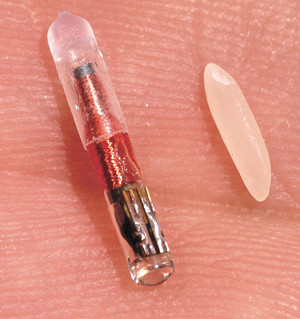
Radio-frequency identi­fication (RFID) tags are embedded in a growing number of personal items and identity documents.
Because the tags were designed to be powerful tracking devices and they typically incorporate little security, people wearing or carrying them are vulnerable to surreptitious surveillance and profiling.
Worldwide, legislators have done little to address those risks to citizens.

If you live in a state bordering Canada or Mexico, you may soon be given an opportunity to carry a very high tech item: a remotely readable driver’s license. Designed to identify U.S. citizens as they approach the nation’s borders, the cards are being promoted by the Department of Homeland Security as a way to save time and simplify border crossings. But if you care about your safety and privacy as much as convenience, you might want to think twice before signing up.

The new licenses come equipped with radio-frequency identification (RFID) tags that can be read right through a wallet, pocket or purse from as far away as 30 feet. Each tag incorporates a tiny microchip encoded with a unique identification number. As the bearer approaches a border station, radio energy broadcast by a reader device is picked up by an antenna connected to the chip, causing it to emit the ID number. By the time the license holder reaches the border agent, the number has already been fed into a Homeland Security database, and the traveler’s photograph and other details are displayed on the agent’s screen.

Although such “enhanced” driver’s licenses remain voluntary in the states that offer them, privacy and security experts are concerned that those who sign up for the cards are unaware of the risk: anyone with a readily available reader device—unscrupulous marketers, government agents, stalkers, thieves and just plain snoops—can also access the data on the licenses to remotely track people without their knowledge or consent. 

What is more, once the tag’s ID number is associated with an individual’s identity—for example, when the person carrying the license makes a credit-card transaction—the radio tag becomes a proxy for that individual. And the driver’s licenses are just the latest addition to a growing array of “tagged” items that consumers might be wearing or carrying around, such as transit and toll passes, office key cards, school IDs, “contactless” credit cards, clothing, phones and even groceries.

RFID tags have been likened to barcodes that broadcast their information, and the comparison is apt in the sense that the tiny devices have been used mainly for identifying parts and inventory, including cattle, as they make their way through supply chains. Instead of having to scan every individual item’s Universal Product Code (UPC), a warehouse worker can register the contents of an entire pallet of, say, paper towels by scanning the unique serial number encoded in the attached RFID tag. That number is associated in a central database with a detailed list of the pallet’s contents. 

But people are not paper products. During the past decade a shift toward embedding chips in individual consumer goods and, now, official identity documents has created a new set of privacy and security problems precisely because RFID is such a powerful tracking technology. Very little security is built into the tags themselves, and existing laws offer people scant protection from being surreptitiously tracked and profiled while living an increasingly tagged life.

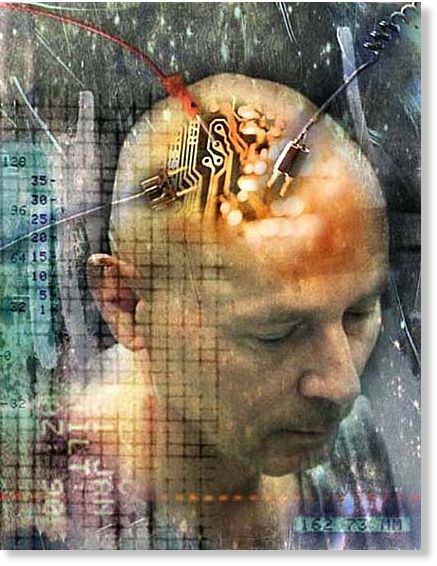
http://www.sott.net/image/image/14478/full/brain_implant3.jpg

Beyond Barcodes

The first radio tags identified military aircraft as friend or foe during World War II, but it was not until the late 1980s that similar tags became the basis of electronic toll-collection systems, such as E-ZPass along the East Coast. And in 1999 corporations began considering the tags’ potential for tracking millions of individual objects. In that year Procter & Gamble and Gillette (which have since merged to become the world’s largest consumer-product manufacturing company) formed a consortium with Massachusetts Institute of Technology engineers, called the Auto-ID Center, to develop RFID tags that would be small, efficient and cheap enough to eventually replace the UPC barcode on everyday consumer products.

By 2003 the group had developed a working version of the technology and attracted in­­vest­ment from more than 100 companies and government agencies. The tags’ promoters promised the tiny chips would revolutionize inventory management and counterfeiting prevention [see “RFID: A Key to Automating Everything,” by Roy Want; Scientific American, January 2004].

To kick-start government adoption of the technology, the General Services Administration (GSA), a federal bureau that manages purchasing for other government institutions, issued a memo in 2004 urging the heads of all federal agencies “to consider action that can be taken to advance the [RFID] industry.” Suddenly, virtually every agency, from the Social Security Administration to the Food and Drug Administration, began announcing RFID trials. 

During the same period, similar initiatives were under way around the world. In 2003 the International Civil Aviation Organization (ICAO), a United Nations agency that sets global passport standards, endorsed the use of RFID tags in passports. ICAO now calls for their use in all scannable “e-passports.” Today dozens of countries, including the U.S., issue e-passports with RFID tags embedded in their covers.

Since their debut, the new passports have been controversial on both privacy and security grounds. In a 2006 report one ICAO official promised that encryption measures would provide a “level of protection [that] should reassure the most anxious passport holder that his personal data cannot be read without his knowledge.”

Security experts quickly proved otherwise. In 2007 British security consultant Adam Laurie cracked the encryption code on a U.K. passport and “skimmed,” or remotely read, its personal information—while it was still sealed in its mailing envelope. Around the same time, German security consultant Lukas Grunwald copied the data from a German passport’s embedded chip and encoded it into a different RFID tag to create a forged document that could fool an electronic passport reader. Investigators at Charles University in Prague, finding similar vulnerabilities in Czech e-passports, wrote that it was “a bit surprising to meet an implementation that actually encourages rather than eliminates [security] attacks.”

Yet these demonstrated security problems have not slowed the adoption of RFID. On the contrary, the technology is being deployed for domestic ID cards around the world. Malaysia has issued some 25 million contactless national identity cards. Qatar is issuing one that stores the cardholder’s fingerprint in addition to personal information. And in what industry observers are calling the single largest RFID project in the world, the Chinese government is spending $6 billion to roll out RFID-based national IDs to nearly one billion citizens and residents.

There is an important difference, however, between other nations’ RFID-based ID cards and Homeland Security’s new driver’s licenses. Most countries’ contactless national IDs and e-passports have adopted an RFID tag that meets an industry standard known as ISO 14443, which was developed specifically for identification and payment cards and has a degree of security and privacy protection built in. In contrast, U.S. border cards use an RFID standard known as EPCglobal Gen 2, a technology that was designed to track products in warehouses, where the goal is not security but maximum ease of readability.

Whereas the ISO 14443 standard includes rudimentary encryption and requires tags to be close to a scanner to be read (a distance measured in inches rather than feet), Gen 2 tags typically have no encryption and only minimal data safeguards. To skim the data from an encrypted ISO 14443 chip, you have to crack the encryption code, but no special skills are required to skim a Gen 2 tag; all you need is any Gen 2 reader. Such readers can be purchased readily and are in common use in warehouses worldwide. A hacker or crim­inal armed with one could skim a border card through a purse, across a room, even through a wall.

As of this past April [2008], more than 35,000 Washington State motorists had signed up for en­­hanced driver’s licenses, and other border states, including Arizona, Michigan and Vermont, have agreed to participate in the program. New York State will begin making the new licenses available to its residents after Labor Day.

But the possibility that the security of such cards could be compromised is just one reason for concern. Even if tighter data-protection measures could someday prevent unauthorized access to RFID-card data, many privacy advocates worry that remotely readable identity documents could be abused by governments that wish to tightly monitor and control their citizens.

China’s national ID cards, for instance, are encoded with what most people would consider a shocking amount of personal information, including health and reproductive history, employment status, religion, ethnicity and even the name and phone number of each cardholder’s landlord. More ominous still, the cards are part of a larger project to blanket Chinese cities with state-of-the-art surveillance technologies. Michael Lin, a vice president for China Public Security Technology, a private company providing the RFID cards for the program, unflinchingly described them to the New York Times as “a way for the government to control the population in the future.” And even if other governments do not take advantage of the surveillance potential inherent in the new ID cards, ample evidence suggests that data-hungry corporations will.

 http://therearenosunglasses.files.wordpress.com/2008/12/6a00d8341bffa053ef00e5507084c68833-800wi.jpg

Living a Tagged Life

If the idea that corporations might want to use RFID tags to spy on individuals sounds far-fetched, it is worth considering an IBM patent filed in 2001 and granted in 2006. The patent describes exactly how the cards can be used for tracking and profiling even if access to official databases is unavailable or strictly limited. Entitled “Identification and Tracking of Persons Using RFID-Tagged Items in Store Environments,” it chillingly details RFID’s potential for surveillance in a world where networked RFID readers called “person tracking units” would be incorporated virtually everywhere people go—in “shopping malls, airports, train stations, bus stations, elevators, trains, airplanes, restrooms, sports arenas, libraries, theaters, [and] mu­­se­­ums”—to closely monitor people’s movements.

According to the patent, here is how it would work in a retail environment: an “RFID tag scanner located [in the desired tracking location]... scans the RFID tags on [a] person.... As that person moves around the store, different RFID tag scanners located throughout the store can pick up radio signals from the RFID tags carried on that person and the movement of that person is tracked based on these detections.... The person tracking unit may keep records of different locations where the person has visited, as well as the visitation times.”

The fact that no personal data are stored in the RFID tag does not present a problem, IBM explains, because “the personal information will be obtained when the person uses his or her credit card, bank card, shopper card or the like.” The link between the unique RFID number of the tag and a person’s identity needs to be made only once for the card to serve as a proxy for the person thereafter. Although IBM envisioned tracking people via miniature tags in consumer goods, with today’s RFID border cards there is no need to wait for such individual product tags to become widespread. Washington’s new driver’s licenses would be ideally suited to the in-store tracking application, because they can already be read by Gen 2 inventory scanners in use today at stores such as Wal-Mart, Dillard’s and American Apparel.

A tracking infrastructure will become increasingly fruitful to marketers as more people begin carrying, and even wearing, RFID-tagged items. At present, tens of millions of contactless credit and ATM cards containing RFID tags are in circulation, along with millions of employee access badges. RFID-based public-transit passes, widely used in Europe and Japan, are also coming to U.S. cities. IBM’s person tracking unit is still only a patent, but an English amusement park called Alton Towers provides a living illustration of RFID’s tracking potential. On entering the park, each visitor is offered an RFID wristband encoded with a unique ID number. As people enjoy the attractions, a network of RFID readers placed strategically throughout the park detects each wristband as it comes within range and triggers nearby video cameras. Candid footage of each individual is stored in a file labeled with the wristband ID number, then made available to the customer on a keepsake DVD at the end of the day.

If RFID tags can enable an amusement park to capture detailed, personalized videos of thousands of people a day, imagine what a determined government could do—not to mention marketers or criminals. That is why my colleagues in the privacy community and I have so firmly opposed the use of RFID in government-issued identity documents or individual consumer items. As far back as 2003, my organization, CASPIAN (Consumers Against Supermarket Privacy Invasion and Numbering)—along with the Privacy Rights Clearinghouse, the Electronic Privacy Information Center, the Electronic Frontier Foundation, the American Civil Liberties Union, and 40 other leading privacy and civil liberties advocates and organizations—recognized this threat and issued a position paper that condemned the tracking of human beings with RFID as inappropriate.

In response to these concerns, dozens of U.S. states have introduced RFID consumer-protection bills—which have all been either killed or gutted by heavy opposition from lobbyists for the RFID industry. When the New Hampshire Senate voted on a bill that would have imposed tough regulations on RFID in 2006, a last-minute floor amendment replaced it with a two-year study instead. (I was appointed by the governor to serve on the resulting commission.) That same year a California bill that would have prohibited the use of RFID in government-issued documents passed both houses of the legislature, only to be vetoed by Governor Arnold Schwarzenegger.

On the federal level, no high-profile consumer-protection bills related to RFID have been passed. Instead, in 2005, the Senate Republican High Tech Task Force praised RFID applications as “exciting new technologies” with “tremendous promise for our economy” and vowed to protect RFID from regulation or legislation.

In the European Union, regulators are at least examining the situation. The European Commission—the executive arm of the E.U.—has acknowledged the potential for serious privacy problems with RFID and opened a public comment period earlier this year. As of July, when this issue went to press, recommendations stemming from the public comments were set to be released later in the summer, but expectations for any consumer-privacy regulations were low. In a March 2007 speech, E.U. commissioner for information society and media Viviane Reding announced that the commission would not regulate RFID but instead would allow businesses to regulate themselves. “I am here to tell you that on RFIDs, there is not going to be a regulation,” she said. “My view is that we should underregulate rather than overregulate so that this sector can take off.”

Unfortunately, industry self-regulation has little force when it comes to protecting the public from RFID risks. EPCglobal, the industry body that now sets technical standards for RFID tags, also produced a set of guidelines for the use of the chips in retail. The organization’s recommendations require, among other things, notice to consumers whenever products contain RFID tags—for instance, in the form of a recognizable RFID logo. Yet when Checkpoint Systems, a member company of EPCglobal, designed RFID tags to be hidden in the soles of shoes—in clear violation of the organization’s own provisions — Mike Meranda, then president of EPCglobal, told me that since the guidelines were voluntary, there was nothing he or his organization could do about it.

The Washington State Department of Licensing reassures citizens that their personal information is safe because the RFID tag in an enhanced driver’s license “doesn’t have a power source” and “doesn’t contain any personal identifying inform­ation”—even though those facts have no bearing on whether the card can be used for tracking. For some people, a false sense of assurance provided by such official mollifications could be dangerous. The National Network to End Domestic Violence, a group that vocally opposes the use of RFID in identity documents and consumer products, has submitted legislative testimony describing how abusers could use the technology to stalk and monitor their victims.

Meanwhile the RFID train is barreling forward. Gigi Zenk, a spokesperson at Washington’s licensing agency, recently confirmed that there are 10,000 enhanced licenses “on the street now—that people are actually carrying.” That’s a lot of potential for abuse, and it will only grow. The state recently mustered a halfhearted response, passing a law that designates the unauthorized reading of a tag “for the purpose of fraud, identity theft, or for any other illegal purpose” as a class C felony, subject to five years in prison and a $10,000 fine. Nowhere in the law does it say, however, that scanning for other purposes such as marketing—or perhaps “to control the population”—is prohibited. We ignore these risks at our peril.
Note: This article was originally published with the title, "RFID Tag--You're It".

ABOUT THE AUTHOR
Katherine Albrecht holds a doctorate in education from Harvard University and is director of CASPIAN, a 15,000-member consumer privacy organization opposing retail surveillance. Since 2003 she has worked to expose and prevent unethical uses of RFID in products and in people. She regularly testifies before legislators and delivered a keynote address at a workshop on RFID and privacy held at the Massachusetts Institute of Technology. She has also co-authored two books describing how corporate and governmental uses of RFID could threaten individual privacy and security.


See also ‘The Implanted Radiofrequency Identification Chip’  - http://newilluminati.blog-city.com/the_implanted_radiofrequency_identification_chip.htm

Images - http://cache.gizmodo.com/assets/images/gizmodo/2008/08/rfid_xray.jpg
http://www.sott.net/image/image/14478/full/brain_implant3.jpg 
http://therearenosunglasses.files.wordpress.com/2008/12/6a00d8341bffa053ef00e5507084c68833-800wi.jpg


For further enlightenment enter a word or phrase into the search box @  New Illuminati:


And see

The Her(m)etic Hermit - http://hermetic.blog.com


This material is published under Creative Commons Copyright (unless an individual item is declared otherwise by copyright holder) – reproduction for non-profit use is permitted & encouraged, if you give attribution to the work & author - and please include a (preferably active) link to the original along with this notice. Feel free to make non-commercial hard (printed) or software copies or mirror sites - you never know how long something will stay glued to the web – but remember attribution! If you like what you see, please send a tiny donation or leave a comment – and thanks for reading this far…

From the New Illuminati – http://nexusilluminati.blogspot.com


Friday, 16 October 2009

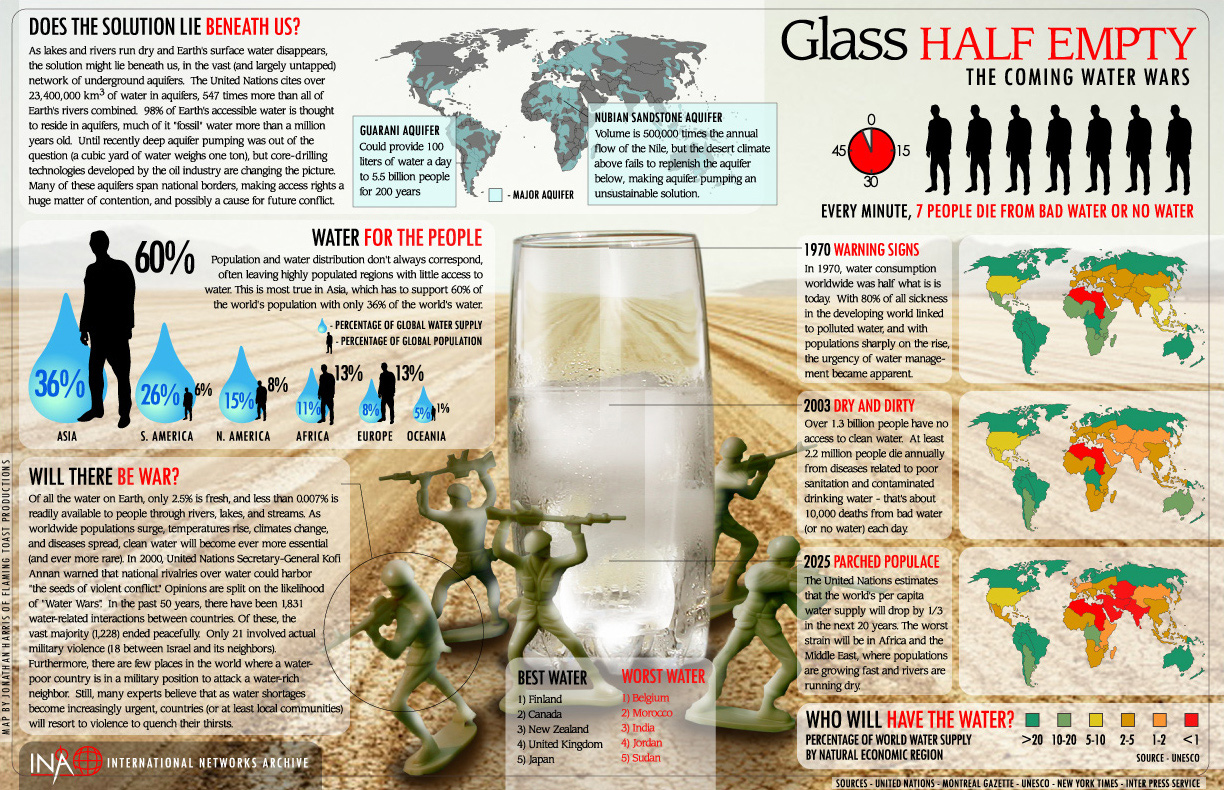
Blue Gold: World Water Wars (Trailer)

Blue Gold
World Water Wars


http://uselessmark.files.wordpress.com/2009/03/water_big.jpg


Blue Gold -
World Water Wars
Trailer (2:37) @ http://www.youtube.com/watch?v=Ikb4WG8UJRw&feature=player_embedded


For further enlightenment enter a word or phrase into the search box @  New Illuminati:


And see

The Her(m)etic Hermit - http://hermetic.blog.com


This material is published under Creative Commons Copyright (unless an individual item is declared otherwise by copyright holder) – reproduction for non-profit use is permitted & encouraged, if you give attribution to the work & author - and please include a (preferably active) link to the original along with this notice. Feel free to make non-commercial hard (printed) or software copies or mirror sites - you never know how long something will stay glued to the web – but remember attribution! If you like what you see, please send a tiny donation or leave a comment – and thanks for reading this far…

From the New Illuminati – http://nexusilluminati.blogspot.com