"All the World's a Stage We Pass Through" R. Ayana

Showing posts with label phone. Show all posts

Thursday, 14 October 2010

A Cancer Muckraker Takes on Cell Phones

A Cancer Muckraker Takes on Cell Phones
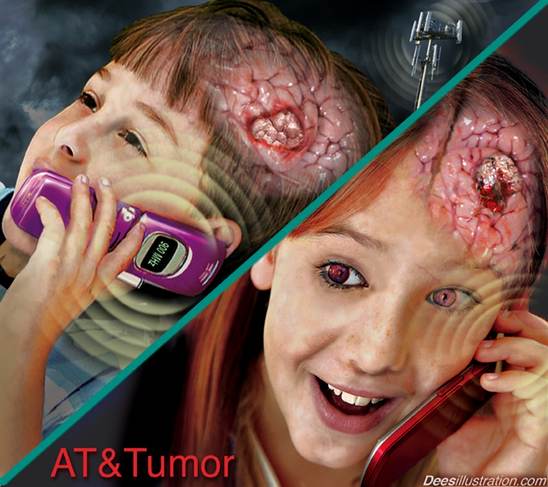
http://www.wariscrime.com/wp-content/uploads/2008/10/tumor_dees.jpg
If anyone would be receptive to the idea that cell phone radiation might play a role in cancer, it would be Dr. Devra Davis. The epidemiologist and toxicologist is an expert in environmental health, and she's made a career out of the idea that cancer often has more to do with what's happening to us than what's going on inside our genes.
Her 2007 book The Secret History of the War on Cancer showed that some of the best medical minds in the U.S. played down the environmental factors behind cancer—from cigarette smoke to chemical exposure—far too long, in part because of deception and delay from industry.
But when a colleague raised the possibility that cell phones could be connected to brain cancer, Davis wasn't receptive. "I couldn't believe it and I didn't want to," says Davis. "These were attractive devices. Cell phones were like cars—you couldn't imagine life without them." But as she began to look seriously into the field, Davis began to have doubts that cell phones were harmless.
She found evidence of studies, some decades old, showing that the radio-frequency radiation used by cell phones could indeed have biological effects–enough to damage DNA and potentially contribute to brain tumors. She found that other countries—like France and Israel—had already acted, discouraging the use of cell phones by children and even putting warning signs on handsets.
She found evidence of  increases in certain kinds of brain tumors among unusually young patients who were heavy users of cell phones. And, just as she saw with tobacco and lung cancer, Davis discovered that the wireless industry—often with the help of governments—had fought independent scientists who studied cell phones, and helped produced questionable science that effectively clouded the issue. "This is about the most important and unrecognized public health issues of our time," says Davis."We could avert a global catastrophe if we act."
Her new book Disconnect is the result of those investigations, and it's convincing enough to give you pause before you fire up that iPhone. I've already covered the possible connections between cell phones and cancer—you can see my February story in TIME for a backgrounder on the scientific debate, and another piece I did recently on the Interphone study, a collection of international studies on mobiles and cancer that was meant to clarify the issue, but only ended up further confusing it. It's a complex subject—mixing electrical engineering, biology and epidemiology—but Davis makes a strong case in her book that we've underplayed the possible threat from cell phones for too long.
 http://static.open.salon.com/files/electromagnetic-damage1259944245.jpg
We're disconnected—even as worrying studies have begun to pile up, however quietly, the message has been slow to reach those in public health and even slower to reach the government. "The fact that we don't know everything about the subject doesn't mean that everything is fine," she says. "I can't tell you that cell phones are dangerous, but I can tell you that I'm not sure they're safe."
The wireless industry has an easy answer for this: in the thousands of studies that have been done on cell phones and health, few of them have shown any effect—and public agencies like the Federal Communications Commission (FCC) and the World Health Organization have found no clear health risks. As CTIA, the wireless industry group, says in a statement on its website: "To date, no adverse health effects have been established for mobile phone use."
The magic word there is "established," because as Davis argues in some of the best passages of Disconnect, it could be that we haven't established the dangers of cell phone use because we haven't asked the right questions—and that might be on purpose. "If you don't want to know the answer," Davis says, "don't ask the question."
Much of the research into the biological effects of cell phone radiation has been underwritten by the... cell phone industry, and you don't have to be a raging paranoiac to wonder whether that money might have an impact on the conclusions of those thousands of studies. After all, in this case—just as it was with tobacco and lung cancer—doubt is the friend of industry. To hold off the possibility of legislation or regulation—not to mention lawsuits—wireless companies and their advocates don't have to prove that cell phones are safe beyond any doubt. They just have to play defense.
However, as Davis shows in Disconnect, that argument is going to get tougher and tougher to make. In one of the finest passages of her book, Davis details the tale of Dr. Franz Adlkofer, a German scientist who had long been involved in tobacco research. Like many scientists—more than medical science might like to admit—Adlkofer was willing to take money from the tobacco industry to fund his research, without really thinking about how that might constrain his work. He was, in a sense, a company man. But when Adlkofer began working with the wireless industry and produced research showing that cell phone radiation unravels DNA, he suddenly found his work under attack by the industry that had funded it. He was accused of fraud in highly suspicious circumstances (he fought the charges, and they were eventually withdrawn), and says the industry paid other scientists to produce studies that would discredit his own work, as he told Davis in Disconnect:
“I can't prove this, but here's what I think they did. The industry never liked this work. From the first they heard about it, they set out to discredit it. I had seen this happen with tobacco science so often, especially at the hands of the American companies. Yet suddenly it was happening to me.”
Davis is justifiably suspicious of Adlkofer—he was a tobacco scientist, after all—but ultimately his story seems to check out. He's also far from the only researcher Davis meets whose career suffered after challenging the conventional wisdom on cell phones and cancer. Davis shows that independent studies on cell phone radiation found dangers at more than twice the rate of industry-funded studies—though because the cell phone industry is the source of much of the funding of cell phone studies, there are far more of the latter. And ultimately that is what is truly disturbing about Davis's book.
Time and again, she shows the way that industry has been able to twist science just enough to stave off the possibility of any regulation—and finds that researchers are afraid of challenging the status quo, lest they find themselves suddenly out of a job, denied the lifeblood of research money. Most of the few brave researchers who challenge the prevailing wisdom on cell phone radiation — like the electrical engineer Om Gandhi or the bioengineer Henry Lai — are senior scientists, secure in their positions and their tenure. But a young researcher just starting out is far more vulnerable to industry pressure. Science isn't as pristine as we imagine it. "There has not been truly independent research in this field," says Davis. "That has to change."
Davis wants to see the government fund new studies on cell phones and health, independent of government interference—and fortunately the National Toxicology Program will be running its own tests, though not until 2014. The good news in the meantime is that you don't have to throw away your cell phone to minimize any potential risks.
Simply using a wired headset should significantly cut down on radiation exposure to the brain, although Davis recommends that children—whose thinner skulls can absorb higher levels of radiation—avoid using phones altogether. "We do so much to protect our children from all manner of threats," she says. "We need to protect them from this as well." Read Disconnect, and you'll be on guard as well.
Posted by Bryan Walsh @ http://ecocentric.blogs.time.com/2010/09/27/health-a-cancer-muckraker-takes-on-cell-phones/
For more see http://newilluminati.blog-city.com/index.cfm?search=phone
http://www.realemfprotection.com/wp-content/uploads/94fd4814bfb834d.jpg
Images - http://www.wariscrime.com/wp-content/uploads/2008/10/tumor_dees.jpg
http://static.open.salon.com/files/electromagnetic-damage1259944245.jpg
http://www.realemfprotection.com/wp-content/uploads/94fd4814bfb834d.jpg

For further enlightenment see –

The Her(m)etic Hermit - http://hermetic.blog.com


This material is published under Creative Commons Copyright – reproduction for non-profit use is permitted & encouraged, if you give attribution to the work & author - and please include a (preferably active) link to the original along with this notice. Feel free to make non-commercial hard (printed) or software copies or mirror sites - you never know how long something will stay glued to the web – but remember attribution! If you like what you see, please send a tiny donation or leave a comment – and thanks for reading this far…

From the New Illuminati – http://nexusilluminati.blogspot.com

Sunday, 8 February 2009

Mind Control by Mobile Phone

Mind Control by Mobile Phone
Change Your Mind about Mobile Phones
– Before They Change It For You

http://loveforlife.com.au/files/tumor_dees.jpg Electromagnetic signals from cell phones can change your brainwaves and behavior…

By R. Douglas Fields


Hospitals and airplanes ban the use of cell phones, because their electromagnetic transmissions can interfere with sensitive electrical devices. Could the brain also fall into that category? Of course, all our thoughts, sensations and actions arise from bioelectricity generated by neurons and transmitted through complex neural circuits inside our skull. 

Electrical signals between neurons generate electric fields that radiate out of brain tissue as electrical waves that can be picked up by electrodes touching a person's scalp. Measurements of such brainwaves in EEGs provide powerful insight into brain function and a valuable diagnostic tool for doctors. Indeed, so fundamental are brainwaves to the internal workings of the mind, they have become the ultimate, legal definition drawing the line between life and death.

Brainwaves change with a healthy person's conscious and unconscious mental activity and state of arousal. But scientists can do more with brainwaves than just listen in on the brain at work-they can selectively control brain function by transcranial magnetic stimulation (TMS). This technique uses powerful pulses of electromagnetic radiation beamed into a person's brain to jam or excite particular brain circuits.

Although a cell phone is much less powerful than TMS, the question still remains: Could the electrical signals coming from a phone affect certain brainwaves operating in resonance with cell phone transmission frequencies? After all, the caller's cerebral cortex is just centimeters away from radiation broadcast from the phone's antenna. Two studies provide some revealing news.

The first, led by Rodney Croft, of the Brain Science Institute, Swinburne University of Technology in Melbourne, Australia, tested whether cell phone transmissions could alter a person's brainwaves. The researchers monitored the brainwaves of 120 healthy men and women while a Nokia 6110 cell phone — one of the most popular cell phones in the world—was strapped to their head. A computer controlled the phone's transmissions in a double-blind experimental design, which meant that neither the test subject nor researchers knew whether the cell phone was transmitting or idle while EEG data were collected. The data showed that when the cell phone was transmitting, the power of a characteristic brain-wave pattern called alpha waves in the person's brain was boosted significantly. The increased alpha wave activity was greatest in brain tissue directly beneath to the cell phone, strengthening the case that the phone was responsible for the observed effect.
Alpha Waves of the Brain

Alpha waves fluctuate at a rate of eight to 12 cycles per second (Hertz). These brainwaves reflect a person's state of arousal and attention. Alpha waves are generally regarded as an indicator of reduced mental effort, "cortical idling" or mind wandering. But this conventional view is perhaps an oversimplification. Croft, for example, argues that the alpha wave is really regulating the shift of attention between external and internal inputs. Alpha waves increase in power when a person shifts his or her consciousness of the external world to internal thoughts; they also are the key brainwave signatures of sleep.

Cell Phone Insomnia

If cell phone signals boost a person's
alpha waves, does this nudge them subliminally into an altered state of consciousness or have any effect at all on the workings of their mind that can be observed in a person's behavior? In the second study, James Horne and colleagues at the Loughborough University Sleep Research Centre in England devised an experiment to test this question. The result was surprising. Not only could the cell phone signals alter a person's behavior during the call, the effects of the disrupted brain-wave patterns continued long after the phone was switched off.

"This was a completely unexpected finding," Horne told me. "We didn't suspect any effect on EEG [after switching off the phone]. We were interested in studying the effect of mobile phone signals on sleep itself." But it quickly became obvious to Horne and colleagues in preparing for the sleep-research experiments that some of the test subjects had difficulty falling asleep.

Horne and his colleagues controlled a Nokia 6310e cell phone—another popular and basic phone—attached to the head of 10 healthy but sleep-deprived men in their sleep research lab. (Their sleep had been restricted to six hours the previous night.) The researchers then monitored the men's brainwaves by EEG while the phone was switched on and off by remote computer, and also switched between "standby," "listen" and "talk" modes of operation for 30 minute intervals on different nights. 

The experiment revealed that after the phone was switched to "talk" mode a different brain-wave pattern, called delta waves (in the range of one to four Hertz), remained dampened for nearly one hour after the phone was shut off. These brainwaves are the most reliable and sensitive marker of stage two sleep—approximately 50 percent of total sleep consists of this stage—and the subjects remained awake twice as long after the phone transmitting in talk mode was shut off. Although the test subjects had been sleep-deprived the night before, they could not fall asleep for nearly one hour after the phone had been operating without their knowledge.

Although this research shows that cell phone transmissions can affect a person's brainwaves with persistent effects on behavior, Horne does not feel there is any need for concern that cell phones are damaging. The arousal effects the researchers measured are equivalent to about half a cup of coffee, and many other factors in a person's surroundings will affect a night's sleep as much or more than cell phone transmissions.

"The significance of the research," he explained, is that although the cell phone power is low, "electromagnetic radiation can nevertheless have an effect on mental behavior when transmitting at the proper frequency." He finds this fact especially remarkable when considering that everyone is surrounded by electromagnetic clutter radiating from all kinds of electronic devices in our modern world. Cell phones in talk mode seem to be particularly well-tuned to frequencies that affect brainwave activity. "The results show sensitivity to low-level radiation to a subtle degree. These findings open the door by a crack for more research to follow. One only wonders if with different doses, durations, or other devices, would there be greater effects?"

Croft of Swinburne emphasizes that there are no health worries from these new findings. "The exciting thing about this research is that it allows us to have a look at how you might modulate brain function and this [look] tells us something about how the brain works on a fundamental level." In other words, the importance of this work is in illuminating the fundamental workings of the brain-scientists can now splash away with their own self-generated electromagnetic waves and learn a great deal about how brainwaves respond and what they do.

Mind Matters is edited by Jonah Lehrer, the science writer behind the blog The Frontal Cortex and the book Proust was a Neuroscientist.

ABOUT THE AUTHOR:
Doug Fields is a developmental neuroscientist and Editor-in-Chief of Neuron Glia Biology.


Despite the disclaimers of the author’s of this article, it behooves me to point out that no-one in their right mind would use a cell-destroying phone except in emergency situations – R. Ayana


For further enlightening info enter a word or phrase into the search box @  New Illuminati:  http://nexusilluminati.blogspot.com (or click on any tag at the bottom of the page for direct references)
And see

The Her(m)etic Hermit - http://hermetic.blog.com


This material is published under Creative Commons Copyright (unless an individual item is declared otherwise by copyright holder) – reproduction for non-profit use is permitted & encouraged, if you give attribution to the work & author - and please include a (preferably active) link to the original along with this notice. Feel free to make non-commercial hard (printed) or software copies or mirror sites - you never know how long something will stay glued to the web – but remember attribution! If you like what you see, please send a tiny donation or leave a comment – and thanks for reading this far…

From the New Illuminati – http://nexusilluminati.blogspot.com