photographic art by Kevin Scofield
Hypnosis has successfully been used by professional therapists to treat a number of psychological problems. One such method involves regressing a patient to a younger age and eliciting memories of his childhood, where developmental crises can be re-lived and resolved. What follows is a transcribed portion of several audio tapes recorded during a regression therapy. The hypnotist, who will remain anonymous, accidentally triggered memories of both past and future lives.
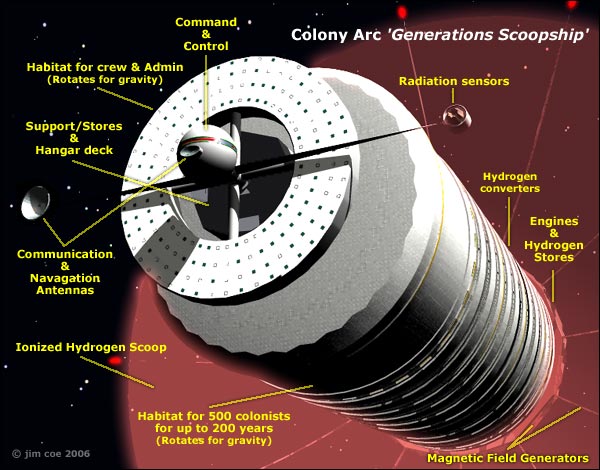
This transcript is from one session that elicited memories of a life in the future-- a future where humanity has left the polluted planet Earth to live in orbiting space colonies.
We will reveal this amazing transcript in two parts. We ask that you keep an open mind and remember that the dialog is unrehearsed and unanticipated. The patient, here identified only as "ep," describes his life and environment in vivid detail. It is this detail that lends credence to his chilling view of what lies ahead for humanity, both on and off the planet.
Excerpt from THIRD WITNESS: The Alan Arthur Winston Hypnotherapy Sessions with Edward Peterson - Copyright 1999 Joseph Robert Cowles. All Rights Reserved.
ep: I see gray. It's gray here through the thick glass.
Everything is just so clear.
aaw: What else?
ep: I see the Earth. Way off.
aaw: And where are you?
ep: I am--on the moon.
aaw: What do you see?
ep: The air is heavy and dank and there's a condensation on the inside of the walls and I'm looking through a, like a, not like a porthole, but not like glass, and it's really, really, really thick. And there's dirt. And there's a slit in the dirt, it covers it all up, and I'm lookin' out and I can see the earthrise. That's very special, because usually we have to keep the shutters down--from all the radiation.
aaw: Do you do work there?
ep: (Clears throat.) I don't like this thick air, y'know. I like it better up at the station.
aaw: We'll go up there in--.
ep: But here's where I work. That's why I'm here. I get to open the glass 'cause nobody (laughs) knows I'm doin' it.
aaw: What kind of work do you do?
ep: I mine. I take oxygen out of the soil. It's good work. I gather up, and dig tunnels, and take all the material back to a smelter. I'm digging, digging, digging, and then I go dump it.
aaw: Are there others?
ep: Yeah.
aaw: Lots of others?
ep: I have a crew of six.
aaw: What is your name?
ep: Albert.
aaw: Are you from--what country?
ep: I don't think Earth has countries anymore.
aaw: Where were you born?
ep: I was born at L5. La Grange Point 5.
aaw: Tell me about that.
ep: That's the fifth of the ten geosynchronous orbit points around the Earth between the Earth and the moon, wherein a space station or any other large ungainly object can be placed in permanent orbit.
aaw: Okay.
ep: As the Earth and the moon move through space, at the L5 point, or the other L points, you're continually falling around the geophysical center of the gravitational pull of the Earth. And so therefore, in relative motion, you're still.
aaw: Is L5 a space station?
ep: Yeah. Sure.
aaw: And you were born there?
ep: Um-hmm.
aaw: Okay. Albert--?
ep: Everybody calls me Al.
aaw: Al. Okay. Al-- what do you call the thing you're riding on?
ep: Crawler.
aaw: And you use it to--?
ep: To dig.
aaw: And then what do you do with what it is you dig?
ep: We take and we dump it through the grate.
aaw: Then what happens to it?
ep: It goes into a furnace. It's smeltered, and we take out the--silicates are drained off and all the gasses are captured and recirculated through the inverter systems and then bottled and compressed and then we shoot 'em up to the L5.
aaw: When do you get out of here? How long is your shift?
ep: Shift? We come down here for about three weeks at a time.
aaw: You mean you stay down there for three weeks at a time?
ep: Um-hmm.
aaw: Where do you sleep?
ep: In the racks.
aaw: Where are the racks?
ep: Back in the quonset hut.
aaw: In the--?
ep: Quon--in the hut.
aaw: The hut? Quonset hut?
ep: Yeah. We call 'em that 'cause that's how they look on the inside. Like big pipes, kinda.
aaw: Is it like a dormitory, or--
ep: Well, yeah.
aaw: --bunkhouse, or--?
ep: Bunkhouse.
aaw: Yes?
ep: Everything's there, though.
aaw: Everything's there?
ep: Sure.
aaw: What about your cooking, your meals?'
ep: Yeah. That's where we do it all.
aaw: Do you cook, or does somebody cook for you?
ep: Oh, we all take turns.
aaw: Yes?
ep: 'S not much to it. Y'just pop it in the microwave a sec.
aaw: Is it frozen?
ep: Some of it. Not all of it.
aaw: How is it--?
ep: Like freeze-dried.
aaw: Freeze dried.
ep: Little packets.
aaw: Uh-huh.
ep: Sometimes they rip and tear, and they're screwed up. You gotta look at 'em.

aaw: How many people did you say were on--?
ep: Six.
aaw: Six on your team. Are there more than one team at a time?
ep: Never. Not in the tunnels. You don't go puttin' anybody into dangers you don't got to.
aaw: So one team at a time, and you stay for three weeks--
ep: Um-hmm.
aaw: --and then the other three weeks, what do you do?
ep: It's three on, one off, three on, one off.
aaw: Three on, one off.
ep: Um-hmm.
aaw: During that one, what do you do?
ep: We recreate. (Laughs.) That's a silly name for it, but you just, uh--
aaw: How long have you been doing this?
ep: What d' you mean?
aaw: This job--
ep: Oh. This is what I trained for.
aaw: You trained to do this?
ep: Um-hmm.
aaw: Did--was it like going to school?
ep: I'm a reclamation analyst.
aaw: Say again?
ep: I'm a reclamation analyst. I run the team. I make sure that our quality is up. In other words, we don't want to ship any distorted gasses or anything like that, and we have to make sure all the pressurization is right in each of the tanks, 'cause if it's too high or too low when it goes through compression and ejection from the surface, it might blow up or spin, and you can't have a tank out there floatin' around, it'll bump into somebody or they'll run into it and that'll screw everything up.
aaw: Look around you where you are now--
ep: Um-hmm.
aaw: --and describe the area in which you are working.
ep: It's like a tunnel, a half-tunnel. And as we go along, we dig, and then about every three meters or so we put up another cross-member, and bolt it together. Comes in three pieces. And we dig, and we keep going. And then, eventually--sometimes we join up with other tunnels--but then eventually, they come along behind us and start converting it into habitat, or put the grow lights in, start the farming.
aaw: All under the soil?
ep: Uh-huh.
aaw: The ground. Is the soil--?
ep: 'S gotta be guarded from the radiation bursts an' stuff.
aaw: Radiation bursts? Where do they come from?
ep: From the sun.
aaw: Oh, like the flares?
ep: Yeah. Sun spots. You get big bursts of radiation. 'Specially if they're at this blocking from the magnetic field [undecipherable] the burst comes and the magnetic field will flux it out and away and then--it's like you're behind the Earth, in the shadow, see, and so then you're gettin' zero, and then you pop out into high concentrations, and so you gotta be real ready for that, you don't have much time sometimes.
aaw: Do you know when they're gonna happen?
ep: Oh, yeah. It's all charted out. But still, people screw up.
aaw: Do you like working here?
ep: I like working here because I think what I'm doing is good and important.
aaw: Are they colonizing the moon?
ep: Colonizing. That's an interesting word. But I guess--it's a good word.
aaw: Well, you said they're putting in grow lights and--?
ep: Yeah. They run lights down the middle of the tunnels.
aaw: Yes. And then--?
ep: Then you scoop the tunnel out. Kinda make it concave, but not round. Like the other half of the tunnel.
aaw: Yes.
ep: And they bring in tiers. Take silicate. Pour it into forms, make tiers. And then they plant in the tiers. Run nutrient underneath. So that the whole system is sealed. You reclaim everything.
aaw: Hydroponics, sort of.
ep: Yeah. You gotta laz the ground to seal it off.
aaw: You have to what?
ep: Laz the ground.
aaw: What does that mean?
ep: We take lasers and superheat the rock and seal it off. We melt it just a little. It's kinda, it's heavy but delicate, sort of. 'S hard to--. 'S like you gotta have a touch. You can't just do it or you get big pock marks, you blow somethin' up. Then you gotta be careful how much gas you release, 'cause the laser releases gas.
aaw: Do you wear masks and gear when you do that? Breathing masks?
ep: When we're doin' that we're on full suit.
aaw: What about your regular work? Do you have protection against dust and things?
ep: Yeah. We're in suits, but we're exposed, y'know. They're just masks and stuff. It's not like a sealed suit.
aaw: D'you mind if I ask you some real personal questions?
ep: Hmm. No, why?
aaw: How--where do you go to the bathroom?
ep: In the tube.
aaw: What tube?
ep: There's a tube in the suit, if you're wearin' a sealed suit.
aaw: Yes. And then what happens? How does it get emptied out?
ep: You can change the suit, then you change your diaper.
aaw: Oh. Okay. I'd like you to tell me about what it's--.
ep: Gotta save it all.
aaw: What happens to it? What do you do with it?
ep: You reclaim it. Everything's reclaimed. All waste is reclaimed.
aaw: What do they do with it?
ep: They put it through separators. I don't know, that's other people's jobs, but they put it through separators, basically. All the fecal material goes back for composting and separation [undeciherable] and stuff like that. And then the urine's just pretty much saved. The diapers have silicone crystals in it, and then they use that stuff, you spread it out, and then the vapor comes off it, then they add something to it, I don't know, and reclaim the water, and then part of that's what's used to set up irrigation drips and stuff. Just, you got to keep the salinity content well under pH, though.
aaw: Are they planning to bring a lot of people to live here?
ep: There's already a hell of a lot of people here.
aaw: How many people are here?
ep: There's eight thousand, in the city proper.
aaw: How long has the city been there?
ep: Since after the war.
aaw: What war?
ep: I don't know the name of it. The war. We just call it the war.
aaw: What happened in the war? Where was the war? On the moon?
ep: No. The war was on the world.
aaw: On the world. Earth?
ep: Um-hmm.
aaw: Was this a war between, well, a war from outside the Earth? Was it a war of the people on the Earth?
ep: Oh, yeah.
aaw: What was the result of that war?
ep: Lot of people decided it was a lot better off livin' up here than down there. Kooks got a hold of the bombs and stuff.
aaw: What?
ep: Kooks got a hold of the bombs.
aaw: Kooks got the bombs.
ep: Yeah. You gotta be careful up here. They screen everybody, but occasionally we get some kooks up here.
aaw: With bombs, up here?
ep: Sometimes. What they like to do is split the air lock seals.
aaw: Explain that.
ep: They put little tiny cracks with razor blades in air lock seals, and so they can be gone a long time-- y'know, fifty, sixty, seventy hours. And then after awhile the seal breaks down, starts to crystallize, and it'll start a slow leak. And then, it's, so you gotta watch it, 'cause sometimes you think it's just a breakdown, so you go there, but then the minute you open the door the rest of the seal will blow off where it's all been cut. It's all crystalline. Once the rubber gets exposed at all to any of the radiation, or if dust gets in, it gets brittle. So we're always very concerned about it being brittle. You catch every little leak, like it could be somethin' major.
aaw: Do you have a security force up there that goes around--
ep: Um-hmm. Sure.
aaw: --and checks these things out?
ep: I don't know if they go around. It's like everybody's screened in. They're still--there's problems, but like there's no, uh--where the hell you gonna run, man?
aaw: What're the kooks trying to pull? What is their--?
ep: They think that we should all be down there on the world.
aaw: Are they originally from the world?
ep: Everybody's originally from the world.
aaw: Well, you said you were actually born--.
ep: On L5, yeah, but I mean we're all from the world.
aaw: Are you the first generation born in space, or--?
ep: No, I'm third.
aaw: Third?
ep: Um-hmm.
aaw: So your parents, both parents--
ep: Um-hmm.
aaw: --were born--were they L5 also?
ep: No. Mom was born on the moon, Dad was born at L3.
aaw: How old are you now?
ep: I'm thirty-five.
aaw: Have you ever been on planet Earth?
ep: No. I won't go there.
aaw: Because?
ep: Stinks. 'S all kind of pollution and shit. Their air there is worse 'n here. It's compressed here. That's why I like it up at L5 better. The air's cleaner. But even there they say that it's, down on the world, it's really bad.
aaw: Because of--?
ep: There's still fallout, lot o' radiation an' stuff.
aaw: Oh. It was a nuclear war?
ep: Yeah.
aaw: Yes?
ep: The kooks set off some bombs.
aaw: Was there a--you had said that there are no more nations, no more national boundaries.
ep: Uhn-uh.
aaw: How did that come about? Do you know?
ep: Sort of. Everything broke down. The only thing left was the World Bank. They had to control everything. And some kind of -- just the -- the United Council took over. They were the only people who had computers left. And so it's -- the way we look at it now is that power just naturally fluxed to them. They had information. Information is power, information is control.
aaw: I'd like to have you go back in time, to your childhood. Say about age ten.
ep: Okay.
aaw: Just go right back in time, and tell me what life was like for you at age ten. And are you on the same station where you were born, or are you someplace else at age ten?
ep: Oh yeah, I'm on L5.
aaw: Uh-huh. Have you ever been off of L5 yet?
ep: No.
aaw: And your name, what do you like to be called Al or--?
ep: I like Al.
aaw: Yes, what's your last--
ep: Albert's my mad name.
aaw: --what's your last name? Do you have a last name?
ep: I dunno.
aaw: Take a look and see. Take a look at that last name. Have you ever had to write it on anything?
ep: Just numbers.
aaw: Numbers? You have numbers?
ep: Numbers and cards. You don't really write. We type. But we sign off signature numbers.
aaw: So you're assigned a number?
ep: I'm AL659, see.
aaw: Yes.
ep: Dash L5. AL659-L5.
aaw: Well that's interesting. AL659-L5. What does the 659 signify?
ep: It signifies my birth number.
aaw: Like your date?
ep: No, my birth number. I'm 659th on L5.
aaw: Oh. Oh, I see. Do you have classes or school?
ep: Sure.
aaw: What do they teach you?
ep: Everything. We can know anything. We got screens in the house, there's screens. We don't really go to school, although there's places that we go. But mostly, information is everywhere. People are everywhere. You just learn. When I'm interested in flying I go fly. When I'm interested in playing games I go play games. When I'm interested in doin' numbers I go do numbers.
aaw: I understand. What do you mean, when you're interested in flying? Where do you fly from and to?
ep: We fly at the hub.
aaw: At the hub?
ep: I like that.
aaw: You fly at the hub?
ep: Um-hmm.
aaw: Of--?
ep: At the L5.
aaw: At L5. What do you mean, you fly? Is there a place of no gravitation?
ep: Yeah. It's in the middle. Gravity's the least there.
aaw: Yes?
ep: That's how we get around sometimes. Instead of goin' all the way around, you can cut across, and that's kinda neat. It's a bitch when you gotta first start climbing, you know, but once you get goin' it's pretty cool.
aaw: When you start climbing?
ep: Yeah. You can go up the sides. There's tubes and ladders. I don't like the shafts.
aaw: What are the shafts?
ep: They're lifts. Drone lifts. They give me the phobes, man.
aaw: So you fly?
ep: Um-hmm.
aaw: How, how--? Do you jump off something?
ep: Yeah. You just -- you fly. Haven't you ever flown?
aaw: I've never flown.
ep: Oh, man.
aaw: We'll have to go there.
ep: Let's go!
aaw: Let's go. Okay, let's go there now.
ep: Oh, you gotta wait till it's--
aaw: Huh?
ep: --we gotta wait for the right time.
aaw: Permission?
ep: Yeah, see, if they're loadin' and stuff, you can't be around, 'cause you might get bumped by one of the loaders.
aaw: Do kids have jobs to do--
ep: Jobs?
aaw: --responsibilities?
ep: Responsibilities. That's a better word. Sure. The minute you can do, you do. Everybody's got a function. If you don't all function, it won't get done.
aaw: So the minute you can do, you do.
ep: Sure.
aaw: Do you get to choose--
ep: Choose?
aaw: --what your functions will be? Do you get to specialize in something?
ep: Sure. It's whatever you're interested in.
aaw: And what are you interested in at age ten?
ep: I like to fly. I want to go to Mars. I like to explore. I really like bein' over by the engines and stuff. They don't let me go there too much, 'cause it's dangerous. I'm pretty small yet. But I sneak over there. Sometimes I go fly when I'm not supposed to. But I wait until the lanyards go by, and then I leap, and get onto the sled, and just kind of ride it across, and nobody really knows.
aaw: With your buddies?
ep: Naw. They aren't so adventurous.
aaw: How big is this area in which you fly?
ep: How big is it?
aaw: Yes. Can you measure it?
ep: Yeah, I guess so. Takes about ten minutes to get across it.
aaw: So it must be pretty big. I can't imagine how big the space station must be. Is it round?
ep: From point A to point A is twenty-six point six miles.
aaw: Around?
ep: I.D.
aaw: Inside dimension?
ep: Diameter.
aaw: Inside diameter!
ep: I.D. ground, I.D. ground.
aaw: Explain that to me.
ep: Inside diameter at the ground level at the parallax is twenty-six point six. Not counting for fluctuations in height and stuff.
aaw: What do you mean, ground level?
ep: At the residence level, at the center lowest point of the hub.
aaw: Do they raise food here on--?
ep: Why sure.
aaw: Do they have gardens?
ep: It goes kinda like, every three or so miles there's a--the levels change--and so there's tiers or hubs, and there's eight tiers. Residence level there's only two tiers, but at feed levels there's eight tiers. And the top tier's not very wide at all, maybe a hundred feet or so.
aaw: Sometime in the near future I'm going to ask you if you will make a sketch of what it's like -- a drawing.
ep: Well, sure.
aaw: You could do that?
ep: Um-hmm. Easy.
aaw: Okay. We won't do it now, but sometime in the near future I'm going to ask you to do that, to help me visualize what it looks like.
ep: Why don't you know what it looks like?
aaw: Because I am not where you are.
ep: Oh, okay. That makes sense.
aaw: Okay, now. Come forward in time, however many years it is--or months, or weeks, or whatever it is--to when you first start your first actual work, the actual thing that you then do.
ep: Hmm. That's really involved. My first job was at L7. I helped mag all the ground rock out for the shielding.
aaw: What do you mean, "helped mag" it?
ep: Fill the sleds, and then put 'em in the mag gun so it would shoot 'em out, for the shielding. You gotta shield everything.
aaw: You shield it with rock?
ep: Yeah. From the moon.
aaw: You mean -- is it an aggregate, do they--?
ep: No, we just dig out rock, big rocks, and (laughs) you set 'em on the sled, an' then you trip the wire, and the mag lights come on, and it shoots 'em down along a ramp, and it fires it off into space, and it's caught by a catcher out at the L point, which I [undecipherable] to shooting to, 'cause at the end you bend it, it's like it's got big piston things that bend it, so you can shoot it to different places, and then you just shoot that rock out there, and they got a big web thing that sorta catches it, and funnels it down and then they pack it up and they put it on the outside of the superstructure like a big shield. You gotta shield it.
aaw: Is the rock held there in place with an adhesive or something, once it's on the superstructure?
ep: Um-hmm.
aaw: What kind of adhesive?
ep: Epoxy.
aaw: So it's glued on?
ep: Yeah, pretty much. Sometimes it comes off. That's why you gotta be able to use the pistons to shoot rock to different places. See, when we go there, that's when we learned all about trajectory.
aaw: Tell me about that.
ep: That's where we learned to figure our trajectories and stuff. How much mass, shot at what speed, and towards what point. And the two basic gravitational forces are Earth and moon, so it's pretty simple.
aaw: I guess so. It's amazing. It's an amazing thing to think about. And it's so obvious, isn't it?
ep: Um-hmm. It looks pretty complex when you first get there. I was pretty impressed. But after awhile I got bored. Some people like it there, 'cause they like the gun.
aaw: How long have these L stations been around?
ep: Oh, I dunno. Hundred-fifty years or something.
aaw: So you work three weeks on and one week off?
ep: Um-hmm. My choice.
aaw: And you've been doing this for how long?
ep: Oh, I've been, let's see--almost ten years now. I've only got five more years to go, and then I can reassign. That's when I want to go to Mars.
aaw: Tell me what's happening on Mars these days.
ep: Well, they're tryin' to mine water there and stuff, but it's not workin' very good. They're havin' all kind of problems. The--.
aaw: You mean mine water as opposed to make water, like you're doing here?
ep: Yeah.
aaw: Is there water under the surface?
ep: In spots. You gotta find it.
aaw: What about, they have ice caps there--?
ep: Um-hmm. But the ice caps are methane.
aaw: Methane?
ep: You can use that for a power source, but you can't drink it. (Laughs.) I suppose you could. Won't do you no good, though. Talk about havin' the bloat!
aaw: But they use it as a power source?
ep: Yeah. You run copper wire through it and it'll generate electricity. You put a no-load, uh, anometer on it, and send in a low current at one end and use a current fluctuator at the other end and it'll generate electricity. Temperature difference. Makes the ion flux left and right, just like an old-time AC-DC coil. Only you just flux it back and forth over a couple hundred miles of wire.
aaw: Is that enough power to light--?'
ep: That's what they use for a power source.
aaw: Are there a lot of people on Mars these days?
ep: No. Five or six hundred, maybe.
aaw: Really?
ep: Um-hmm. They're not all there.
aaw: Where are they?
ep: Oh, they got some big ships. Not like stations. More like big abandoned cargo ships. They've been rebuilt.
aaw: Are they in orbit?
ep: Uh-huh.
aaw: But you want to go to the planet?
ep: Yeah.
aaw: What do you want to do there?
ep: I'd like to explore. I've seen all these pictures, and they're so beautiful, the colors. It's all so gray on the moon. But there it's color! There's these beautiful colors. I think it'd be so nice.
aaw: But how do they breathe?
ep: Same as we do.
aaw: Do they have, do you have to be in suits all the time?
ep: Oh yeah. There you're on exotics all the time.
aaw: Did they ever discover any evidence of past civilizations on--?
ep: Well sure. I think that's why everybody wants to go there. Man, you get one good artifact you're set for life.
aaw: What kind of artifacts have they come across?
ep: Little stuff or big stuff?
aaw: Yes. Either way.
ep: There's like big temple things. I don't really know what they call 'em. They're kinda like the old pyramids, on the world. Some people think that it's the same, that everybody used to go back and forth, but I think -- I don't know what I think. That sounds silly to me. 'Cause if everybody was goin' back and forth, why the hell would we have had such a tough time gettin' out here in the first place? So maybe they came here, but I sure don't think we went there.
aaw: So then it might have been a one-way trip?
ep: Um-hmm. But I don't know about that.
aaw: What about the small artifacts?
ep: Oh, there's lots o' little -- we call 'em doo-dads, y'know, but they're little bracelets, and neck things. The women love 'em. Like chokers, I guess.
aaw: Jewelry?
ep: Yeah. That's a good word. We call 'em doo-dads.
aaw: Doo-dads.
ep: 'Cause you can't really show 'em, see. If anybody sees you with 'em everybody wants to know where the hell you got 'em. So they're special. We have doo-dad parties. Only people you know. You can wear your cool stuff, you know. 'Cause you won't get in trouble.
aaw: What's happening on the other planets these days? Anything going on, on Venus?
ep: No. Too damn hot.
aaw: Has there been manned exploration there?
ep: They tried it. Everybody died. Just too hot, too much pressure. Sunburst got the Russians, way back, and that was the last one, just before the war. And nobody's gone since then.
aaw: What about some of the other moons?
ep: Where?
aaw: Within the solar system.
ep: [Undecipherable] the comets. Moons are pretty boring.
aaw: What about the comets?
ep: We like the comets, 'cause it's icy.
aaw: Yes?
ep: Use the comet path.
aaw: To do what?
ep: To travel.
aaw: How does that work?
ep: You take a barge and you go out and you line up with the comet and you find it and you hook on to it and you blow your hole and you sink down in and you stay there.
aaw: For how long?
ep: Well--.
aaw: You mean, to travel--
ep: Yeah.
aaw: --across the system?
ep: Um-hmm.
aaw: And how fast are they traveling?
ep: Each comet travels at a different speed. I couldn't tell you offhand. It's all relative, anyway.
aaw: Yes, but if you wanted to go from--where would you go, where would you travel?
ep: I dunno. Some people just like to travel. They get enough people to do it, and they go. Who knows where they're going.
aaw: Outer planets--?
ep: Yeah, no, you never see 'em again. They're gone.
aaw: Oh. They're in totally self-contained--?
ep: Yeah.
aaw: And they're gone?
ep: Yeah. You gotta go with about a hundred and fifty people or you don't got enough people.
aaw: Are all of the L's, all of the various ones, are they all operable, are they all inhabited, are they all--?
ep: No. There's been problems.
aaw: What are the problems?
ep: There was a docking problem at the one, I forget which one, and one of the cargo ships came in and [undecipherable] wrong and it set a spin off or something, and the thing kinda twist ed. And, so they been fixin' that for--Dad worked on that one. And they're still tryin' to fix it.
aaw: You dad was second generation?
ep: Um-hmm.
aaw: What kind of work did he do? Does he do?
ep: He was a structural engineer.
aaw: Is he still alive?
ep: Nope.
aaw: How'd he die?
ep: He died in an accident.
aaw: What was the accident?
ep: Oxygen fire.
aaw: Where was that?
ep: L4.
aaw: What were they doing?
ep: He was working in a lab and somebody hit a button seal, and the place went up, boom!
aaw: The whole L4 or just the lab?
ep: No, the whole L4.
aaw: So is it now defunct?
ep: Yeah. It's just like a charred thing. And sometimes people go there and take stuff.
aaw: You mean like--?
ep: Like salvage. 'Cause there's still a lot of mass there.
aaw: A few minutes ago you told me that you affix, they affix rock, or moon stuff, whatever they -- do you call it rock? Is it rock?
ep: Rock. Sure. It's rock. You only pick the rock, you don't take the dust. You find rock.
aaw: Yes. But what kind of rock is it?
ep: Any kind you can get. Aggregate.
aaw: Okay, and then this is--.
ep: It has to be there. You gotta have at least five meters, to buffer. Through the belly of the pan you gotta have at least five meters. You can peter out a little thin around the edge, three meters, but--.
aaw: Five meters?
ep: 'Cause you need that buffer. That absorbs--.
aaw: That much of a buffer?
ep: Sure, um-hmm. That's a lot o' mass, all that mass, see, where the station absorbs those waves. We get resonant waves, so you need that rock there.
aaw: Is it just on one side of the station?
ep: No, it's all the way around, like a ring.
aaw: Is the station spinning?
ep: Oh, yeah.
aaw: Okay. That's probably what causes the--.
ep: That's what makes the gravity.
aaw: Yes. Okay. Right. My knowledge of this stuff is kind of lacking. So they glue this stuff, in effect, onto the superstructure?
ep: Um-hmm. Um-hmm.
aaw: But the superstructure is made of what?
ep: It's made of irons.
aaw: And where do those come from?
ep: Those come from the moon.
aaw: Those are mined on the moon, too?
ep: Um-hmm. They tried takin' asteroids for a little while, but it was a real pain in the ass.
aaw: Because--?
ep: Is that a joke? Pain in the asteroid.
aaw: Yes. Why was it a pain in the asteroid?
ep: Because of the smelting process. Once you had the thing at a stable point, the smelting process made pollution. And you don't want to build an [undecipherable] at the pollution point, cause you can't make all that stuff go away. The radiation tends to hang out, like in a gravity trap. Even though it emanates in all directions equally, it'll stay on stuff. Stuff will accumulate a radiation frequency of some sort. Then over a long period of time you can pollute the environment of the -- one section of the station or something, whatever it spins around, so you gotta keep the reactors [undecipherable]. After all, it was just easier to go down to the surface and use the grav guns to, the mag guns rather, to shoot the material up. It's the same thing, see? You make the material down there and you shoot it up. And then you can make beams, and you make everything that you need, and then they shoot that up. Same thing. You just catch it. Big cars, like tanks.
aaw: So it's made on the surface of the moon--?
ep: Um-hmm. Extruded.
aaw: Extruded, okay. And when you shoot it past the moon's gravity, it in effect is then without weight, has only mass, right?
ep: Yeah.
aaw: So it should be fairly easy to catch.
ep: Well, it has weight and it has mass. Two different things. Weight is a relative term that deals with whatever the local geophysical center of gravity is, so weight is only a term that's relative to the world or to the moon or to Mars or wherever it is that you're dealin' with. But mass is a thing that is constant. So a thing can have a fluctuating weight, but it will always have a constant mass.
aaw: Do they have -- robots?
ep: Sort of. We use --.
aaw: Not humanoid.
ep: No, uhn-uh. That's silly. (Laughs.)
aaw: Is it?
ep: Yeah. Doesn't work.
aaw: No. But they have robot things--
ep: Yeah, we have--.
aaw: --for manufacturing?
ep: Yeah. We call 'em remotes, not robots.
aaw: Remotes? Why do they call them that?
ep: Because you jive 'em, or you run 'em from somewhere, and you send those into the polluted environments or unsafe places or into the gas holes, so you don't gotta go.
aaw: The gas holes? Where are those?
ep: They collect places. 'Cause when you're doin' all this smeltin' and stuff and meltin' all this stuff, lotta times some of the gasses separate out, and they go to the low spots. You don't always know where those are, so you gotta send--.
aaw: Are they explosive?
ep: Oh, yeah. Not always. But it's most of 'em. Any collection of strong gas can be explosive under compression.
aaw: Do they have religion these days?
ep: Religion?
aaw: Religion.
ep: What's religion?
aaw: Does that word have any meaning to you?
ep: Mmm, not really. Oh, you mean, like belief systems, and stuff?
aaw: Yes.
ep: We just go with morals and ethics.
aaw: Morals and ethics. What kind of rules do you have to follow?
ep: Rules?
aaw: Laws?
ep: Laws. Well, I dunno. These are like archaic terms or something.
aaw: Yes?
ep: Because, I would say, it comes down like this, which is, basically, if you screw up you're dead or everybody's dead. So the rules are self-evident. As you attain knowledge you realize what your proper place is, what your job is, what you should and shouldn't do. If you transgress these rules, you die or other people die. And so, basically, the screwups die quick.
aaw: (Laughs.)
ep: It's a little simplistic, but that's about what it boils down to. If you're stupid or you're ineffectual or you can't get your job done, you're dead. Eventually you'll kill yourself or you'll kill somebody else.
aaw: Do you have family? A wife, kids?
ep: No.
aaw: Single. Always been single?
ep: Um-hmm.
aaw: Do they have a lot of families up there?
ep: Oh, yeah. Gotta have families.
aaw: Yes? But you've chosen not to.
ep: Oh, a marriage contract's a serious thing.
aaw: Well, I guess so. What happens in a marriage contract?
ep: You agree to make a unit between yourself, and then all your progeny. Everything is inherited down, all your stuff. Stuff's important here. (Laughs.) There's so damn little stuff, it becomes very important. I have Grandpa's books.
aaw: Really. Real books?
ep: Um-hmm. I got 'em in bags. I got 'em sealed.
aaw: Was that your grandfather on your father's side or mother's side?
ep: Father's side. Never knew my mother's--.
aaw: Tell me about your mother. She was born on the moon, you said?
ep: Um-hmm.
aaw: And has she -- I'm taking it that everybody works, in one fashion or another?
ep: You have to.
aaw: What kind of work has she done?
ep: She was a nurse.
aaw: And she's no longer living?
ep: No.
aaw: How did she die?
ep: She died after Dad died. She got real sad and unhappy. She got the lung disease thing.
aaw: What's that?
ep: Your lungs quit processing. They get gas bubbles in them, and real slow but sure you lose your ability to transfer oxygen. And your body acquires a high level of pollutant or other gasses -- especially if you've been in compressed or endangered environments. And then the tissues break down, and even though your lungs are functioning, you're not transferring the proper amounts of oxygen
aaw: Is it a contagious disease?
ep: No. But it's -- we don't get it so much anymore. Filtration systems are a lot better now. Got a lot more air. Didn't used to have so much air.
aaw: What were they breathing?
ep: What do you mean?
aaw: Thin air? Or was it high in nitrogen, or--?
ep: No. It gets pollutants.
aaw: Pollutants from the--?
ep: From the rebreathers. It doesn't take out all the gasses, the expelled gasses.
aaw: Pollutants from the--?
eb: From the rebreathers. It doesn't take out all the gasses, the expelled gasses.
aaw: Go back again to that rock shielding.
ep: Um-hmm.
aaw: Does it eventually absorb, and hold on to or become radioactive?
ep: Um-hmm.
aaw: And then does it have to be replaced?
ep: Um-hmm.
aaw: So it's a kind of an--
ep: See, you do understand.
aaw: --ongoing project?
ep: Yeah. Lasts about thirty or forty years. And then it starts to break up too from stress. And then you gotta redo the epoxy. So generally, you just about get one done and pretty much you gotta start all over again. That's a real good job, too.
aaw: And there's a total of how many out there?
ep: Out where?
aaw: The L stations.
ep: They usually run about twenty-five to thirty-five thousand, I guess.
aaw: Twenty-five to thirty-five thousand what?
ep: People.
aaw: Per station?
ep: Um-hmm.
aaw: They've got to be huge!
eb: Um-hmm. They are, I guess. What's big? Define big.
aaw: Huge. Huge!
ep: Seems like the right size.
aaw: (Laughs.) Twenty-six what--?
ep: Twenty-six point six.
aaw: Miles?
ep: Miles.
aaw: You guys use miles up here, huh?
ep: On the station.
aaw: Now -- entertainment. What do you do for entertainment?
ep: What d'you mean?
aaw: Well, what do you do when you're not -- how do you recreate?
ep: I watch movies, I like to read, I like to listen to music, I play music, I like to write, I like to sing, I like to fly. Sometimes I like to go sit and just meditate and relax. Sometimes that's my favorite.
aaw: Can you go places off the moon?
ep: Um-hmm.
aaw: Do you have a personal transportation vehicle?
ep: Personal? What d'you mean?
aaw: Something that you get to say when it leaves and when it doesn't leave--.
ep: You mean, like a possession?
aaw: Yes. Or do you have to shut--
ep: Possession. That doesn't -- that doesn't fit no more.
aaw: --do you have to shuttle?
ep: Yeah, you shuttle from the L's.
aaw: Are there regular--?
ep: Yeah, sure. There's shuttles all the time everywhere. But they're not your shuttle. They're just shuttles. What would you want one for?
aaw: Well, what if you wanted to zip around the moon, to visit some places?
ep: Then I'd go tell Mark. I'd say, "Hey, man, I want to go for a ride. You got one open?" And he'd say yeah or no.
aaw: What would he have? What kind of vehicle would it be?
ep: They're just little shuttles. I don't know what you mean.
aaw: Do they fly? Do they travel across the surface of the--.
ep: Do they fly? Oh! Yeah, sure. That's--yeah.
aaw: And then they can land?
ep: Um-hmm.
aaw: Is the whole moon pretty well explored now?
ep: I see what you mean. They -- we call 'em pop-ups.
aaw: Pop-ups?
ep: Yeah. You pop up five-six-seven hundred feet, about in there.
aaw: Yes?
ep: And then there's -- you just ratchet the stick forward and the rocket will blast forward, and once you're set in motion, then every forty-fifty seconds you give it just a little bump – pssst -- and it'll keep you up. Pretty much then it's like you fall around the curvature of the moon.
aaw: Hmm. So are there places that are interesting to go on the moon?
ep: Feature-wise, sure.
aaw: Other than the fact that it's all gray.
ep: It's all pretty damn gray.
aaw: What about some of those great big open--?
ep: Craters? [Undecipherable.] They're interesting, but they're flat. Flat's interesting for so long.
aaw: Do people live in the--are there people who live away from the basic work area, work settlement, or prospectors, or--?
ep: There's people who go out and around, but they use bigger crawlers and stuff, and that's a pretty tough thing to do. You're takin' a lot of risks there. Can't always-- you could get caught out in a burst, you pop a tread or something. You don't know what's going to happen.
aaw: Are the sunbursts more frequent than they used to be in the past?
ep: Um-hmm.
aaw: Is there a reason for that?
ep: Well, sure. I don't know what it is, particularly. (Laughs.)
aaw: Yes. Okay. But is there a known reason?
ep: No. I don't know if it's more frequent. Maybe we're just more susceptible, or something.
aaw: Do you get broadcasts from down on the planet, down on Earth?
ep: The world?
aaw: The world.
ep: Um-hmm.
aaw: You call it the world?
ep: Um-hmm.
aaw: You don't call it Earth?
ep: Not really.
aaw: You refer to it as the world?
ep: Yeah. We call it earthrise but it's the world.
aaw: The world. So--are there broadcasts, programs?
ep: Um-hmm.
aaw: Video? Do you have video?
ep: Videos.
aaw: Videos. Yes. Do you have screens -- video screens -- for your broadcasts?
ep: Well, sure. Just like -- screens. I'm not sure what you're asking me.
aaw: I'm not sure how to put it. So you have view screens?
ep: Yeah.
aaw: With programs?
ep: Some of 'em have programs in 'em, but mostly you gotta take a keyway or a box and program it yourself, whatever you want. You clip it right in there, and then it shows you whatever is on that box.
aaw: Describe that. What does that look like?
ep: The box or the screen?
aaw: The box. I can pretty well visualize the screen.
ep: The box. The boxes are an inch by four or five inches by about two inches. And they have all the information in 'em. Whatever it is that you want. And you set it on the side of the screen, there's these hooks, and you just hook it there. And then it translates the information onto the screen.
aaw: So it's like a recording.
ep: Recording? Hmm.
aaw: A record. It's not happening live, it's information that's stored in the box.
ep: Yeah. It's stored.
aaw: Okay. Now what about live things, like broadcasts, news?--
ep: We don't really care what goes on down there.
aaw: Oh! Okay.
ep: I mean, it's there, but it's all just - -I don't know. I don't watch it. I don't care. It's on.
aaw: Do you people in space consider yourselves to be a different society?
ep: Well, we are.
aaw: A different--?
ep: We interact. [Undecipherable.] We perform.
aaw: Do people still come up from the planet?
ep: Sometimes.
aaw: Do they need permission to come up?
ep: Oh, yeah.
aaw: They have to apply, like immigrants?
ep: Apply? Apply. No. they have to be screened and coded and checked.
aaw: How do they get screened?
ep: They gotta be scanned.
aaw: You mean physically?
ep: Um-hmm.
aaw: What are they looking for?
ep: Any kind of devices, any kind of congenital anomalies, any hidden stuff in the digestive tracts or anything like that. Can't let anybody go up that has weak hearts, weak lungs, aneurysms, thin blood vessels, any kind of thing that would pop 'em open, you know. Pressure changes, compression from takeoff.
aaw: So the people up there--up here, up where you are--are pretty healthy then?
ep: By whose standards?
aaw: Well, generally speaking.
ep: Yes.
aaw: Do they--?
ep: People from Earth have all kinds of diseases and stuff. The world is filled with problems.
aaw: Yes.
ep: We try to screen all that out. We don't let dirty people come up.
aaw: What kinds of health problems would you be likely to have--say yourself, or someone who was born up here and lives up here and--?
ep: Biggest thing is problems with enlarged hearts and our lungs. Sometimes we get eye problems. 'Cause our eyes superincede.
aaw: Your eyes what?
ep: From the pressure. They enlarge. You know, pressure changes. And that can mess you up sometimes.
aaw: Is that becoming something where babies are born with enlarged eyes, now?
ep: Um-hmm. You can always tell a Worlder.
aaw: Is it like an evolution? Is it like they've evolved?
ep: Evolution? No. It's adaption.
aaw: Okay. Have babies -- are they born with stronger lungs and --
ep: Oh. I know what you're asking.
aaw: --bigger hearts, and--
ep: Not stronger, necessarily, but--
aaw: You see what I'm getting at.
ep: Yeah. I think in general it's like this: we're taller, we're thinner, we're much more flexible. I think that we're much more sensitive to changes in the environment about us. But we live in a very controlled environment usually, so very minor fluctuations are really, really obvious. You pop a couple o' degrees one way or the other Celsius and you can really feel that. I think that's why I like flying. It's 'cause I could feel breeze and air. And I read all about how breezes blow. But the only time I ever feel that is when I'm by somethin' that goes by me maybe or--.
aaw: Fans, maybe.
ep: Yeah. Pushers.
aaw: What's a pusher?
ep: Fans. Pushers. They push the air.
aaw: What about plants? Trees?
ep: Where?
aaw: Where you are.
ep: On the surface, or at the L5?
aaw: At the L.
ep: The L has everything.
aaw: Animals?
ep: Sometimes. By the farms they got animals. But you can't have pets. That's a waste of space and air and food. If it grows, it feeds.
aaw: Do they eat lots of meat, or some meat, or no meat?
ep: Mostly chickens.
aaw: Chicken. Because--?
ep: Because they're easy to grow.
aaw: Easy to grow.
ep: I do like processed stuff, you'd call it now.
aaw: What about things like cholesterol?
ep: It's all taken care of in our diet. We don't worry about anything like that. It's already controlled. We only eat what we eat.
aaw: Who gets to control it? Who says? Who chooses?
ep: That's an interesting question. I just think that that's the way it is. That's how certain stuff works.
aaw: What about government? Is there government?
ep: There's councils. Is that government?
aaw: Yes. What do they do?
ep: Well, they kinda oversee stuff, they modify stuff. If things aren't workin' out, they kinda omni-budsmen between disputers. Just make sure everything's functioning smoothly, make sure everybody's doin' their work. Government--that's kind of a nasty term now-days. Government implies controls and restrictions. I mean, if you're too stupid not to wear your safety helmet, then a law isn't gonna protect you. 'Cause eventually you won't wear your safety helmet, then you'll die. Then that's that.
aaw: Okay. Al, I want you now to scan forward in your life, and tell me if you make it to Mars.
ep: Nope.
aaw: What happens?
ep: Just don't go.
aaw: You change your mind?
ep: Um-hmm.
aaw: What were the things that had you change your mind?
ep: My kids.
aaw: You got married?
ep: Uhn-uh.
aaw: No? You had kids, though?
ep: Oh, yeah.
aaw: Did you have a contract with someone to have kids?
ep: Um-hmm.
aaw: Tell me how that works.
ep: I just contracted with Maria. Moved in together and we had kids, but we didn't get married.
aaw: Are you still together?
ep: When?
aaw: I mean, did you stay together?
ep: Uhn-uh. We just had kids.
aaw: Who then cared for the kids?
ep: What d'you mean, cared for?
aaw: Well--.
ep: Everybody. Everybody cares for the kids.
aaw: You mean all--? Explain that.
ep: Maybe like this: It's not my kids. They're our kids.
aaw: You mean they're the kids of the community?
ep: Yeah. They're kids.
aaw: Do you have money?
ep: Nah. What for?
aaw: What about, is there any, does anyone try to mine precious jewels, or--?
ep: What's a precious jewel?
aaw: --diamonds? Gold? Minerals?
ep: Oh, I see. Like the doo-dads. I guess so. I don't think you got it quite right up here. That stuff don't matter. There's no wanting, so if you have everything you want, what do you want extra stuff for? Oh--I guess that's not fair, 'cause I covet my books.
aaw: I was going to ask you about those books. Yes, you--.
ep: Y'see, that's -- I don't use my books like a profit lever.
aaw: Like a what?
ep: Like a profit lever. I'm not--they're just a thing that brings me pleasure. What's wrong with that?
aaw: So would you say that in your society everybody's pretty well considered equal?
ep: Sure. We all take turns.
aaw: What about--
ep: I'll be on the council again in a couple of years.
aaw: On the what, the council?
ep: Um-hmm.
aaw: What about -- are there any prejudices?
ep: Prejudices?
aaw: You know, do you have--?
ep: Oh. Yeah. We don't like them Worlders. They're short, and they stink, and they bring diseases with 'em, and they ask a lot of weird stuff like you do.
aaw: (Laughs.) Thanks.
ep: What?
aaw: Just remember, I might be your great-great-great-grandfather.
ep: Oh. (Laughs.) You couldn't be, you're white.
aaw: What color are you?
ep: I'm brown.
aaw: Because--?
ep: 'Cause we're all brown.
aaw: Everybody's brown?
ep: Um-hmm.
aaw: How did that come about? All the same shade of brown, or different colors of brown--?
ep: Pretty much.
aaw: Yes? Well -- describe your hair.
ep: My hair is short. I keep it back a lot, I guess. I trim it. I don't like it, 'cause it's in the helmet. So I keep it real trimmed shortened back.
aaw: Does most everybody keep it the same way?
ep: Um-hmm. Hair's kind of a pain in the ass.
aaw: What color?
ep: It's black.
aaw: So -- no prejudice, except for the -- well how then do you treat people whom you allow in, that you allow up from--?
ep: Anybody comes in from the world's goin' somewhere.
aaw: You mean passing through?
ep: Yeah.
aaw: Going to--?
ep: Some science station. Or they're gonna go on some mission or somethin' and they're all thinking they're pretty damn cool.
aaw: Are they?
ep: No. Generally they don't get it, they don't understand. They're all too concerned about stuff, about the stuff that don't matter.
aaw: So what becomes of them? Do they become assimilated? Do they eventually get it?
ep: No, I don't think so.
aaw: Do their kids get it?
ep: If you're from the world and you go to space and then you gotta [undecipherable] to go back to the world, or your bones will atrophy, and your eyes will bug out, and your anal gland will quit workin' and your ass'll tighten up. And then that's that.
aaw: And then you can't go back.
ep: No -- then you die. (Laughs.) I guess that's goin' back.
aaw: Everybody who lives in space has enlarged eyes?
ep: I guess so. Gee, that's a relative question, isn't it?
aaw: Well, enlarged compared to the way your great- great-great-grandfather--?
ep: Yeah. The pictures don't look the same.
aaw: How much enlarged are they?
ep: It's not like they're enlarged. It's like they're more forward. Cranial sockets are pretty much the same, but the gelatinous mass has reformed a little. The eye is more forward. I believe that we have much more peripheral vision than the Worlders do. And we're also much more sensitive to light shifts into the blue spectrum.
aaw: So you're really saying in effect that you've evolved into almost a different species.
ep: No, uhn-uh. I would call that heresy.
aaw: Are you still Homo sapiens?
ep: We're not so hot on those guys, either. (Laughs.) I don't know if I know what you mean by Homo sapiens.
aaw: That's what they used to call human beings.
ep: Oh. Well, we're still human beings.
aaw: But a different breed.
ep: Hmm.
aaw: You could see yourselves as--
ep: We're L people.
aaw: --the pioneers.
ep: Gramp was the pioneer.
aaw: Yes? Tell me about Grandpa. What was Grandpa's story?
ep: He was up on the moon, and he was one of the first people to start in on the L's. He was one of the original constructors. And that was that.
aaw: And that's what he did with his life?
ep: Um-hmm. He believed. He was a believer.
aaw: Did he start out young, did he come up young? Where was he born?
ep: He was from the world.
aaw: So he believed and he decided--?
ep: He was a believer. He believed that everything was going to be out there, and that's the way he looked at it, that's the way he wrote about it.
aaw: Was he an author?
ep: No, his name was Timothy.
aaw: Timothy?
ep: Oh, you mean author. Book. (Laughs.) No. He used to write journals and letters. Sometimes articles. Used to publish in magazines, they called 'em.
aaw: So he came into space and stayed?
ep: Um-hmm. And died.
aaw: And died. But in those days, they weren't screening people.
ep: Everybody came from the world then.
aaw: When did they start screening people?
ep: About eleven hundred.
aaw: What does that date signify?
ep: Date?
aaw: Eleven hundred. What does that mean?
ep: Eleven hundred is the mission number.
aaw: Okay. By that time, by that mission number--. Well, time must be kind of relative to you guys too. Dates and things--.
ep: 'S not like dates. 'S like passages. Call 'em weeks, but it's a two hundred forty hour block.
aaw: That's the equivalent of ten Earth days.
ep: Ten revolutions, you mean
. aaw: Yes.
ep: Not days. Revolutions.
aaw: Your revolutions around the Earth. But you're geosynchronous. Let me figure how that works. The Earth revolves, and you revolve--?
ep: It doesn't really revolve. It's just always right there.
aaw: Yes. Geosynchronous. Can you look down on the Earth with telescopes, see the cities?
ep: Sure. 'Cept, the bands are to the inside of the wheel, so it depends on our aspect. But if we're aspected right, then you can see the Earth. 'Course you can go places and look. There's ways to look. But once you're on the L5 the aspect has to be right. But generally we're pointed away from the sun, to put the rim up, so you really look out at the other inside rim. That's why it's special to see the world rise, to see the earthrise.
aaw: Because you normally don't?
ep: Right.
aaw: Go back to the moon, where you are in the wherever it is with the gray window that you are lifting up to look at the earthrise, and you have six people--including yourself? --on your team--
ep: Um-hmm.
aaw: --and you're three weeks on, one week off, three weeks on, one week off--for how long?
ep: What do you mean?
aaw: Do you work for, say, nine months, and then take a vacation every--?
ep: What's a vacation?
aaw: Oh. Okay. Why do you bother to take the week off?
ep: 'Cause you gotta get your head right, you know. You get down in them tunnels and shit, and after awhile you get kinda foggy. Doin' the same old shit. Gotta have value to life. Only way you can have that is to have personal time.
aaw: Okay. Let's do one more thing--.
ep: I just thought of something.
aaw: Okay.
ep: We use personal time like you were talking about money.
aaw: How's that?
ep: I can trade my P-time to somebody, or they can trade it to me. And we do that sometimes. So I might work longer, and then take longer, 'specially during an asteroid or meteor shower. I really like those. I like to get a little time off and go watch 'em. Y'see, that's all real easy. That's all real, uh--everybody understands or something. Eddie, he likes to go watch the solar flares. So sometimes when we know there's a big flare coming, I'll just work a couple extra days and let him take some of my P-time. Then he'll go up to the observatory and watch for a couple o' days, 'cause he really digs that.
aaw: Who's Eddie?
ep: Eddie's one o' the guys that work for me.
aaw: How old do you get to be in this life?
ep: About a hundred and fiftyish or so. Depends on how many rads you take.
aaw: A hundred and fifty years?
ep: Um-hmm.
aaw: But you don't have to work all those years.
ep: Why wouldn't you?
aaw: I mean, at something like driving a--.
ep: Have to? I don't understand have to--.
aaw: Oh well, okay.
ep: Why wouldn't you? It's what you do, you're--don't you stay interested in things?
aaw: Okay. How long would you work at what you're doing?
ep: Till I got bored with it.
aaw: And then?
ep: I would go do something else. Whatever I could do, whatever I wanted to do.
aaw: Do they have constant training programs? If you wanted to go do something that you hadn't done before--?
ep: Well, Eddie--eventually he's gonna want to go up and be in the observatory all the time, so pretty soon, maybe another five, ten years, he'll quit diggin' and he'll go be in the observatory. And he'll do that until he gets sick of it and moves on to somethin' else.
aaw: So you personally live, will live, have lived, are living--your personal life span is about one hundred fifty years?
ep: Um-hmm.
aaw: How do you die?
ep: I die in a big explosion.
aaw: What's the cause of the explosion?
ep: Oxygen.
aaw: Was it an accident?
ep: Not really. I was blowin' a tube out, and I wanted to get them out safely, and the only way to do it was to go back and knock the cannisters down and I knew that that would be that, but they would all be safe, so I went and did it.
aaw: Who were you getting out?
ep: The crew.
aaw: What kind of crew was this?
ep: The asteroid crew.
aaw: Tell me about the asteroid crew.
ep: We're on the asteroid and we're gettin' water, and we're comin' back around and there's a big sunburst, and it takes off and all the seals go crystalline up at the launch point, and everything breaks down. We don't have any more protection. And I can't get the rockets to spin the asteroid. I can't make the stuff fire, because the seal's broken down and I can't get in there, so I figure the only way to blast 'em off is to load everybody in there at the pad, and then I seal off the back room -- I open the front doors to the pad and then I seal off the back room -- and uncork all the oxygen containers. I wait, and I wait until the pressure gets up to about 7500, and then I knock off the final valve, and it blows it up, and it shot 'em out. And I hope that they make it.
aaw: And you--?
ep: Me what?
aaw: What happened to you?
ep: Oh, I'm dead.
aaw: Did you burn? Did you asphyx--
ep: No. More like ka-boom!
aaw: An explosion.
ep: Yeah. My atoms separate. Boom. Totally painless.
aaw: And you. Where do you go from there? After the atoms in your body separated. Where does your essence--?
ep: (Laughs.) Probably about ten thousand miles per hour directly in the opposite direction. (Laughs.) Pretty much.
aaw: Okay. Looking back over this life--.
ep: (Chuckles.) You ask some silly questions sometimes. Where do I go? Directly the opposite way.
aaw: (Laughs.) I mean your essence, I don't mean your body. Looking back over this life experience, what regrets--?
ep: I don't know. Regrets? I'm not sure I understand that.
aaw: Okay, let's give you the opposite question, then. What wouldn't you have missed?
ep: Everything!
aaw: What were the highlights, the things that gave you the most pleasure, the most joy, the most contentment?
ep: Knowing that I functioned at a very high level of skill. Knowing that what I did was an integral part of the whole, and that the preciseness and fluidity with which I functioned is what allowed everyone and myself to survive.
aaw: How many children did you finally have?
ep: Five.
aaw: How many grandchildren?
ep: Six.
aaw: How many wives?
ep: None.
aaw: Never got married?
ep: Uhn-uh. Why?
aaw: How many marriage contracts--?
ep: I didn't want to give my books up. (Laughs.) They're my books, dammit.
aaw: (Laughs.) Who gets the books?
ep: I don't know. Who does get the books? I was thinkin' that when you said it. Who gets the books? Somebody. Actually, everything goes to the colony, see, unless somebody inherits directly. So the books will go to the library. My stuff will just be divided up. My kids will come around, the grandkids--it doesn't matter. Hell, I'm gone. What do I care?
aaw: Were all of your children still alive?
ep: Um-hmm.
aaw: All of your grandchildren?
ep: Um-hmm. Some of them went on the voyage.
aaw: Tell me about the voyage.
ep: They sent the voyage to a star.
aaw: To a star?
ep: Alpha Centauri.
aaw: What did they expect to find there?
ep: They have no idea.
aaw: Were they looking for habitable planets?
ep: Looking for as a primary objective--not necessarily, certainly, as an end point. But you figure five generations to get there, so--.
aaw: Kind of--.
ep: Yeah. Six or seven hundred years on the way over. It's just--uh--you gotta go, you gotta go.
aaw: How big was the vessel they went on?
ep: Wasn't a vessel. They went on an asteroid.
aaw: The asteroid itself?
ep: Um-hmm.
aaw: Was it traveling along already heading in that direction?
ep: Oh, no. Uhn-uh. You capture 'em.
aaw: You capture an asteroid? Tell me how you do that.
ep: You take a bunch of sleds and go along it and you get next to it and you put your hooks in and you blow your hole and then you settle in, and you do that all around--probably at least five places, depends on the size.
aaw: What do you mean, you blow your hole?
ep: You blow your hole. You blow a hole.
aaw: With explosives?
ep: Um-hmm.
aaw: What does the hole do?
ep: That's where you put the generators in. You gotta get your water and your methane. That's how you do it. You put your hooks in, you blow your hole, you settle it in, and you start suckin' the hydrogen and the methane out of 'em. That's your fuel.
aaw: So the asteroid becomes the ship?
ep: Um-hmm. Becomes the vehicle.
aaw: Becomes the vehicle. What kind of--? Words are really inadequate here.
ep: Um-hmm.
aaw: What do the people live in during this trip?
ep: They live in the asteroid.
aaw: They dig into the asteroid?
ep: Um-hmm.
aaw: So--can they be on the outside of the asteroid too?
ep: Sure. Just, inside, you're protected better. And there's a lotta room. You can make big rooms. Seal stuff off. Lotta space.
aaw: Is this all from the hole you blow? Or do they excavate--
ep: Oh no. You gotta stay away from the engines and the motors.
aaw: Do they dig into the asteroid?
ep: No, you laz in. Shhhht! You melt. You melt conduits and holes. Seal 'em up. Put silicate on it an' seal 'em off. Otherwise you can get oxygen bleed. You don't want that.
aaw: You mean the oxygen dissipates?
ep: Yeah. Bleeds off. You gotta seal it. Seal-- that's the right word, ain't it?
aaw: That's the right word. What do they do for food?
ep: They take it. And they grow it.
aaw: What kinds of things grow best?
ep: Beans, mostly. Legumes.
aaw: Legumes, huh? Are there grains?
ep: A few. Requires too much sunlight and heat transfer. Legumes can do good in low biotic environments--pH levels can fluctuate pretty high. They give off lots of oxygen for the square meter of leaf. And the conversion rate's high. Also, when you compost the stuff back there's good pH values in it. Legumes fix nitrogen. Most stuff sucks nitrogen, doesn't fix it. My favorite--I like lupine bread.
aaw: Lupine bread? What--? Tell me about that.
ep: Lupines.
aaw: Lupines? Like the flower?
ep: Like flowers.
aaw: Is that a legume?
ep: No, it's not a legume, but we make, uh--wheat don't go. So we use Lupines. Lupines are nitrogen fixers. They suck nitrogen right out of the air and fix it. In nodules. Right on the grow screens.
aaw: The grow screens?
ep: Um-hmm.
aaw: Tell me about those.
ep: Like what?
aaw: What is a grow screen?
ep: It's where we grow things.
aaw: Is it a screen?
ep: Yeah. Like A's. A-frames. An' there's two of them. It's like--A--frame. And there's two sides to each frame. And then you put the pods in, you collapse the frame on each side. And then the rip masses go in the center, and then you have spray and drip systems that shoot the nitrogen and the hydrogen right onto the roots. And it's all trapped. They only use that on the big ships and on the asteroids, 'cause it's temperamental, it's picky. But it doesn't require ground--it doesn't require too much area, it doesn't require soil right away. 'Cause you gotta grow five crops to produce enough soil to start growing more crops. Takes awhile for everything to break down properly, 'cause we can't allow the microorganisms up there like you would down on the world. Or like you would even on the moon. You can have a much freer microorganism environment in certain places, but in really fixed and contained places you have to keep the microorganism growth really controlled and contained. 'Cause you never know, with adaptions and stuff, you never know exactly what's gonna happen. There's always that point zero-zero-six's percent of anomaly. So it's like--it's strains y'know, like virulent strains.
aaw: Are the soils in the asteroids and the moons suitable for growing?
ep: That's a whole bunch o' different questions. On the moon you gotta add stuff, but not too much stuff. Once you get things going you can actually, sort of, mine right in that basic soil and grow stuff. But it's bred for there. It's not quite the same stuff that we use on the L's. And then the stuff on the asteroids is pretty much like the stuff on the L's, but it's, in an odd way it's hardier, but then in another way it's more delicate. It won't tolerate--it'll tolerate a wider band of fluctuation in temperature, but it won't tolerate wide pH fluctuations. And the nutrient has to be consistent. Small nutrient devaluations can really, uh--'cause if you screw up one time you might kill off three or four frames. You don't know. You can't really afford that. Everything has to function pretty smoothly. There's not that much I-factor.
aaw: I factor?
ep: Yeah. 'S my grampa's term. Idiot factor.
aaw: (Laughs.) Okay.
ep: It's like a joke, almost. "Hey, what's the I-factor on that thing?" "Six-point-five, buddy."
aaw: If you hadn't been killed at the age of approximately a hundred-fifty, what would your expected life span be?
ep: I was about there. I probably had another good twenty years in me. Would have been nice to spend out my last little while on the council again. I kinda liked that. But this was better. I did the right thing.
aaw: Yes. What--?
ep: I wish I knew if they'd made it.
aaw: You wish you knew what? If they made it?
ep: Sacrifice is pretty damned silly if you don't know if you made it, you know?
aaw: What would it take for you to go--do you call it your soul, your spirit? What do you call your essence?
ep: My essence? What do--? I just call it me.
aaw: What would it take for you to have your you, your me-ness, go to where you can observe whether or not they made it?
ep: That's--I don't have any idea. That's an interesting question. I don't know.
aaw: Your me is without limitation.
ep: My me is without limitation? You're tellin' me that I could envision it if I wanted to.
aaw: Or teleport to it. Or something. So did they make it?
ep: They made it. They had to make it.
aaw: They had to make it.
ep: I figured everything out really good.
aaw: And where were they going to make it to?
ep: They had to get over under the shadow of the moon.
aaw: And how long did they have to stay there?
ep: They had to be in there seventeen-point-five minutes.
aaw: And how much time did they have to get there?
ep: About three minutes.
aaw: But there was enough time, wasn't there?
ep: They might have taken a little charge right before they hit the shadow, but I think they made it. I'd figured pretty close. Pressure was just perfect. I waited as long as I could--
aaw: Because you didn't want 'em to go out of the shadow at the other side?
ep: Right. They gotta be in the shadow, see. Once they made it to the shadow, somebody could pick 'em up. Plenty of time to pick 'em up. Fifteen, seventeen minutes. Get 'em in the hopper pretty quick. It was a pretty good idea. Know where I got it from?
aaw: Where?
ep: A gun. An old gun. My grampa had an old gun. It was a discharge gun, an [undecipherable]. They used to work like there is a tube, like a shell, and there is a projectile in the top, and a powder charge, with gunpowder, and then they would ignite it, and it would shoot the projectile forward, through the tube, see? And I, so I just, I couldn't think o' how we were gonna pull this off, and then I thought, well, I'll divide it in half, and I'll put the canister out front, and I'll pack everybody in the canister--strapped all in with webbing, cargo webs--cargo webs and pads behind 'em--then I opened the front doors, and we sealed off the middle with visqueen and stuff, 'cause it had to blow open, couldn't be too sealed-- I had them seal me in and then they went and got back in the canister, and then I started uncorkin' the bottles, and I raised the pressure, and then right at the last I took a wrench and knocked the top off the last oxygen bottle and it made a spark and ka-boom! Blew 'em right out of there. Just like Grampa's gun. That's a pretty damn good idea.
aaw: Pretty heroic thing to do.
ep: You kidding? (Laughs.) The hard part was gettin' 'em to get in the canister. Spam in a can, buddy. You don't remember that? Charles Grissom said that. He was one of the first American explorers to die.
aaw: How'd he die?
ep: Grissom and Young. Canaveral. Cockpit fire. Wasn't it Grissom and Young?
aaw: No way to get out?
ep: No way to get out. Nowhere to go. Back then they used to bolt y' in. There was no escape hatches or nothing. I used to study that. They had to fight to get a window.
aaw: Talk about primitive.
ep: They didn't even have control.
aaw: Back in these days--those days to you, people are wondering about extraterrestrial communications. What can you tell me about--?
ep: Ain't found no live ones.
aaw: No live ones yet, huh?
ep: There's stuff all over Mars, though.
aaw: But that could be ancestors of the people on the Earth.
ep: Well, some people think now that whoever was there left there and came here. And that when they got here they interbred with the monkeys. That's what made us.
aaw: What do you think?
ep: I think I'd have to be pretty hard up before I'd hump a monkey. (Laughs.)
aaw: Okay. If you were to send a communication back--
ep: I'm an adaptionist.
aaw: An adaptionist?
ep: Um-hmm.
aaw: You mean you adapt to fit the circumstances?
ep: Not just me, but we. That's why we are. We adapt. For me what pulled it together is studying just my family. I see how quickly we changed, how we changed, how we looked, how we do things. And we know all that took place only over about two hundred fifty years or so. That's pretty damn quick.
aaw: Two hundred fifty years from when?
ep: From Gramps. From eleven hundred.
aaw: Who built the first L?
ep: The first L? The world.
aaw: But any particular country? Did they still have countries at that time?
ep: Uhm-um. Maybe.
aaw: Was it after the war--?
ep: Yeah, it was like everybody chipped in, but probably what made it no more countries is at the L. It took the whole world to build the L. I think everybody had a hand in it.
aaw: They still starve down on the world?
ep: Sort of. Disease has pretty much done 'em under. Lotta room down there now.
aaw: What would the population be down there now?
ep: Gosh, I dunno. I dunno. Probably right around a billion-five.
aaw: That's the lowest it's been in hundreds of years.
ep: Well, after the earthquakes a lot of the coastal places got whacked out pretty good. It seems like they used to build all their big cities right on the coast. Seems kinda dumb now. And the water got 'em.
aaw: If you could send one message back through time to your ancestors on Earth, what would you send?
ep: Wow. I'd tell 'em to buy NavCom Stock as quickly as they can, as cheap as they can get it. And then I'd be ownin' the council, man! (Laughs.)
aaw: Okay. That should be enough. Is there anything else you want to say?
ep: No.
aaw: Then come back in time to the present day.
ep: How come?
aaw: Because it's time for you to change your plane of existence. Come back to being Edward Peterson.
ep: He's dead.
aaw: Not at the moment. Not at this moment. Come back to being Edward Peterson, now. Your predecessor.
ep: That's a weird thing to say.
aaw: What?
ep: He's dead. I am not. I'm right here.
aaw: Yes. And let me count from zero to ten and when I reach ten you will be able to sit up and be awake and you will have full recall of the conversation we just had with Al. Zero, one, two, three, four, five, six, open your eyes, be awake, stretch, yawn, big yawn, sit up, seven, eight, nine, ten. Welcome back, Eddie.
ep: God, these ceilings are high!
aaw: It is a nice high ceiling in here, isn't it? I don't much like low ceilings.
ep:You get used to 'em. That's why I like to fly.
aaw: Eddie.
ep: Hmm?
aaw: Are you tellin' me you're going to be Al for awhile?
ep: No.
aaw: No? What are you tellin' me?
ep: Nothing. I just thought, I like to fly!
The complete text of THIRD WITNESS is available in book form at AMAZON.COM |
 Modern studies
repeatedly suggest that a significant proportion of people in the Western world
now believe in reincarnation. Although this phenomenon can be traced back to
various esoteric movements that flourished from the second half of the 19th
century, it gained significant ground with the explosion of popular interest in
Eastern spiritual approaches in the 60s. And it was reinforced by a
proliferation of therapists offering to regress people into their past lives.
Modern studies
repeatedly suggest that a significant proportion of people in the Western world
now believe in reincarnation. Although this phenomenon can be traced back to
various esoteric movements that flourished from the second half of the 19th
century, it gained significant ground with the explosion of popular interest in
Eastern spiritual approaches in the 60s. And it was reinforced by a
proliferation of therapists offering to regress people into their past lives.
 The second
area of past-life research is hypnotic regression. With this we must first
appreciate that the human brain appears to store a complete record of
everything we have ever been exposed to, no matter how briefly or how long ago,
and that although most of these memories remain inaccessible to our normal consciousness
they can be accessed in trance. So apparently authentic and detailed past
lives, even including strong emotions and strange accents and so on, have
sometimes been proved to come from perfectly normal sources – not least
historical fiction, which is often overlooked by spiritual researchers.
Nevertheless, there remain some cases involving information so obscure that only a paranormal
explanation seems appropriate.
The second
area of past-life research is hypnotic regression. With this we must first
appreciate that the human brain appears to store a complete record of
everything we have ever been exposed to, no matter how briefly or how long ago,
and that although most of these memories remain inaccessible to our normal consciousness
they can be accessed in trance. So apparently authentic and detailed past
lives, even including strong emotions and strange accents and so on, have
sometimes been proved to come from perfectly normal sources – not least
historical fiction, which is often overlooked by spiritual researchers.
Nevertheless, there remain some cases involving information so obscure that only a paranormal
explanation seems appropriate. So how do we
properly bring this evidence of individual soul survival and reincarnation
together with the idea of a universal consciousness that underlies everything?
Although the most profound spiritual sources have hinted at the truth
throughout the ages, the most simple yet elegant solution has only become
available to us in recent decades with the discovery of the hologram. And it
involves applying this principle not to the brain, nor to memory, nor even to
the universe as a whole, but instead to soul consciousness itself:
So how do we
properly bring this evidence of individual soul survival and reincarnation
together with the idea of a universal consciousness that underlies everything?
Although the most profound spiritual sources have hinted at the truth
throughout the ages, the most simple yet elegant solution has only become
available to us in recent decades with the discovery of the hologram. And it
involves applying this principle not to the brain, nor to memory, nor even to
the universe as a whole, but instead to soul consciousness itself: