How Our Thoughts Control Our DNA

The
common idea that DNA determines so much of who we are — not only our eye
or hair color, for example, but also our addictions, disorders, or
susceptibility to cancer — is a misconception. This concept
“says you are less powerful than your genes.”
The
problem with that belief system is that it extends to another level … You find yourself to be more or less a victim of
your heredity. You become
irresponsible. You say, “I can’t do anything about it, so
why try?”
In reality, a person’s
perception, not genetic programming, is what spurs all
action in the body. It is actually our beliefs that
select our genes, that select our behavior.
The
human body is comprised of 50 to 65 trillion cells. Cell
functions independent of DNA and its perceptions of environmental stimuli
affect DNA. This also applies the same
principles to the human body as a whole, showing the power our perceptions, our beliefs, have over DNA.
5-Step Explanation
1.The cell is like a human body and it functions without DNA
The
cell is like a human body. It is capable of respiration, digestion, reproduction, and other life functions. The nucleus, which contains
the genes, has traditionally been
viewed as the control center — the brain of the cell.
Yet,
when the nucleus is removed, the cell continues with all of its life functions
and it can still recognize toxins and nutrients. It appears the nucleus — and
the DNA it contains — does not control the cell.
Scientists
assumed some 50 years ago that genes control biology. It just seemed so correct, we bought the story. We don’t
have the right assumptions.
2. DNA is controlled by the environment
Proteins
carry out the functions in cells and they are building blocks of life. It has
long been thought that DNA controls or determines the actions of proteins.
Here
I propose a different model. Environmental
stimuli that come into contact with the cell membrane are perceived by receptor
proteins in the membrane. This sets
off a chain reaction of proteins passing on what could be described as messages
to other proteins, motivating action in the cell.
DNA
is coated in a protective sleeve of protein. The environmental signals act on
that protein, causing it to open up and to select certain genes for use — genes
specifically needed to react to the current environment.
Basically,
DNA is not the beginning of the chain reaction. Instead, the cell membrane’s
perception of the environment is the first step.
If
there are no perceptions, the DNA is inactive.
Genes
can’t turn themselves on or off … they can’t control themselves. If a cell is
cut off from any environmental stimuli, it doesn’t do
anything. Life is due to how the cell
responds to the environment.
3. Perception of the environment is not necessarily the reality of the environment
In
a 1988 study done by John Cairns, published in
the journal Nature titled “The Origin of Mutants,” he showed that mutations in DNA were not random, but happened in a predetermined way in response to
environmental stresses.
In
every one of your cells, you have genes whose function it is to rewrite and
adapt genes as necessary. In a chart
illustrating Cairns findings in the
journal, environmental signals were shown to be separate from the organism’s
perception of environmental signals.
A
being’s perception of the environment acts as a filter between the reality of
the environment and the biological reaction to it.
Perception
rewrites genes!
4. Human beliefs, choosing to perceive a positive or negative environment
Just
as a cell has receptor proteins to perceive the environment outside the cell
membrane, humans have the five senses.
These
are what help a person determine which genes need to be activated for a given
situation.
The
genes are like programs on a computer disk. These programs can be divided into
two classes: the first relates to growth, or reproduction; the second relates to protection.
When
a cell encounters nutrients, the growth genes are activated and used. When a
cell encounters toxins, the protection genes are activated and used.
When a human being encounters love, the
growth genes are activated. When a human being encounters fear, the protection
genes are activated.
A
person may perceive a negative environment where there is actually a supportive
or positive environment. When this negative perception activates the protection genes, the body’s response is the
programmed “fight or flight.”
5. ‘Fight or Flight’
Blood
flow is directed away from the vital organs to the limbs, which are used for
fighting and running. The immune system becomes of lesser importance. If you picture the responses we once needed for running
from a lion, for example, the legs would have been infinitely more important in
that immediate situation than the
immune system. Thus, the body favors the legs and neglects the immune system.
So,
when a person perceives a negative environment, the body tends to neglect the
immune system and vital organs. Stress also makes us less intelligent, less clear-minded. The part of the brain related to
reflexes is given more prominence in fight or flight mode than the part related
to memory and other mental functions.
When
a person perceives a loving environment, the body activates growth genes and
nurtures the body.
For
example, in Eastern European orphanages where children are
given lots of nutrients, but little love these types of institutions have found to
have stunted development in terms of height, learning, and other areas. There
is also a high incidence of autism. Autism
in this case is a symptom of
protection genes being activated, like walls being put up.
Beliefs
act as a filter between the real environment and your biology. Thus, people have the power to change their
biology. It is important to keep a
clear perception because otherwise you won’t
develop the right things biologically for the real environment around you.
You
are not victims of genes. What beliefs are you choosing for your genes to be expressed?
Please note: The
above is a simplistic summary of “The Biology of
Belief”. For more details, you may
visit www.brucelipton.com
The Human Genome – Perception Directly Controls Gene Activity

When
scientific discovery undermines a “core belief” that is part of the
fabric of the entire society, the course of human history is radically altered.
Consider how the course of human history changed when the belief that the world
was flat was challenged by the circumnavigation of the globe?
In
1893, the chairman of physics at Harvard University warned students that there
was no more need for additional PhD’s in the field of physics. He boasted that
science had established the fact that the universe was a matter machine,
comprised of physical, indivisible atoms that fully obeyed the laws of
Newtonian Mechanics. Since all the descriptive laws of physics were “known”,
the future of physics would be relegated to making finer and finer measurements.
Two
years later, the Newtonian concept of a matter-only universe was toppled by the
discovery of subatomic particles, X-rays and radioactivity.
Within
ten years, physicists had to discard their fundamental belief in a material
universe for it was recognized that the universe was actually made of energy
whose mechanics obeyed the laws of Quantum Physics. That discovery
profoundly altered the course of civilization, taking us from steam
engines to rocket ships, from telegraphs to computers.
The Human Genome Project
In
all the hoopla over the sequencing of the human genetic code and being caught up
in the brilliant technological feat, we have not focused on the actual
“meaning” of the results.
One
of the most important and fundamental core beliefs in conventional biology is
that the traits and character of organisms are “controlled” by their genes.
This belief is couched in the concept of genetic determinacy, the conventional
dogma provided in virtually every textbook and biology course. How do genes
manage to “control” life? It is based upon the concept that genes are
self-emergent, meaning that they are able to “turn themselves on and off.”
Self-actualizing genes would provide for computer-like programs that would
control organismal structure and function. Accordingly, our belief in genetic
determinacy implies that “complexity” (evolutionary stature) of an organism
would be proportional to the number of genes it possessed.
Before
the Human genome Project was underway, scientists had estimated that human
complexity would necessitate a genome in excess of 100,000 genes. Genes are
primarily blueprints encoding the chemical structure of proteins, the molecular
“parts” that comprise the cell. It was thought that there was one gene to code
for each of the 70,000 to 90,000 proteins that make up our bodies.
In
addition to protein-coding genes, the cell contains genes that determine the
character of an organism by “controlling” the activity of other genes. Genes
that “program” the expression of other genes are called regulatory genes.
Regulatory genes encode information about complex physical patterns that
provide for specific anatomies, which represent the structures that
characterize each cell type (muscle versus bone) or organism (a chimp from a human).
In addition, a subset of regulatory genes is associated with the “control” of
specific behavioral patterns. Regulatory genes orchestrate the activity of a
large numbers genes whose actions collectively contribute to the expression of
such traits as awareness, emotion, and intelligence. It was estimated that
there were more than 30,000 regulatory genes in the human genome.
In
considering the minimal number of genes needed to make a human: we would start
with a base number of over 70,000 genes, one for each of the over 70,000
proteins found in a human. Then we include the number of regulatory genes
needed to provide for the complexity of patterns expressed in our anatomy,
physiology and behavior. Lets round-off the number of human genes to a total of
an even 100,000, by including a minimalist number of 30,000 regulatory genes.
The
results of the Genome project reveal that there are only about 34,000 genes in
the human genome. Two thirds of the anticipated genes do not exist! How can we
account for the complexity of a genetically-controlled human when there are not
even enough genes to code just for the proteins?
More
humiliating to the dogma of our belief in genetic determinacy is the fact that
there is not much difference in the total number of genes found in humans and
those found in primitive organisms populating the planet. Recently, biologists
completed mapping the genomes of two of the most studied animal models in
genetic research, the fruit fly and a microscopic roundworm (Caenorhabditis elegans).
The
primitive Caenorhabditis worm serves as a perfect model to study the role of
genes in development and behavior. This rapidly growing and reproducing
primitive organism has a precisely patterned body comprised of exactly 969
cells, a simple brain of about 302 ordered cells, it expresses a unique
repertoire of behaviors, and most importantly, it is amenable to genetic
experimentation. The Caenorhabditis genome is comprised of over 18,000 genes.
The 50+ trillion-celled human body has a genome with only 15,000 more genes
than the lowly, spineless, microscopic roundworm.
Obviously,
the complexity of organisms is not reflected in the complexity of its genes.
For example the fruit fly genome was recently defined to consist of 13,000
genes. The eye of the fruit fly is comprised of more cells than are found in
the entire Caenorhabditis worm. Profoundly more complex in structure and
behavior than the microscopic roundworm, the fruit fly has 5000 fewer genes!!
The
Human Genome Project was a global effort dedicated to deciphering the human
genetic code. It was thought the completed human blueprint would provide
science with all the necessary information to “cure” all of mankind’s ills. It
was further assumed that an awareness of the human genetic code mechanism would
enable scientists to create a Mozart or another Einstein.
The
“failure” of the genome results to conform to our expectations reveals that
our expectations of how biology “works” are clearly based upon incorrect
assumptions or information. Our “belief” in the concept of genetic determinism
is fundamentally…flawed! We can not truly attribute the character of our lives
to be the consequence of genetic “programming.” The genome results force us to
reconsider the question: “From whence do we acquire our biological
complexity?”
In
a commentary on the surprising results of the Human Genome study, David
Baltimore, one of the world’s most prominent geneticists and Nobel prize
winner, addressed this issue of complexity:
“But
unless the human genome contains a lot of genes that are opaque to our
computers, it is clear that we do not gain our undoubted complexity over worms
and plants by using more genes. Understanding what does give us our
complexity-our enormous behavioral repertoire, ability to produce conscious
action, remarkable physical coordination, precisely tuned alterations in
response to external variations of the environment, learning, memory…need I go
on?-remains a challenge for the future.” (Nature 409:816, 2001)
Scientists
have continuously touted that our biological fates are written in our genes.
Now, in the face of that belief, the Universe humors us with a cosmic joke: The
“control” of life is not in the genes. Of course the most interesting
consequence of the project’s results is that we must now face that “challenge
for the future” Baltimore alluded to. What does “control” our biology, if not
the genes?
Over
the last number of years, science and the press’ emphasis on the “power” of
genes has overshadowed the brilliant work of many biologists that reveal a
radically different understanding concerning organismal expression. Emerging at
the cutting edge of cell science is the recognition that the environment, and
more specifically, our perception of the environment, directly controls our
behavior and gene activity.
The
molecular mechanisms by which animals, from single cells to humans, respond to
environmental stimuli and activate appropriate physiological and behavioral
responses have recently been identified. Cells utilize these mechanisms in
order to dynamically “adapt” their structure and function to accommodate
ever-changing environmental demands. The process of adaptation is mediated by
the cell membrane (the skin of the cell), which serves as the equivalent of the
cell’s “brain.” Cell membranes recognize environmental “signals” through the
activity of receptor proteins. Receptors recognize both physical (e.g.,
chemicals, ions) and energetic (e.g., electromagnetic, scalar forces) signals.
Environmental
signals “activate” receptor proteins causing them to bind with complementary
effector proteins. Effector proteins are “switches” that control the cell’s
behavior. Receptor-effector proteins provide the cell with awareness through
physical sensation. By strict definition, these membrane protein complexes
represent molecular units of perception. These membrane perception molecules
also control gene transcription (the turning on and off of gene programs) and
have recently been linked to adaptive mutations (genetic alterations that
rewrite the DNA code in response to stress).
The
cell membrane is a structural and functional homologue (equivalent) of a
computer chip, while the nucleus represents a read-write hard disk loaded with
genetic programs. Organismal evolution, resulting from increasing the number of
membrane perception units, would be modeled using fractal geometry. Reiterated
fractal patterns enable a cross-referencing of structure and function among
three levels of biological organization: the cell, the multicellular organism
and societal evolution. Through fractal mathematics we are provided with
valuable insight into the past and future of evolution.
The
environment, through the act of perception, controls behavior, gene activity
and even the rewriting of the genetic code. Cells “learn” (evolve) by creating
new perception proteins in response to novel environmental experiences.
“Learned” perceptions, especially those derived from indirect experiences
(e.g., parental, peer and academic education), may be based upon incorrect
information or faulty interpretations. Since they may or may not be “true,”
perceptions are in reality-beliefs!
Our
new scientific knowledge is returning to an ancient awareness of the power of
belief. Beliefs are indeed powerful… whether they are true or false. While we
have always heard of the “power of positive thinking,” the problem is negative
thinking is just as powerful, though in the “opposite” direction. Problems
encountered in health and in the unfolding of our lives are generally connected
to the “misperceptions” acquired in our learning experiences. The wonderful
part of the story is that perceptions can be relearned! We can reshape our
lives in retraining our consciousness. This is a reflection of the ageless
wisdom that has been passed down to us and is now being recognized in cellular
biology.
An
understanding of the newly described cell-control mechanisms will cause as
profound a shift in biological belief as the quantum revolution caused in
physics. The strength of the emerging new biological model is that it unifies
the basic philosophies of conventional medicine, complementary medicine and
spiritual healing.
About
the author:
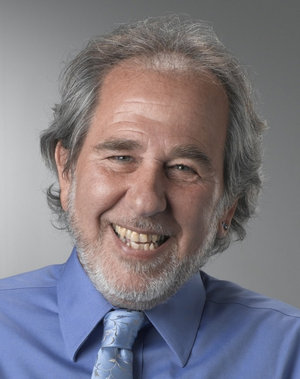
 Bruce
H. Lipton, PhD is an internationally recognized leader in bridging science and
spirit. Stem cell biologist, bestselling author of The
Biology of Belief and recipient of the 2009 Goi Peace Award, he has been a
guest speaker on hundreds of TV and radio shows, as well as keynote presenter
for national and international conferences.
Bruce
H. Lipton, PhD is an internationally recognized leader in bridging science and
spirit. Stem cell biologist, bestselling author of The
Biology of Belief and recipient of the 2009 Goi Peace Award, he has been a
guest speaker on hundreds of TV and radio shows, as well as keynote presenter
for national and international conferences.
Dr.
Lipton has taken his award-winning medical school lectures to the public and is
currently a sought after keynote speaker and workshop presenter. He lectures to
conventional and complementary medical professionals and lay audiences about
leading-edge science and how it dovetails with mind-body medicine and spiritual
principles.
Dr.
Lipton’s books include:
- 2005 The Biology of Belief – Unleashing the Power of Consciousness, Matter & Miracles
- 2006 The Wisdom of Your Cells – How Your Beliefs Control Your Biology
- 2009 Spontaneous Evolution: Our Positive Future and a Way to Get There from Here
- 2013 The Honeymoon Effect: The Science of Creating Heaven on Earth
Bruce Lipton’s catalogue of books are available here.
From Wake Up World
@ http://wakeup-world.com/2015/03/01/how-our-thoughts-control-our-dna/
and http://wakeup-world.com/2015/02/08/the-human-genome-project-a-cosmic-joke/
For more information about DNA see http://nexusilluminati.blogspot.com/search/label/dna
- Scroll down
through ‘Older Posts’ at the end of each section
Hope you like this
not for profit site -
It takes hours of work every day by
a genuinely incapacitated invalid to maintain, write, edit, research,
illustrate and publish this website from a tiny cabin in a remote forest
Like what we do? Please give anything
you can -
Contribute any amount and receive at
least one New Illuminati eBook!
(You can use a card
securely if you don’t use Paypal)
Please click below -
Spare Bitcoin
change?
For further enlightening
information enter a word or phrase into the random synchronistic search box @
the top left of http://nexusilluminati.blogspot.com
And see
New Illuminati – http://nexusilluminati.blogspot.com
New Illuminati on Facebook - https://www.facebook.com/the.new.illuminati
New Illuminati Youtube Channel - https://www.youtube.com/user/newilluminati/playlists
New Illuminati’s OWN Youtube Videos
-
New Illuminati on Google+ @ For
New Illuminati posts - https://plus.google.com/u/0/+RamAyana0/posts
New Illuminati on Twitter @ www.twitter.com/new_illuminati
New Illuminations –Art(icles) by
R. Ayana @ http://newilluminations.blogspot.com
The Her(m)etic Hermit - http://hermetic.blog.com
DISGRUNTLED SITE ADMINS PLEASE NOTE –
We provide a live link to your original material on your site (and
links via social networking services) - which raises your ranking on search
engines and helps spread your info further!
This site is published under Creative Commons (Attribution) CopyRIGHT
(unless an individual article or other item is declared otherwise by the copyright
holder). Reproduction for non-profit use is permitted
& encouraged - if you give attribution to the work & author and include
all links in the original (along with this or a similar notice).
Feel free to make non-commercial hard (printed) or software copies or
mirror sites - you never know how long something will stay glued to the web –
but remember attribution!
If you like what you see, please send a donation (no amount is too
small or too large) or leave a comment – and thanks for reading this far…
Live long and prosper! Together we can create the best of all possible
worlds…
From the New Illuminati – http://nexusilluminati.blogspot.com