"All the World's a Stage We Pass Through" R. Ayana

Showing posts with label contaminated food. Show all posts

Friday, 3 June 2016

Poisoning YOU: The Last Roundup


Poisoning YOU: The Last Roundup

Results of Glyphosate Pee Test Are in ‘And It’s Not Good News’


http://www.permaculturenews.org/images/roundup_killing_machine.jpg


[In April], Members of the European Parliament (MEPs) volunteered to take a urine test to see if glyphosate—the cancer-linked weedkiller—is in their system. Forty-eight MEPs from 13 different European Union countries participated in the test, and now the results are in.

Greens take the #MEPee to highlight 'probably carcinogenic' effects of #glyphosate https://t.co/3GW9jZchk1 pic.twitter.com/RWpBUkrP2x
— Andrew Bell (@aw_bell) April 22, 2016

According to ELISA test results from the accredited Biocheck Laboratory in Germany: “All participants excreted glyphosate by urine.”

The experiment was spearheaded by the Green Party in the European Parliament, which wants a ban on the controversial herbicide in the European Union.

The group noted in a press release of their so-called “#MEPee” test:

On average, the MEPs had 1.7 micrograms/liter of glyphosate in their urine, 17 times higher than the European drinking water norm (0.1 microgram/litre). This means that everyone we tested was way above the limit for residues of pesticides in drinking water.

Of the 48 participants, EU-parliament members from Belgium, France and Germany made up more than 80 percent of the whole investigated participants. The test showed that EU-parliament members from Lithuania, Spain and Croatia had the highest concentrations of glyphosate. The lowest concentrations were in the urines of participants from Italy, Finland and Ireland.

“Nevertheless all investigated EU-parliament members were glyphosate contaminated. This will show glyphosate is also in the food chain of members of the EU-parliament,” the report states.

Glyphosate, which the World Health Organization’s International Agency for Research on Cancer (IARC) declared a possible carcinogen last March, is the main ingredient in Monsanto’s widely used weedkiller, Roundup. It is also found in herbicides manufactured by Syngenta and Dow.

The Greens conducted the test ahead of European Parliament’s April 13 resolution that opposed the European Union’s relicensing of glyphosate.


http://ecowatch.com/wp-content/uploads/2016/05/mepeefi.jpg


The results of our #MEPee test on #glyphosate are in and it's not good news for the 48 MEPs https://t.co/wMUCNhfKBn pic.twitter.com/DyqDO4i6Gj
— Greens in the EP (@GreensEP) May 12, 2016

Despite fierce opposition from European Parliament, countries such as France, Sweden, Italy and the Netherlands, and the 1.4 million people who have signed a petition calling on an EU ban, the European Commission—the executive body of the European Union—reportedly plans to relicense glyphosate for nine years.

According to the Green Party, the European Commission’s latest proposal, which will be voted on May 19, will “plough ahead with a full-fledged approval of glyphosate’s license for nine years.”

“It considers only symbolically if at all the European Parliament’s resolution calling for a very limited scope of approval. Responsibility for the protection of operators and for multiple risks is discharged onto Member States in a non-legally binding manner,” the party said. “We are pissed off that our governments want to allow this poison for another nine years! No politician should have this in his or her body, and not a single citizen either!”

Glyphosate approval in the EU expires at the end of June. The chemical has been the subject of incredible controversy in Europe especially after the European Food Safety Authority famously rejected the IARC’s classification of glyphosate as a possible carcinogen in November.

Agri-business giant Monsanto has also vehemently denied glyphosate’s health and cancer risks and demanded a retraction of the IARC report.


EN Glyphosate


The Green Party’s MEPee test was inspired by a German study “Urinale 2015,” which sampled glyphosate concentrations in urine from more than 2,000 participants.

“The study found that the scale of the glyphosate problem is enormous, with detected concentrations in urine between five and 42 times over the maximum value of residues for drinking water in Europe,” the Green Party pointed out. “No less than 99.6 percent of all citizens who took part in this survey had higher residue levels. This means that virtually all citizens are contaminated with glyphosate.”

A number of other studies have detected glyphosate—the “most widely applied pesticide worldwide”—in feminine hygiene products, everyday food items and, yes, human bodies. A 2013 Friends of the Earth Europe study reported people in 18 European countries have traces of glyphosate in their urine.


https://www.organicconsumers.org/sites/default/files/styles/400x300/public/l_glyphosate_2013.png?itok=zgzC6Lan


European Parliament votes to ban most uses of glyphosate


http://www.theecologist.org/siteimage/scale/800/600/400270.png


by Oliver Tickell


The EU Parliament has responded to the health concerns of millions by calling on the Commission to severely restrict permitted uses of the toxic herbicide glyphosate, including an effective ban on pre-harvest dessication of crops.

This resolution opposes approval of glyphosate for most uses, and takes aim at the excessive length of the approval proposed by the Commission, which must now address these concerns.

The European Parliament today [April] adopted a resolution strongly opposing the Commission's proposal to reapprove the controversial weedkiller glyphosate for use in Europe for 15 years.

The resolution flags significant concerns with the Commission's proposal, notably calling for significantly restricting the uses for which glyphosate - best known in Monsanto's 'Roundup' formulation - could be approved.

The Parliament's vote precedes a decision by EU government representatives on whether or not to support the Commission proposal to approve glyphosate for use in the EU. This may take place at the next EU pesticides committee meeting on 18-19 May.

While the 374 to 225 vote is non-binding on the Commission and EU governments, it will nonetheless carry strong moral weight since it comes from the EU's only elected body directly representing EU citizens and will force a discussion of the issues raised.

The resolution calls for no approval of glyphosate - recently determined to be "probably carcinogenic" by the WHO's cancer watchdog, the IARC - for many uses now considered acceptable, including:

  • non-professional uses;
  • in or close to public parks, playgrounds and gardens;
  • where integrated pest management systems are sufficient for necessary weed control.


It also calls for the renewal to be limited to just seven years instead of the 15 proposed by the Commission.


Pre-harvest 'desiccation' strictly limited


The resolution additionally demands strict limits on 'pre-harvest' applications on crops, with a strong recital calling such uses "unacceptable". This refers to the practice of spraying crops up to two weeks before harvest to 'desiccate' the plants and make harvesting easier.

Pre-harvest application of glyphosate is a clear route for human exposure to glyphosate via the harvested crop. Currently glyphosate formulations are licenced for a wide range of crops including wheat, barley, oats, oilseed rape (canola), linseed, field beans and peas.

This use of glyphosate is believed to be the main source of the herbicide and its residues in bread and NGOs including the UK's Soil Association are campaiging to stop this use.

The resolution further calls for:

  • An independent review of overall toxicity of glyphosate;

  • A call on the Commission and EFSA to immediately disclose all scientific evidence for the positive classification of glyphosate, given the overriding public interest in disclosure;

  • A call on the Commission to test and monitor glyphosate residues in foods and drinks produced in the Union as well as in imported produce;

  • Strong criticism of the Commission for accepting an incomplete dossier with regard to endocrine disruption;

  • strong criticism of the problem of resistances of weed created by glyphosate, and the toxic spiral by agro-biotech companies adding further resistances to plants.


'The Commission and EU governments must take note'


After the vote, Green food safety and public health spokesperson Bart Staes said: "The European Parliament has today highlighted serious concerns with the proposal to re-approve glyphosate for use in Europe and the Commission and EU governments must take note.

"We would have preferred if MEPs had followed the recommendation of the Parliament's environment committee in clearly calling for an outright rejection of the re-approval of glyphosate. However, this resolution opposes approval of glyphosate for most of its uses, and takes aim at the excessive length of the approval proposed by the Commission.

"This is a shot across the bow of the Commission and it must now work with EU governments to address these concerns, rather than pushing ahead with its proposed reapproval."

Although falling short of the full ban demanded by the Greens and campaigners, the passage of the resolution represents a huge victory for all those who have opposed the Commission's proposal to re-licence for all existing uses for 15 years and heavily lobbied their MEPs. Over 1.4 million people have signed an Avaaz petition opposing the relicencing of glyphosate.

The passing of the resolution also represents some skilful political footwork by the Greens in the EU Parliament. While they wanted a complete ban on glyphosate, they worked with other political groups to impose restrictions that would secure a majority of votes from other parties - even though the Greens opposed the final resolution as falling short of a complete ban.

"There is growing opposition among EU governments to reapproving glyphosate for use in the EU and we hope today's vote, combined with major public opposition, will convince more governments to change their minds on glyphosate", Staes continued.

"Given the serious health and environmental concerns and conflicting scientific advice regarding glyphosate, it is scandalous that the EU Commission proposed to continue to allow its use for 15 more years, without any restrictions on its use.

"With the WHO assessment having concluded the substance is probably carcinogenic, EU governments must heed these concerns and reject the Commission's proposal." 


Rural residents still left at risk


However pesticides campaigner Georgina Downs points out that even if the Parliament's position was adopted by EU Governments, millions of rural residents would still be at risk from agricultural use of glyphosate:

"The European Parliament vote has seemingly recognised the risk to the health of transient bystanders and non-professional users of pesticides but left at risk from exposure and adverse impacts the group with one of the highest levels of exposure which is rural residents living in the locality of sprayed crop fields ...

"There are many millions of rural residents across the EU (including babies, children, pregnant women, the elderly, people already ill and/or disabled) who have no protection at all from exposure to this (or indeed any other) pesticide that is often sprayed in the locality of their homes and gardens."

In a statement, Avaaz gave the vote a cautious welcome, pointing out that "with mounting public concern the vote in the European Parliament could be a major influencing factor for the decision of the Commission on a new license."

Pascal Vollenweider, Avaaz Campaign Director, added: "This vote shows European politicians are beginning to listen to the citizens they represent and independent science, but we will still be glyphosate lab rats for 7 more years. Two-thirds of Europeans want to suspend glyphosate until it is proven safe and it's now up to the Commission to put public health before corporate profits."


Group of Farmers Files Lawsuit Against Monsanto Claiming RoundUp Gave Them All Cancer


https://buelahman.files.wordpress.com/2015/05/dees-mon28_n.jpg

A group of Nebraska farmers diagnosed with cancer is suing Monsanto, maker of agricultural chemicals and GMO seed. The farmers allege that glyphosate, the popular Monsanto herbicide, caused them to develop cancer and that the company intentionally misled the public about the dangers of the world’s most widely used herbicide.

The lawsuit was filed last Wednesday in federal court in Lincoln, Nebraska. The farmers are seeking punitive damages, alleging defective design, failure to warn, negligence and breach of warranty.

Glyphosate is the active ingredient in Monsanto’s Roundup brand herbicide, which is advertised as being able to kill almost any weed. However, the company claims it is safe to use on food. Monsanto’s Roundup Ready GMO seeds are designed to resist the chemicals so the plants can still grow after being sprayed.

The lawsuit also claims that Monsanto “concealed or systematically sought to discredit” research showing links between glyphosate and cancer and continues to do so.

“Monsanto championed falsified data and has attacked legitimate studies that revealed Roundup’s dangers. Monsanto led a campaign of misinformation to convince government agencies, farmers and the general population that Roundup is safe. Its continuing denial extends to the date of this Complaint,” the lawsuit states.

Glyphosate was designated as a probable cause of cancer in March 2015 by the World Health Organization’s International Agency for Research on Cancer. The report noted glyphosate is most frequently associated with non-Hodgkin’s lymphoma and other hematopoietic cancers, including multiple myelomas, lymphocytic lymphoma, and B-cell lymphoma.

All of the farmers in the group have been diagnosed with non-Hodgkin’s lymphoma.

Later in 2015, California announced plans to label glyphosate as a carcinogen based on the IARC’s classification. Monsanto has fought back against the declaration with a lawsuit.

Several countries have banned or restricted glyphosate since its classification as a possible carcinogen by the IARC, including the Netherlands, France, Bermuda and Sri Lanka.

According to the farmers’ lawsuit, Roundup is used on more than 100 varieties of crops, and the volume of glyphosate applied to crops grown in the U.S. has increased from 85 million pounds in 2001 to 185 million pounds by 2007.

“Glyphosate is found in rivers, streams, and groundwater in agricultural areas where Roundup is used. It has been found in food, the urine of exposed persons, and in the urine of urban dwellers without direct contact with glyphosate,” according to the complaint.

Monsanto has been the target of a series of new lawsuits including in India and Burkina Faso, both related to its BT Cotton. The company is also being sued by 7 major US cities including Portland, Seattle, and San Diego.

GMO policy is also in focus for the 2016 election season as Vermont’s labeling law is the first in the nation to require labels for GMO ingredients. Vermont’s law takes effect in July 2016. In March, the U.S. Senate voted 48-49 against SB 2609, a bill that would have blocked states from making their own GMO labeling laws. Senate Bill 2609, the Biotech Labeling Solutions Act has been called the DARK Act, an acronym for Deny Americans the Right to Know.

The new Vermont law has some companies planning to label all products with GMO ingredients including MARS, maker of M&M’s and SNICKERS, fruit company Del Monte, and other large food conglomerates like Kellogg’s, and General Mills.


For more information about Roundup see http://nexusilluminati.blogspot.com/search/label/roundup
- Scroll down through ‘Older Posts’ at the end of each section


Do you LIKE this uniquely informative site?
Hours of effort by a genuinely incapacitated invalid are required every day to maintain, write, edit, research, illustrate, moderate and publish this website from a tiny cabin in a remote forest.
Now that most people view these posts on mobile devices, sites like this earn an ever diminishing pittance from advertising…
Like what you see? Please give anything you can -  
Contribute any amount and receive at least one New Illuminati eBook!
(You can use a card securely if you don’t use Paypal)
Please click below -


Spare Bitcoin change?


Xtra Images – http://www.permaculturenews.org/images/roundup_killing_machine.jpg
 https://www.organicconsumers.org/sites/default/files/styles/400x300/public/l_glyphosate_2013.png?itok=zgzC6Lan
https://buelahman.files.wordpress.com/2015/05/dees-mon28_n.jpg


For further enlightening information enter a word or phrase into the random synchronistic search box @ the top left of http://nexusilluminati.blogspot.com


And see


 New Illuminati on Facebook - https://www.facebook.com/the.new.illuminati

New Illuminati Youtube Channel -  https://www.youtube.com/user/newilluminati/playlists

New Illuminati’s OWN Youtube Videos -  
New Illuminati on Google+ @ For New Illuminati posts - https://plus.google.com/u/0/+RamAyana0/posts

New Illuminati on Twitter @ www.twitter.com/new_illuminati


New Illuminations –Art(icles) by R. Ayana @ http://newilluminations.blogspot.com

The Her(m)etic Hermit - http://hermetic.blog.com


DISGRUNTLED SITE ADMINS PLEASE NOTE –
We provide a live link to your original material on your site (and links via social networking services) - which raises your ranking on search engines and helps spread your info further!

This site is published under Creative Commons (Attribution) CopyRIGHT (unless an individual article or other item is declared otherwise by the copyright holder). Reproduction for non-profit use is permitted & encouraged - if you give attribution to the work & author and include all links in the original (along with this or a similar notice).

Feel free to make non-commercial hard (printed) or software copies or mirror sites - you never know how long something will stay glued to the web – but remember attribution!

If you like what you see, please send a donation (no amount is too small or too large) or leave a comment – and thanks for reading this far…

Live long and prosper! Together we can create the best of all possible worlds…


From the New Illuminati – http://nexusilluminati.blogspot.com

Friday, 13 February 2015

Dumping Radioactive Food from Japan on the World: Why the TPP is a Pending Disaster


Dumping Radioactive Food from Japan
 on the World:
Why the TPP is a Pending Disaster

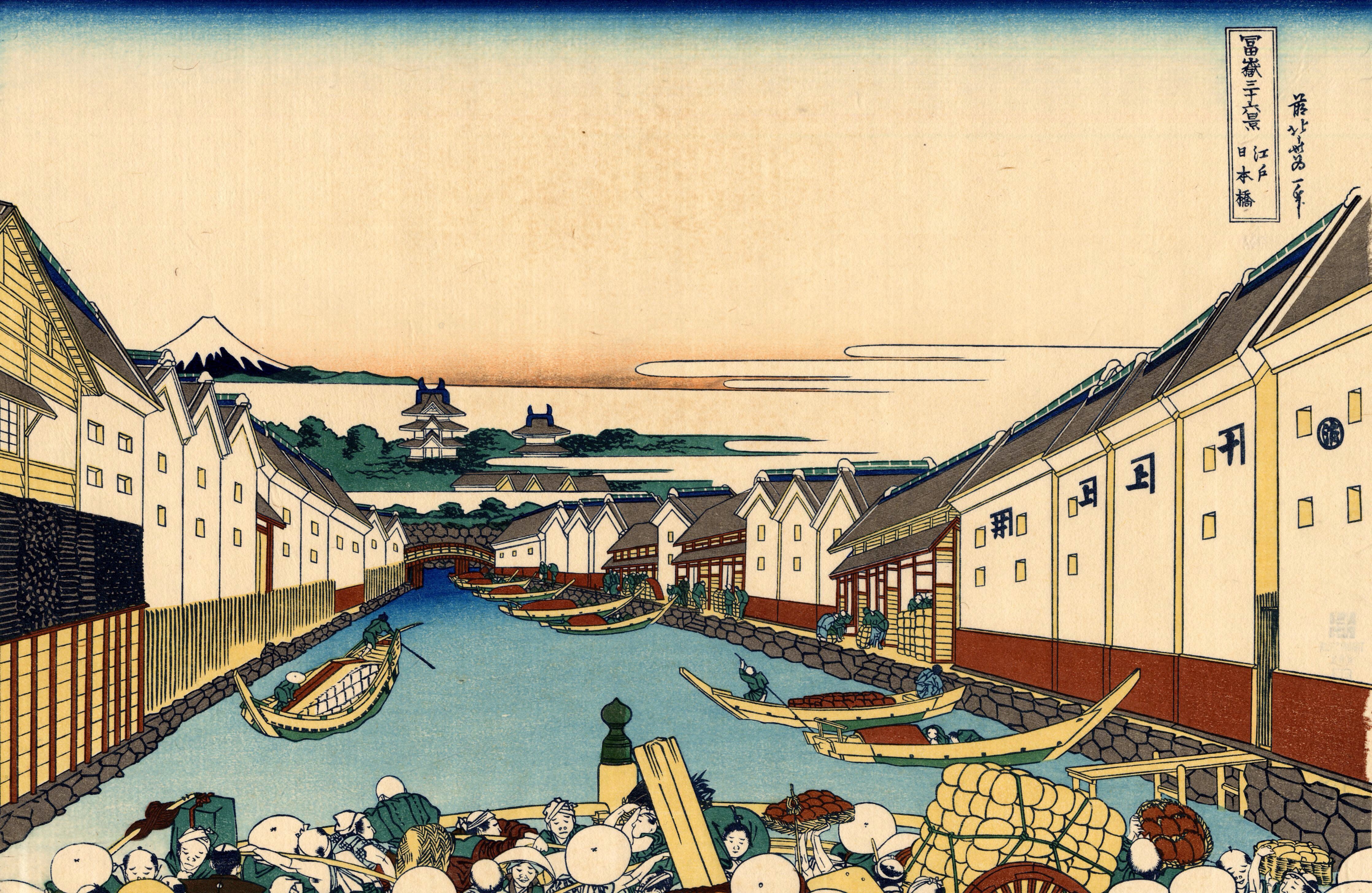
Nihonbashi bridge in Edo, by Katsushika Hokusai (葛飾北斎) (1760–1849)
Rice Brokers at Nihonbashi bridge in Edo, by Katsushika Hokusai (
葛飾北斎) (1760–1849) http://en.wikipedia.org/wiki/Rice


Economist Robert Reich has laid out the more general dangers of the TPP Trade Agreement in his recent piece “Why the Trans-Pacific Partnership Agreement is a Pending Disaster” (see end of article).

However, the biggest risk is that it will allow Japan to dump all of its radioactive food on much of the world. In particular, 10 to 15 times more radiation is allowed in food in the US, Australia, Canada, and New Zealand than in Japan. The US has the weakest “standards” of all, allowing food to have around 1,200 – 1,500 Becquerels per kg [1], i.e. 1,200-1,500 radioactive emissions per second per kg, compared to 100 Bq/kg in Japan. (A kg is 2.2 pounds.) The amount allowed in Japan for children is even less than 100 Bq.

The TPP will allow Japan to more easily export radioactive metal products, as well. It is also a back door to allow Japan to export radioactive food and goods to Europe. Unlike most of the English speaking world, Europe got wise to Japan’s radioactive food export plot and only accepts Japanese food with 100 Bq/kg of radiation, even though the European “standard” is at 600 Bq/kg.

This may also be an economic disaster, especially for US rice farmers, as Japan dumps its radioactive produce for cheap on the world. They can then import food which is presumed to be less radioactive, as recently seen by the urgency given to import of US French fries (Japan grows potatoes.) While the US was exporting some potatoes to Japan before Fukushima, they must certainly export more now. Who ever heard of urgently flying French fries to another country, as recently happened due to a shortage of US French fries in Japan? The well-known fast-food chain doing the importing claims to use local produce, so the reason for imports appears clear – neither they nor their Japanese customers want potentially radioactive French fries.

https://miningawareness.files.wordpress.com/2014/12/image77.jpgEven if the same 100 Bq/kg Japan radiation “standard” were to be implemented for all countries – and you can be certain it will not be – 100 Bq/kg is almost certainly more contaminated than food grown in the US, Canada, New Zealand, Australia. Or, at least one hopes that food from radiation contaminated zones in Japan is more radioactive than in the US, though with wanton dumping of radioactive waste, even into US landfills, and legally leaking nuclear reactors, along with historical US nuclear weapons testing within the US, and Fukushima and Chernobyl fallout, one cannot be certain. The ill-fated WIPP is probably the most sophisticated US nuclear waste dump, and it was designed to fail over time. It just failed early. For those who missed it, this is how the US government handles highly dangerous transuranic waste (plutonium, etc):

Then the US president runs around asking other countries to dump their nuclear waste on America, in the name of security!


However, with Hiroshima-Nagasaki, Fukushima, and Pacific nuclear weapons testing, and lots of nuclear reactors and waste on a small island, one can guess that Japan is probably overall the most radioactive country in the world.

Japan whining and complaining over GM food is most surely a lure. The only real way to get rid of radioactive waste is to export it. Plants take up the radiation from soil and water, so this ploy will leave Japan with less radiation and the rest of the world more radioactive. It is an advanced version of the dilute and disperse policies so beloved by the nuclear industry. Some radiation will stay in the bones until long after death, excepting cremation. Other radiation will be gradually excreted to poison the land.

From the US Summary of Objectives on the TPP:
The United States is participating in negotiations of the Trans-Pacific Partnership (TPP) Agreement with 11 other Asia-Pacific countries (Australia, Brunei Darussalam, Canada, Chile, Japan, Malaysia, Mexico, New Zealand, Peru, Singapore, and Vietnam) – a trade agreement that will open markets, set high-standard trade rules, and address 21st-century issues in the global economy. By doing so, TPP will promote jobs and growth in the United States and across the Asia-Pacific region.http://www.ustr.gov/tpp/Summary-of-US-objectives


According to the Office of US Trade Rep: “Twenty percent of U.S. farm income comes from agricultural exports and those exports support rural communities.http://www.ustr.gov/tpp/Summary-of-US-objectives Some will recall that after NAFTA was passed, US manufacturing, including many jobs in the auto industry, went to Canada and Mexico. For those who need details, see: http://www.epi.org/publication/fast-track-to-lost-jobs-free-trade-agreements-are-bad-deals-for-working-americans/

The dumping of US rice on Haiti for cheaper than it could be grown in Haiti was devastating to Haitian farmers, but great for Bill Clinton’s Arkansas. While cheap rice was good for Haiti’s urban poor, it actually made more urban poor by destroying the livelihoods of Haitian farmers. Japan actually tried to send Fukushima rice to Haiti, and poor Haitians had the good sense to be outraged, because they didn’t want radioactive rice. Not only will there be dumping of Japan’s radioactive food, but there will be dumping of food from all countries with lower wages-costs. Over the decades free-trade policies have led to lower wages, even while consumer costs for many basic needs have risen disproportionately. Contrary to popular opinion, there have been many “lost generations” going back for decades, including highly educated people who have remained unemployed, underemployed, or precariously employed.

When the Office of US Trade Rep says “Non-tariff trade barriers, such as duplicative testing and unscientific regulations imposed on food and agricultural goods, are among the biggest challenges facing exporters across the Asia-Pacific region“, what they mean is that they don’t want radiation testing and they consider the wacko high levels of radiation accepted by international promoters of the nuclear industry as “scientific”. The US’ own National Academy of Science has consistently stated for decades, in their BEIR reports, that there is no safe dose of ionizing radiation, and that risk increases linearly with dose. This is true for Low LET radiation. However, High LET (e.g. alpha) radiation is even more dangerous, as the National Academy of Science also explains in their BEIR report. Yet the US government has continued to ignore its own National Academy of Sciences in favor of the Nuclear Industry and UN Agencies. It has actually increased “acceptable” levels of radiation in food, in recent years, to pander to the nuclear industry. So, now it should be clear what they really mean when they say: “The United States is therefore seeking in TPP to strengthen rules intended to eliminate unwarranted technical barriers to trade (TBT) and build upon WTO commitments in this area, and to ensure that sanitary and phytosanitary measures (SPS) are developed and implemented in a transparent, science-based manner.http://www.ustr.gov/tpp/Summary-of-US-objectives Food testing is considered a barrier to trade, as is food safety. Thus, the high levels of radiation allowed in food. Already Europe and the US use the honor system for accepting Japanese food imports. They let Japan do the radiation tests and blindly accept the results.

While Robert Reich states below that for decades free trade was a “win-win”, that is fairly debatable. Free trade has a long track record of destroying local industries. Brazil had to shut itself off from free trade in order to develop a modern economy. Poor countries, which did not, generally suffered from increasing poverty and underdevelopment. As he discusses in another article, the rich have used their extra money to buy off US politicians. The US Congress is hence almost totally out of control and working against the American people. The majority of Americans probably know this. So, it’s really hard to see how passing it before Congress would do anything, though it would enhance transparency, if Americans are willing to read, which they generally are not. If Americans had the time or inclination to read government documents, they would not be in the mess they are in right now.

It’s hard to think of another country throughout all of history, where the government has so much disdain for its own people, and for the land, as the US Government, with the probable exception of Haiti. What other country besides the US runs around begging the world for all of its high level radioactive waste? Germany, Sweden, Canada, Japan, and some other countries, are all too happy to comply in sending both high and low level radioactive waste to dump on the poor, hapless, people of South Carolina and Tennessee. Importing radioactive food from Japan is but an extension of this policy, which is effectively an extermination policy, whatever the intent. The US political and economic elites can easily replace the people and they know it. Is this why they so oppose family planning in poor countries? But, they can’t replace the land. They apparently intend to go someplace else, once they have destroyed the country and made their killing.

Based on what Robert Reich says below, the TPP may also make it more difficult for countries to exit nuclear power, without facing the sort of frivolous and secretive lawsuit, which Swedish State owned Vattenfall has launched against Germany:
Why the Trans-Pacific Partnership Agreement is a Pending Disaster
Published on Wednesday, January 07, 2015, by RobertReich.org


Projected on the side of a building in Spokane, Washington in 2013, the message against ‘fast track’ authority, which would restrict lawmakers ability to weigh in or make changes to the deal, has been key in the fight against the Trans-Pacific Trade Partnership agreement. The reason: If the American people knew what was in this deal they would never allow their members of Congress to vote in favor of it. Republicans who now run Congress say they want to cooperate with President Obama, and point to the administration’s Trans-Pacific Partnership, or TPP, as the model. The only problem is the TPP would be a disaster.

If you haven’t heard much about the TPP, that’s part of the problem right there. It would be the largest trade deal in history — involving countries stretching from Chile to Japan, representing 792 million people and accounting for 40 percent of the world economy – yet it’s been devised in secret.

Lobbyists from America’s biggest corporations and Wall Street’s biggest banks have been involved but not the American public. That’s a recipe for fatter profits and bigger paychecks at the top, but not a good deal for most of us, or even for most of the rest of the world.

First some background. We used to think about trade policy as a choice between “free trade” and “protectionism.” Free trade meant opening our borders to products made elsewhere. Protectionism meant putting up tariffs and quotas to keep them out.

In the decades after World War II, America chose free trade. The idea was that each country would specialize in goods it produced best and at least cost. That way, living standards would rise here and abroad. New jobs would be created to take the place of jobs that were lost. And communism would be contained.

For three decades, free trade worked. It was a win-win-win.

But in more recent decades the choice has become far more complicated and the payoff from trade agreements more skewed to those at the top.

Tariffs are already low. Negotiations now involve such things as intellectual property, financial regulations, labor laws, and rules for health, safety, and the environment.

It’s no longer free trade versus protectionism. Big corporations and Wall Street want some of both.

They want more international protection when it comes to their intellectual property and other assets. So they’ve been seeking trade rules that secure and extend their patents, trademarks, and copyrights abroad, and protect their global franchise agreements, securities, and loans.

But they want less protection of consumers, workers, small investors, and the environment, because these interfere with their profits. So they’ve been seeking trade rules that allow them to override these protections.

Not surprisingly for a deal that’s been drafted mostly by corporate and Wall Street lobbyists, the TPP provides exactly this mix.

What’s been leaked about it so far reveals, for example, that the pharmaceutical industry gets stronger patent protections, delaying cheaper generic versions of drugs. That will be a good deal for Big Pharma but not necessarily for the inhabitants of developing nations who won’t get certain life-saving drugs at a cost they can afford.

The TPP also gives global corporations an international tribunal of private attorneys, outside any nation’s legal system, who can order compensation for any “unjust expropriation” of foreign assets.

Even better for global companies, the tribunal can order compensation for any lost profits found to result from a nation’s regulations. Philip Morris is using a similar provision against Uruguay (the provision appears in a bilateral trade treaty between Uruguay and Switzerland), claiming that Uruguay’s strong anti-smoking regulations unfairly diminish the company’s profits.

Anyone believing the TPP is good for Americans take note: The foreign subsidiaries of U.S.-based corporations could just as easily challenge any U.S. government regulation they claim unfairly diminishes their profits – say, a regulation protecting American consumers from unsafe products or unhealthy foods, investors from fraudulent securities or predatory lending, workers from unsafe working conditions, taxpayers from another bailout of Wall Street, or the environment from toxic emissions.

The administration says the trade deal will boost U.S. exports in the fast-growing Pacific basin where the United States faces growing economic competition from China. The TPP is part of Obama’s strategy to contain China’s economic and strategic prowess.

Fine. But the deal will also allow American corporations to outsource even more jobs abroad.

In other words, the TPP is a Trojan horse in a global race to the bottom, giving big corporations and Wall Street banks a way to eliminate any and all laws and regulations that get in the way of their profits.

At a time when corporate profits are at record highs and the real median wage is lower than it’s been in four decades, most Americans need protection – not from international trade but from the political power of large corporations and Wall Street.

The Trans Pacific Partnership is the wrong remedy to the wrong problem. Any way you look at it, it’s just plain wrong.

https://farm8.staticflickr.com/7319/11602800996_d90eeb59e4_k.jpg
………………………………………………………..
Robert Reich, one of the nation’s leading experts on work and the economy, is Chancellor’s Professor of Public Policy at the Goldman School of Public Policy at the University of California at Berkeley. He has served in three national administrations, most recently as secretary of labor under President Bill Clinton. Time Magazine has named him one of the ten most effective cabinet secretaries of the last century. He has written thirteen books, including his latest best-seller, Aftershock: The Next Economy and America’s Future; The Work of Nations; Locked in the Cabinet; Supercapitalism; and his newest, Beyond Outrage. His syndicated columns, television appearances, and public radio commentaries reach millions of people each week. He is also a founding editor of the American Prospect magazine, and Chairman of the citizen’s group Common Cause. His widely-read blog can be found at http://www.robertreich.org.
http://www.commondreams.org/views/2015/01/07/why-trans-pacific-partnership-agreement-pending-disaster (Robert Reich, CommonDreams, CC-BY-SA-3.0)
[Emphasis our own].

Links that were embedded in the original Robert Reich-CommonDreams article: https://wikileaks.org/tpp-ip2/
http://www.citizen.org/documents/tpp-investment-fixes.pdf http://www.globalresearch.ca/the-trans-pacific-partnership-agreement-tppa-when-foreign-investors-sue-the-state/5357500 http://www.corpwatch.org/article.php?id=15991


Article by Robert Reich which discusses dangers caused by cost-cutting in nuclear reactor construction: http://www.huffingtonpost.com/robert-reich/safety-on-the-cheap_b_836347.html

Related posts from last year: https://miningawareness.wordpress.com/2014/01/20/secret-trans-pacific-partnership-agreement-tpp-environment-consolidated-text-and-our-comments/ https://miningawareness.wordpress.com/2014/01/20/responsible-trade-program-trans-pacific-partnership-agreement/ https://miningawareness.wordpress.com/2014/01/20/japan-remains-hotbed-of-tpp-protest-as-u-s-tries-to-fast-track-trade-deal-crush-environmental-laws/

Philip Morris employs only 75,600 people worldwide? And how many do they kill?
In 2007, PMI sold 831 billion cigarettes, or the biggest non-government tobacco company in the world by volume… With its Operations Center based in Lausanne, Switzerland, it owns 7 of the top 15 tobacco brands in the world and has a mix of international and local products, which are produced in more than 50 factories around the world. PMI employs 75,600 people worldwide“. http://en.wikipedia.org/wiki/Philip_Morris_International


Note 1: The US “standard” of 1,200 Bq/kg is for Cs 134 plus Cs 137 only. Other radionuclides, whether tested or untested, increase the Becquerels found in the food. The US actually slightly exceeds the UN “standards”, which “only” allow for 1,000 Bq/kg of Cs 134 plus Cs 137 and several other radionuclides combined. These standards are actually supposed to be temporary and for only a portion of food intake, but apparently the food is not even tested unless it is suspected of exceeding the amount. Europe allows about half the amount of radiation in food allowed by the US. Europe had temporarily raised the amount allowed after Fukushima. There was great outrage and now it stands at 600 Bq/kg.


TPP: The Dirtiest Trade Deal You've Never Heard Of
(2:40)


TPP Uncovered:

WikiLeaks releases draft of highly-secretive multi-national trade deal


A screenshot from wikileaks.org


Details of a highly secretive, multi-national trade agreement long in works have been published by WikiLeaks, and critics say there will be major repercussions for much of the modern world if it's approved in this incarnation.

The anti-secrecy group published on Wednesday a 95-page excerpt taken from a recent draft of the Trans-Pacific Partnership, or TPP, a NAFTA-like agreement that is expected to encompass nations representing more than 40 percent of the world’s gross domestic product when it is finally approved: the United States, Japan, Mexico, Canada, Australia, Malaysia, Chile, Singapore, Peru, Vietnam, New Zealand and Brunei. 

#WikiLeaks release on secret #TPP that represents more than 40% of the world GDP - full negotiated IP draft text | http://t.co/FOOH82tBCI
— WikiLeaks (@wikileaks) November 13, 2013

US President Barack Obama and counterparts from 11 other prospective member states have been hammering out the free trade agreement in utmost secrecy for years now, the result of which, according to the White House, would rekindle the economies of all of those involved, including many countries considered to still be emerging.

The TPP will boost our economies, lowering barriers to trade and investment, increasing exports and creating more jobs for our people, which is my number-one priority,” Obama said during a Nov. 2011 address. The deal, he said, “has the potential to be a model not only for the Asia Pacific but for future trade agreements” by regulating markets and creating opportunities for small and medium-sized businesses in the growing global marketplace. 

Upon the publication of an excerpt obtained by WikiLeaks this week, however, opponents of the act are insisting that provisions dealing with creation, invention and innovation could serve a severe blow to everyone, particularly those the internet realm.

Although the TPP covers an array of topics — many of which have not been covered by past agreements, according to Obama — WikiLeaks has published a chapter from a draft dated August 30, 2013 that deals solely on Intellectual Property, or IP, rights. Previous reports about the rumored contents of the TPP with regards to IP law have raised concern among activists before, with the California-based Electronic Frontier Foundation going as far as to warn that earlier leaked draft text suggested the agreement “would have extensive negative ramifications for users’ freedom of speech, right to privacy and due process and hinder peoples' abilities to innovate,” all of which is being agreed upon without any oversight or observation. Indeed, the thousands of words released by WikiLeaks this week has concreted those fears and has already caused the likes of the EFF and others to sound an alarm.

The newly leaked TPP text confirms it's a serious threat to users' rights. Help us stop it: https://t.co/JEfZ5SNMhJ
— EFF (@EFF) November 13, 2013

The IP chapter, wrote WikiLeaks, “provides the public with the fullest opportunity so far to familiarize themselves with the details and implications of the TPP,” an agreement that has largely avoided scrutiny in the mainstream media during its development, no thanks, presumably, to the under-the-table arguments that have led prospective member states to the point they’re at today.

Julian Assange, the Australian founder of the whistleblower site who has been confined to the Ecuadorian Embassy in London for over a year now, had particularly harsh words for the TPP in a statement published alongside the draft release.

If instituted, the TPP’s IP regime would trample over individual rights and free expression, as well as ride roughshod over the intellectual and creative commons,” Assange said. “If you read, write, publish, think, listen, dance, sing or invent; if you farm or consume food; if you’re ill now or might one day be ill, the TPP has you in its crosshairs.”

Within the IP chapter, the partaking nations in one excerpt agree to “Enhance the role of intellectual property in promoting economic and social development,” but elsewhere suggest that the way in which such could be accomplished would involve serious policing of the World Wide Web. Later, the countries write they hope to “reduce impediments to trade and investment by promoting deeper economic integration through effective and adequate creation, utilization, protection and enforcement of intellectual property rights, taking into account the different levels of economic development and capacity as well as differences in national legal systems.”

Compared to existing multilateral agreements, the TPP IPR chapter proposes the granting of more patents, the creation of intellectual property rights on data, the extension of the terms of protection for patents and copyrights, expansions of right holder privileges and increases in the penalties for infringement,” James Love of Knowledge Ecology International explained after reading the leaked chapter. “The TPP text shrinks the space for exceptions in all types of intellectual property rights. Negotiated in secret, the proposed text is bad for access to knowledge, bad for access to medicine and profoundly bad for innovation.”

Opponents have argued in the past that stringent new rules under the TPP with regards to copyrighted material would cause the price of medication to go up: potentially catastrophic news for residents of member state who may have difficulties affording prescriptions. Public Citizen, a Washington-based consumer advocacy organization, has warned that US Trade Representatives privy to the TPP discussions have demanded provisions that “would strengthen, lengthen and broaden pharmaceutical monopolies on cancer, heart disease and HIV/AIDS drugs, among others, in the Asia-Pacific region.” Indeed, the leaked chapter suggests drug companies could easily extend and widen patents under the TPP, prohibiting other countries from producing life-saving pills and selling them for less. Outside of the world of medicine, though, the implications that could come with new copyright rules agreed upon my essentially half of the world’s economy are likely to affect everyone.

"One could see the TPP as a Christmas wish-list for major corporations, and the copyright parts of the text support such a view," Dr. Matthew Rimmer, an expert in intellectual property law, told the Sydney Morning Herald. "Hollywood, the music industry, big IT companies such as Microsoft and the pharmaceutical sector would all be very happy with this."

WikiLeaks wrote in response that the enforcement measures discussed have “far-reaching implications for individual rights, civil liberties, publishers, internet service providers and internet privacy, as well as for the creative, intellectual, biological and environmental commons.”

Particular measures proposed include supranational litigation tribunals to which sovereign national courts are expected to defer, but which have no human rights safeguards,” warned WikiLeaks. “The TPP IP Chapter states that these courts can conduct hearings with secret evidence.”

According to the whistleblower site, the IP chapter also includes provisions that rehash some of the very surveillance and enforcement rules from the abandoned SOPA and ACTA treaties that were left to die after public outrage halted any agreement with regards to those legislation.

The WikiLeaks text also features Hollywood and recording industry inspired proposals – think about the SOPA debacle – to limit internet freedom and access to educational materials, to force internet providers to act as copyright enforcers and to cut off people’s internet access,” Burcu Kilic, an intellectual property lawyer with Public Citizen, explained to the website TorrentFreak.

SOPA, or the Stop Online Privacy Act, was abandoned last year after massive public campaign thwarted the US Congress’ attempt to censor access to certain internet sites where copyrighted content may be incidentally hosted. One of the bill’s biggest opponents, Kim Dotcom of file-sharing sites Megaupload and Mega, was quick to condone WikiLeaks for their release of the TPP draft and condemned those responsible for drafting a bill that he warned would have major consequences for all if approved, including residents of New Zealand such as himself.

No wonder they kept it secret. What a malicious piece of US corporate lobbying. TPP is about world domination for US corporations. Nothing else. We will stop this madness in New Zealand,” he told RT’s Andrew Blake.

According to WikiLeaks, the Obama administration and senior heads of state from other potential TPP nations have expressed interest in ratifying the agreement before 2014. All of that could now be put in jeopardy.


From RT @ http://rt.com/usa/wikileaks-tpp-ip-dotcom-670/


For more information about Fukushima see http://nexusilluminati.blogspot.com/search/label/Fukushima   
- Scroll down through ‘Older Posts’ at the end of each section


Hope you like this not for profit site -
It takes hours of work every day by a genuinely incapacitated invalid to maintain, write, edit, research, illustrate and publish this website from a tiny cabin in a remote forest
Like what we do? Please give anything you can -  
Contribute any amount and receive at least one New Illuminati eBook!
(You can use a card securely if you don’t use Paypal)
Please click below -


Spare Bitcoin change?


For further enlightening information enter a word or phrase into the random synchronistic search box @ the top left of http://nexusilluminati.blogspot.com

And see


 New Illuminati on Facebook - https://www.facebook.com/the.new.illuminati

New Illuminati Youtube Channel - http://www.youtube.com/user/newilluminati


New Illuminati on Twitter @ www.twitter.com/new_illuminati


New Illuminations –Art(icles) by R. Ayana @ http://newilluminations.blogspot.com

The Her(m)etic Hermit - http://hermetic.blog.com


DISGRUNTLED SITE ADMINS PLEASE NOTE –
We provide a live link to your original material on your site (and links via social networking services) - which raises your ranking on search engines and helps spread your info further! This site is published under Creative Commons Fair Use Copyright (unless an individual article or other item is declared otherwise by the copyright holder). Reproduction for non-profit use is permitted & encouraged,  - if you give attribution to the work & author. Please include a (preferably active) link to the original (along with this or a similar notice).

Feel free to make non-commercial hard (printed) or software copies or mirror sites - you never know how long something will stay glued to the web – but remember attribution!

If you like what you see, please send a donation (no amount is too small or too large) or leave a comment – and thanks for reading this far…

Live long and prosper! Together we can create the best of all possible worlds…


From the New Illuminati – http://nexusilluminati.blogspot.com